Kirjojen hintavertailu – 12 903 725 kirjaa ja 27 kauppaa

Kirjailija

Rachel Stenner

Kirjat ja teokset yhdessä paikassa: 4 kirjaa, julkaisuja vuosilta 2018–2025, suosituimpiin kuuluu The Typographic Imaginary in Early Modern English Literature. Vertaile teosten hintoja ja tarkista saatavuus suomalaisista kirjakaupoista.

4 kirjaa

Kirjojen julkaisuvuodet: 2018–2025.

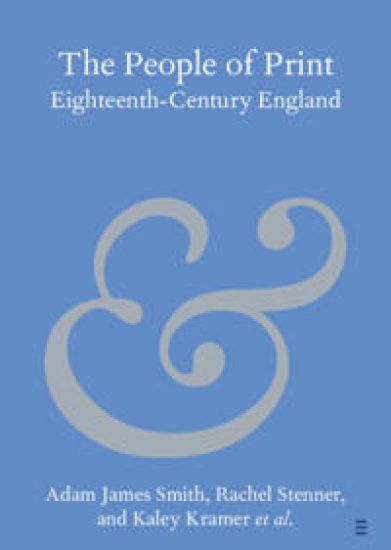
The People of Print

The People of Print

Adam James Smith; Rachel Stenner; Kaley Kramer; Helen Williams; Jacob Baxter; Kate Ozment; Sarah Griffin; Lisa Maruca; Barbara Crosbie; Dominic Bridge; John Hinks

Cambridge University Press
2025
pokkari
This collection profiles understudied figures in the book and print trades of the eighteenth century. With an explicit focus on intervening in the critical history of the trades, this volume profiles seven women and three men, emphasising the broad range of material, cultural, and ideological work these people undertook. It offers a biographical introduction to each figure, placing them in their social, professional, and institutional settings. The collection considers varied print trade roles including that of the printer, publisher, business-owner, and bookseller, as well as several specific trade networks and numerous textual forms. The biographies draw on extensive new archival research, with details of key sources for further study on each figure. Chronologically organised, this Element offers a primer both on individual figures and on the tribulations and innovations of the print trade in the century of national and print expansion.

The People of Print

The People of Print

Rachel Stenner; Kaley Kramer; Adam James Smith; Georgina E. M. Wilson; Joe Saunders; William Clayton; Jennifer Young; Alan B. Farmer; Benjamin Woodring; Michael Durrant; Verônica Calsoni Lima; Rosalind Johnson

Cambridge University Press
2023
pokkari
This collection profiles understudied figures in the book and print trades of the seventeenth century. With an equal balance between women and men, it intervenes in the history of the trades, emphasising the broad range of material, cultural, and ideological work these people undertook. It offers a biographical introduction to each figure, placing them in their social, professional, and institutional settings. The collection considers varied print trade roles including that of the printer, publisher, paper-maker, and bookseller, as well as several specific trade networks and numerous textual forms. The biographies draw on extensive new archival research, with details of key sources for further study on each figure. Chronologically organised, this Element offers a primer both on numerous individual figures, and on the tribulations and innovations of the print trade in the century of revolution.
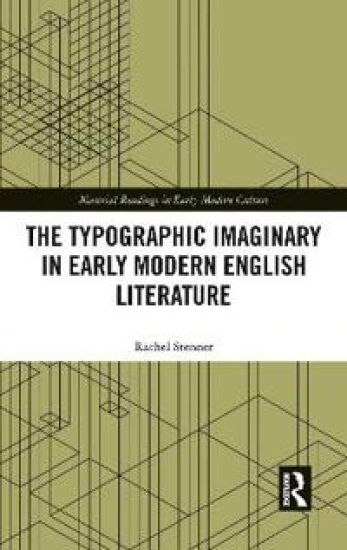
The Typographic Imaginary in Early Modern English Literature
The typographic imaginary is an aesthetic linking authors from William Caxton to Alexander Pope, this study centrally contends. Early modern English literature engages imaginatively with printing and this book both characterizes that engagement and proposes the typographic imaginary as a framework for its analysis. Certain texts, Rachel Stenner states, describe the people, places, concerns, and processes of printing in ways that, over time, generate their own figurative authority. The typographic imaginary is posited as a literary phenomenon shared by different writers, a wider cultural understanding of printing, and a critical concept for unpicking the particular imaginative otherness that printing introduced to literature. Authors use the typographic imaginary to interrogate their place in an evolving media environment, to assess the value of the printed text, and to analyse the roles of other text-producing agents. This book treats a broad array of authors and forms: printers’ manuals; William Caxton’s paratexts; the pamphlet dialogues of Robert Copland and Ned Ward; poetic miscellanies; the prose fictions of William Baldwin, George Gascoigne, and Thomas Nashe; the poetry and prose of Edmund Spenser; writings by John Taylor and Alexander Pope. At its broadest, this study contributes to an understanding of how technology changes cultures. Located at the crossroads between literary, material, and book historical research, the particular intervention that this work makes is threefold. In describing the typographic imaginary, it proposes a new framework for analysis of print culture. It aims to focus critical engagement on symbolic representations of material forms. Finally, it describes a lineage of late medieval and early modern authors, stretching from the mid-fifteenth to the mid-eighteenth centuries, that are linked by their engagement of a particular aesthetic.
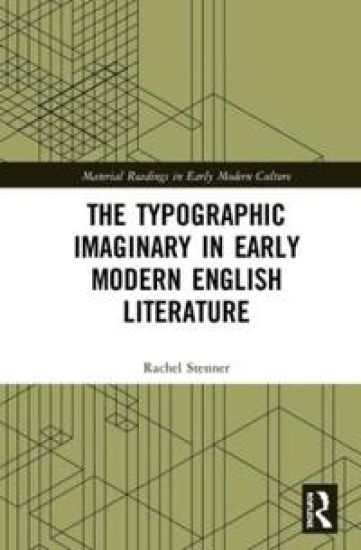
The Typographic Imaginary in Early Modern English Literature
The typographic imaginary is an aesthetic linking authors from William Caxton to Alexander Pope, this study centrally contends. Early modern English literature engages imaginatively with printing and this book both characterizes that engagement and proposes the typographic imaginary as a framework for its analysis. Certain texts, Rachel Stenner states, describe the people, places, concerns, and processes of printing in ways that, over time, generate their own figurative authority. The typographic imaginary is posited as a literary phenomenon shared by different writers, a wider cultural understanding of printing, and a critical concept for unpicking the particular imaginative otherness that printing introduced to literature. Authors use the typographic imaginary to interrogate their place in an evolving media environment, to assess the value of the printed text, and to analyse the roles of other text-producing agents. This book treats a broad array of authors and forms: printers’ manuals; William Caxton’s paratexts; the pamphlet dialogues of Robert Copland and Ned Ward; poetic miscellanies; the prose fictions of William Baldwin, George Gascoigne, and Thomas Nashe; the poetry and prose of Edmund Spenser; writings by John Taylor and Alexander Pope. At its broadest, this study contributes to an understanding of how technology changes cultures. Located at the crossroads between literary, material, and book historical research, the particular intervention that this work makes is threefold. In describing the typographic imaginary, it proposes a new framework for analysis of print culture. It aims to focus critical engagement on symbolic representations of material forms. Finally, it describes a lineage of late medieval and early modern authors, stretching from the mid-fifteenth to the mid-eighteenth centuries, that are linked by their engagement of a particular aesthetic.