
Kirjojen hintavertailu – 12 903 725 kirjaa ja 27 kauppaa

Kirjailija

Raef Zreik

Kirjat ja teokset yhdessä paikassa: 2 kirjaa, julkaisuja vuosilta 2023–2025, suosituimpiin kuuluu A Land of Two Peoples. Vertaile teosten hintoja ja tarkista saatavuus suomalaisista kirjakaupoista.

2 kirjaa

Kirjojen julkaisuvuodet: 2023–2025.

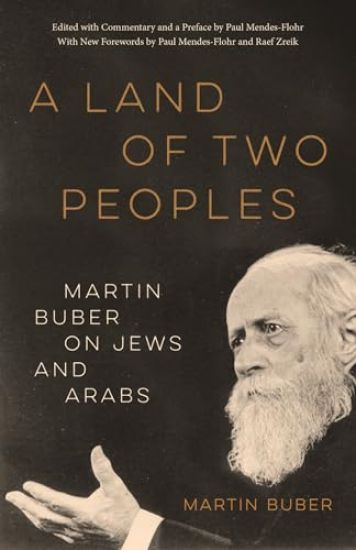
A Land of Two Peoples

A Land of Two Peoples

Martin Buber; Paul Mendes-Flohr; Raef Zreik

THE UNIVERSITY OF CHICAGO PRESS
2025
nidottu
A new edition of Martin Buber’s many writings on Arab-Jewish relations in Palestine, with updated forewords by two preeminent Palestinian and Jewish scholars. The theologian and philosopher Martin Buber (1878–1965) was committed to radical socioeconomic reconstruction in pursuit of international peace. His voluminous writings on Arab-Jewish relations in Palestine interweave his religious and philosophical teachings with his politics, each essential to Buber’s vision of democratic and religious life. A Land of Two Peoples collects the letters, talks, and essays in which Buber advocated for a binationalism that reconciled Arabs and Jews as a solution to the conflict in the Middle East. As relevant today as when it was first published nearly fifty years ago, this edition of A Land of Two Peoples includes two forewords from the preeminent Jewish and Palestinian scholars Paul Mendes-Flohr and Raef Zreik.
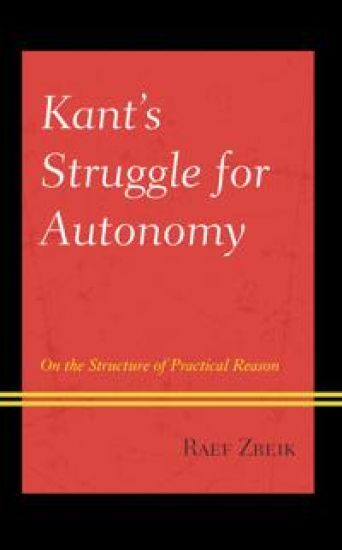
Kant's Struggle for Autonomy

Kant's Struggle for Autonomy

Raef Zreik

BLOOMSBURY PUBLISHING PLC
2023
sidottu
In Kant’s Struggle for Autonomy: On the Structure of Practical Reason, Raef Zreik presents an original synoptic view of Kant’s practical philosophy, uncovering the relatively hidden architectonics of Kant’s system and critically engaging with its broad implications. He begins by investigating the implicit strategy that guides Kant in making the distinctions that establish the autonomous spheres: happiness, morality, justice, public order-legitimacy. The organizing principle of autonomy sets these spheres apart, assuming there is self-sufficiency for each sphere. Zreik then develops a critique of this strategy, showing its limits, its costs, and its inherent instability. He questions self-sufficiency and argues that autonomy is a matter of ongoing struggle between the forces of separation and unification. Zreik proceeds to suggest that we “read Kant backward,” reading early Kant in light of late Kant. This reading reveals Kant's strategy of both taking things apart and putting them together, focusing on the joints, transitions, and metastructures of the system. The image emanating from this account of Kant’s legal and moral philosophy is of an intimate yet tragic conflict within Kant’s thought—one that leaves us to our own judgment as to where to draw the boundaries between spheres, opening the door for politicizing Kant's practical philosophy.