Kirjojen hintavertailu – 12 859 819 kirjaa ja 27 kauppaa

Kirjailija

Raffaele Marchetti

Kirjat ja teokset yhdessä paikassa: 11 kirjaa, julkaisuja vuosilta 2006–2026, suosituimpiin kuuluu Sixty Years of Transnational Civil Society Mobilizations. Vertaile teosten hintoja ja tarkista saatavuus suomalaisista kirjakaupoista.

11 kirjaa

Kirjojen julkaisuvuodet: 2006–2026.

Sixty Years of Transnational Civil Society Mobilizations
Sixty Years of Transnational Civil Society Mobilizations: The Other Side of Global Politics offers a new reading of the role played by civil society in global politics over the last few decades. This book tells a story about the lesser known side of globalization, the non-governmental and civil one, in order to contribute to a better understanding of a phenomenon precisely at the moment of its reconfiguration. The book’s theoretical framework, innovatively differentiates transnational mobilizations according to their vision of global politics: civilizationism, cosmopolitanism, localism, and neo-liberalism. Together with these visions, the book studies the organizational form, strategies, as well as the contextual conditions that has allowed for the flourishing of global activism. From the 1970s global activism has been an integral part of the western-led process of globalization. Today we are on the verge of deep international transformations: globalization is declining, global governance is undergoing a clear fatigue, while power politics is coming back, at times replacing diplomacy with violence. In such a context, civil society finds it harder to continue to play the same significant role in international affairs. At the end of every political cycle is important to develop a deeper awareness of its processes, not just for the sake of knowledge, but also because such awareness is essential for facing future challenges. The final part of the book is an exploration of the future opportunities and constraints for global activism in the next decade. Without history we will not be able to write new stories. Sixty Years of Transnational Civil Society Mobilizations will interest students and scholars of Global Politics, Global Activism, International Affairs, Global Civil Society, and Civilizationism.
Hybrid Diplomacy with NGOs

Hybrid Diplomacy with NGOs

Raffaele Marchetti

Springer Nature Switzerland AG
2021
sidottu
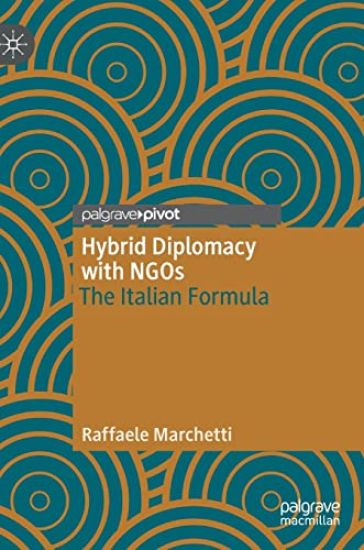
This book explores a new way of doing diplomacy through the engagement with non-governmental organizations, here referred to as hybrid diplomacy. Today’s global politics is played out most successfully by the combined actions of different actors. A specific type of partnership is that between governments (namely Ministries of Foreign Affairs) and civil society organizations. While not the only type of global partnership at work, this is particularly effective in advancing new issues and promoting the norm changes that have been discussed at length in international relations and sociological literature. The author has chosen Italy as a case study because of the country's prolonged deployment of such policy. Being a middle power, with a strong non-profit sector, and hosting the central node of catholic global network, Italy is well positioned to take advantage of this new diplomatic mode. Through presenting a new reading of the Italian contribution to international affairs, this book contributes to broadening the scholarship in foreign policy analysis and transnational activism.
City Diplomacy

City Diplomacy

Raffaele Marchetti

The University of Michigan Press
2021
sidottu
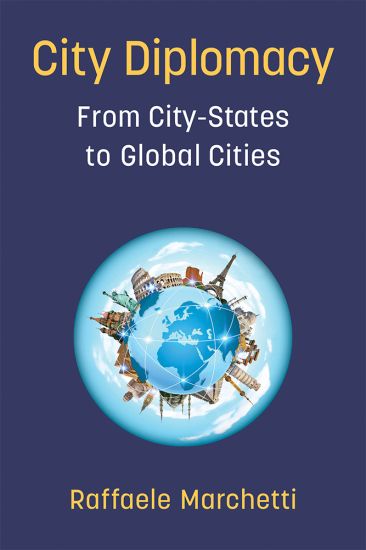
While the view that only states act as global actors is conventional, significant diplomatic and cross-cultural activity is taking place in cities today. Economic growth and fiscal experiments all occur in urban contexts. Political reforms, social innovation, and protests and revolutions generate in cities. Criminal activities, terrorist actions, counterinsurgency, missile attacks (indeed, atomic bombs), and wars are centered in big cities. They are sources of global pollution as well as of environmental transformations such as urban gardening. Knowledge production, big data collection, and tech innovation all spur from intense interaction in cities. They are the meeting points between different cultures, religions, and identities. These increasingly international cities develop twinning networks and projects, share information, sign cooperation agreements, contribute to the drafting of national and international policies, provide development aid, promote assistance to refugees, and do territorial marketing through decentralized city-city or district-district cooperation. Cities do what “municipalities” used to do many centuries ago: they cooperate but also enter into intense competitive dynamics. To understand current sociopolitical dynamics on a planetary level, we need to have two mental maps in mind: the state-centered map and the nonstate centered map. We must take into account the existence of a complex diplomatic regime based on different overlapping levels—the urban and the state.
City Diplomacy

City Diplomacy

Raffaele Marchetti

The University of Michigan Press
2021
nidottu
While the view that only states act as global actors is conventional, significant diplomatic and cross-cultural activity is taking place in cities today. Economic growth and fiscal experiments all occur in urban contexts. Political reforms, social innovation, and protests and revolutions generate in cities. Criminal activities, terrorist actions, counterinsurgency, missile attacks (indeed, atomic bombs), and wars are centered in big cities. They are sources of global pollution as well as of environmental transformations such as urban gardening. Knowledge production, big data collection, and tech innovation all spur from intense interaction in cities. They are the meeting points between different cultures, religions, and identities. These increasingly international cities develop twinning networks and projects, share information, sign cooperation agreements, contribute to the drafting of national and international policies, provide development aid, promote assistance to refugees, and do territorial marketing through decentralized city-city or district-district cooperation. Cities do what “municipalities” used to do many centuries ago: they cooperate but also enter into intense competitive dynamics. To understand current sociopolitical dynamics on a planetary level, we need to have two mental maps in mind: the state-centered map and the nonstate centered map. We must take into account the existence of a complex diplomatic regime based on different overlapping levels—the urban and the state.
Global Strategic Engagement

Global Strategic Engagement

Raffaele Marchetti

Lexington Books
2017
nidottu
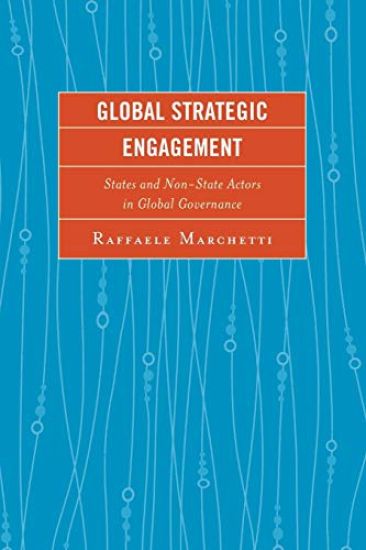
Global Strategic Engagement analyzes the changes brought about in global politics by the phenomenon of globalization in the last thirty years. The primary point of view of the text is the micro-perspective of the new practitioners of global governance: international public officers, transnational activists, global entrepreneurs, and world leaders. The novelty of the book derives from its two outputs: a micro description of the new way of playing the political game in the age of globalization, and a constructivist mapping of the current political terrain which is centered on the identification of the new references of contemporary politics beyond the traditional cleavage left vs. right.
Global Strategic Engagement

Global Strategic Engagement

Raffaele Marchetti

Lexington Books
2016
sidottu
Global Strategic Engagement analyzes the changes brought about in global politics by the phenomenon of globalization in the last thirty years. The primary point of view of the text is the micro-perspective of the new practitioners of global governance: international public officers, transnational activists, global entrepreneurs, and world leaders. The novelty of the book derives from its two outputs: a micro description of the new way of playing the political game in the age of globalization, and a constructivist mapping of the current political terrain which is centered on the identification of the new references of contemporary politics beyond the traditional cleavage left vs. right.
Global Democracy: For and Against

Global Democracy: For and Against

Raffaele Marchetti

Routledge
2009
nidottu
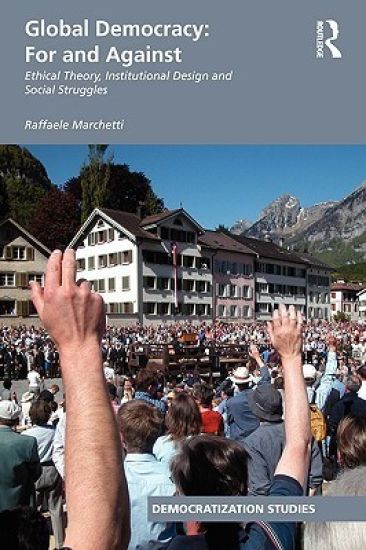
This book defends the case for the expansion of the democratic model to the global political sphere. Concentrating on the democratic deficit of international affairs, it examines the nexus between the phenomenon of international exclusion and the political response of global democracy. This distinctive position is developed through a critical survey of the principal theories for and against global democracy. The main rival narratives (realism, nationalism, civilizationism, and liberal internationalism) are rebutted on grounds of failing democratic principles of inclusion. Based on a notion of interaction-dependent justice, these theories arguably provide a crucial ideological support to the exclusionary attitude of the current international system. Going beyond these exclusionary paradigms, the book defends a model of cosmo-federalism that is all-inclusive, multilayered and rooted. The text adopts an interdisciplinary perspective that combines three areas of scholarship: international political theory, international relations and political sociology. Within them, a number of contemporary controversies are analyzed, including the ethical dispute on global justice, the institutional debate on supranationalism, and the political discussion on social emancipatory struggles. From such an interdisciplinary perspective derives an engaged text that will be of interest to students and researchers concerned with the key political aspects of the discussion on globalization and democratic global order.
Global Democracy: For and Against

Global Democracy: For and Against

Raffaele Marchetti

Routledge
2008
sidottu
This book defends the case for the expansion of the democratic model to the global political sphere. Concentrating on the democratic deficit of international affairs, it examines the nexus between the phenomenon of international exclusion and the political response of global democracy. This distinctive position is developed through a critical survey of the principal theories for and against global democracy. The main rival narratives (realism, nationalism, civilizationism, and liberal internationalism) are rebutted on grounds of failing democratic principles of inclusion. Based on a notion of interaction-dependent justice, these theories arguably provide a crucial ideological support to the exclusionary attitude of the current international system. Going beyond these exclusionary paradigms, the book defends a model of cosmo-federalism that is all-inclusive, multilayered and rooted. The text adopts an interdisciplinary perspective that combines three areas of scholarship: international political theory, international relations and political sociology. Within them, a number of contemporary controversies are analyzed, including the ethical dispute on global justice, the institutional debate on supranationalism, and the political discussion on social emancipatory struggles. From such an interdisciplinary perspective derives an engaged text that will be of interest to students and researchers concerned with the key political aspects of the discussion on globalization and democratic global order.
Global Justice Movement

Global Justice Movement

Donatella Della Porta; Massimiliano Andretta; Angel Calle; Helene Combes; Nina Eggert; Marco G. Giugni; Jennifer Hadden; Manuel Jimenez; Raffaele Marchetti

Paradigm
2007
nidottu
"Della Porta has assembled a distinguished group of scholars who have made great strides in illuminating the early phases of the movement. The book includes especially keen analyses of the movement against global capitalism, particularly in its European manifestations." John D. McCarthy, Pennsylvania State University "Della Porta has skillfully coordinated a comparative study in six European countries and the US. Renowned scholars give testimony of the movement in their countries. [This is] the first attempt to document a genuine transnational movement." Bert Klandermans, Vrije Universiteit, Amsterdam You G-8, we 6 billion!" So went the chant at the international parade leading into the summit in Genoa, Italy. The global justice movement has led to a new wave of protest, building up transnational networks, inventing new strategies of action, constructing new images of democracy, and boldly asserting that "another world is possible". This book examines all this and more with case studies drawn from seven different countries, covering transnational networks and making cross-national comparisons. Leading European and American scholars analyze more than 300 organizations and 5,000 activists, looking at mobilizations that bridge old and new movements and bring politics back to the street. Contributors include: Massimiliano Andretta, Angel Calle, Helene Combes, Donatella della Porta, Nina Eggert, Marco Giugni, Jennifer Hadden, Manuel Jimenez, Raffaele Marchetti, Lorenzo Mosca, Mario Pianta, Herbert Reiter, Christopher Rootes, Dieter Rucht, Clare Saunders, Isabelle Sommier, Sidney Tarrow, Simon Teune, Mundo Yang.
Global Justice Movement

Global Justice Movement

Donatella Della Porta; Massimiliano Andretta; Angel Calle; Helene Combes; Nina Eggert; Marco G. Giugni; Jennifer Hadden; Manuel Jimenez; Raffaele Marchetti

Paradigm
2006
sidottu
"Della Porta has assembled a distinguished group of scholars who have made great strides in illuminating the early phases of the movement. The book includes especially keen analyses of the movement against global capitalism, particularly in its European manifestations." John D. McCarthy, Pennsylvania State University "Della Porta has skillfully coordinated a comparative study in six European countries and the US. Renowned scholars give testimony of the movement in their countries. [This is] the first attempt to document a genuine transnational movement." Bert Klandermans, Vrije Universiteit, Amsterdam You G-8, we 6 billion!" So went the chant at the international parade leading into the summit in Genoa, Italy. The global justice movement has led to a new wave of protest, building up transnational networks, inventing new strategies of action, constructing new images of democracy, and boldly asserting that "another world is possible". This book examines all this and more with case studies drawn from seven different countries, covering transnational networks and making cross-national comparisons. Leading European and American scholars analyze more than 300 organizations and 5,000 activists, looking at mobilizations that bridge old and new movements and bring politics back to the street. Contributors include: Massimiliano Andretta, Angel Calle, Helene Combes, Donatella della Porta, Nina Eggert, Marco Giugni, Jennifer Hadden, Manuel Jimenez, Raffaele Marchetti, Lorenzo Mosca, Mario Pianta, Herbert Reiter, Christopher Rootes, Dieter Rucht, Clare Saunders, Isabelle Sommier, Sidney Tarrow, Simon Teune, Mundo Yang.