Kirjojen hintavertailu – 12 903 725 kirjaa ja 27 kauppaa

Kirjailija

Raffaella Cribiore

Kirjat ja teokset yhdessä paikassa: 10 kirjaa, julkaisuja vuosilta 1996–2024, suosituimpiin kuuluu Listening to the Philosophers. Vertaile teosten hintoja ja tarkista saatavuus suomalaisista kirjakaupoista.

10 kirjaa

Kirjojen julkaisuvuodet: 1996–2024.

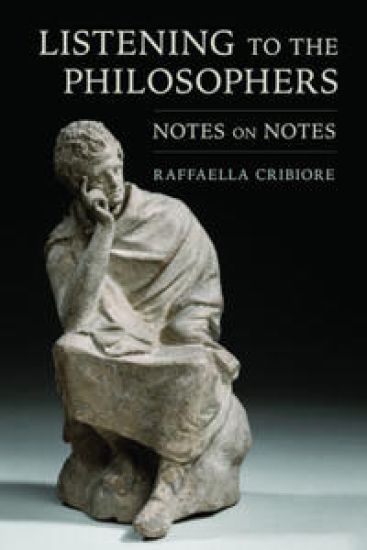
Listening to the Philosophers

Listening to the Philosophers

Raffaella Cribiore

CORNELL UNIVERSITY PRESS
2024
pokkari
Listening to the Philosophers offers the first comprehensive look into how philosophy was taught in antiquity through a stimulating study of lectures by ancient philosophers that were recorded by their students. Raffaella Cribiore shows how the study of notes—whether Philodemus of Gadara's notes of Zeno's lectures in the first century BCE, or Arrian recording the Discourses of Epictetus in the second century CE, or the students of Didymus the Blind in the fourth century and Olympiodorus in the sixth century—can enable us to understand the methods and practices of what was an orally conducted education. By considering the pedagogical and mnemonic role of notetaking in ancient education, Listening to the Philosophers demonstrates how in antiquity the written and the spoken worlds were intimately intertwined.
Listening to the Philosophers

Listening to the Philosophers

Raffaella Cribiore

CORNELL UNIVERSITY PRESS
2024
sidottu
Listening to the Philosophers offers the first comprehensive look into how philosophy was taught in antiquity through a stimulating study of lectures by ancient philosophers that were recorded by their students. Raffaella Cribiore shows how the study of notes—whether Philodemus of Gadara's notes of Zeno's lectures in the first century BCE, or Arrian recording the Discourses of Epictetus in the second century CE, or the students of Didymus the Blind in the fourth century and Olympiodorus in the sixth century—can enable us to understand the methods and practices of what was an orally conducted education. By considering the pedagogical and mnemonic role of notetaking in ancient education, Listening to the Philosophers demonstrates how in antiquity the written and the spoken worlds were intimately intertwined.
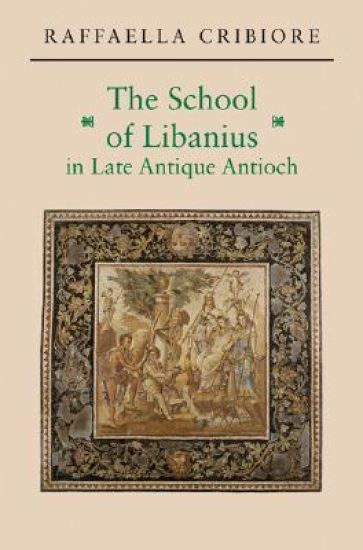
The School of Libanius in Late Antique Antioch

The School of Libanius in Late Antique Antioch

Raffaella Cribiore

Princeton University Press
2016
pokkari
This book is a study of the fourth-century sophist Libanius, a major intellectual figure who ran one of the most prestigious schools of rhetoric in the later Roman Empire. He was a tenacious adherent of pagan religion and a friend of the emperor Julian, but also taught leaders of the early Christian church like St. John Chrysostom and St. Basil the Great. Raffaella Cribiore examines Libanius's training and personality, showing him to be a vibrant educator, though somewhat gloomy and anxious by nature. She traces how he cultivated a wide network of friends and former pupils and courted powerful officials to recruit top students. Cribiore describes his school in Antioch--how students applied, how they were evaluated and trained, and how Libanius reported progress to their families. She details the professional opportunities that a thorough training in rhetoric opened up for young men of the day. Also included here are translations of 200 of Libanius's most important letters on education, almost none of which have appeared in English before. Cribiore casts into striking relief the importance of rhetoric in late antiquity and its influence not only on pagan intellectuals but also on prominent Christian figures. She gives a balanced view of Libanius and his circle against the far-flung panorama of the Greek East.
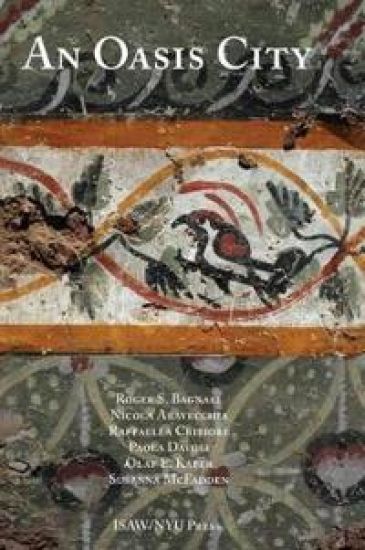
An Oasis City

An Oasis City

Roger S. Bagnall; Nicola Aravecchia; Raffaella Cribiore; Paola Davoli; Olaf E. Kaper; Susanna McFadden

New York University Press
2016
sidottu
Scattered through the vast expanse of stone and sand that makes up Egypt's Western Desert are several oases. These islands of green in the midst of the Sahara owe their existence to springs and wells drawing on ancient aquifers. In antiquity, as today, they supported agricultural communities, going back to Neolithic times but expanding greatly in the millennium from the Saite pharaohs to the Roman emperors. New technologies of irrigation and transportation made the oases integral parts of an imperial economy. Amheida, ancient Trimithis, was one of those oasis communities. Located in the western part of the Dakhla Oasis, it was an important regional center, reaching a peak in the Roman period before being abandoned. Over the past decade, excavations at this well-preserved site have revealed its urban layout and brought to light houses, streets, a bath, a school, and a church. The only standing brick pyramid of the Roman period in Egypt has been restored. Wall-paintings, temple reliefs, pottery, and texts all contribute to give a lively sense of its political, religious, economic, and cultural life. This book presents these aspects of the city's existence and its close ties to the Nile valley, by way of long desert roads, in an accessible and richly illustrated fashion.
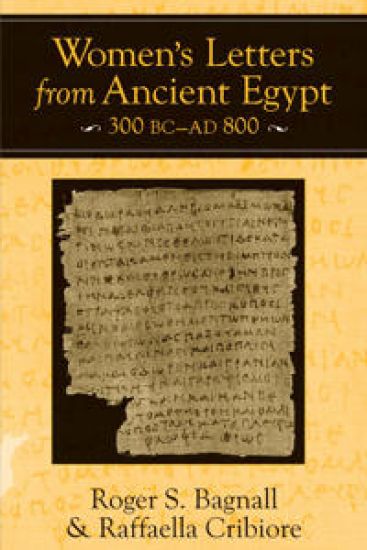
Women's Letters from Ancient Egypt, 300 BC-AD 800

Women's Letters from Ancient Egypt, 300 BC-AD 800

Roger Bagnall; Raffaella Cribiore

The University of Michigan Press
2015
nidottu
More than three hundred letters written in Greek and Egyptian by women in Egypt in the millennium from Alexander the Great to the Arab conquest survive on papyrus and pottery. Written by women from various walks of life, they shed light on critical social aspects of life in Egypt after the pharaohs. Roger S. Bagnall and Raffaella Cribiore collect the best preserved letters in translation and set them in their paleographic, linguistic, social, and economic contexts. The authors' analysis suggests that women's habits, interests, and means of expression were a product more of their social and economic standing than of specifically gender-related concerns or behavior. They present theoretical discussions about the handwriting and language of the letters, the education and culture of the writers' everyday concerns and occupations. Numerous illustrations display the varieties of handwriting.
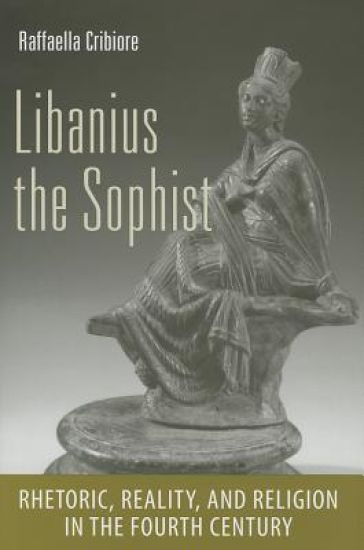
Libanius the Sophist

Libanius the Sophist

Raffaella Cribiore

Cornell University Press
2013
sidottu
Libanius of Antioch was a rhetorician of rare skill and eloquence. So renowned was he in the fourth century that his school of rhetoric in Roman Syria became among the most prestigious in the Eastern Empire. In this book Raffaella Cribiore draws on her unique knowledge of the entire body of Libanius's vast literary output—including 64 orations, 1,544 letters, and exercises for his students—to offer the fullest intellectual portrait yet of this remarkable figure whom John Chrystostom called "the sophist of the city." Libanius (314–ca. 393) lived at a time when Christianity was celebrating its triumph but paganism tried to resist. Although himself a pagan, Libanius cultivated friendships within Antioch's Christian community and taught leaders of the Church including Chrysostom and Basil of Caesarea. Cribiore calls him a "gray pagan" who did not share the fanaticism of the Emperor Julian. Cribiore considers the role that a major intellectual of Libanius's caliber played in this religiously diverse society and culture. When he wrote a letter or delivered an oration, who was he addressing and what did he hope to accomplish? One thing that stands out in Libanius's speeches is the startling amount of invective against his enemies. How common was character assassination of this sort? What was the subtext to these speeches and how would they have been received? Adapted from the Townsend Lectures that Cribiore delivered at Cornell University in 2010, this book brilliantly restores Libanius to his rightful place in the rich and culturally complex world of Late Antiquity.
The School of Libanius in Late Antique Antioch

The School of Libanius in Late Antique Antioch

Raffaella Cribiore

Princeton University Press
2007
sidottu
This book is a study of the fourth-century sophist Libanius, a major intellectual figure who ran one of the most prestigious schools of rhetoric in the later Roman Empire. He was a tenacious adherent of pagan religion and a friend of the emperor Julian, but also taught leaders of the early Christian church like St. John Chrysostom and St. Basil the Great. Raffaella Cribiore examines Libanius's training and personality, showing him to be a vibrant educator, though somewhat gloomy and anxious by nature. She traces how he cultivated a wide network of friends and former pupils and courted powerful officials to recruit top students. Cribiore describes his school in Antioch--how students applied, how they were evaluated and trained, and how Libanius reported progress to their families. She details the professional opportunities that a thorough training in rhetoric opened up for young men of the day. Also included here are translations of 200 of Libanius's most important letters on education, almost none of which have appeared in English before. Cribiore casts into striking relief the importance of rhetoric in late antiquity and its influence not only on pagan intellectuals but also on prominent Christian figures. She gives a balanced view of Libanius and his circle against the far-flung panorama of the Greek East.