Kirjojen hintavertailu – 12 874 946 kirjaa ja 26 kauppaa

Kirjailija

Rafia Zakaria

Kirjat ja teokset yhdessä paikassa: 7 kirjaa, julkaisuja vuosilta 2016–2024, suosituimpiin kuuluu Veil. Vertaile teosten hintoja ja tarkista saatavuus suomalaisista kirjakaupoista.

7 kirjaa

Kirjojen julkaisuvuodet: 2016–2024.

Veil

Veil

Rafia Zakaria

Bloomsbury Academic USA
2017
nidottu
Object Lessons is a series of short, beautifully designed books about the hidden lives of ordinary things. The veil can be an instrument of feminist empowerment, and veiled anonymity can confer power to women. Starting from her own marriage ceremony at which she first wore a full veil, Rafia Zakaria examines how veils do more than they get credit for. Part memoir and part philosophical investigation, Veil questions that what is seen is always good and free, and that what is veiled can only signal servility and subterfuge. From personal encounters with the veil in France (where it is banned) to Iran (where it is compulsory), Zakaria shows how the garment’s reputation as a pre-modern relic is fraught and up for grabs. The veil is an object in constant transformation, whose myriad meanings challenge the absolute truths of patriarchy. Object Lessons is published in partnership with an essay series in The Atlantic.
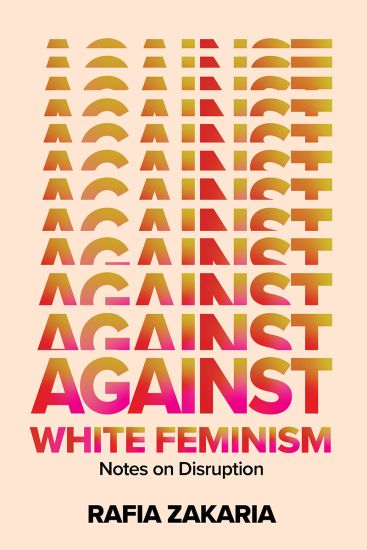
Against White Feminism

Against White Feminism

Rafia Zakaria

PENGUIN BOOKS LTD
2022
pokkari

Halvin toimitettuna 17,90 €

Personal, provocative and powerfully persuasive - an essential guide to what white feminism is, why it matters, and how we can put an end to it'Thoughtful and provocative... It is a must-read' Roxane Gay'A book to make you stop and think' Mishal Husain'This book is going to light fires everywhere, so if you are prone to combust, get right the hell out of the way' Lit HubMost of us believe that feminism is a force for good. In the past 200 years, it has paved the way for women to advance economically, increasing their safety and their power in society, and advocating for their needs and experiences. But not for all women. If you are poor, if you are an immigrant to the West or (even worse) don't live here at all, and above all if your skin is not white, the door to mainstream feminism has been shut against you from day one. This is not oversight or an accident. It is an active and sustained strategy to advance white women at the expense of everyone else. And what makes this strategy especially dangerous - and especially effective - is that most white people have no idea they are participating in it. Attorney and activist Rafia Zakaria shines a spotlight on this urgent issue, revealing the fingerprints of white supremacy all over the feminist movement: from early suffragette campaigns right up to the divided and profoundly unequal world we inherit today. And she issues a powerful call to every reader to join her in building a new kind of feminism, lighting the path to emancipation for all.
Against White Feminism: Notes on Disruption

Against White Feminism: Notes on Disruption

Rafia Zakaria

W. W. Norton Company
2022
nidottu

Halvin toimitettuna 19,20 €

Upper-middle-class white women have long been heralded as "experts" on feminism. They have presided over multinational feminist organizations and written much of what we consider the feminist canon, espousing sexual liberation and satisfaction, LGBTQ inclusion, and racial solidarity, all while branding the language of the movement itself in whiteness and speaking over Black and Brown women in an effort to uphold privilege and perceived cultural superiority. An American Muslim woman, attorney, and political philosopher, Rafia Zakaria champions a reconstruction of feminism in Against White Feminism, centering women of color in this transformative overview and counter-manifesto to white feminism's global, long-standing affinity with colonial, patriarchal, and white supremacist ideals. Covering such ground as the legacy of the British feminist imperialist savior complex and "the colonial thesis that all reform comes from the West" to the condescension of the white feminist-led "aid industrial complex" and the conflation of sexual liberation as the "sum total of empowerment," Zakaria follows in the tradition of intersectional feminist forebears Kimberl Crenshaw, Adrienne Rich, and Audre Lorde. Zakaria ultimately refutes and reimagines the apolitical aspirations of white feminist empowerment in this staggering, radical critique, with Black and Brown feminist thought at the forefront.
Against White Feminism: Notes on Disruption

Against White Feminism: Notes on Disruption

Rafia Zakaria

W. W. Norton Company
2021
sidottu
Upper-middle-class white women have long been heralded as "experts" on feminism. They have presided over multinational feminist organizations and written much of what we consider the feminist canon, espousing sexual liberation and satisfaction, LGBTQ inclusion, and racial solidarity, all while branding the language of the movement itself in whiteness and speaking over Black and Brown women in an effort to uphold privilege and perceived cultural superiority. An American Muslim woman, attorney, and political philosopher, Rafia Zakaria champions a reconstruction of feminism in Against White Feminism, centering women of color in this transformative overview and counter-manifesto to white feminism's global, long-standing affinity with colonial, patriarchal, and white supremacist ideals. Covering such ground as the legacy of the British feminist imperialist savior complex and "the colonial thesis that all reform comes from the West" to the condescension of the white feminist-led "aid industrial complex" and the conflation of sexual liberation as the "sum total of empowerment," Zakaria follows in the tradition of intersectional feminist forebears Kimberl Crenshaw, Adrienne Rich, and Audre Lorde. Zakaria ultimately refutes and reimagines the apolitical aspirations of white feminist empowerment in this staggering, radical critique, with Black and Brown feminist thought at the forefront.
Feminism and Nationalism in the Third World

Feminism and Nationalism in the Third World

Kumari Jayawardena; Rafia Zakaria

Verso Books
2016
nidottu
For twenty-five years, Feminism and Nationalism in the Third World has been an essential primer on the late nineteenth- and early twentieth-century history of women's movements in Asia and the Middle East. In this engaging and well-researched survey, Kumari Jayawardena presents feminism as it originated in the Third World, erupting from the specific struggles of women fighting against colonial power, for education or the vote, for safety, and against poverty and inequality. Journalist and human rights activist Rafia Zakaria's foreword to this new edition is an impassioned letter in two parts: the first to Western feminists; the second to feminists in the Global South, entreating them to use this "compendium of female courage" as a bridge between women of different nations. Feminism and Nationalism in the Third World was chosen as one of the top twenty Feminist Classics of this Wave, 1970-1990, by Ms. magazine, and won the Feminist Fortnight Award in the UK.
The Upstairs Wife

The Upstairs Wife

Rafia Zakaria

Beacon Press
2016
pokkari
A memoir of Karachi through the eyes of its women An Indies Introduce Debut Authors Selection For a brief moment on December 27, 2007, life came to a standstill in Pakistan. Benazir Bhutto, the country's former prime minister and the first woman ever to lead a Muslim country, had been assassinated at a political rally just outside Islamabad. Back in Karachi--Bhutto's birthplace and Pakistan's other great metropolis--Rafia Zakaria's family was suffering through a crisis of its own: her Uncle Sohail, the man who had brought shame upon the family, was near death. In that moment these twin catastrophes--one political and public, the other secret and intensely personal--briefly converged. Zakaria uses that moment to begin her intimate exploration of the country of her birth. Her Muslim-Indian family immigrated to Pakistan from Bombay in 1962, escaping the precarious state in which the Muslim population in India found itself following the Partition. For them, Pakistan represented enormous promise. And for some time, Zakaria's family prospered and the city prospered. But in the 1980s, Pakistan's military dictators began an Islamization campaign designed to legitimate their rule--a campaign that particularly affected women's freedom and safety. The political became personal when her aunt Amina's husband, Sohail, did the unthinkable and took a second wife, a humiliating and painful betrayal of kin and custom that shook the foundation of Zakaria's family but was permitted under the country's new laws. The young Rafia grows up in the shadow of Amina's shame and fury, while the world outside her home turns ever more chaotic and violent as the opportunities available to post-Partition immigrants are dramatically curtailed and terrorism sows its seeds in Karachi. Telling the parallel stories of Amina's polygamous marriage and Pakistan's hopes and betrayals, The Upstairs Wife is an intimate exploration of the disjunction between exalted dreams and complicated realities.