Kirjojen hintavertailu – 12 903 725 kirjaa ja 27 kauppaa

Kirjailija

Raisa Maria Toivo

Kirjat ja teokset yhdessä paikassa: 8 kirjaa, julkaisuja vuosilta 2008–2026, suosituimpiin kuuluu Lived Religion and Gender in Late Medieval and Early Modern Europe. Vertaile teosten hintoja ja tarkista saatavuus suomalaisista kirjakaupoista.

8 kirjaa

Kirjojen julkaisuvuodet: 2008–2026.

Expressed Experience in Early Modern Northern Europe

Expressed Experience in Early Modern Northern Europe

Raisa Maria Toivo

BLOOMSBURY PUBLISHING PLC
2026
sidottu
‘Experience’ has become a catchword in scholarly as well as political debates. Raisa Maria Toivo convincingly contends in this open access book that while it is often used to denote something ‘simple and real’ instead of something theoretical or idealistic, experience is in fact much more than self-evident truth. Toivo makes the case that people have different experiences depending on their situation in life – be that their age, gender, social status, wealth, ethnicity and more; that as they try to express their experiences, they often find that not everyone is allowed to experience in the same ways. For example, in 17th-century Finland it was accepted that a young girl of 12 talked with angels, but an old woman of 50 was sentenced of witchcraft and a farmhand of 25 was deemed delusional when they all said they had met with divine spirits: experience was guided by identity and social status, but also by power relationships and cultural scripts. Expressed Experience in Early Modern Northern Europe explores different ways of communicating and curating experience. The first part of the book explores how experiences were spoken and written of in lower court records, while the second part looks at visual communication in church murals. The book goes on to examine spatial settings of experience in landscapes and public buildings, such as churches and public roads or private houses. The fourth part explores embodied experience and corporeality. Toivo draws all this together in a conclusion which reflects on how experience was curated through a combination of communication means. The ebook editions of this book are available open access under a CC BY-NC-ND 4.0 licence on bloomsburycollections.com. Open access was funded by Tampere University Library.
Parricide and Violence against Parents

Parricide and Violence against Parents

Marianna Muravyeva; Phillip Shon; Raisa Maria Toivo

TAYLOR FRANCIS LTD
2023
nidottu
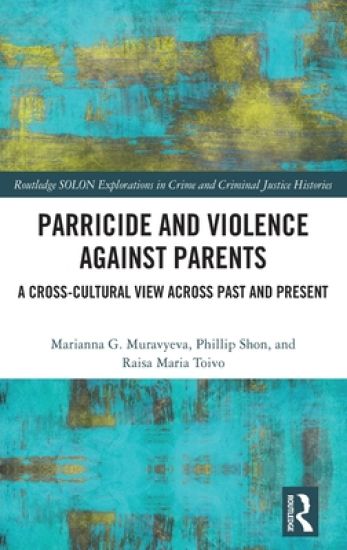
Parricide and Violence Against Parents takes a historical and criminological approach to the research on parricide and violence against parents, placing the research in the context of social development from the 1500s to contemporary society, and giving a global overview and comparison. The book examines parricide and violence against parents as historically and culturally sensitive phenomena. It offers evidence on a seemingly rare subject from different eras, areas, and cultures, and then uses the cross-disciplinary data to produce a new, systematic insight for the reader. Case studies shift the discussion from the contemporary focus on adolescent to parent abuse, to examining the sources of conflict during life cycles of parents and their offspring. A historical approach illuminates the variations in conflicts between parents and their offspring that are shaped by the life stages of the victims and offenders themselves across time. The book argues that parental authority has been marked by property ownership and tax paying responsibilities throughout history. The continued possession of property resulted in power, the reluctance to part with it, becoming a notable source of conflict across generations within families. Parental authority was protected by means of heavy penalties and punishments and didactic teachings in almost every society at every stage of historical development. It was also challenged constantly by children as a part of their coming into adulthood. The abuse of parents has often been connected to situations where adult children were prevented from gaining the amount of independence appropriate to their position in life. This led to disputes over authority and the legitimate grounds for that authority. Offering an insight into complicated and interconnected histories of generational conflicts and how they affect modern families in different parts of the world, this book will be of great interest to students and scholars of criminology, history of crime, history of the family, family violence, homicide studies, gender studies, history of emotions, political violence, and social work.
Parricide and Violence against Parents

Parricide and Violence against Parents

Marianna Muravyeva; Phillip Shon; Raisa Maria Toivo

Routledge
2020
sidottu
Parricide and Violence Against Parents takes a historical and criminological approach to the research on parricide and violence against parents, placing the research in the context of social development from the 1500s to contemporary society, and giving a global overview and comparison. The book examines parricide and violence against parents as historically and culturally sensitive phenomena. It offers evidence on a seemingly rare subject from different eras, areas, and cultures, and then uses the cross-disciplinary data to produce a new, systematic insight for the reader. Case studies shift the discussion from the contemporary focus on adolescent to parent abuse, to examining the sources of conflict during life cycles of parents and their offspring. A historical approach illuminates the variations in conflicts between parents and their offspring that are shaped by the life stages of the victims and offenders themselves across time. The book argues that parental authority has been marked by property ownership and tax paying responsibilities throughout history. The continued possession of property resulted in power, the reluctance to part with it, becoming a notable source of conflict across generations within families. Parental authority was protected by means of heavy penalties and punishments and didactic teachings in almost every society at every stage of historical development. It was also challenged constantly by children as a part of their coming into adulthood. The abuse of parents has often been connected to situations where adult children were prevented from gaining the amount of independence appropriate to their position in life. This led to disputes over authority and the legitimate grounds for that authority. Offering an insight into complicated and interconnected histories of generational conflicts and how they affect modern families in different parts of the world, this book will be of great interest to students and scholars of criminology, history of crime, history of the family, family violence, homicide studies, gender studies, history of emotions, political violence, and social work.
Lived Religion and Gender in Late Medieval and Early Modern Europe

Lived Religion and Gender in Late Medieval and Early Modern Europe

Sari Katajala-Peltomaa; Raisa Maria Toivo

Routledge
2020
sidottu
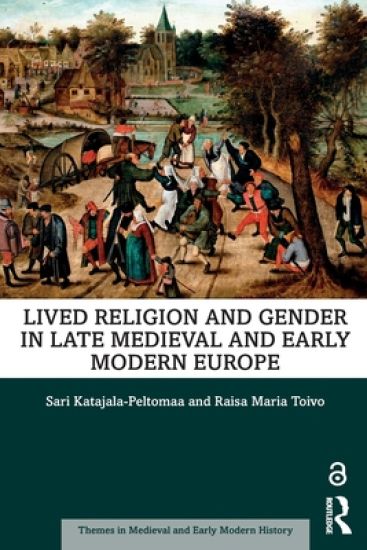
This study is an exploration of lived religion and gender across the Reformation, from the 14th–18th centuries. Combining conceptual development with empirical history, the authors explore these two topics via themes of power, agency, work, family, sainthood and witchcraft. By advancing the theoretical category of ‘experience’, Lived Religion and Gender reveals multiple femininities and masculinities in the intersectional context of lived religion. The authors analyse specific case studies from both medieval and early modern sources, such as secular court records, to tell the stories of both individuals and large social groups. By exploring lived religion and gender on a range of social levels including the domestic sphere, public devotion and spirituality, this study explains how late medieval and early modern people performed both religion and gender in ways that were vastly different from what ideologists have prescribed. Lived Religion and Gender covers a wide geographical area in western Europe including Italy, Scandinavia and Finland, making this study an invaluable resource for scholars and students concerned with the history of religion, the history of gender, the history of the family, as well as medieval and early modern European history. The Introduction chapter of this book is freely available as a downloadable Open Access PDF at http://www.taylorfrancis.com under a Creative Commons Attribution-Non Commercial-No Derivatives (CC-BY-NC-ND) 4.0 license.
Lived Religion and Gender in Late Medieval and Early Modern Europe

Lived Religion and Gender in Late Medieval and Early Modern Europe

Sari Katajala-Peltomaa; Raisa Maria Toivo

Routledge
2020
nidottu
This study is an exploration of lived religion and gender across the Reformation, from the 14th–18th centuries. Combining conceptual development with empirical history, the authors explore these two topics via themes of power, agency, work, family, sainthood and witchcraft. By advancing the theoretical category of ‘experience’, Lived Religion and Gender reveals multiple femininities and masculinities in the intersectional context of lived religion. The authors analyse specific case studies from both medieval and early modern sources, such as secular court records, to tell the stories of both individuals and large social groups. By exploring lived religion and gender on a range of social levels including the domestic sphere, public devotion and spirituality, this study explains how late medieval and early modern people performed both religion and gender in ways that were vastly different from what ideologists have prescribed. Lived Religion and Gender covers a wide geographical area in western Europe including Italy, Scandinavia and Finland, making this study an invaluable resource for scholars and students concerned with the history of religion, the history of gender, the history of the family, as well as medieval and early modern European history. The Introduction chapter of this book is freely available as a downloadable Open Access PDF at http://www.taylorfrancis.com under a Creative Commons Attribution-Non Commercial-No Derivatives (CC-BY-NC-ND) 4.0 license.
Faith and Magic in Early Modern Finland

Faith and Magic in Early Modern Finland

Raisa Maria Toivo

Palgrave Macmillan
2019
nidottu
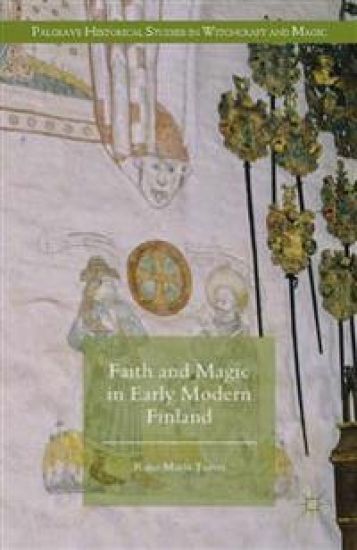
Early modern Finland is rarely the focus of attention in the study of European history, but it has a place in the context of northern European religious and political culture. While Finland was theoretically Lutheran, a religious plurality – embodied in ceremonies and interpreted as magic – survived and flourished. Blessing candles, pilgrimages, and offerings to forest spirits merged with catechism hearings and sermon preaching among the lay piety. What were the circumstances that allowed for such a continuity of magic? How were the manifestations and experiences that defined faith and magic tied together? How did western and eastern religious influences manifest themselves in Finnish magic? Faith and Magic in Early Modern Finland shows us how peripheral Finland can shed light on the wider context of European magic and religion.
Faith and Magic in Early Modern Finland

Faith and Magic in Early Modern Finland

Raisa Maria Toivo

Palgrave Macmillan
2016
sidottu
Early modern Finland is rarely the focus of attention in the study of European history, but it has a place in the context of northern European religious and political culture. While Finland was theoretically Lutheran, a religious plurality – embodied in ceremonies and interpreted as magic – survived and flourished. Blessing candles, pilgrimages, and offerings to forest spirits merged with catechism hearings and sermon preaching among the lay piety. What were the circumstances that allowed for such a continuity of magic? How were the manifestations and experiences that defined faith and magic tied together? How did western and eastern religious influences manifest themselves in Finnish magic? Faith and Magic in Early Modern Finland shows us how peripheral Finland can shed light on the wider context of European magic and religion.
Witchcraft and Gender in Early Modern Society

Witchcraft and Gender in Early Modern Society

Raisa Maria Toivo

Ashgate Publishing Limited
2008
sidottu
How could a woman be three times accused of witchcraft and go on running a successful farmstead? Why would men use a frying pan for cattle magic? Why did witches keep talking about the children? What kind of a relation did Finnish witches have with authority and power? These are among the questions Raisa Maria Toivo addresses in this study, as she explores the gender implications of the complex system of household management and public representation in which seventeenth-century Finnish women and men negotiated their positions. From specific case studies, Toivo broadens her narrative to include historiographical discussion on the history of witchcraft, on women's and gender history and on early modern social history, shedding new light on each theme. Toivo contributes to the on-going discussion in the European historiography about whether the early modern period witnessed an improvement, decline, or simply alteration in the conditions of oppression of women within patriarchal households by using a multidimensional set of roles that could be adopted by women. Finally, she demonstrates convincingly that members of the solid peasant class were not only subject of the newly forming states, but also avid users of the court system, which they manipulated and put to work in the interests of their own individual, household, and collective affairs.