Kirjojen hintavertailu – 12 903 725 kirjaa ja 27 kauppaa

Kirjailija

Rajiv S. Mishra

Kirjat ja teokset yhdessä paikassa: 13 kirjaa, julkaisuja vuosilta 2013–2027, suosituimpiin kuuluu Metallurgy and Design of Alloys with Hierarchical Microstructures. Vertaile teosten hintoja ja tarkista saatavuus suomalaisista kirjakaupoista.

Nimi esiintyy myös muodoissa: Rajiv S Mishra

13 kirjaa

Kirjojen julkaisuvuodet: 2013–2027.

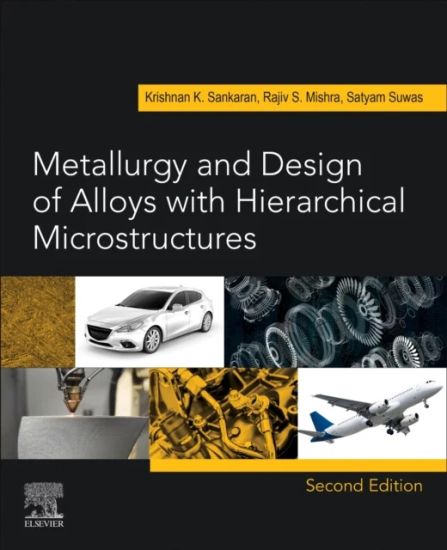
Metallurgy and Design of Alloys with Hierarchical Microstructures

Metallurgy and Design of Alloys with Hierarchical Microstructures

Krishnan K. Sankaran; Rajiv S. Mishra; Satyam Suwas

Elsevier - Health Sciences Division
2026
nidottu
Metallurgy and Design of Alloys with Hierarchical Microstructures, Second Edition covers the fundamentals of processing-microstructure-property relationships and how multiple properties are balanced and optimized in materials with hierarchical microstructures widely used in critical applications. The discussion is based principally on metallic materials used in aircraft structures, though due to sufficiently diverse microstructures, the underlying principles can be easily applied to other materials systems. The book integrates aspects of computational materials science, physical metallurgy, alloy design, process design, and structure-properties relationship, in a manner not done before. It fills a knowledge gap in the interrelationships of multiple microstructural and deformation mechanisms. By applying the concepts and tools of designing microstructures for achieving combinations of engineering properties, such as strength, corrosion resistance, durability and damage tolerance in multi-component materials used for critical structural applications, this book brings new coverage of metallurgy fundaments, new worked examples and applications, new developments in the field, new problems with an emphasis on calculations, and much more.
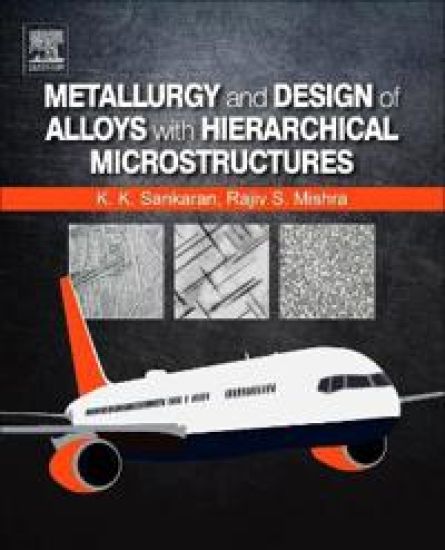
Metallurgy and Design of Alloys with Hierarchical Microstructures

Metallurgy and Design of Alloys with Hierarchical Microstructures

Krishnan K. Sankaran; Rajiv S. Mishra

Elsevier Science Publishing Co Inc
2017
nidottu
Metallurgy and Design of Alloys with Hierarchical Microstructures covers the fundamentals of processing-microstructure-property relationships and how multiple properties are balanced and optimized in materials with hierarchical microstructures widely used in critical applications. The discussion is based principally on metallic materials used in aircraft structures; however, because they have sufficiently diverse microstructures, the underlying principles can easily be extended to other materials systems. With the increasing microstructural complexity of structural materials, it is important for students, academic researchers and practicing engineers to possess the knowledge of how materials are optimized and how they will behave in service. The book integrates aspects of computational materials science, physical metallurgy, alloy design, process design, and structure-properties relationships, in a manner not done before. It fills a knowledge gap in the interrelationships of multiple microstructural and deformation mechanisms by applying the concepts and tools of designing microstructures for achieving combinations of engineering properties—such as strength, corrosion resistance, durability and damage tolerance in multi-component materials—used for critical structural applications.
Friction Stir Welding of Dissimilar Alloys and Materials

Friction Stir Welding of Dissimilar Alloys and Materials

Nilesh Kulkarni; Rajiv S. Mishra; Wei Yuan

Butterworth-Heinemann Inc
2015
nidottu
This book will summarize research work carried out so far on dissimilar metallic material welding using friction stir welding (FSW). Joining of dissimilar alloys and materials are needed in many engineering systems and is considered quite challenging. Research in this area has shown significant benefit in terms of ease of processing, material mixing, and superior mechanical properties such as joint efficiencies. A summary of these results will be discussed along with potential guidelines for designers.
Friction Stir Processing for Enhanced Low Temperature Formability

Friction Stir Processing for Enhanced Low Temperature Formability

Christopher B. Smith; Rajiv S. Mishra

Butterworth-Heinemann Inc
2014
nidottu
The use of friction stir processing to locally modify the microstructure to enhanced formability has the potential to alter the manufacturing of structural shapes. There is enough research to put together a short monograph detailing the fundamentals and key findings. One example of conventional manufacturing technique for aluminum alloys involves fusion welding of 5XXX series alloys. This can be replaced by friction stir welding, friction stir processing and forming. A major advantage of this switch is the enhanced properties. However qualification of any new process involves a series of tests to prove that material properties of interest in the friction stir welded or processed regions meet or exceed those of the fusion welded region (conventional approach). This book will provide a case study of Al5083 alloy with some additional examples of high strength aluminum alloys.
Ultrafine Grained Materials II

Ultrafine Grained Materials II

Yuntian Theodore Zhu; Terence G. Langdon; Rajiv S Mishra

John Wiley Sons
2027
nidottu
Proceedings of a symposium sponsored by the Shaping and Forming Committee of the Materials Processing and Manufacturing Division (MPMD) and the Mechanical Behavior Committee (Jt. SMD/ASM-MSCTS) of the Structural Materials Division (SMD) of TMS (The Minerals, Metals & Materials Society) and held during the 2002 TMS Annual Meeting in Seattle, Washington February 17-21,2002.
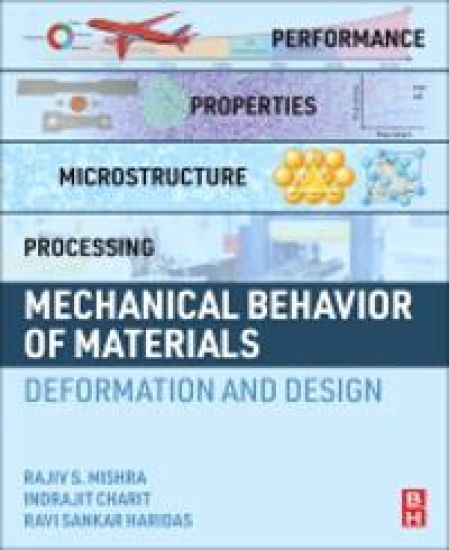
Mechanical Behavior of Materials

Mechanical Behavior of Materials

Rajiv S. Mishra; Indrajit Charit; Ravi Sankar Haridas

Butterworth-Heinemann Ltd
2025
nidottu
Mechanical Behavior of Materials: Deformation and Design is the first textbook to adopt a design-led approach to the teaching of mechanical behavior of materials in which the underlying fundamental science is presented in the context of design. This approach has been found to help motivate and engage students through real-life case studies and illustrative applications. In addition to the design-led approach, Mishra and Charit cover newer content not found in other textbooks, such as recent advances in microstructural characterization techniques and up-to-date presentation of fundamentals that link the microstructure of engineering materials with realistic mechanical response.
High Entropy Materials

High Entropy Materials

Krishanu Biswas; Nilesh Prakash Gurao; Tanmoy Maiti; Rajiv S. Mishra

SPRINGER VERLAG, SINGAPORE
2023
nidottu
This book provides a detailed overview of high entropy materials and alloys, discussing their structure, the processing of bulk and nanostructured alloys as well as their mechanical and functional properties and applications. It covers the exponential growth in research which has occurred over the last decade, discussing novel processing techniques, estimation of mechanical, functional and physical properties, and utility of these novel materials for various applications. Given the expanding scope of HEAs in ceramics, polymers, thin films and coating, this book will be of interest to material scientists and engineers alike.
High Entropy Materials

High Entropy Materials

Krishanu Biswas; Nilesh Prakash Gurao; Tanmoy Maiti; Rajiv S. Mishra

SPRINGER VERLAG, SINGAPORE
2022
sidottu
This book provides a detailed overview of high entropy materials and alloys, discussing their structure, the processing of bulk and nanostructured alloys as well as their mechanical and functional properties and applications. It covers the exponential growth in research which has occurred over the last decade, discussing novel processing techniques, estimation of mechanical, functional and physical properties, and utility of these novel materials for various applications. Given the expanding scope of HEAs in ceramics, polymers, thin films and coating, this book will be of interest to material scientists and engineers alike.
Friction Stir Welding of 2XXX Aluminum Alloys including Al-Li Alloys

Friction Stir Welding of 2XXX Aluminum Alloys including Al-Li Alloys

Rajiv S. Mishra; Harpreet Sidhar

Butterworth-Heinemann Inc
2016
nidottu
Friction Stir Processing of 2XXX Aluminum Alloys including Al-Li Alloys is the latest edition in the Friction Stir Welding and Processing series and examines the application of friction stir welding to high strength 2XXX series alloys, exploring the past and current developments in the field. The book features recent research showing significant benefit in terms of joint efficiency and fatigue performance as a result of friction stir welding. Friction stir welding has demonstrated significant benefits in terms of its potential to reduce cost and increase manufacturing efficiency of industrial products including transportation, particularly the aerospace sector. The 2XXX series aluminum alloys are the premium aluminum alloys used in aerospace. The book includes discussion of the potential future directions for further optimization, and is designed for both practicing engineers and materials scientists, as well as researchers in the field.
Friction Stir Welding of High Strength 7XXX Aluminum Alloys

Friction Stir Welding of High Strength 7XXX Aluminum Alloys

Rajiv S. Mishra; Mageshwari Komarasamy

Butterworth-Heinemann Inc
2016
nidottu
Friction Stir Welding of High Strength 7XXX Aluminum Alloys is the latest edition in the Friction Stir series and summarizes the research and application of friction stir welding to high strength 7XXX series alloys, exploring the past and current developments in the field. Friction stir welding has demonstrated significant benefits in terms of its potential to reduce cost and increase manufacturing efficiency of industrial products in transportation, particularly the aerospace sector. The 7XXX series aluminum alloys are the premium aluminum alloys used in aerospace. These alloys are typically not weldable by fusion techniques and considerable effort has been expended to develop friction stir welding parameters. Research in this area has shown significant benefit in terms of joint efficiency and fatigue performance as a result of friction stir welding. The book summarizes those results and includes discussion of the potential future directions for further optimization.
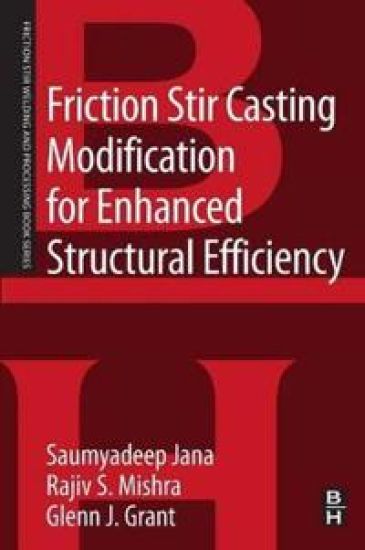
Friction Stir Casting Modification for Enhanced Structural Efficiency

Friction Stir Casting Modification for Enhanced Structural Efficiency

Saumyadeep Jana; Rajiv S. Mishra; Glenn Grant

Butterworth-Heinemann Inc
2015
nidottu
Friction Stir Casting Modification for Enhanced Structural Efficiency: A Volume in the Friction Stir Welding and Processing Book Series summarizes current research and applications of friction stir processing techniques for casting modification. Research in this area has shown significant benefit in terms of fatigue performance as a result of friction stir processing. This book addresses the latest research, providing readers with a summary of these results and new guidelines for designers.
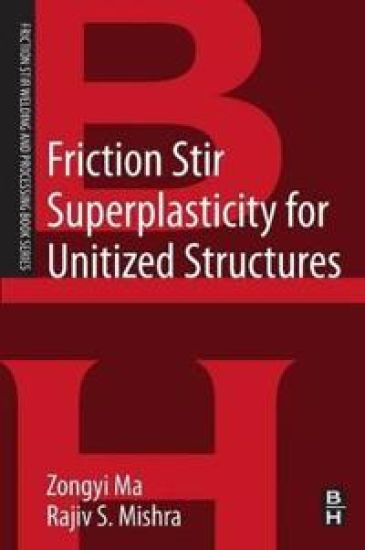
Friction Stir Superplasticity for Unitized Structures

Friction Stir Superplasticity for Unitized Structures

Zongyi Ma; Rajiv S. Mishra

Butterworth-Heinemann Inc
2014
nidottu
This book describes the fundamentals and potential applications of ‘friction stir superplasticity for unitized structures’. Conventional superplastic forming of sheets is limited to the thickness of 3 mm because the fine grained starting material is produced by rolling. Friction stir superplasticity has grown rapidly in the last decade because of the effectiveness of microstructural refinement. The thickness of the material remains almost constant, and that allows for forming of thick sheets/plates, which was not possible before. The field has reached a point where designers have opportunities to expand the extent of unitized structures, which are structures in which the traditional primary part and any supporting structures are fabricated as a single unit. With advanced optimization and material considerations, this class of structures can be lighter weight and more efficient, making them less costly, as well as mechanically less complex, reducing areas of possible failure.
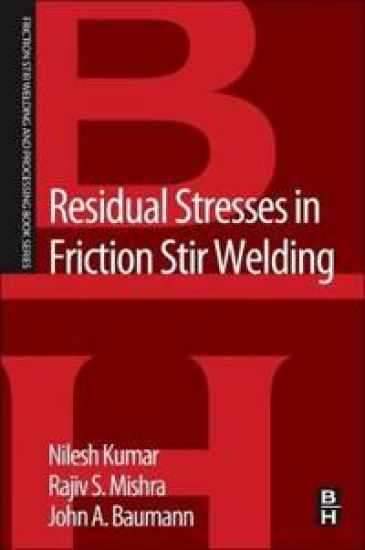
Residual Stresses in Friction Stir Welding

Residual Stresses in Friction Stir Welding

Nilesh Kumar; Rajiv S. Mishra; John A Baumann

Butterworth-Heinemann Inc
2013
nidottu
This book describes the fundamentals of residual stresses in friction stir welding and reviews the data reported for various materials. Residual stresses produced during manufacturing processes lead to distortion of structures. It is critical to understand and mitigate residual stresses. From the onset of friction stir welding, claims have been made about the lower magnitude of residual stresses. The lower residual stresses are partly due to lower peak temperature and shorter time at temperature during friction stir welding. A review of residual stresses that result from the friction stir process and strategies to mitigate it have been presented. Friction stir welding can be combined with additional in-situ and ex-situ manufacturing steps to lower the final residual stresses. Modeling of residual stresses highlights the relationship between clamping constraint and development of distortion. For many applications, management of residual stresses can be critical for qualification of component/structure.