Kirjojen hintavertailu – 12 903 725 kirjaa ja 27 kauppaa

Kirjailija

Raju J. Das

Kirjat ja teokset yhdessä paikassa: 15 kirjaa, julkaisuja vuosilta 2014–2026, suosituimpiin kuuluu Contradictions of Capitalist Society and Culture. Vertaile teosten hintoja ja tarkista saatavuus suomalaisista kirjakaupoista.

Nimi esiintyy myös muodoissa: Raju J Das

15 kirjaa

Kirjojen julkaisuvuodet: 2014–2026.

Marx, the State, and Primitive Accumulation

Marx, the State, and Primitive Accumulation

Raju J Das

TAYLOR FRANCIS LTD
2026
sidottu
Critically engaging with contributions from both the Global North and South, this book offers a systematic rethinking of Marx’s concept of primitive accumulation and its relevance to contemporary capitalism. The book argues that recent attempts to reinterpret dispossession often suffer from conceptual overstretch and a neglect of production and class relations. The book’s focus is the concept of expanded primitive accumulation: an ongoing, capitalist state-mediated process of extra-economic coercion that separates producers from privately owned, communal, and state-owned means of production and subsistence. This concept is situated within a broader framework that distinguishes and relates primitive accumulation, labour exploitation, normal capitalist exchange relations, and class differentiation within the totality of capitalist social relations. The analysis foregrounds the capitalist state as both enforcer and manager of dispossession, and shows that such processes are shaped by class struggle and require ideological legitimation. Combining theoretical reconstruction with empirical analysis, including a case study from Odisha, India, the book develops the political implications of dispossession, emphasizing the need for working-class leadership in struggles against capitalism. It will be of interest to scholars and students across the social sciences, as well as to readers concerned with Marxist political and economic thought, capitalism, dispossession, and the state.
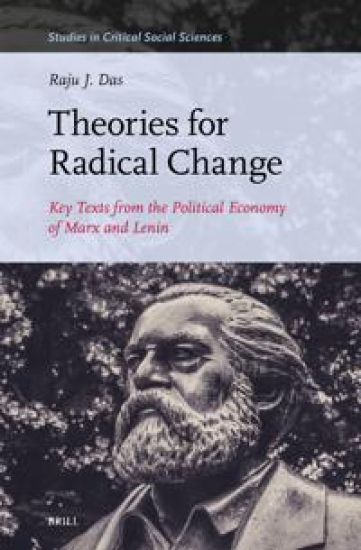
Theories for Radical Change: Key Texts from the Political Economy of Marx and Lenin
This book is focused on production and its relations. It argues for the primacy of economic over extra-economic processes, and of production and production relations over other aspects of the economic realm. It explores how production relations of capitalism and imperialism fetter the development of the productive forces of nature and wage-labour and hinder state's ability to solve the problems produced by capitalism. It covers a wide range of political-economic issues including commodity production, class differentiation, fundamental traits of capitalist production (including its uneven and combined development), capitalist state, and the impoverishment of common people and their struggle against the capitalist mode of production.
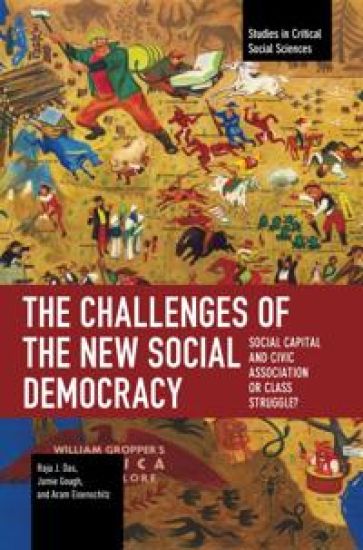
The Challenges of the New Social Democracy

The Challenges of the New Social Democracy

Raju J. Das; Aram Eisenschitz; Jamie Gough

Haymarket Books
2024
pokkari
In this important study, Raju J Das, Jamie Gough and Aram Eisenschitz provide a Marxist critique of new social democracy as the dominant contemporary strategy for local economic and social development. In both the global North and South, new social democracy seeks to develop social capital, strengthen civil society, build not-for-profit enterprises, encourage self-help, and foster community ties. It seeks participatory forms of local politics to achieve a local class consensus. It promises to improve people's economic and social conditions in the face of neoliberal capitalism, and to empower them. The authors argue that this strategy is severely limited by, and internalizes, its capitalist environment. They show that social enterprise can be developed in socialist ways, and contribute to a local politics based in class struggle. But social capital cannot replace the struggle of the exploited and oppressed against capitalism and for a socialist society, a strategy which the authors outline for the local scale.
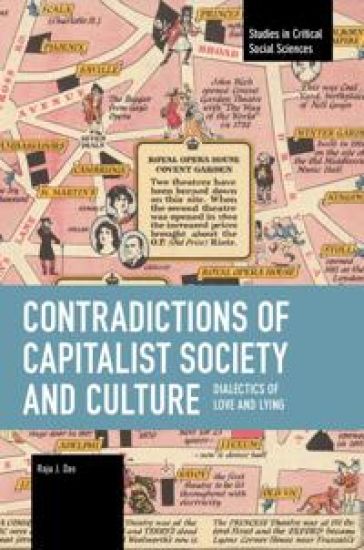
Contradictions of Capitalist Society and Culture
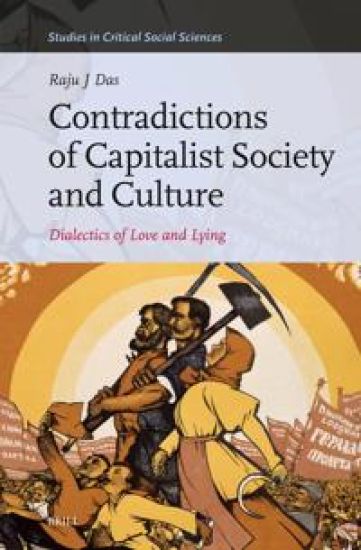
In this sociological examination of love, truth, and hate, Raju J. Das argues that if we are to defeat the hate-politics and post-truth politics, then we must fight for a post-capitalist world that is truthful and caring. Love and truth are important aspects of culture. Signifying the crisis of capitalist culture in the contemporary world are their opposites, i.e. hate and lying, respectively. There is rampant lying for ideological/political purposes. There is also an increasing absence of genuine love, i.e., love as caring and solidarity, which, under certain conditions, takes romantic forms. Ideological-political lying is connected to the corruption of love, with its confinement to the private sphere of individuals and consequent isolation from the wider unequal society. This connection is via capitalism. On the one hand, capitalism resorts to ideological-political lying to cover up its contradictions that cause alienation/suffering of the masses. Lying and alienation/suffering are not conducive to genuine love in society. On the other hand, a crisis-ridden capitalism produces the right-wing politics of lying ('post-truth' politics). This is also a politics of hatred (or, 'post-love, or, anti-love') against minorities, democrats and socialists, a politics that is justified by lies about these subjects.
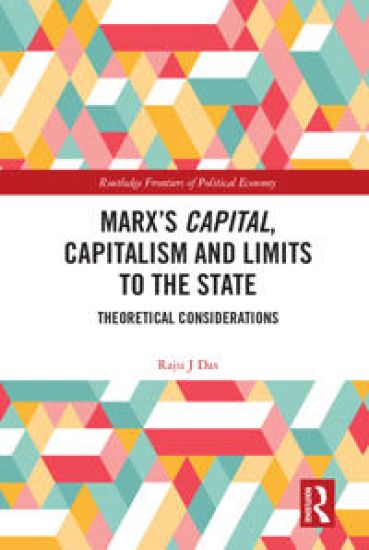
Marx’s Capital, Capitalism and Limits to the State
Marx’s Capital, Capitalism and Limits to the State examines the capitalist state in the abstract, and as it exists in advanced capitalism and peripheral capitalism, illustrating the ideas with evidence from the North and the South. The volume unpacks the capitalist state’s functions in relation to commodity relations, private property, and the crisis-ridden production of (surplus) value as a part of the capital circuit (M-C-M'). It also examines state’s political and geographical forms. It argues that no matter how autonomous it is, the state cannot meet the pressing needs of the masses significantly and sustainably. This is not because of so-called capitalist constraints, but because the state is inherently capitalist. Each chapter begins with Capital volume 1. And each chapter ends with theoretical/practical implications of the ideas which taken together counter existing state theory’s focus on state autonomy and reforms and point to the necessity for the masses to establish a new transitional democratic state. But the book goes ‘beyond’ Marx too, as it deploys the combined Marxism of 19th and 20th centuries. Marx’s Capital, Capitalism and Limits to the State will interest scholars researching state-society/economy relations. It is suitable for university students as well as established scholars in sociology, political science, heterodox economics, human geography, and international development.
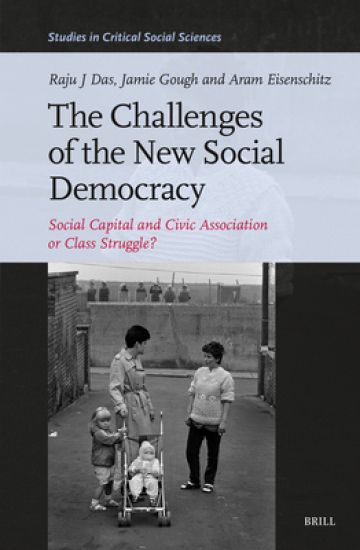
The Challenges of the New Social Democracy

The Challenges of the New Social Democracy

Raju J. Das; Jamie Gough; Aram Eisenschitz

BRILL
2023
sidottu
Raju J Das, Jamie Gough and Aram Eisenschitz provide a Marxist critique of new social democracy as the dominant contemporary strategy for local economic and social development. In both the global North and South, new social democracy seeks to develop social capital, strengthen civil society, build not-for-pro¬fit enterprises, encourage self-help, and foster community ties. It seeks participatory forms of local politics to achieve a local class consensus. It promises to improve people's economic and social conditions in the face of neoliberal capitalism, and to empower them. The authors argue that this strategy is severely limited by, and internalises, its capitalist environment. They show that social enterprise can be developed in socialist ways, and contribute to a local politics based in class struggle. But social capital cannot replace the struggle of the exploited and oppressed against capitalism and for a socialist society, a strategy which the authors outline for the local scale.
Contradictions of Capitalist Society and Culture
Love and truth are important aspects of culture. Signifying the crisis of capitalist culture in the contemporary world are their opposites, i.e. hate and lying, respectively. There is rampant lying for ideological/political purposes. There is also an increasing absence of genuine love, i.e., love as caring and solidarity, which, under certain conditions, takes romantic forms. Ideological-political lying is connected to the corruption of love, with its confinement to the private sphere of individuals and consequent isolation from the wider unequal society. This connection is via capitalism. On the one hand, capitalism resorts to ideological-political lying to cover up its contradictions that cause alienation/suffering of the masses. Lying and alienation/suffering are not conducive to genuine love in society. On the other hand, a crisis-ridden capitalism produces the right-wing politics of lying (‘post-truth’ politics). This is also a politics of hatred (or, ‘post-love, or, anti-love’) against minorities, democrats and socialists, a politics that is justified by lies about these subjects. The fight against hate-politics and post-truth politics must be part of the fight for a post-capitalist world (socialist democracy), imagined as a truthful and caring world.
Marx’s Capital, Capitalism and Limits to the State
Marx’s Capital, Capitalism and Limits to the State examines the capitalist state in the abstract, and as it exists in advanced capitalism and peripheral capitalism, illustrating the ideas with evidence from the North and the South. The volume unpacks the capitalist state’s functions in relation to commodity relations, private property, and the crisis-ridden production of (surplus) value as a part of the capital circuit (M-C-M'). It also examines state’s political and geographical forms. It argues that no matter how autonomous it is, the state cannot meet the pressing needs of the masses significantly and sustainably. This is not because of so-called capitalist constraints, but because the state is inherently capitalist. Each chapter begins with Capital volume 1. And each chapter ends with theoretical/practical implications of the ideas which taken together counter existing state theory’s focus on state autonomy and reforms and point to the necessity for the masses to establish a new transitional democratic state. But the book goes ‘beyond’ Marx too, as it deploys the combined Marxism of 19th and 20th centuries. Marx’s Capital, Capitalism and Limits to the State will interest scholars researching state-society/economy relations. It is suitable for university students as well as established scholars in sociology, political science, heterodox economics, human geography, and international development.
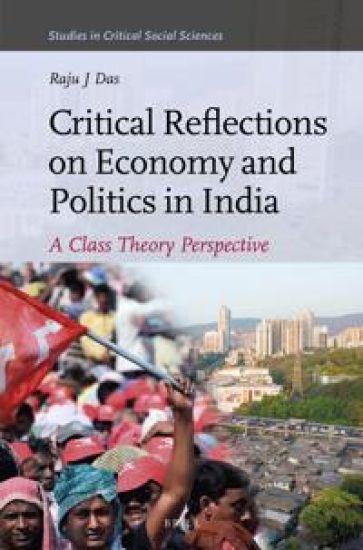
Critical Reflections on Economy and Politics in India. Volume 1

Critical Reflections on Economy and Politics in India. Volume 1

Raju J. Das

Haymarket Books
2021
pokkari

Halvin toimitettuna 36,40 €

In the first volume of this sweeping analysis of contemporary India, Raju Das offers a much needed class-based perspective on the economic situation in what has become one of the fastest growing economies in the world. Offering invaluable insights along the way, Das examines the specificities of Indian capitalism and neoliberalism, the country’s geographically uneven development, the impact of technological change, and the consequences of its export-oriented, nature-dependent production. Critical Reflections on Economy and Politics in India applies abstract theoretical ideas to the concrete situation in India, which, in turn, inspires a rethinking of theory. Das unabashedly shows the relevance of a class theory that takes seriously matters of oppression/domination of religious minorities and lower castes. A must read for anyone looking to not only interpret the world, but to change it.
Critical Reflections on Economy and Politics in India. Volume 2

Critical Reflections on Economy and Politics in India. Volume 2

Raju J. Das

Haymarket Books
2021
pokkari

Halvin toimitettuna 36,40 €

In the first volume of this sweeping analysis of contemporary India, Raju Das offers a much needed class-based perspective on the economic situation in what has become one of the fastest growing economies in the world. Offering invaluable insights along the way, Das examines the specificities of Indian capitalism and neoliberalism, the country’s geographically uneven development, the impact of technological change, and the consequences of its export-oriented, nature-dependent production. Critical Reflections on Economy and Politics in India applies abstract theoretical ideas to the concrete situation in India, which, in turn, inspires a rethinking of theory. Das unabashedly shows the relevance of a class theory that takes seriously matters of oppression/domination of religious minorities and lower castes. A must read for anyone looking to not only interpret the world, but to change it.
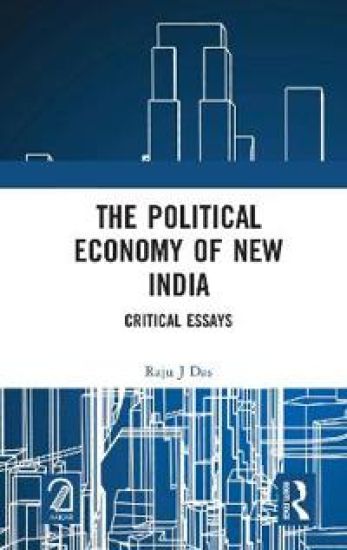
The Political Economy of New India

The Political Economy of New India

Raju J Das

Taylor Francis Ltd
2021
sidottu
Critical of the economic and political power relations in contemporary India, this book is written from the vantagepoint of the working masses whose basic economic and democratic rights remain unmet. Written for a broader audience beyond the academic community, the essays that make up the book provide short critical commentaries on different aspects of Indian society undergoing significant changes in recent times. The essays are conceptually driven and include empirical details, but they generally avoid the usual perils of academicism, by expressing complicated ideas in a relatively simple language and by drawing out their practical implications. This book is co-published with Aakar Books, New Delhi. Taylor & Francis does not sell or distribute the print versions of this book in India, Pakistan, Nepal, Bhutan, Bangladesh and Sri Lanka.
Critical Reflections on Economy and Politics in India: A Class Theory Perspective
In this book, Das presents a class-based perspective on the economic and political situation in contemporary India in a globalizing world. It deals with the specificities of India's capitalism and neoliberalism, as well as poverty/inequality, geographically uneven development, technological change, and export-oriented, nature-dependent production. The book also deals with Left-led struggles in the form of the Naxalite/Maoist movement and trade-union strikes, and presents a non-sectarian Left critique of the Left. It also discusses the politics of the Right expressed as fascistic tendencies, and the question of what is to be done. The book applies abstract theoretical ideas to the concrete situation in India, which, in turn, inspires rethinking of theory. Das unabashedly shows the relevance of class theory that takes seriously the matter of oppression/domination of religious minorities and lower castes.
Marxist Class Theory For A Skeptical World

Marxist Class Theory For A Skeptical World

Raju J. Das

Haymarket Books
2018
nidottu

Halvin toimitettuna 56,20 €

In this important work of scholarship sure to reshape the landscape of critical social sciences, Raju Das offers a critique of many of the influential radical theories of class, making a spirited defence of class theory. Marxist Theory of Class for a Skeptical World critically discusses Analytical Marxist and Post-structuralist Marxist theories of class and persuasively argues for an alternative approach that is rooted in the ideas of Marx and Engels, as well as Lenin and Trotsky.