
Kirjojen hintavertailu – 12 859 818 kirjaa ja 27 kauppaa

Kirjailija

Ralph G. Carter

Kirjat ja teokset yhdessä paikassa: 2 kirjaa, julkaisuja vuosilta 2009–2021, suosituimpiin kuuluu Choosing to Lead. Vertaile teosten hintoja ja tarkista saatavuus suomalaisista kirjakaupoista.

2 kirjaa

Kirjojen julkaisuvuodet: 2009–2021.

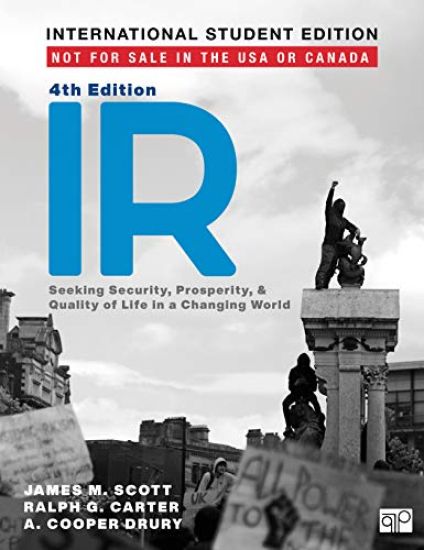
IR - International Student Edition

IR - International Student Edition

James M. Scott; Ralph G. Carter; A. Cooper Drury

SAGE Publications Inc
2021
nidottu
IR: Seeking Security, Prosperity, and Quality of Life in a Changing World invites students into the debates in world politics and supports them as they engage with ideas and events by providing a clear introduction to not just what happens, but why and how it happens. Assuming no prior knowledge about international relations, award-winning teachers and scholars James M. Scott, Ralph G. Carter, and A. Cooper Drury meet students where they are and provide them with a framework to make sense of the complicated events and interactions of world politics. The latest edition is thoroughly updated to provide insights into recent world developments.
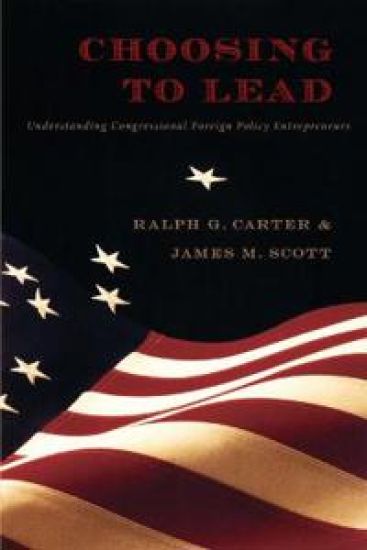
Choosing to Lead

Choosing to Lead

Ralph G. Carter; James M. Scott

Duke University Press
2009
pokkari
Shedding new light on how U. S. foreign policy is made, Ralph G. Carter and James M. Scott focus on “congressional foreign policy entrepreneurs,” the often unrecognized representatives and senators who take action on foreign policy matters rather than waiting for the executive branch to do so. These proactive members of Congress have undertaken many initiatives, including reaching out to Franco’s Spain, promoting détente with the Soviet Union, proposing the return of the Panama Canal, seeking to ban military aid to Pinochet’s regime in Chile, pushing for military intervention in Haiti, and championing the recognition of Vietnam. In Choosing to Lead, Carter and Scott examine the characteristics, activities, and impact of foreign policy entrepreneurs since the end of the Second World War. In so doing, they show not only that individual members of Congress have long influenced the U. S. foreign policy-making process, but also that the number of foreign policy entrepreneurs has grown over time. Carter and Scott combine extensive quantitative analysis, interviews with members of Congress and their staff, and case studies of key foreign policy entrepreneurs, including Frank Church, William Fulbright, Jesse Helms, Edward Kennedy, Pat McCarran, and Curt Weldon. Drawing on their empirical data, the authors identify the key variables in foreign policy entrepreneurship, including membership in the Senate or House, seniority and committee assignments, majority or minority party status, choice of foreign policy issues, and the means used to influence policy. By illuminating the roles and impact of individual members of Congress, Carter and Scott contribute to a more nuanced understanding of the broader U. S. foreign policy-making process.