Kirjojen hintavertailu – 12 903 725 kirjaa ja 27 kauppaa

Kirjailija

Ralph Keyes

Kirjat ja teokset yhdessä paikassa: 8 kirjaa, julkaisuja vuosilta 2003–2021, suosituimpiin kuuluu Euphemania: Our Love Affair with Euphemisms. Vertaile teosten hintoja ja tarkista saatavuus suomalaisista kirjakaupoista.

8 kirjaa

Kirjojen julkaisuvuodet: 2003–2021.

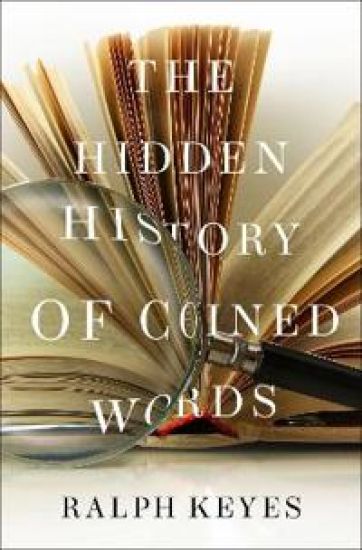
The Hidden History of Coined Words

The Hidden History of Coined Words

Ralph Keyes

Oxford University Press Inc
2021
sidottu
Successful word-coinages -- those that stay in currency for a good long time -- tend to conceal their beginnings. We take them at face value and rarely when and where they were first minted. Engaging, illuminating, and authoritative, Ralph Keyes's The Hidden History of Coined Words explores the etymological underworld of terms and expressions and uncovers plenty of hidden gems. He also finds some fascinating patterns, such as that successful neologisms are as likely to be created by chance as by design. A remarkable number of new words were coined whimsically, originally intended to troll or taunt. Knickers, for example, resulted from a hoax; big bang from an insult. Casual wisecracking produced software, crowdsource, and blog. More than a few resulted from happy accidents, such as typos, mistranslations, and mishearing (bigly and buttonhole), or from being taken entirely out of context (robotics). Neologizers (a Thomas Jefferson coinage) include not just scholars and writers but cartoonists, columnists, children's book authors. Wimp originated with a book series, as did goop, and nerd from a book by Dr. Seuss. Coinages are often contested, controversy swirling around such terms as gonzo, mojo, and booty call. Keyes considers all contenders, while also leading us through the fray between new word partisans, and those who resist them strenuously. He concludes with advice about how to make your own successful coinage. The Hidden History of Coined Words will appeal not just to word mavens but history buffs, trivia contesters, and anyone who loves the immersive power of language.
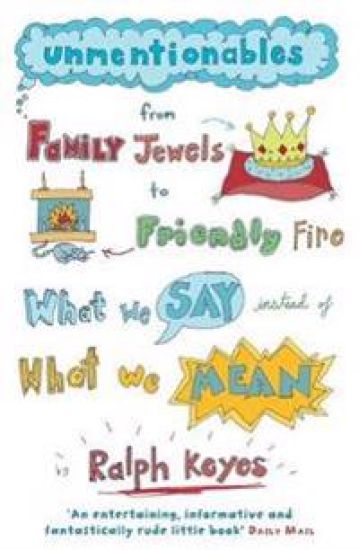
Unmentionables

Unmentionables

Ralph Keyes

John Murray Publishers Ltd
2011
pokkari
We say a lot about ourselves by what we don't say. Words and phrases like 'collateral damage', 'wardrobe malfunction', 'vertically challenged', and old favourites like 'unmentionables' (trousers, apparently) or 'lady of the night' - all are ways of not using particular words. UNMENTIONABLES is a rollicking exploration of the history of euphemistic usage, looking at how taboos connected to sex, death, religion, war, politics, business and matters of status have produced an extraordinary linguistic creativity, and how euphemistic speech has changed over the centuries. It looks at how euphemisms are born, and how they die (or 'experience a negative outcome') and it explores why it is that we create euphemisms, and the different purposes - from the benign to the sinister - that they serve. (Is 'euphemism' a euphemism for lying?)Lively, entertaining, and crammed with fascinating nuggets of information, UNMENTIONABLES is a celebration of the richness of language. Why have just one word for something when you can have ten other words instead?
Euphemania: Our Love Affair with Euphemisms

Euphemania: Our Love Affair with Euphemisms

Ralph Keyes

Little, Brown Spark
2010
sidottu
How did die become kick the bucket, underwear become unmentionables, and having an affair become hiking the Appalachian trail? Originally used to avoid blasphemy, honor taboos, and make nice, euphemisms have become embedded in the fabric of our language. Euphemania traces the origins of euphemisms from a tool of the church to a form of gentility to today's instrument of commercial, political, and postmodern doublespeak. As much social commentary as a book for word lovers, Euphemania is a lively and thought-provoking look at the power of words and our power over them.
I Love It When You Talk Retro: Hoochie Coochie, Double Whammy, Drop a Dime, and the Forgotten Origins of American Speech
Today's eighteen-year-olds may not know who Mrs. Robinson is, the size of a breadbox, or why going postal refers to a major uproar. Such "retroterms" are words or phrases whose origin lies in our past. I Love It When You Talk Retro discusses these verbal fossils that linger in our national conversation long after the topic they refer to has galloped into the sunset. That could be a person (Charles Ponzi), product (Edsel), radio show (Gang Busters), or ad slogan ("Cha-ching "). How many realize that cooties was World War I slang for lice, or that doofus came from the comic strip Popeye? Ralph Keyes takes us on an illuminating and engaging tour through what he calls retrotalk. This journey along the highways of history and byways of culture is an invaluable handbook for anyone who's ever wondered about an obscure word or phrase, "I wonder where that came from?" Ralph Keyes's book answers that question. Repeatedly. And is a lot of fun to read.
The Quote Verifier: Who Said What, Where, and When
Our language is full of hundreds of quotations that are often cited but seldom confirmed. Ralph Keyes's The Quote Verifier considers not only classic misquotes such as "Nice guys finish last," and "Play it again, Sam," but more surprising ones such as "Ain't I a woman?" and "Golf is a good walk spoiled," as well as the origins of popular sayings such as "The opera ain't over till the fat lady sings," "No one washes a rented car," and "Make my day." Keyes's in-depth research routinely confounds widespread assumptions about who said what, where, and when. Organized in easy-to-access dictionary form, The Quote Verifier also contains special sections highlighting commonly misquoted people and genres, such as Yogi Berra and Oscar Wilde, famous last words, and misremembered movie lines. An invaluable resource for not just those with a professional need to quote accurately, but anyone at all who is interested in the roots of words and phrases, The Quote Verifier is not only a fascinating piece of literary sleuthing, but also a great read.
The Courage to Write

The Courage to Write

Ralph Keyes

HENRY HOLT COMPANY INC
2003
nidottu

Halvin toimitettuna 22,90 €

The Courage to Write is an invaluable book and essential reading for anyone who wishes to learn how to write well. Katherine Anne Porter called courage "the first essential" for a writer. "I have to talk myself into bravery with every sentence," agreed Cynthia Ozick, "sometimes every syllable." E. B. White said he admired anyone who "has the guts to write anything at all." An author who has taught writing for more than thirty years, In The Courage to Write, Ralph Keyes, an author who has taught writing for more than thirty years, assures us that anxiety is felt by writers at every level, especially when they dare to do their best. He describes the sequence of "courage points" through which all writers must pass, from the challenge of identifying a worthwhile project to the mixture of pride and panic they feel when examining a newly published book or article. Keyes also offers specifics on how to root out dread of public "performance" and of the judgment of family and friends, make the best use of writers' workshops and conferences, and handle criticism of works in progress. Throughout, he includes the comments of many accomplished writers -- Pat Conroy, Amy Tan, Rita Dove, Isabel Allende, and others -- on how they transcended their own fears to produce great works.
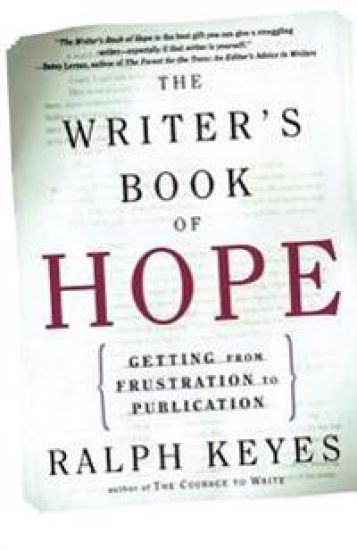
The Writer's Book of Hope

The Writer's Book of Hope

Ralph Keyes

Henry Holt Company Inc
2003
nidottu
The renowned author and journalist offers his best advice and encouragement, helping writers find the courage and dedication they need to continue to write despite the obstacles to success. Original. 15,000 first printing.
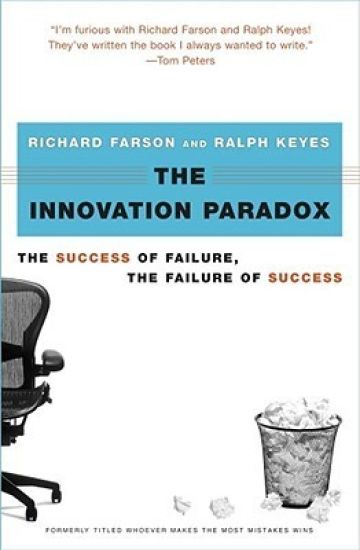
The Innovation Paradox

The Innovation Paradox

Richard Evans Farson; Ralph Keyes

The Free Press
2003
pokkari
Challenges managers to redevelop their concepts of success and failure to recognize that innovation is as dependent on setbacks as it is on victories, explaining the importance of risk taking and citing the examples of companies who fell behind because they resisted change. Reprint. 20,000 first printing.