Kirjojen hintavertailu – 12 859 819 kirjaa ja 27 kauppaa

Kirjailija

Ralph Mcinerny

Kirjat ja teokset yhdessä paikassa: 29 kirjaa, julkaisuja vuosilta 1982–2022, suosituimpiin kuuluu Lord of the World. Vertaile teosten hintoja ja tarkista saatavuus suomalaisista kirjakaupoista.

29 kirjaa

Kirjojen julkaisuvuodet: 1982–2022.

St. Thomas Aquinas

St. Thomas Aquinas

Ralph McInerny

UNIVERSITY OF NOTRE DAME PRESS
2022
sidottu
St. Thomas Aquinas enables the reader to appreciate both Thomas's continuity with earlier thought and his creative independence. After a useful account of the life and work of St. Thomas, McInerny shows how the thoughts of Aristotle, Boethius, and Augustine and Pseudo-Dionysius were assimilated into the personal wisdom of St. Thomas. He also offers a helpful study of the distinctive features of Aquinas's Christian theology.
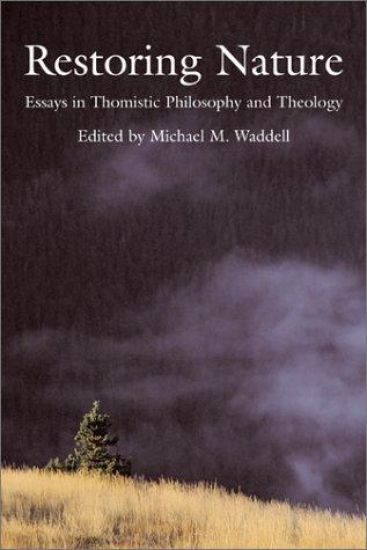
Restoring Nature: Essays Thomistic Philosophy & Theology

Restoring Nature: Essays Thomistic Philosophy & Theology

Michael M. Waddell; Ralph McInerny

St. Augustine's Press
2019
nidottu
The outstanding contributors to this symposium are Benedict M. Ashley, o.p., Steven Baldner, Angelo Campodonico, William E. Carroll, Lawrence Dewan, o.p., Fulvio Di Blasi, Jude P. Dougherty, Leo J. Elders, svd, Robert A. Gahl, Jr., Anne Barbeau Gardiner, Marie George, John Goyette, Christopher Kaczor, Steven A. Long, Christopher Martin, Ralph McInerny, John O'Callaghan, Vittorio Possenti, Anthony Rizzi, Mario Enrique Sacchi, Michael M. Waddell, and H ctor Zagal.
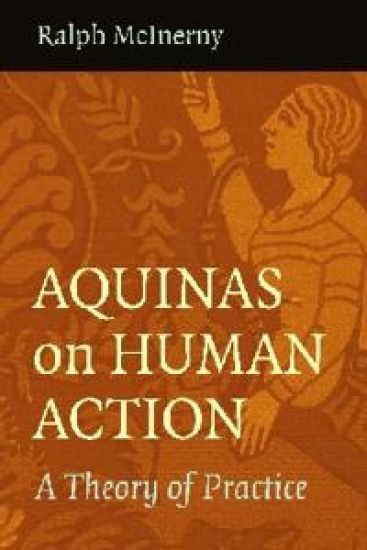
Aquinas on Human Action

Aquinas on Human Action

Ralph McInerny

The Catholic University of America Press
2012
nidottu
A patient and faithful working of primary Thomistic texts, this volume presents a systematic and unified character of Aquinas's theory of moral agency as it relates to human action. Focusing especially on the Summa theologiae, Ralph McInerny carefully argues that Aquinas's theory of moral action stands up to contemporary needs and remains adequate against contemporary criticism. This lively and incisive study by a first-rate scholar demonstrates a breadth of knowledge of Aquinas in a novel, yet scholarly, fashion.
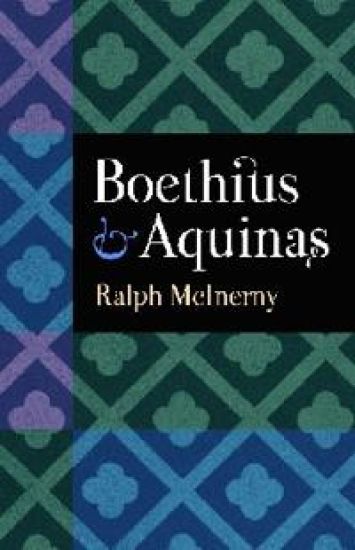
Boethius and Aquinas

Boethius and Aquinas

Ralph McInerny

The Catholic University of America Press
2012
nidottu
In this study of the relationship between Boethius and Thomas Aquinas, Ralph McInerny dispels the notion that Aquinas misunderstood the early philosopher and argues instead that he learned from Boethius, assimilated his ideas, and proved to be a reliable interpreter of his thought. McInerny makes his point that ""Boethius taught what Thomas says he taught"" through a careful analysis of Aquinas's commentary on the De trinitate and De hebdomadibus of Boethius.
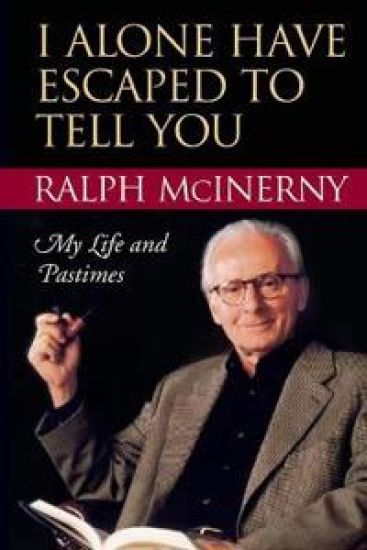
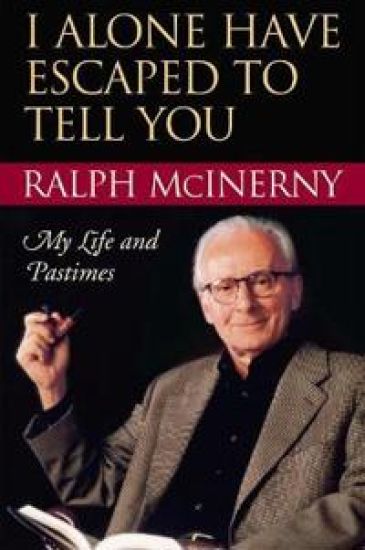
I Alone Have Escaped to Tell You

I Alone Have Escaped to Tell You

Ralph McInerny

University of Notre Dame Press
2011
nidottu
With I Alone Have Escaped to Tell You, Ralph McInerny—distinguished scholar, mystery writer, editor, publisher, and family man—delivers a thoroughly engaging memoir. In the course of his recollections, McInerny describes his childhood in Minnesota; his grammar school and seminary education, with his decision to leave the path toward ordination; his marriage to his beloved Connie and their active family life and travels; and his life as a fiction writer. We learn of his career as a Catholic professor of philosophy at Notre Dame, his views on the Catholic Church, his experiences as an editor and publisher of Catholic magazines and reviews, his involvement with the International Catholic University, and his thoughts on other Catholic writers. Part homage to his academic home for the last half century and part appreciation of the many significant friendships he has fostered over his life, McInerny's reminiscences beautifully convey his lively interest in the world and his gift for friendship and collegiality. Written in his characteristically elegant style, by turns charming, poignant, humorous, and revealing, I Alone Have Escaped to Tell You will delight McInerny's many devoted readers.
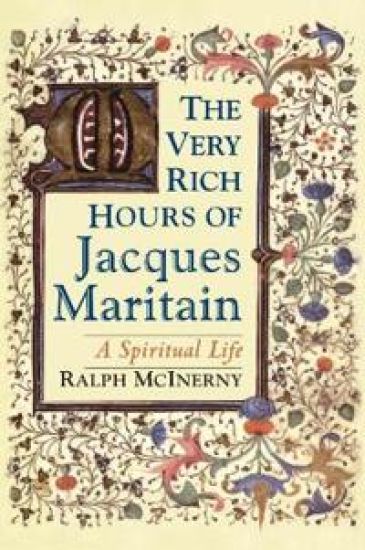
The Very Rich Hours of Jacques Maritain

The Very Rich Hours of Jacques Maritain

Ralph McInerny

University of Notre Dame Press
2011
nidottu
The Very Rich Hours of Jacques Maritain is distinguished philosopher Ralph McInerny's hymn of praise to the spiritual and intellectual life of the great Catholic philosopher Jacques Maritain (1881–1973). The structure of this work is modeled on the medieval book of hours, making use of the daily offices, from Matins through Compline, to examine each stage of the life of Maritain and his wife, Raïssa. Through this unique blending of biography and meditation, McInerny creates a powerful portrait of the Maritains, one that reveals a model of the intellectual life as lived by Christian believers. McInerny's authoritative work provides an interesting and accessible avenue of entry to Maritain's life and thought. Among the topics McInerny covers are Maritain's remarkable and diverse set of friends, his involvement in French politics, and the development of his views on the nature and future of democracy, the church, and Catholic intellectual life. By skillfully interweaving Maritain's philosophy with anecdotes from his life, McInerny demonstrates what distinguished Maritain as a Catholic philosopher and why he is a source of inspiration for McInerny and others of his generation.
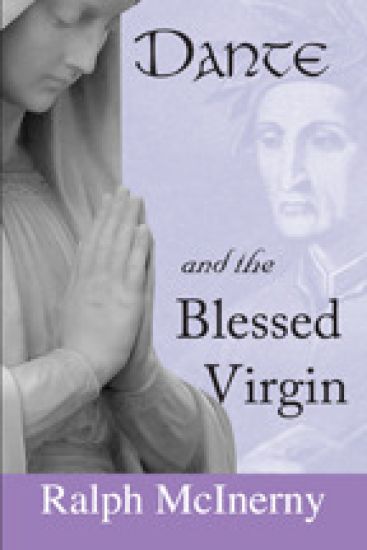
Dante and the Blessed Virgin

Dante and the Blessed Virgin

Ralph McInerny

University of Notre Dame Press
2010
sidottu
Dante and the Blessed Virgin is distinguished philosopher Ralph McInerny's eloquent reading of one of western literature's most famous works by a Catholic writer. The book provides Catholic readers new to Dante's The Divine Comedy (or Commedia) with a concise companion volume. McInerny argues that the Blessed Virgin Mary is the key to Dante. She is behind the scenes at the very beginning of the Commedia, and she is found at the end in the magnificent closing cantos of the Paradiso. McInerny also discusses Dante's Vita Nuova, where Mary is present as the object of the young Beatrice's devotion. McInerny draws from a diverse group of writers throughout this book, including Plato, Aristotle, St. Bernard, St. Bonaventure, St. Thomas Aquinas, and George Santayana, among others. It is St. Thomas, however, to whom McInerny most often turns, and this book also provides an accessible introduction to Thomistic moral philosophy focusing on the appetites, the ordering of goods, the distinction between the natural and the supernatural orders, the classification of capital vices and virtues, and the nature of the theological virtues. This engagingly written book will serve as a source of inspiration and devotion for anyone approaching Dante's work for the first time as well as those who value the work of Ralph McInerny.
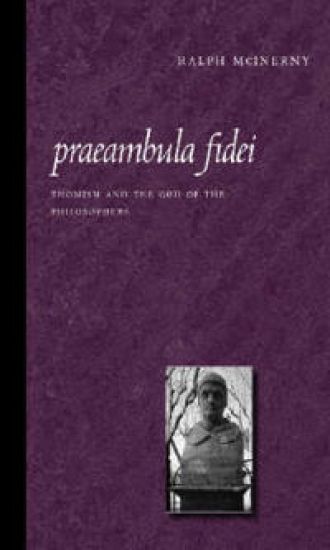
Praeambula Fidei

Praeambula Fidei

Ralph McInerny

The Catholic University of America Press
2006
nidottu
The Praeambula Fidei (""preambles of faith"") are regarded by Thomas Aquinas as the culmination of philosophy: natural theology, the highest knowledge of God that is possible on philosophical grounds alone. The natural home for such considerations is the ""Metaphysics"" of Aristotle and Thomas's commentary on that work. Yet Thomas's view has been cast into doubt, with philosophers and theologians alike attempting to drive a wedge between Aquinas and Aristotle. In this book, renowned philosopher Ralph McInerny sets out to review what Thomas meant by the phrase and to defend a robust understanding of Thomas's teaching on the subject. After setting forth different attitudes toward proofs of God's existence and outlining the difference between belief and knowledge, McInerny examines the texts in which Thomas uses and explains the phrase ""preambles of faith."" He then turns his attention to the work of eminent twentieth-century Thomists and chronicles their abandonment of the preambles. He draws a contrast between this form of Thomism and that of the classical Dominican commentators, notably Cajetan, arguing that part of the abandonment of the notion of the preambles as philosophical involves a misreading and misrepresentation of Cajetan. McInerny concludes with a positive rereading of Aristotle's ""Metaphysics"" and Aquinas's use thereof. In the end, the book argues for a return to the notion of Aristotelico - Thomism - Thomistic philosophy as the organic development of the thought of Aristotle.
I Alone Have Escaped to Tell You

I Alone Have Escaped to Tell You

Ralph McInerny

University of Notre Dame Press
2006
sidottu
With I Alone Have Escaped to Tell You, Ralph McInerny—distinguished scholar, mystery writer, editor, publisher, and family man—delivers a thoroughly engaging memoir. In the course of his recollections, McInerny describes his childhood in Minnesota; his grammar school and seminary education, with his decision to leave the path toward ordination; his marriage to his beloved Connie and their active family life and travels; and his life as a fiction writer. We learn of his career as a Catholic professor of philosophy at Notre Dame, his views on the Catholic Church, his experiences as an editor and publisher of Catholic magazines and reviews, his involvement with the International Catholic University, and his thoughts on other Catholic writers. Part homage to his academic home for the last half century and part appreciation of the many significant friendships he has fostered over his life, McInerny's reminiscences beautifully convey his lively interest in the world and his gift for friendship and collegiality. Written in his characteristically elegant style, by turns charming, poignant, humorous, and revealing, I Alone Have Escaped to Tell You will delight McInerny's many devoted readers.
An Introduction to Philosophy

An Introduction to Philosophy

Jacques Maritain; Ralph McInerny

Sheed Ward,U.S.
2005
sidottu
Jacques Maritain's An Introduction to Philosophy was first published in 1931. Since then, this book has stood the test of time as a clear guide to what philosophy is and how to philosophize. Inspired by the Thomistic Revival called for by Leo XIII, Maritain relies heavily on Aristotle and St. Thomas Aquinas to shape a philosophy that, far from sectarian theology in disguise, is driven by reason and engages the modern world. Re-released as part of the Sheed & Ward Classic series, An Introduction to Philosophy is sure to enliven the minds of students and general readers for years to come. From the new introduction by Ralph McInerny: You are about to read a magnificent introduction not only to a kind of philosophy but to philosophizing itself. Jacques Maritain was a relatively young man when he wrote this book, but his effort is one that attracts any philosopher more and more as he grows older. However odd and unusual what he says becomes, the philosopher yearns to show how even the most abstruse claims can be put into relation with what the reader already knows. That, in its essence, is what teaching is. In this book, the reader will find a wise and certain guide into philosophizing as such. And, in the end, he will find that what he reads is really only a refinement and development of what he and everybody else already knew.
An Introduction to Philosophy

An Introduction to Philosophy

Jacques Maritain; Ralph McInerny

Sheed Ward,U.S.
2005
nidottu
Jacques Maritain's An Introduction to Philosophy was first published in 1931. Since then, this book has stood the test of time as a clear guide to what philosophy is and how to philosophize. Inspired by the Thomistic Revival called for by Leo XIII, Maritain relies heavily on Aristotle and St. Thomas Aquinas to shape a philosophy that, far from sectarian theology in disguise, is driven by reason and engages the modern world. Re-released as part of the Sheed & Ward Classic series, An Introduction to Philosophy is sure to enliven the minds of students and general readers for years to come. From the new introduction by Ralph McInerny: You are about to read a magnificent introduction not only to a kind of philosophy but to philosophizing itself. Jacques Maritain was a relatively young man when he wrote this book, but his effort is one that attracts any philosopher more and more as he grows older. However odd and unusual what he says becomes, the philosopher yearns to show how even the most abstruse claims can be put into relation with what the reader already knows. That, in its essence, is what teaching is. In this book, the reader will find a wise and certain guide into philosophizing as such. And, in the end, he will find that what he reads is really only a refinement and development of what he and everybody else already knew.
Aquinas

Aquinas

Ralph McInerny

Polity Press
2003
nidottu
This lively and highly accessible introduction to the thought of Thomas Aquinas focuses on his philosophy while making clear its openness to theology as reflection on Revelation. Introduces students this great philosopher of the middle ages in one short book. Brings together alternative approaches to Aquinas’ thought. Uses key texts to describe the trajectory of Aquinas’ philosophy and the legacy it left behind. This is the first title in a new Polity series, Classic Thinkers.