Kirjojen hintavertailu – 12 876 061 kirjaa ja 26 kauppaa

Kirjailija

Ralph O'Connor

Kirjat ja teokset yhdessä paikassa: 7 kirjaa, julkaisuja vuosilta 2007–2013, suosituimpiin kuuluu The Earth on Show. Vertaile teosten hintoja ja tarkista saatavuus suomalaisista kirjakaupoista.

7 kirjaa

Kirjojen julkaisuvuodet: 2007–2013.

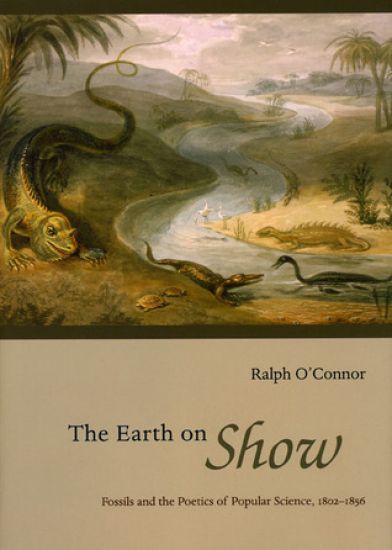
The Earth on Show

The Earth on Show

Ralph O'Connor

University of Chicago Press
2013
nidottu
At the turn of the nineteenth century, geology - and its claims that the earth had a long and colorful prehuman history - was widely dismissed as dangerous nonsense. But just fifty years later, it was the most celebrated of Victorian sciences. Ralph O'Connor tracks the astonishing growth of geology's prestige in Britain, exploring how a new geohistory far more alluring than the standard six days of Creation was assembled and sold to the wider Bible-reading public. Shrewd science writers, O'Connor shows, marketed spectacular visions of past worlds, piquing the public imagination with glimpses of man-eating mammoths, talking dinosaurs, and sea dragons spawned by Satan himself. These authors - including men of science, women, clergymen, biblical literalists, hack writers, blackmailers, and prophets - borrowed freely from the Bible, modern poetry, and the urban entertainment industry, creating new forms of literature in order to transport their readers into a vanished and alien past. In exploring the use of poetry and spectacle in the promotion of popular science, O'Connor proves that geology's success owed much to the literary techniques of its authors.
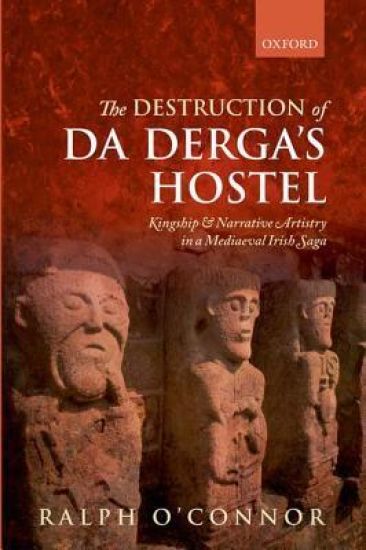
The Destruction of Da Derga's Hostel

The Destruction of Da Derga's Hostel

Ralph O'Connor

Oxford University Press
2013
sidottu
Irish saga literature represents the largest collection of vernacular narrative in existence from the early Middle Ages, using the tools of Christian literacy to retell myths and legends about the pagan past. This unique corpus remains marginal to standard histories of Western literature: its tales are widely read, but their literary artistry remains a puzzle to many even within Celtic studies. This book, the first to offer a systematic literary analysis of any single native Irish tale, aims to show how one particularly celebrated saga 'works' as a story: the Middle Irish tale Togail Bruidne Da Derga (The Destruction of Da Derga's Hostel), which James Carney called 'the finest saga of the early period'. This epic tale tells how the legendary king Conaire was raised by a shadowy Otherworld to the kingship of Tara and, after a fatal error of judgement, was hounded by spectres to an untimely death at Da Derga's Hostel at the hands of his own foster-brothers. By turns lyrical and laconic, and rich in native mythological imagery, the story is told with a dramatic intensity worthy of Greek tragedy, and the intricate symmetry of its narrative procedure recalls the visual patterning of illuminated manuscripts such as The Book of Kells. This book invites the reader to enjoy and understand this literary masterpiece, explaining its narrative artistry within its native, classical and biblical literary contexts. Against a historical backdrop of shifting ideologies of Christian kingship, it interprets the saga's possible significance for contemporary audiences as a questioning exploration of the challenges and paradoxes of kingship.
Victorian Science and Literature, Part II vol 7

Victorian Science and Literature, Part II vol 7

Gowan Dawson; Bernard Lightman; Claire Brock; Marwa Elshakry; Sujit Sivasundaram; Ralph O'Connor; Roger Luckhurst; Justin Sausman

Routledge
2012
sidottu
This eight-volume, reset edition in two parts collects rare primary sources on Victorian science, literature and culture. The sources cover both scientific writing that has an aesthetic component – what might be called 'the literature of science' – and more overtly literary texts that deal with scientific matters.
Victorian Science and Literature, Part II vol 6

Victorian Science and Literature, Part II vol 6

Gowan Dawson; Bernard Lightman; Claire Brock; Marwa Elshakry; Sujit Sivasundaram; Ralph O'Connor; Roger Luckhurst; Justin Sausman

Routledge
2012
sidottu
This eight-volume, reset edition in two parts collects rare primary sources on Victorian science, literature and culture. The sources cover both scientific writing that has an aesthetic component – what might be called 'the literature of science' – and more overtly literary texts that deal with scientific matters.
Victorian Science and Literature, Part II vol 5

Victorian Science and Literature, Part II vol 5

Gowan Dawson; Bernard Lightman; Claire Brock; Marwa Elshakry; Sujit Sivasundaram; Ralph O'Connor; Roger Luckhurst; Justin Sausman

Routledge
2012
sidottu
This eight-volume, reset edition in two parts collects rare primary sources on Victorian science, literature and culture. The sources cover both scientific writing that has an aesthetic component – what might be called 'the literature of science' – and more overtly literary texts that deal with scientific matters.
Victorian Science and Literature, Part II vol 8

Victorian Science and Literature, Part II vol 8

Gowan Dawson; Bernard Lightman; Claire Brock; Marwa Elshakry; Sujit Sivasundaram; Ralph O'Connor; Roger Luckhurst; Justin Sausman

Routledge
2012
sidottu
This eight-volume, reset edition in two parts collects rare primary sources on Victorian science, literature and culture. The sources cover both scientific writing that has an aesthetic component – what might be called 'the literature of science' – and more overtly literary texts that deal with scientific matters.
The Earth on Show

The Earth on Show

Ralph O'Connor

University of Chicago Press
2007
sidottu
At the turn of the nineteenth century, geology - and its claims that the earth had a long and colorful prehuman history - was widely dismissed as dangerous nonsense. But just fifty years later, it was the most celebrated of Victorian sciences. Ralph O'Connor tracks the astonishing growth of geology's prestige in Britain, exploring how a new geohistory far more alluring than the standard six days of Creation was assembled and sold to the wider Biblereading public. Savvy science writer, O'Connor shows, marketed spectacular visions of past worlds, piquing the public imagination with glimpses of man-eating mammoths, talking dinosaurs, and sea-dragons spawned by Satan himself. These authors - including men of science, women, clergymen, biblical literalists, hack writers, blackmailers, and prophets - borrowed freely from the Bible, modern poetry, and the urban entertainment industry, creating new forms of literature in order to transport their readers into a vanished and alien past. In exploring the use of poetry and spectacle in the promotion of popular science, O'Connor proves that geology's success owed much to the literary techniques of its authors. An innovative blend of the history of science, literary criticism, book history, and visual culture, "The Earth on Show" rethinks the relationship between geology and literature in the nineteenth century.