Kirjojen hintavertailu – 12 859 828 kirjaa ja 27 kauppaa

Kirjailija

Ramjee Prasad

Kirjat ja teokset yhdessä paikassa: 47 kirjaa, julkaisuja vuosilta 1996–2025, suosituimpiin kuuluu Cognitive Radio Networks. Vertaile teosten hintoja ja tarkista saatavuus suomalaisista kirjakaupoista.

47 kirjaa

Kirjojen julkaisuvuodet: 1996–2025.

Unlock Your Personalization

Unlock Your Personalization

Ramjee Prasad

Aalborg Universitetsforlag
2012
sidottu
This book is based on a unique and novel technique, C5, which can improve your quality of life. C5 offers five basic key parameters for strengthening your body and mind: "Concentration", "Calmness", "Confidence", "Contentment" and "Creativity", to which the book gives a detailed introduction. The book presents lifes five stages, namely "Innocence", "Intelligence", "Innovativeness", "Involvement", and "Infinity". Life is short, and its limits are given. Living should bring happiness and pleasure, but most people have to cope with enormous problems stemming from heavy workloads, stress and anxiety. In our post-modern, technoscience world, every effort is being made to achieve a high standard of living. Still, few people find an effective solution for relieving stress and achieving their objectives in life. This book promotes an innovative and novel approach to achieving a good quality of life through unlocking your personalisation. The C5 concept looks on creativity as the foundation on which to build a successful life with no stress or tension, allowing you to enjoy nights of deep, peaceful sleep. This is what a good quality of life is really all about. Practising C5 is the simplest way toward steering and controlling your mind in order to unlock your hidden mental potential. The C5 method has been very successful in helping many people, most recently Leo, who is the scientific director of a university institute in the Netherlands, and Inga, a retired teacher from Denmark. Both have practised the C5 concept in their daily lives and they have found that life can indeed be free of stress and tension and that they can enjoy nights of good sleep. The book gives an insight into how Leo and Inga feel about C5 and their views on its value for human life. The book also describes plans for disseminating the C5 concept even further afield. A mind and body centre to educate and train people will be launched for the benefit of humankind. The vision, on which the centre's activities will be driven, will be to serve society by stimulating the growth of Quality of Life.
Ad-Hoc Networking Towards Seamless Communications

Ad-Hoc Networking Towards Seamless Communications

Liljana Gavrilovska; Ramjee Prasad

Springer
2010
nidottu
Ad-Hoc Networking Towards Seamless Communications is dedicated to an area that attracts growing interest in academia and industry and concentrates on wireless ad hoc networking paradigm. The persistent efforts to acquire the ability to establish dynamic wireless connections from anywhere to anyone with any device without prerequisite imbedded infrastructure move the communications boundaries towards ad-hoc networks. Recently, ad hoc networking has attracted growing interest due to advances in wireless communications, and developed framework for running IP based protocols. The expected degree of penetration of these networks will depend on the successful resolution of the key features. Ad-hoc networks pose many complex and open problems for researchers. Ad-Hoc Networking Towards Seamless Communications reveals the state-of-the-art in wireless ad-hoc networking and discusses some of the key research topics that are expected to promote and accelerate the commercial applications of these networks (e.g., MAC, routing, QoS, cross-layer optimization issues, service discovery, mobility, handovers, security).
Voice over IP in Wireless Heterogeneous Networks

Voice over IP in Wireless Heterogeneous Networks

Hanane Fathi; Shyam S. Chakraborty; Ramjee Prasad

Springer
2010
nidottu
karmano hy api boddhavyam boddhavyam ca vikarmanah akarmanas ca boddhavyam gahana karmano gatih The intricacies of action are very hard to understand. Therefore one should know properly what action is, what forbidden action is, and what inaction is. The Bhagvad Gita (4.17) This book is the outcome of the research contribution of Hanane Fathi towards her Ph. D. studies jointly with Shyam S. Chakraborty and Ramjee Prasad as - pervisors. To the best of the authors' knowledge, this is a ?rst book on voice over Internet protocol (VoIP) covering such a broad perspective as illustrated in Figure P.1. This book is a new, forward-looking resource that explores the present and future trends of VoIP in the wireless heterogeneous networks. This book also provides the discovery path that these network infrastructures are following from a perspective of synergies with the present systems and how they will pave the way for future systems. This book is intended for everyone in the ?eld of wireless information and multimedia communications. It provides different levels of material suitable for managers, researchers, network providers, and graduate students. We hope that all readers will experience the bene?ts and power of this knowledge. We have tried our best to make each chapter comprehensive and we cannot claim that this book is without errors. Any remarks to improve the text and correct the errors would be highly appreciated.
Introduction to Ultra Wideband for Wireless Communications

Introduction to Ultra Wideband for Wireless Communications

Homayoun Nikookar; Ramjee Prasad

Springer
2010
nidottu
asakta-buddhih sarvatra . jitatma vigata-sprhah . . . . naiskarmya-siddhim paramam . sannyasenadhigacchati Detached by spiritual intelligence from everything controlling the mind, without material desires, one attains the paramount perfection in cessation of re- tions by renunciation. The Bhagvad Gita (18.49) Compared to traditional carrier-based, Ultra-Wide Band (UWB), or carrier-less, systems implement new paradigms in terms of signal generation and reception. Thus, designing an UWB communication system requires the understanding of how excess bandwidth and very low transmitted powers can be used jointly to provide a reliable radio link. UWB offers systems transceiver potential for very simple implementations. Comparison between UWB and traditional narrow-band systems highlights the following features: Large bandwidth enables very fine time-space resolution for accurate lo- tion of the UWB nodes and for distributing network time stamps. Very short pulses are effectively counter-fighting the channel effect in very dense multipath environments. Data rate (number of pulses transmitted per bit) can be traded with power emission control and distance coverage. Very low power density leads to low probability of signal detection and adds security for all the layers of the communication stack. Very low power density is obtained through radio regulation emission masks; UWB systems are suitable for coexistence with already deployed narrow-band systems.
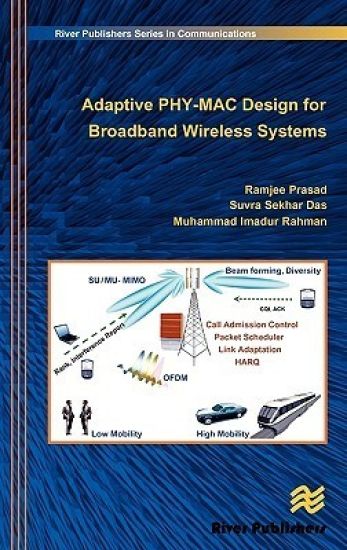
Adaptive PHY-MAC Design for Broadband Wireless Systems

Adaptive PHY-MAC Design for Broadband Wireless Systems

Ramjee Prasad; Suvra Sekhar Das; Muhammad Imadur Rahman

River Publishers
2010
sidottu
The next generation mobile communication networks (4G) have the challenging target of The next generation mobile communication networks (4G) have the challenging target of providing a peak data rate of 1 Gigabit per second local area and 100 Megabit per second wide area. The ability to offer such high data rates in 100MHz bandwidth requires overall a very high spectral efficiency, and hence the need for multi-antenna techniques (MIMO) with spatial multiplexing, fast dynamic link adaptation and packet scheduling, wideband access techniques, and most likely non-contention based spectrum sharing among multiple operators. Many of these required technology components and techniques are well researched and established. Adaptive PHY-MAC Design for Broadband Wireless Systems explains how one can integrate and optimise their use in providing the target cell data rates with high availability. The authors address the ability to cope with interference and enhanced physical layer processing, and simultaneously, the multifaceted system level design. Focus is also on the selection of technology components and techniques, which leads to the highest spectral efficiency and peak data rate availability with reasonable Quality of Service (QoS) support, such as improved outage scenario, reduced delay, guaranteed bit rate, etc. In short, this book will answer questions such as, how individual techniques relate to each other, how can we benefit the gains by suitable combinations of different technologies and how to choose different technological solutions in different scenarios, etc. The next generation mobile communication networks (4G) have the challenging target of The next generation mobile communication networks (4G) have the challenging target of providing a peak data rate of 1 Gigabit per second local area and 100 Megabit per second wide area.
WiMAX Networks

WiMAX Networks

Ramjee Prasad; Fernando J. Velez

Springer
2010
sidottu
Ignited by the mobile phone's huge success at the end of last century, the demand for wireless services is constantly growing. To face this demand, wireless systems have been and are deployed at a large scale. These include mobility-oriented technologies such as GPRS, CDMA or UMTS, and Local Area Network-oriented technologies such as WiFi. WiMAX Networks covers aspects of WiMAX quality of service (QoS), security, mobility, radio resource management, multiple input multiple output antenna, planning, cost/revenue optimization, physical layer, medium access control (MAC) layer, network layer, and so on.
New Horizons in Mobile and Wireless Communications, Volume 1: Radio Interfaces

New Horizons in Mobile and Wireless Communications, Volume 1: Radio Interfaces

Albena Mihovska; Ramjee Prasad

Artech House Publishers
2009
sidottu
Based on cutting-edge research projects in the field, this comprehensive 4-volume book series provides the latest details and covers the most impactful aspects of mobile, wireless, and broadband communications development. These books present key systems and enabling technologies in a clear and accessible manner, offering you a detailed roadmap the future evolution of next generation communications. Drawing upon the insights of leading experts in the field, each of the four volumes is dedicated to an area of critical importance, including Radio Interfaces; Networks, Services and Applications; Reconfigurability; and Ad Hoc Networks.
Single- And Multi-Carrier Mimo Transmission for Broadband Wireless Systems

Single- And Multi-Carrier Mimo Transmission for Broadband Wireless Systems

Ramjee Prasad; Muhammad Imadur Rahman; Sekhar Suvra Das

River Publishers
2009
sidottu
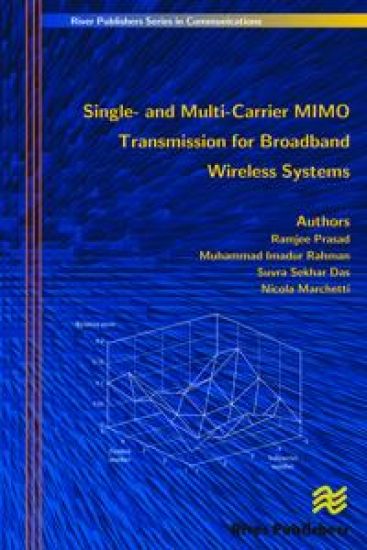
The main focus of Single- and Multi-Carrier MIMO Transmission for Broadband Wireless Systems is to provide the basic understanding of the underlying techniques related to PHY-MAC design of future wireless systems. It includes basic concepts related to single- and multi-carrier transmissions together with MIMO techniques. Discussions related to different recent standards that use single- and multi-carrier transmissions are also explained. Single- and Multi-Carrier MIMO Transmission for Broadband Wireless Systems provides a comprehensive and holistic approach to the variety of technical solutions. Future system design would require these different technologies to work together, and not independently. Therefore, it is very important to analyze the effects and gains when they are put together in a unified platform. This is the prime focus of this book. Moreover, the authors include recent research results which are not yet published in another form. The book is intended to be used for lectures in graduate level courses at universities. PhD level students should also find it useful as this book will outline the fundamental concepts and design methods for PHY and MAC layers of future wireless systems. This book can also be used as a reference by engineers and developers in the industry as well as by researchers in academia. For professionals, system architects and managers who play a key role in the selection of a baseline system concept for future wireless standards, such as IMT-Advanced type architecture, the authors will include discussions, analysis and guidelines to highlight overall system level perspective.
Introduction to Ultra Wideband for Wireless Communications

Introduction to Ultra Wideband for Wireless Communications

Homayoun Nikookar; Ramjee Prasad

Springer-Verlag New York Inc.
2008
sidottu
asakta-buddhih sarvatra . jitatma vigata-sprhah . . . . naiskarmya-siddhim paramam . sannyasenadhigacchati Detached by spiritual intelligence from everything controlling the mind, without material desires, one attains the paramount perfection in cessation of re- tions by renunciation. The Bhagvad Gita (18.49) Compared to traditional carrier-based, Ultra-Wide Band (UWB), or carrier-less, systems implement new paradigms in terms of signal generation and reception. Thus, designing an UWB communication system requires the understanding of how excess bandwidth and very low transmitted powers can be used jointly to provide a reliable radio link. UWB offers systems transceiver potential for very simple implementations. Comparison between UWB and traditional narrow-band systems highlights the following features: Large bandwidth enables very fine time-space resolution for accurate lo- tion of the UWB nodes and for distributing network time stamps. Very short pulses are effectively counter-fighting the channel effect in very dense multipath environments. Data rate (number of pulses transmitted per bit) can be traded with power emission control and distance coverage. Very low power density leads to low probability of signal detection and adds security for all the layers of the communication stack. Very low power density is obtained through radio regulation emission masks; UWB systems are suitable for coexistence with already deployed narrow-band systems.
Voice over IP in Wireless Heterogeneous Networks

Voice over IP in Wireless Heterogeneous Networks

Hanane Fathi; Shyam S. Chakraborty; Ramjee Prasad

Springer-Verlag New York Inc.
2008
sidottu
karmano hy api boddhavyam boddhavyam ca vikarmanah akarmanas ca boddhavyam gahana karmano gatih The intricacies of action are very hard to understand. Therefore one should know properly what action is, what forbidden action is, and what inaction is. The Bhagvad Gita (4.17) This book is the outcome of the research contribution of Hanane Fathi towards her Ph. D. studies jointly with Shyam S. Chakraborty and Ramjee Prasad as - pervisors. To the best of the authors' knowledge, this is a ?rst book on voice over Internet protocol (VoIP) covering such a broad perspective as illustrated in Figure P.1. This book is a new, forward-looking resource that explores the present and future trends of VoIP in the wireless heterogeneous networks. This book also provides the discovery path that these network infrastructures are following from a perspective of synergies with the present systems and how they will pave the way for future systems. This book is intended for everyone in the ?eld of wireless information and multimedia communications. It provides different levels of material suitable for managers, researchers, network providers, and graduate students. We hope that all readers will experience the bene?ts and power of this knowledge. We have tried our best to make each chapter comprehensive and we cannot claim that this book is without errors. Any remarks to improve the text and correct the errors would be highly appreciated.
OFDM towards Fixed and Mobile Broadband Wireless Access
Broadband wireless access is what makes the sending and receiving of data to and from wireless devices possible. OFDM (Orthogonal Frequency Division Multiplexing) is a key technology that allows for robust, high-capacity, high-speed data transmission. Presenting the state-of-the-art in broadband wireless access technology, this unique resource shows professionals how to design OFDM transceivers and develop a novel wireless transceiver system architecture - one that streamlines wireless system development and deployment because of its reusability, scalability and flexibility. This comprehensive resource discusses important requirements, tradeoffs, and other critical design considerations.
Ad-Hoc Networking Towards Seamless Communications

Ad-Hoc Networking Towards Seamless Communications

Liljana Gavrilovska; Ramjee Prasad

Springer-Verlag New York Inc.
2006
sidottu
Ad-Hoc Networking Towards Seamless Communications is dedicated to an area that attracts growing interest in academia and industry and concentrates on wireless ad hoc networking paradigm. The persistent efforts to acquire the ability to establish dynamic wireless connections from anywhere to anyone with any device without prerequisite imbedded infrastructure move the communications boundaries towards ad-hoc networks. Recently, ad hoc networking has attracted growing interest due to advances in wireless communications, and developed framework for running IP based protocols. The expected degree of penetration of these networks will depend on the successful resolution of the key features. Ad-hoc networks pose many complex and open problems for researchers. Ad-Hoc Networking Towards Seamless Communications reveals the state-of-the-art in wireless ad-hoc networking and discusses some of the key research topics that are expected to promote and accelerate the commercial applications of these networks (e.g., MAC, routing, QoS, cross-layer optimization issues, service discovery, mobility, handovers, security).
4G Roadmap and Emerging Communication Technologies

4G Roadmap and Emerging Communication Technologies

Young Kyun Kim; Ramjee Prasad

Artech House
2005
sidottu
Unlike 3G (third generation), which is a specific standard for mobile communications, 4G (fourth generation) is a broad spectrum of communications standards and technologies that are constantly undergoing revision and enhancement. This book provides a solid, up-to-the-minute and multifaceted look at the 4G suite of standards, services, and technologies. It explains how wired and wireless network technology, telecommunications and Web services, IP (Internet Protocol), and consumer electronics are converging to create 4G. The book examines the current telecommunications marketplace, where consumer demand is driving the market for 4G applications and services. Professionals find coverage of important 4G concepts like the Adaptive Global-Net (AGN), the key technologies enabling 4G, the architecture of 4G networks, and the design challenges in developing 4G devices.
From WPANs to Personal Networks: Technologies and Applications
Wireless personal area networks (WPANs) are leading the personalization revolution that is reshaping the telecommunications industry. This comprehensive book offers professionals a solid overview of WPAN's technical foundations, including Bluetooth, and fully explains the cutting-edge technology that enables WPANs, such as the Personal Operating Space (POS). The book covers a range of applications from sensor networks to Ambient Intelligence and the role wireless ad-hoc networks, low-power devices, and security play in these applications. It provides scenarios on how WPANs can be integrated into the current wireless marketplace and how WPANs are emerging as the key component in 4G networks and services. This authoritative volume also provides practitioners with solutions for personal connectivity, a quick reference to current WPAN standards, and insights into future WPAN developments and products.
Applied Satellite Navigation Using GPS, GALILEO, and Augmentation Systems

Applied Satellite Navigation Using GPS, GALILEO, and Augmentation Systems

Ramjee Prasad; Marina Ruggieri

Artech House Publishers
2005
sidottu
When GPS (global positioning system) was made commercially available in the year 2000, it launched a new era of satellite navigation services and technologies as dramatic as a spacecraft launch itself. This authoritative work gives engineers a timely, unified analysis of the various satellite navigation technologies, applications, and services now in operation or development. It describes the entire GPS system in detail, including features of the next-generation GPS-III, and brings readers up to speed on the developing European GALILEO system and its innovative characteristics. The book examines the architectures paving the way for the future integration of satellite navigation systems with wireless communications systems, and for interoperability among different satellite navigation systems themselves.
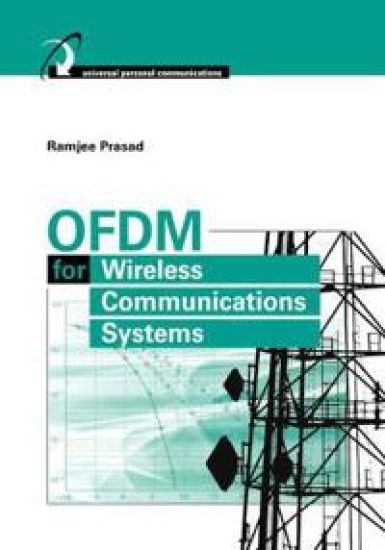
OFDM for Wireless Communications Systems
OFDM (Orthogonal Frequency Division Multiplexing) is a key technology which allows for robust, high capacity, high speed wireless broadband multimedia networks. Written by leading authority and best-selling author Ramjee Prasad, this timely new work offers today's wireless professionals a complete understanding of OFDM technology and applications in wireless communications systems, placing emphasis on wireless LANs (local area networks) and PANs (personal area networks). The book offers an in-depth treatment of the underlying technologies and applications of PANs and describes and evaluates a practical OFDM system concept. Invaluable for wireless engineers and researchers, this cutting edge new book is a must-have for anyone who needs to understand this critical technology and its implementation in today's wireless systems.
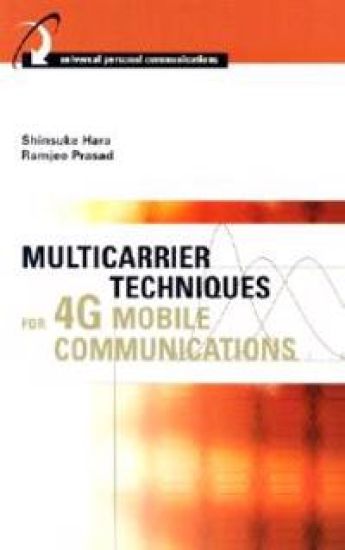
Multicarrier Techniques for 4G Mobile Communications

Multicarrier Techniques for 4G Mobile Communications

Shinsuka Hara; Ramjee Prasad

Artech House
2003
sidottu
The research for future fourth generation (4G) mobile communication systems has been launched worldwide in major companies and academic institutions. This manual seeks to help forward-thinking engineers, researchers and academics gain a thorough understanding of the cutting-edge technologies and design techniques that will make these systems work.
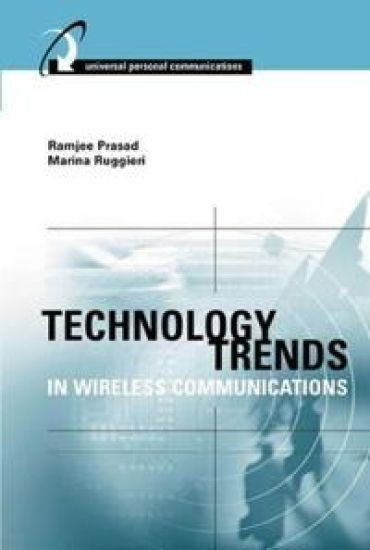
Technology Trends in Wireless Communications

Technology Trends in Wireless Communications

Ramjee Prasad; Marina Ruggieri

Artech House
2003
sidottu
A guide to the technology details you need to know to prepare yourself and your organization for tomorrow's world of wireless multimedia. It includes in-depth discussions on topics in this area, including AAA, multiple access protocols, IPv6 and adaptive technologies. Such resource management strategies as power control, user admission techniques, and congestion control are explained.
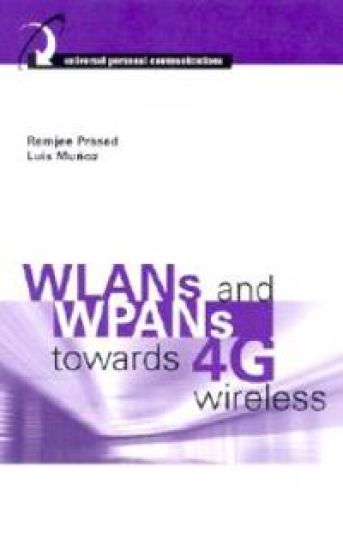
WLANs and WPANs towards 4G Wireless

WLANs and WPANs towards 4G Wireless

Luis Munoz; Ramjee Prasad

Artech House
2003
sidottu
An exploration of the present and future trends of WLANs and WPANs. It examines the path that these infrastructures are following from a perspective of synergies with 3G systems, and how they will pave the way for future 4G systems. The authors present an overview of 3G networks and standards, and discuss intraworking and handover mechanisms between WLANs and WPANs when they support the TCP/IP stack. Several critical issues are explored in depth, including IP routing and mobility, the ad hoc concept, IEEE 802.11 and the HIPERLAN/2 standards, PHY and MAC layers for the main WLAN specifications, the TCP-UDP/IP protocol stack, and 802.11b over TCP/IP.
Wireless IP and Building the Mobile Internet

Wireless IP and Building the Mobile Internet

Sudhir Dixit; Ramjee Prasad

Artech House
2002
sidottu
Written by experts in academia and industry, this manual takes a comprehensive look at the convergence of wireless and Internet technologies that are giving rise to the mobile wireless Internet. This resource offers practitioners an overview of all the elements required to understand and develop future IP (Internet Protocol) based wireless multimedia communications and services.