Kirjojen hintavertailu – 12 859 824 kirjaa ja 27 kauppaa

Kirjailija

Rand Suffolk

Kirjat ja teokset yhdessä paikassa: 4 kirjaa, julkaisuja vuosilta 2022–2023, suosituimpiin kuuluu Evelyn Hofer: Eyes on the City. Vertaile teosten hintoja ja tarkista saatavuus suomalaisista kirjakaupoista.

4 kirjaa

Kirjojen julkaisuvuodet: 2022–2023.

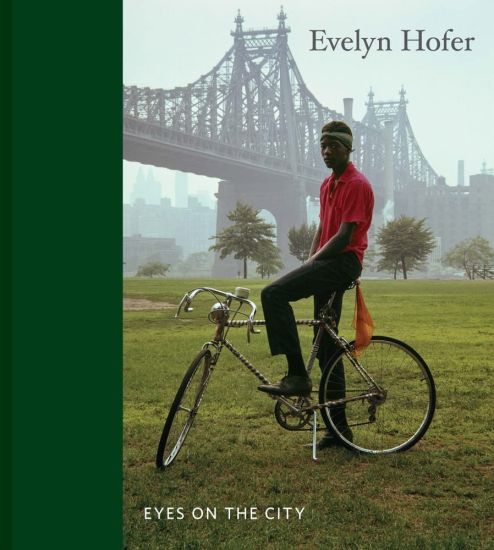
Evelyn Hofer: Eyes on the City

Evelyn Hofer: Eyes on the City

Rand Suffolk; Julián Zugazagoitia

DISTRIBUTED ART PUBLISHERS
2023
sidottu
How Hofer used the photobook form to chronicle American and European cities in an era of postwar transformation Evelyn Hofer was a highly innovative photographer whose prolific career spanned five decades. Despite her extraordinary output, she was underrecognized during her lifetime and was notably referred to by New York Times art critic Hilton Kramer as “the most famous unknown photographer in America.” She made her greatest impact through a series of photobooks, published throughout the 1960s, devoted to European and American cities, including Florence, London, New York, Washington and Dublin, and a book focused on the country of Spain. Comprising more than 100 photographs in both black and white and color, Eyes on the City accompanies the artist’s first major museum exhibition in the United States in over 50 years and is organized around her photobooks. The photographs feature landscapes and architectural views combined with portraiture, conveying the unique character and personality of these urban capitals during a period of intense structural, social and economic transformations after World War II. Evelyn Hofer (1922–2009) was born in Germany and moved to New York in 1946. She was an early adopter of color photography and published assignments for many major magazines including Vogue and Harper's Bazaar. Hofer collaborated with authors such as Mary McCarthy and V. S. Pritchett on several books, including The Stones of Florence (1959), London Perceived (1962) and Dublin: A Portrait (1967). She died in Mexico City.
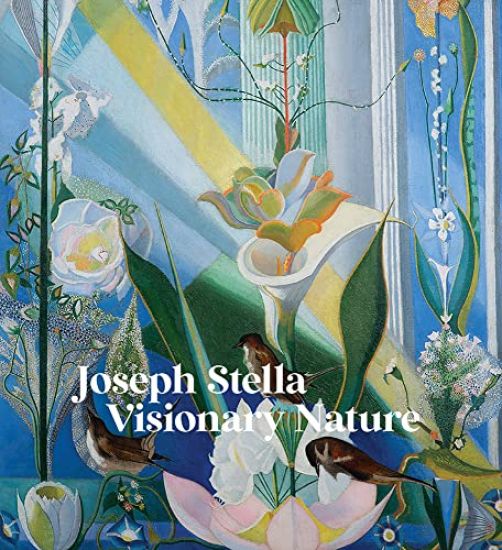
Joseph Stella: Visionary Nature

Joseph Stella: Visionary Nature

Thomas Padon; Rand Suffolk

DISTRIBUTED ART PUBLISHERS
2023
sidottu
The first major monograph on the visionary nature paintings of the pioneering American modernist Though Joseph Stella is primarily recognized for his dynamic Futurist-inspired paintings of New York, particularly of the Brooklyn Bridge, he was also compelled to express the powerful connection he felt to the natural world, a subject he pursued persistently throughout his career. Visionary Nature presents an overdue examination of this prolific and wide-ranging body of nature-based work. If Stella’s cityscapes became symbols of a modern era, his pictures of flowers, plants, birds and trees were rooted in another, more ancient, primal and paradisaical world. Inspired by archaic and classical precedents as well as his own brand of spirituality, these lyrical and exuberant works are also his least understood. By focusing on his unique visual vocabulary and the context in which it developed, Visionary Nature reconsiders how his nature paintings relate to his career, revealing a surprising continuity between seemingly disparate subjects and exploring how these works are reflective of Stella’s passionate spirituality. His close affiliation with the natural world shaped a body of work that ranged from vividly realistic to poetically transcendent and visionary in its unique expression. Joseph Stella (1877–1946) was born in Italy and moved to New York City in 1896. He belonged to avant-garde circles on both sides of the Atlantic and achieved international notoriety in the 1910s for his large-scale paintings of modern America. For the remainder of his career, he traveled widely and produced a large body of nature-themed work. He died in 1946 from heart failure.
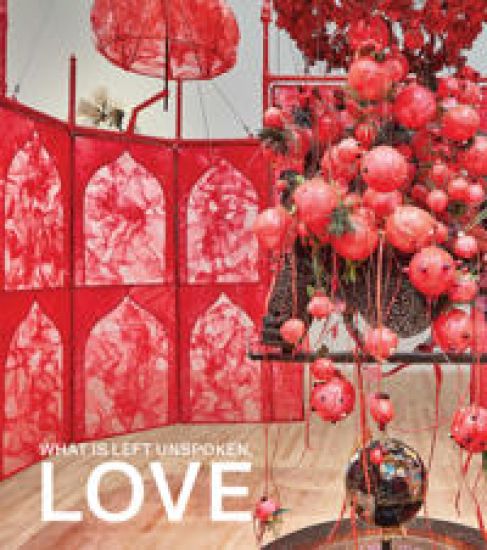
What Is Left Unspoken, Love

What Is Left Unspoken, Love

Rand Suffolk

DISTRIBUTED ART PUBLISHERS
2022
sidottu
Artworks from the early 1990s through the present examine the many ways that love is understood, expressed or left unspoken This volume features more than 35 diverse and multigenerational artists, exploring themes that grapple with some of the most firmly rooted concepts of love, including the union of two people and their co-belonging in a shared destiny, the ties that bind family and friends, and loving practice that comes from action, intention and commitment to promote the worth and well-being of community. Artists include: Ghada Amer, Rina Banerjee, Thomas Barger, Patty Chang, Susanna Coffey, James Drake, Keith Edmier and Farrah Fawcett, Alanna Fields, Dara Friedman, Andrea Galvani, General Idea, Jeffrey Gibson, Felix Gonzalez-Torres, Kahlil Robert Irving, Tomashi Jackson, María de los Angeles Rodríguez Jiménez, Rashid Johnson, Gerald Lovell, Rafael Lozano-Hemmer, Kerry James Marshall, Felicita Felli Maynard, Wangechi Mutu, Ebony G. Patterson, Paul Pfeiffer, Magnus Plessen, Gabriel Rico, Dario Robleto, RongRong&inri, Michelle Stuart, Vivian Suter, Jana Vander-Lee, Carrie Mae Weems and Akram Zaatari.
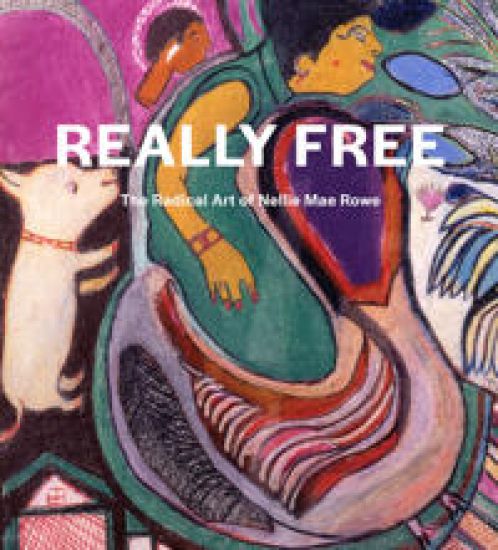
Really Free: The Radical Art of Nellie Mae Rowe

Really Free: The Radical Art of Nellie Mae Rowe

Katherine Jentleson; Rand Suffolk

DISTRIBUTED ART PUBLISHERS
2022
sidottu
An unprecedented look at Nellie Mae Rowe’s art as a radical act of self-expression and liberation in the post-civil rights-era South A New York Times critics' pick | Best Art Books 2021 During the last 15 years of her life, Nellie Mae Rowe lived on Paces Ferry Road, a major thoroughfare in Vinings, Georgia, and welcomed visitors to her “Playhouse,” which she decorated with found-object installations, handmade dolls, chewing-gum sculptures and hundreds of drawings. Rowe created her first works as a child in rural Fayetteville, Georgia, but only found the time and space to reclaim her artistic practice in the late 1960s, following the deaths of her second husband and her longtime employer. This book offers an unprecedented view of how Rowe cultivated her drawing practice late in life, starting with colorful and at times simple sketches on found materials and moving toward her most celebrated, highly complex compositions on paper. Through photographs and reconstructions of her Playhouse created for an experimental documentary on her life, this publication is also the first to juxtapose her drawings with her art environment. Nellie Mae Rowe (1900–82) grew up in rural Fayetteville, Georgia. When her Playhouse became an Atlanta attraction, she began to exhibit her art outside of her home, beginning with Missing Pieces: Georgia Folk Art, 1770–1976, a traveling exhibition that brought attention to several Southern self-taught artists, including Rowe and Howard Finster. In 1982, the year she died, Rowe’s work received a new level of acclaim, as she was honored in a solo exhibition at Spelman College and included as one of three women artists in the Corcoran Gallery of Art’s landmark exhibition .