Kirjojen hintavertailu – 12 903 725 kirjaa ja 27 kauppaa

Kirjailija

Randall Collins

Kirjat ja teokset yhdessä paikassa: 28 kirjaa, julkaisuja vuosilta 1986–2026, suosituimpiin kuuluu Max Weber. Vertaile teosten hintoja ja tarkista saatavuus suomalaisista kirjakaupoista.

28 kirjaa

Kirjojen julkaisuvuodet: 1986–2026.

Den sociologiska blicken : att se bortom det uppenbara
Är sociologi ett studium av självklarheter, draperat i jargong? Tvärtom. Randall Collins ger läsaren en blick för sociologisk forskning när den är som mest fängslande. I denna välkända introduktionsbok problematiseras det till synes uppenbara. Gamla oreflekterade föreställningar om samhället och vårt sociala liv visar sig vara just oreflekterade intuitioner som inte håller streck när man undersöker dem noga. Med utgångspunkt i rationalitetens begränsningar och vikten av sociala ritualer, diskuterar Collins en rad spännande områden som makt, brottslighet, sex, kärlek och kvinnans position i samhället. Genom sin förmåga att behandla djupa och svåra sociologiska frågor med ett klart och elegant språk, har Collins åstadkommit något så ovanligt som en introduktion som är av intresse också för avancerade studenter och forskare. Ur bokens förord:"Boken uppvisar sociologin när den är som bäst, men illustrerar också hur en bra sociolog tänker, skriver och ser." Thomas Brante, professor i sociologi vid Lunds universitet

Interaction Ritual Chains

Interaction Ritual Chains

Randall Collins

Princeton University Press
2005
pokkari

Halvin toimitettuna 42,90 €

Sex, smoking, and social stratification are three very different social phenomena. And yet, argues sociologist Randall Collins, they and much else in our social lives are driven by a common force: interaction rituals. Interaction Ritual Chains is a major work of sociological theory that attempts to develop a "radical microsociology." It proposes that successful rituals create symbols of group membership and pump up individuals with emotional energy, while failed rituals drain emotional energy. Each person flows from situation to situation, drawn to those interactions where their cultural capital gives them the best emotional energy payoff. Thinking, too, can be explained by the internalization of conversations within the flow of situations; individual selves are thoroughly and continually social, constructed from the outside in. The first half of Interaction Ritual Chains is based on the classic analyses of Durkheim, Mead, and Goffman and draws on micro-sociological research on conversation, bodily rhythms, emotions, and intellectual creativity. The second half discusses how such activities as sex, smoking, and social stratification are shaped by interaction ritual chains. For example, the book addresses the emotional and symbolic nature of sexual exchanges of all sorts--from hand-holding to masturbation to sexual relationships with prostitutes--while describing the interaction rituals they involve. This book will appeal not only to psychologists, sociologists, and anthropologists, but to those in fields as diverse as human sexuality, religious studies, and literary theory.
The Sociology of Philosophies

The Sociology of Philosophies

Randall Collins

The Belknap Press
2000
nidottu
Randall Collins traces the movement of philosophical thought in ancient Greece, China, Japan, India, the medieval Islamic and Jewish world, medieval Christendom, and modern Europe. What emerges from this history is a social theory of intellectual change, one that avoids both the reduction of ideas to the influences of society at large and the purely contingent local construction of meanings. Instead, Collins focuses on the social locations where sophisticated ideas are formed: the patterns of intellectual networks and their inner divisions and conflicts.
Macrohistory

Macrohistory

Randall Collins

Stanford University Press
1999
sidottu
This book explores the accomplishments of the golden age of "macrohistory," the sociologically informed analysis of long-term patterns of political, economic, and social change that has reached new heights of sophistication in the last decades of the twentieth century. It describes the scholarly revolution that has taken place in the Marxian-inspired theory of revolutions, the shift to a state-breakdown model in which revolutions, rather than bubbling up from discontent below, start at the top in the fiscal strains of the state. The author links revolutions to military-centered transformations of the state, and reviews how he used this theory in the early 1980s to predict the breakdown of the Soviet empire. He goes on to show the implications of viewing states and societies from the outside in, including the geopolitical patterns that affect the legitimacy of dominant ethnic groups and thus determine the direction of ethnic assimilation or fragmentation. Another application is the author's new theory of democratization, which asserts that democracy depends not merely on a widening of the franchise but on a geopolitical pattern favoring federated structures of collegially shared power. Using this new theoretical tool, the author argues that Anglophone scholars have polemically misinterpreted German history, and that the roots of the Holocaust cannot be determined by German-bashing but must be attributed to processes that affect all of us. Other essays generalize about the historical dynamics and transformations of markets. Going beyond Weber's Eurocentric model, the author proposes a more general theory that explains the origins of capitalism in Japan on an independent but parallel path.
Four Sociological Traditions

Four Sociological Traditions

Randall Collins

Oxford University Press Inc
1994
nidottu

Halvin toimitettuna 139,60 €

Organized along the same lines as Three Sociological Traditions, Four Sociological Traditions is Randall Collins' updated guide to the development of modern sociology. Explaining in a brief, readable format the 4 main schools of sociological thought, this book represents a concise intellectual history of the development of sociology. Widely adopted as either a main or supplemental text, Four Sociological Traditions presents clearly the conflict tradition of Marx and Weber, the ritual solidarity tradition of Durkheim, and the microinteractionist tradition of Mead, Blumer, and Garfinkel, and - new in this edition - the rational choice/utilitarian tradition. One of the most lively and exciting writers in sociology, Randall Collins introduces students to the roots of social theory, indicating areas where progress has been made in our understanding, as well as those areas where controversy still exists. Students will find Four Sociological Traditions a fresh, thorough, and thought-provoking examination.
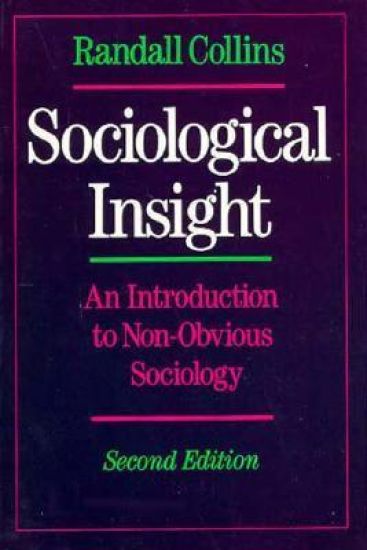
Sociological Insight

Sociological Insight

Randall Collins

Oxford University Press Inc
1992
nidottu
In the second edition of this successful and highly regarded supplementary text, Randall Collins has revised his preface and added a new chapter in which he considers how sociology can inform the development of artificial intelligence. As he points out, computer designers and programmers have to consider the social as well as psychological characteristics of human beings in designing computers that can approximate human thinking.
Weberian Sociological Theory

Weberian Sociological Theory

Randall Collins

Cambridge University Press
1986
pokkari
Randall Collins convincingly argues that much of Max Weber’s work has been misunderstood, and that many of his most striking and sophisticated theories have been overlooked. By analysing hitherto little known aspects of Weber’s writings, Professor Collins is able both to offer a new interpretation of Weberian sociology and to show how the more fruitful lines of the Weberian approach can be projected to an analysis of current world issues. Professor Collins begins with Weber’s theory of the rise of capitalism, examining it in the light of Weber’s later writings on the subject and extending the Weberian line of reasoning to suggest a ‘Weberian revolution’ in both medieval Europe and China. He also offers a new interpretation of Weber’s theory of politics, showing it to be a ‘world-system’ model; and he expands this into a theory of geopolitics, using as a particular illustration the prediction of the future decline of Russian world power. Another ‘buried treasure’ in the corpus is Weber’s conflict theory of the family as sex and property, which Professor Collins applies to the historical question of the conditions that led to the initial rise in the status of women. The broad view of Weber’s works shows that Weberian sociology remains intellectually alive and that many of his theories still represent the frontier of our knowledge about large-scale social processes.
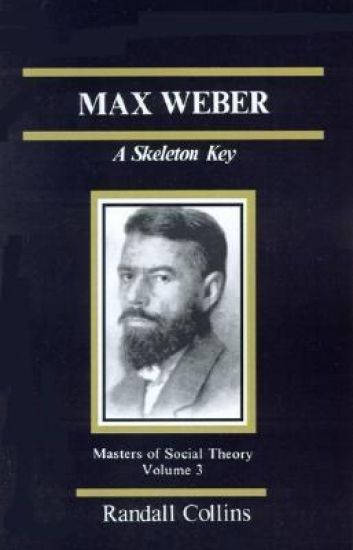
Max Weber

Max Weber

Randall Collins

SAGE Publications Inc
1986
nidottu
A concise overview of sociology's greatest classic thinker. Weber emerges as a multisided intellectual personality, whose intellectual ambivalence is related to a neurotic breakdown in mid career and to the compromises he was forced to make among the conflicting politievanscal and intellectual currents of his time. Here we see what kinds of philosophical idealism Weber favored and what kinds he rejected, as well as his position on the "battle of methods" among the economists of his day. Weber's famous "Protestant Ethic" thesis is put in proper perspective as an intellectual gambit in one particular period of his life, rather than as his central achievement. Weber's overall view of social change is examined, drawing on several of his crucial but little-known works, on the sociology of ancient agrarian societies and on the long chain of organizational conditions that finally led to modern capitalism. Also treated are Weber's major works on the sociology of religion and his contributions to systematic theory, especially social stratification. The many strands of Weber's theorizing, and his tremendous scope of comparisons across world history, are here brought into a clear and manageable focus. "Randall Collins is the leading sociological theorist of his generation. He has also done more than anyone else to use and develop Weberian sociology. Accordingly we expect much from Collins on Weber and Max Weber does not disappoint." --Whitney Pope, Indiana University "A lively, efficient, reliable interpretation, captivating for the novice, provocative for the expert. . . . Typical Collins." --Alan Sica, University of Kansas "A good introductory survey of Weber's major writings. It is interesting reading and highly informative." --Contemporary Sociology "A good capsule biography . . . very readable . . . honors clarity, style, and the value of popular understanding." --The Madison Independent Books in Review "Ideal for an introductory course on Weber." --Ethics