Kirjailija
Randy Martin
Kirjat ja teokset yhdessä paikassa: 23 kirjaa, julkaisuja vuosilta 1990–2024, suosituimpiin kuuluu Knowledge LTD. Vertaile teosten hintoja ja tarkista saatavuus suomalaisista kirjakaupoista.
23 kirjaa
Kirjojen julkaisuvuodet: 1990–2024.
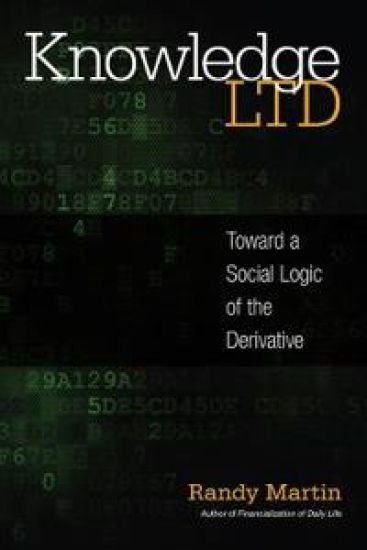
Catastrophes ranging from the travesties of financial markets and the explosion of the Deepwater Horizon oil well to the tsunami that struck northern Japan and the levees breaking in New Orleans are examples of the limits of knowledge. Author Randy Martin insists that the expertise erected to prevent these natural and social disasters failed in each case. In Knowledge LTD, Martin explores how both the limits of knowledge and the social constructions of culture reflect the way we organize social life in the face of disasters and their aftermath. He examines this crisis of knowledge as well as the social movements that rose up in its wake. Martin not only treats derivatives as financial contracts for pricing risk, but also shows how the derivative works in economic terms, where the very unity of the economy is undone. Knowledge LTD ultimately points to a more comprehensive reordering of the once separate spheres of economy, polity, and culture. Martin provides a new way of understanding the social significance of the all-pervasive derivative logic.

In Lost, Found, and Forever, Leslie Yerkes shares a heartwarming true story about love, trust, and second chances. When Beej, a compassionate young girl, learns that her neighbor's dog Coco is lost, she embarks on a determined search to bring her home. Along the way, she crosses paths with Big Boy, a homeless and scared dog, who becomes her next mission. With her loyal dog Buddha Bear by her side, Beej uses patience, persistence, and kindness to slowly earn Big Boy's trust. This uplifting tale of resilience and friendship demonstrates that when you make a promise-especially to those who depend on you-you keep it. Lost, Found, and Forever is a touching narrative of love for animals, the importance of perseverance, and the joy of helping others find their way home.
You Left Your Paw Prints on My Heart
Leslie Yerkes; Randy Martin
Catalyst Consulting Group, Inc.
2024
pokkari
Big Boy is a South African Mastiff who lives wild in the back lot of a manufacturing plant in Cleveland, OH. He has no one to feed him, provide water, or care for him. He lives with the constant memory of being beaten by the human who used to own him, before that man brought him to this field and left him to survive on his own. One day, a young girl and her dog show up with roasted chicken, a smile, and hope. Will that be enough to rescue Big Boy? To move him from his dreary home, living forgotten in some forsaken field? And will he choose to walk away from this unhappy existent and be rescued by a human and her dog? This is a story of relationships filled with mistrust and doubt, friendship and betrayal, and the flowering of love. It's about choosing to overcome the past and step forward into the future. It's a story of how it feels when someone loves you.
Derivatives and the Wealth of Societies
Benjamin Lee; Randy Martin; Martin Randy
University of Chicago Press
2016
sidottu
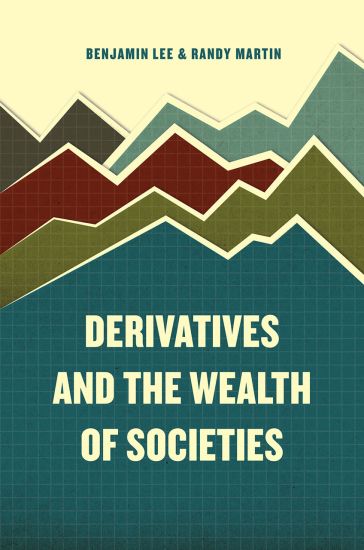
Derivatives were responsible for one of the worst financial meltdowns we have ever seen, one from which we have not yet fully recovered. However, they are likewise capable of generating some of the most incredible wealth we have ever seen. This book asks how we might ensure the latter while avoiding the former. Looking past the usual arguments for the regulation or abolition of derivative finance, it asks a more probing question: what kinds of social institutions and policies would we need to put in place to both avail ourselves of the derivative's wealth production and make sure that production benefits all of us? To answer that question, the contributors to this book draw upon their deep backgrounds in finance, social science, art, and the humanities to create a new way of understanding derivative finance that does justice to its social and cultural dimensions. They offer a two-pronged analysis. First, they develop a social understanding of the derivative that casts it in the light of anthropological concepts such as the gift, ritual, play, dividuality, and performativity. Second, they develop a derivative understanding of the social, using financial concepts such as risk, hedging, optionality, and arbitrage to uncover new dimensions of contemporary social reality. In doing so, they construct a necessary, renewed vision of derivative finance as a deeply embedded aspect not just of our economics but our culture.
Derivatives and the Wealth of Societies
Benjamin Lee; Randy Martin; Martin Randy
University of Chicago Press
2016
nidottu
Derivatives were responsible for one of the worst financial meltdowns we have ever seen, one from which we have not yet fully recovered. However, they are likewise capable of generating some of the most incredible wealth we have ever seen. This book asks how we might ensure the latter while avoiding the former. Looking past the usual arguments for the regulation or abolition of derivative finance, it asks a more probing question: what kinds of social institutions and policies would we need to put in place to both avail ourselves of the derivative's wealth production and make sure that production benefits all of us? To answer that question, the contributors to this book draw upon their deep backgrounds in finance, social science, art, and the humanities to create a new way of understanding derivative finance that does justice to its social and cultural dimensions. They offer a two-pronged analysis. First, they develop a social understanding of the derivative that casts it in the light of anthropological concepts such as the gift, ritual, play, dividuality, and performativity. Second, they develop a derivative understanding of the social, using financial concepts such as risk, hedging, optionality, and arbitrage to uncover new dimensions of contemporary social reality. In doing so, they construct a necessary, renewed vision of derivative finance as a deeply embedded aspect not just of our economics but our culture.
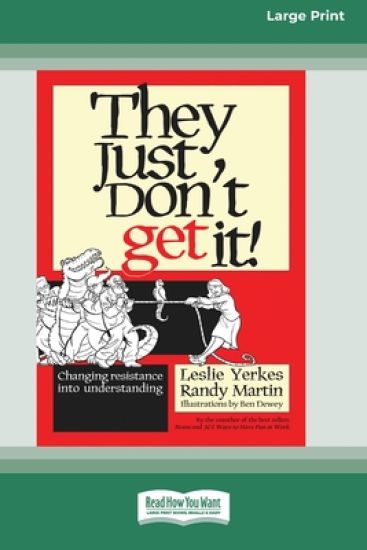
They Just Don't Get It explores an all - too - common dilemma: when people around us just don't ''''''''get'''''''' our ideas. Through a charming illustrated fable, it tells the story of Julie Buffet, a hard - charging advertising executive with what she thinks is a fantastic idea for a new campaign. But nobody gets it - not the client, not her boss, and not her coworkers. And Julie can't understand why. We have all found ourselves in this situation at one time or another, and we typically see this problem as a failing on the part of the other party. They Just Don't Get It shows that when they don't get it, the problem is really with ourselves. And it shows how we can finally really get it. If you've ever wondered why your ideas haven't been received or acted on in the way you expected, this book will reveal your own personal responsibility in helping others understand your intentions. Examining the root source of the problem, it details five keys to ''''''''getting it'''''''' - Take Responsibility; Practice Humility; Begin with Questions; Remain Open; and Believe They Can. These five simple steps will enable you to overcome the problem, and prevent it from happening in the future. They Just Don't Get It will teach you how to communicate your ideas better, and how to motivate others to pull together and achieve your highest goals in any situation.
A balanced review of the changing nature of the corporate university
In this significant Marxist critique of contemporary American imperialism, the cultural theorist Randy Martin argues that a finance-based logic of risk control has come to dominate Americans’ everyday lives as well as U. S. foreign and domestic policy. Risk management-the ability to adjust for risk and to leverage it for financial gain-is the key to personal finance as well as the defining element of the massive global market in financial derivatives. The United States wages its amorphous war on terror by leveraging particular interventions (such as Iraq) to much larger ends (winning the war on terror) and by deploying small numbers of troops and targeted weaponry to achieve broad effects. Both in global financial markets and on far-flung battlegrounds, the multiplier effects are difficult to foresee or control. Drawing on theorists including Michel Foucault, Giorgio Agamben, Michael Hardt, Antonio Negri, and Achille Mbembe, Martin illuminates a frightening financial logic that must be understood in order to be countered. Martin maintains that finance divides the world between those able to avail themselves of wealth opportunities through risk taking (investors) and those who cannot do so, who are considered “at risk.” He contends that modern-day American imperialism differs from previous models of imperialism, in which the occupiers engaged with the occupied to “civilize” them, siphon off wealth, or both. American imperialism, by contrast, is an empire of indifference: a massive flight from engagement. The United States urges an embrace of risk and self-management on the occupied and then ignores or dispossesses those who cannot make the grade.
Tenured Bosses and Disposable Teachers
Marc Bousquet; Randy Martin
Southern Illinois University Press
2003
nidottu
Exposing the poor working conditions of contingent composition faculty, these essays explore practical alternatives to the unfair labour practices that are all too common on campuses today. They consider the nature, extent and economics of the managed labour problem in composition instruction.
Corruption in Corporate Culture argues that there has been a serious breakdown in the systems designed to ensure fair dealing in the self-governing and self-policing worlds of U. S. business and finance. Contending that a war of containment has been launched to conceal both the repercussions of corporate corruption and government complicity in it, this special issue of Social Text evaluates these problems on a systemic level, as well as focusing on immediate cases. Addressing several recent high-profile scandals, contributors examine both the short- and the long-term ramifications of corporate corruption: the means by which Martha Stewart has been used as an icon and a scapegoat in the ImClone case while broader critical issues have failed to receive the attention they demand; the divisive ways in which the antifeminist Independent Women’s Forum-along with other neocon organizations and pundits-has moved the debate regarding the deregulation of the financial services sector far to the right of the far right; the collapse of Enron and what it means for corporate governance; the global implications of U. S. corporate corruption; the confusion over public and private business transactions in Argentina; the moral panic ensuing from the random violence caused by the Washington, D. C. area snipers precisely as the U. S. was launching a war on Iraq because of its supposed weapons of mass destruction; and the emergence of a new business model and icon, the hiphop mogul. Contributors. Peter Bratsis, David M. Brennan, Jane Marcus-Delgado, Randy Martin, Nancy Shaw, Ella Shohat, Christopher Holmes Smith, Barbara Spindel, Susan Willis
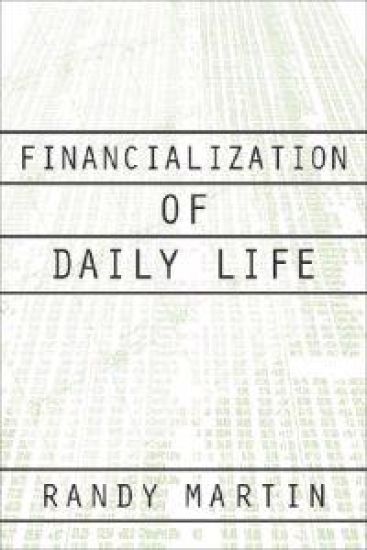
While trillions of dollars came and went in the stock market boom of the 1990s, the image of "every man and woman a CEO" may turn out to be the era's lasting legacy. Business news, once reserved to specialized papers or sections of the larger news of the day, came to the forefront in cable television and in cultural images of how ordinary people, through the internet and other avenues could not only master their financial life, but move money and equity around with the ease of a financial titan. Financialization of Daily Life looks at how this transformation occurred, and how it is just now becoming a significant, and troubling, aspect of our political and cultural life. Randy Martin takes us through all of the aspects of our "financialization." He examines how the shift in economic life arose not only from changes in culture, but also from new policy priorities that emphasize controlling inflation over promoting growth. He offers a close reading of self-help literature that teaches parents how to rear financially literate children and to instruct adults in the fundamentals of fiscal management. He examines just what a society that treats financial investment as a national past time really looks like, and how that society is transforming the world. In a country rocked by scandals in accounting and banking, the identification ordinary citizens make with, and the risk with which they engage in, the stock market calls into question the very basis of our economic system. Randy Martin spells out in clear terms the implications our financial doings--and undoing--have for the way we organize our lives, and, especially, our money. Author note: Randy Martin is Professor of Art and Public Policy and Associate Dean of Faculty and Interdisciplinary Programs at New York University. He is the author and editor of seven books, including, most recently, On Your Marx: Rethinking Socialism and the Left.
911 A Public Emergency?
Brent Hayes Edwards; Stefano Harney; Randy Martin; Timothy Mitchell; Ella Shohat; Fred Moten
Duke University Press
2002
pokkari
Since September 11, public discourse has often been framed in terms of absolutes: an age of innocence gives way to a present under siege, while the United States and its allies face off against the Axis of Evil. This special issue of Social Text aims to move beyond these binaries toward thoughtful analysis. The editors argue that the challenge for the Left is to develop an antiterrorism stance that acknowledges the legacy of U. S. trade and foreign policy as well as the diversity of the Muslim faith and the dangers presented by fundamentalism of all kinds. Examining the strengths and shortcomings of area, race, and gender studies in the search for understanding, this issue considers cross-cultural feminism as a means of combating terrorism; racial profiling of Muslims in the context of other racist logics; and the homogenization of dissent. The issue includes poetry, photographic work, and an article by Judith Butler on the discursive space surrounding the attacks of September 11. This impressive range of contributions questions the meaning and implications of the events of September 11 and their aftermath. Contributors. Muneer Ahmad, Meena Alexander, Lopamudra Basu, Judith Butler, Zillah Eisenstein, Stefano Harney, Randy Martin, Rosalind C. Morris, Fred Moten, Sandrine Nicoletta, Yigal Nizri, Jasbir K. Puar, Amit S. Rai, Ella Shohat, Ban Wang
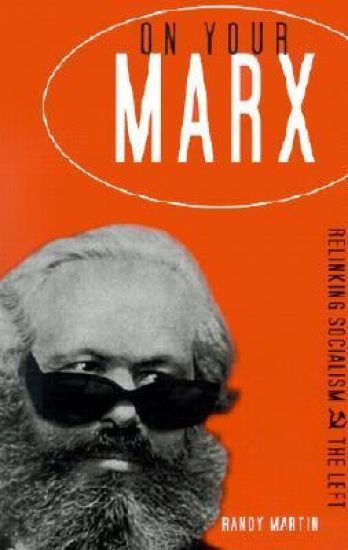
Reclaims Marx for today through a fundamental reconsideration of how his works should be read. Why-and how-does Marx speak to our day? Seeking to reestablish the link between Marx, socialism, and the Left, this book negotiates the common ground between orthodox marxism and postmarxism to show how Marx can elaborate the present. More than a claim for his relevance, this book is also a forceful statement about how theory relates to political project and organization. What, Randy Martin asks, does Marx have to say to the discourses of radical democracy, postmodernism, and globalization-all of which purport to solve problems that emerge in Marx’s writings? A reading of Marx can in fact disclose the limitations of the contemporary modes of criticism, identifying the difficult conceptual problems that cannot be avoided or overcome. Using readings of Marx to restage contemporary political discussions, On Your Marx reengages orthodox and postmarxist understandings in a critical and constructive conversation. In doing so, the book points to powerful new alliances between cultural and political theorists and activists, opening new possibilities for mobilization and social justice.
While trillions of dollars came and went in the stock market boom of the 1990s, the image of "every man and woman a CEO" may turn out to be the era's lasting legacy. Business news, once reserved to specialized papers or sections of the larger news of the day, came to the forefront in cable television and in cultural images of how ordinary people, through the internet and other avenues could not only master their financial life, but move money and equity around with the ease of a financial titan. Financialization of Daily Life looks at how this transformation occurred, and how it is just now becoming a significant, and troubling, aspect of our political and cultural life. Randy Martin takes us through all of the aspects of our "financialization." He examines how the shift in economic life arose not only from changes in culture, but also from new policy priorities that emphasize controlling inflation over promoting growth. He offers a close reading of self-help literature that teaches parents how to rear financially literate children and to instruct adults in the fundamentals of fiscal management. He examines just what a society that treats financial investment as a national past time really looks like, and how that society is transforming the world. In a country rocked by scandals in accounting and banking, the identification ordinary citizens make with, and the risk with which they engage in, the stock market calls into question the very basis of our economic system. Randy Martin spells out in clear terms the implications our financial doings-and undoing-have for the way we organize our lives, and, especially, our money.
Describes how people perform their sexual identities as athletes and spectators.