Kirjojen hintavertailu – 12 903 735 kirjaa ja 27 kauppaa

Kirjailija

Ranjan Datta

Kirjat ja teokset yhdessä paikassa: 12 kirjaa, julkaisuja vuosilta 2018–2026, suosituimpiin kuuluu Rethinking and Relearning Disaster Adaptations from and within Indigenous Land-Based Perspectives. Vertaile teosten hintoja ja tarkista saatavuus suomalaisista kirjakaupoista.

12 kirjaa

Kirjojen julkaisuvuodet: 2018–2026.

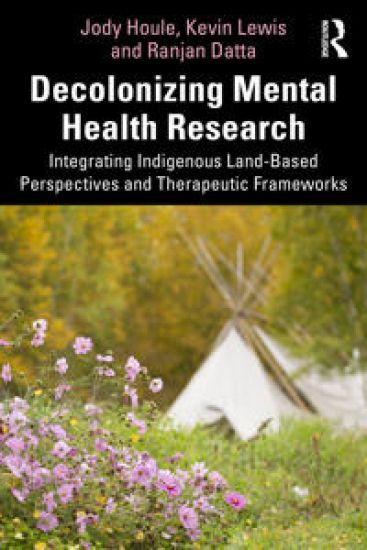
Decolonizing Mental Health Research

Decolonizing Mental Health Research

Jody Houle; Kevin Lewis; Ranjan Datta

TAYLOR FRANCIS LTD
2026
sidottu
This book reimagines health research through Indigenous knowledge systems, specifically Cree First Nation land-based science. With contributions from a range of Indigenous, academic, and interdisciplinary experts, this book challenges dominant Western health paradigms by centering wâhkôhtowin — a Cree kinship system that acknowledges the interconnectedness of all beings, human and non-human — as a foundation for holistic health and healing. The authors introduce a tangible model for implementing Indigenous land-based knowledge and adapted Western therapies to foster resilience and cultural continuity, as well as offer wâhkôhtowin (kinship) as a theoretical, methodological, and conceptual guidepost for the book’s journey. This book not only offers critiques of colonial health frameworks but shares actionable strategies for restoring Indigenous health sovereignty and healing through community engagement, confrontations of intergenerational trauma, and other holistic Indigenous therapeutic modalities. It also incorporates discussion questions and reflection prompts for deeper engagement. Through storytelling, personal narratives, and Elder teachings, the book illustrates how Indigenous-led, land-based therapeutic practices can heal intergenerational trauma, center individual and relational well-being, and promote environmental sustainability. This is an indispensable resource for those committed to sustainable, culturally rooted health practices that benefit both Indigenous and broader communities. It is ideal for health researchers, educators, policymakers, practitioners, and graduate students seeking decolonized, community-centered approaches to health and well-being.
Decolonizing Mental Health Research

Decolonizing Mental Health Research

Jody Houle; Kevin Lewis; Ranjan Datta

TAYLOR FRANCIS LTD
2026
nidottu
This book reimagines health research through Indigenous knowledge systems, specifically Cree First Nation land-based science. With contributions from a range of Indigenous, academic, and interdisciplinary experts, this book challenges dominant Western health paradigms by centering wâhkôhtowin — a Cree kinship system that acknowledges the interconnectedness of all beings, human and non-human — as a foundation for holistic health and healing. The authors introduce a tangible model for implementing Indigenous land-based knowledge and adapted Western therapies to foster resilience and cultural continuity, as well as offer wâhkôhtowin (kinship) as a theoretical, methodological, and conceptual guidepost for the book’s journey. This book not only offers critiques of colonial health frameworks but shares actionable strategies for restoring Indigenous health sovereignty and healing through community engagement, confrontations of intergenerational trauma, and other holistic Indigenous therapeutic modalities. It also incorporates discussion questions and reflection prompts for deeper engagement. Through storytelling, personal narratives, and Elder teachings, the book illustrates how Indigenous-led, land-based therapeutic practices can heal intergenerational trauma, center individual and relational well-being, and promote environmental sustainability. This is an indispensable resource for those committed to sustainable, culturally rooted health practices that benefit both Indigenous and broader communities. It is ideal for health researchers, educators, policymakers, practitioners, and graduate students seeking decolonized, community-centered approaches to health and well-being.

Rethinking and Relearning Disaster Adaptations from and within Indigenous Land-Based Perspectives

Rethinking and Relearning Disaster Adaptations from and within Indigenous Land-Based Perspectives

Ranjan Datta; Margot Hurlbert; Arifatul Kibria; Rajmoni Singha; Barsha Kairy; Somashree Chattapadhya

Taylor & Francis
2026
Nidottu
This book offers a critical exploration into Indigenous knowledge systems, particularly focusing on Indigenous land-based knowledge and practice in reshaping disaster adaptations. Drawing from Indigenous communities in Bangladesh, this book challenges transformational approaches to disaster resilience by centering on land-based perspectives intrinsic to Indigenous cultures. The book showcases how Indigenous and land-based minority communities in Bangladesh have historically coped with and adapted to environmental challenges. It navigates beyond the Eurocentric paradigm, acknowledging the richness of traditional Indigenous land-based knowledge and practice embedded in the relationship between Indigenous peoples, land-based minority communities, and their natural environments. The book focuses on the interconnectedness of Indigenous land-based knowledge, culture, and sustainable practices, providing a blueprint for rethinking contemporary disaster adaptation strategies. By relearning from Indigenous land-based perspectives, readers gain invaluable insights into holistic, community-based approaches prioritizing harmony with nature over technological fixes. Through Indigenist, decolonial, relational, and feminist theoretical research frameworks, the book advocates for a paradigm shift in disaster management, emphasizing the importance of respecting and integrating Indigenous land-based solutions. Rethinking and Relearning Disaster Adaptations from and within Indigenous Land-Based Perspectives emerges as a crucial resource for scholars, policymakers, and practitioners seeking to foster resilience through a more inclusive and culturally sensitive lens.
Decolonizing Climate Adaptation

Decolonizing Climate Adaptation

Ranjan Datta

Springer Nature Switzerland AG
2025
sidottu
This volume critically examines the intersection of settler colonialism and human-created disasters affecting many Indigenous and minority communities in Bangladesh. Through a rigorous exploration of both historical and contemporary contexts, it shows how colonial and postcolonial policies have excavated community vulnerabilities, intensified environmental degradation, and intensified disaster risks. Drawing on community-led case studies and centering Indigenous voices, the book advocates for decolonial approaches to disaster adaptation, emphasizing Indigenous and local sovereignty, traditional environmental knowledge, and self-determined leadership in addressing climate crises. It highlights sustainable and culturally interconnected strategies such as forest conservation, land-based agriculture, and community-led adaptation planning. This volume is a critical resource for scholars, students, and practitioners working in environmental policy, climate adaptation, conservation, Indigenous studies, gender studies, environmental sustainability, and ethnic studies. It contributes to an urgent and timely conversation about how to reimagine disaster adaptation through relational, land-based, and decolonial frameworks.
Indigenous Practice and Community-Led Climate Change Solutions

Indigenous Practice and Community-Led Climate Change Solutions

Rani Muthukrishnan; Ranjan Datta

TAYLOR FRANCIS LTD
2025
nidottu
This book centers Indigenous knowledge and practice in community-led climate change solutions. This book will be one of the first academic books to use the consciousness framework to examine and explain humans' situatedness and role in maintaining ecosystems' health. Drawing on teachings from the Indigenous Adi-Shaiva community, the authors present up-to-date research on meanings and implications of South Asian traditional cosmic knowledge, which focuses on relationality and spirituality connected to climate change. This knowledge can create innovative climate change solutions in areas including land, water, traditional management, sustainability goals and expectations, and state development projects. Overall, this book provides an innovative framework for nonviolent climate solutions, which has its foundations in a traditional cosmic and consciousness-based context. This book, which aims to bridge the gap between Indigenous and Western perspectives by re-educating researchers and decolonizing popular climate change solutions, will be of great interest to students and scholars studying climate change, conservation, environmental anthropology, and Indigenous studies on a broader scale.
Rethinking and Relearning Disaster Adaptations from and within Indigenous Land-Based Perspectives

Rethinking and Relearning Disaster Adaptations from and within Indigenous Land-Based Perspectives

Ranjan Datta; Margot Hurlbert; Arifatul Kibria; Rajmoni Singha; Barsha Kairy; Somashree Chattapadhya

TAYLOR FRANCIS LTD
2025
sidottu
This book offers a critical exploration into Indigenous knowledge systems, particularly focusing on Indigenous land-based knowledge and practice in reshaping disaster adaptations. Drawing from Indigenous communities in Bangladesh, this book challenges transformational approaches to disaster resilience by centering on land-based perspectives intrinsic to Indigenous cultures. The book showcases how Indigenous and land-based minority communities in Bangladesh have historically coped with and adapted to environmental challenges. It navigates beyond the Eurocentric paradigm, acknowledging the richness of traditional Indigenous land-based knowledge and practice embedded in the relationship between Indigenous peoples, land-based minority communities, and their natural environments. The book focuses on the interconnectedness of Indigenous land-based knowledge, culture, and sustainable practices, providing a blueprint for rethinking contemporary disaster adaptation strategies. By relearning from Indigenous land-based perspectives, readers gain invaluable insights into holistic, community-based approaches prioritizing harmony with nature over technological fixes. Through Indigenist, decolonial, relational, and feminist theoretical research frameworks, the book advocates for a paradigm shift in disaster management, emphasizing the importance of respecting and integrating Indigenous land-based solutions. Rethinking and Relearning Disaster Adaptations from and within Indigenous Land-Based Perspectives emerges as a crucial resource for scholars, policymakers, and practitioners seeking to foster resilience through a more inclusive and culturally sensitive lens.
Northern Indigenous Community-Led Disaster Management and Sustainable Energy

Northern Indigenous Community-Led Disaster Management and Sustainable Energy

Ranjan Datta; Margot Hurlbert; William Marion

TAYLOR FRANCIS LTD
2024
nidottu
This book examines how current energy and water management processes affect Indigenous communities in North America, with a specific focus on Canada. Currently, there is no known Indigenous community-led strategic environmental assessment (ICSEA) tool for developing community-led solutions for pipeline leak management and energy resiliency. To fill this lacuna, this book draws on expertise from Indigenous Elders, Knowledge-keepers, and leaders representing communities who are highly affected by pipeline leaks. These accounts highlight the importance of providing Indigenous communities with technical information and advice, allowing them to practise community-led disaster management, and giving them direct access to lawyers and decision-makers. If implemented into current policy and practice, these tools would succeed in helping rural Indigenous communities make strategic choices for sustainable energy management and utilize their lands, traditional territories, and natural resources to develop a robust, sustainable energy future. Prioritizing Indigenous perspectives on energy management and governance, this book will be of great interest to students, scholars, and practitioners working in the fields of energy policy and justice, environmental sociology, and Indigenous studies.
Indigenous Practice and Community-Led Climate Change Solutions

Indigenous Practice and Community-Led Climate Change Solutions

Rani Muthukrishnan; Ranjan Datta

TAYLOR FRANCIS LTD
2023
sidottu
This book centers Indigenous knowledge and practice in community-led climate change solutions. This book will be one of the first academic books to use the consciousness framework to examine and explain humans' situatedness and role in maintaining ecosystems' health. Drawing on teachings from the Indigenous Adi-Shaiva community, the authors present up-to-date research on meanings and implications of South Asian traditional cosmic knowledge, which focuses on relationality and spirituality connected to climate change. This knowledge can create innovative climate change solutions in areas including land, water, traditional management, sustainability goals and expectations, and state development projects. Overall, this book provides an innovative framework for nonviolent climate solutions, which has its foundations in a traditional cosmic and consciousness-based context. This book, which aims to bridge the gap between Indigenous and Western perspectives by re-educating researchers and decolonizing popular climate change solutions, will be of great interest to students and scholars studying climate change, conservation, environmental anthropology, and Indigenous studies on a broader scale.
Northern Indigenous Community-Led Disaster Management and Sustainable Energy

Northern Indigenous Community-Led Disaster Management and Sustainable Energy

Ranjan Datta; Margot Hurlbert; William Marion

TAYLOR FRANCIS LTD
2023
sidottu
This book examines how current energy and water management processes affect Indigenous communities in North America, with a specific focus on Canada. Currently, there is no known Indigenous community-led strategic environmental assessment (ICSEA) tool for developing community-led solutions for pipeline leak management and energy resiliency. To fill this lacuna, this book draws on expertise from Indigenous Elders, Knowledge-keepers, and leaders representing communities who are highly affected by pipeline leaks. These accounts highlight the importance of providing Indigenous communities with technical information and advice, allowing them to practise community-led disaster management, and giving them direct access to lawyers and decision-makers. If implemented into current policy and practice, these tools would succeed in helping rural Indigenous communities make strategic choices for sustainable energy management and utilize their lands, traditional territories, and natural resources to develop a robust, sustainable energy future. Prioritizing Indigenous perspectives on energy management and governance, this book will be of great interest to students, scholars, and practitioners working in the fields of energy policy and justice, environmental sociology, and Indigenous studies.
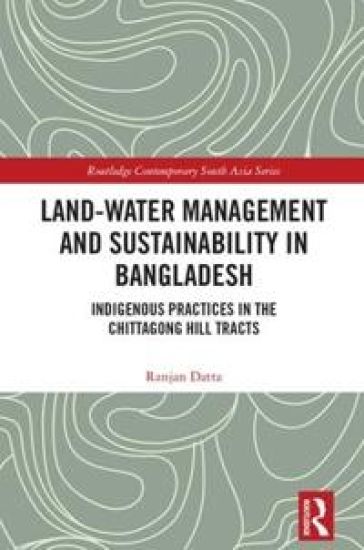
Land-Water Management and Sustainability in Bangladesh
Indigenous sustainability and environmental management cannot be understood apart from a community, its traditions, and ways of practices. Interest in Indigenous environmental sustainability has grown steadily in past years, reflecting traditional cultural perspectives about the environment and developing research priorities. This book explores the ways one Indigenous community, in the Chittagong Hill Tracts in Bangladesh, has reinvented the meanings of sustainability using traditional knowledge to blend traditional sentiment with large-scale dislocations within their own communities and international economy. This book includes up-to-date research on meanings and implications of Bangladeshi Indigenous sustainability which focus on relationality, traditional knowledge, spirituality and hybridity. Environmental protection and Indigenous land-water rights have been ignored in the region and there has been minimal research on these intersecting issues locally or internationally. Land-Water Management and Sustainability in Bangladesh addresses this gap in an examination of postcolonial Indigenous communities’ complex and shifting relationships to nature and in relation to discrimination and oppression regarding Indigenous land and rights. The book makes a contribution to both the research literature and on the ground practice in inspiring a new culture of sustainability in Indigenous regions. Bringing together community engagement, activism, critical research and scholarship to advocate for socio-environmental justice and trans-systematic sustainability of cross-cultural knowledge, the book will be of interest to academics of a variety of disciplines, including environmental policy, conservation practices, Indigenous studies environmental sustainability, anthropology, American studies, Asian Studies and ethnic studies.
Land-Water Management and Sustainability in Bangladesh
Indigenous sustainability and environmental management cannot be understood apart from a community, its traditions, and ways of practices. Interest in Indigenous environmental sustainability has grown steadily in past years, reflecting traditional cultural perspectives about the environment and developing research priorities. This book explores the ways one Indigenous community, in the Chittagong Hill Tracts in Bangladesh, has reinvented the meanings of sustainability using traditional knowledge to blend traditional sentiment with large-scale dislocations within their own communities and international economy. This book includes up-to-date research on meanings and implications of Bangladeshi Indigenous sustainability which focus on relationality, traditional knowledge, spirituality and hybridity. Environmental protection and Indigenous land-water rights have been ignored in the region and there has been minimal research on these intersecting issues locally or internationally. Land-Water Management and Sustainability in Bangladesh addresses this gap in an examination of postcolonial Indigenous communities’ complex and shifting relationships to nature and in relation to discrimination and oppression regarding Indigenous land and rights. The book makes a contribution to both the research literature and on the ground practice in inspiring a new culture of sustainability in Indigenous regions. Bringing together community engagement, activism, critical research and scholarship to advocate for socio-environmental justice and trans-systematic sustainability of cross-cultural knowledge, the book will be of interest to academics of a variety of disciplines, including environmental policy, conservation practices, Indigenous studies environmental sustainability, anthropology, American studies, Asian Studies and ethnic studies.