Kirjojen hintavertailu – 12 859 819 kirjaa ja 27 kauppaa

Kirjailija

Ranjith R Unnithan

Kirjat ja teokset yhdessä paikassa: 4 kirjaa, julkaisuja vuosilta 2021–2026, suosituimpiin kuuluu Optical Brain–Computer Interface. Vertaile teosten hintoja ja tarkista saatavuus suomalaisista kirjakaupoista.

4 kirjaa

Kirjojen julkaisuvuodet: 2021–2026.

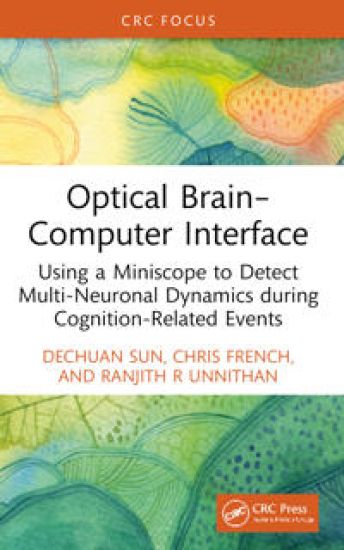
Optical Brain–Computer Interface

Optical Brain–Computer Interface

Dechuan Sun; French Chris; Ranjith R Unnithan

Taylor & Francis
2026
Nidottu
In this shortform book, Sun, French, and Unnithan explore state- of- the- art optical recording techniques, with a focus on the revolutionary miniaturized fluorescence microscope – the miniscope – for real- time and in vivo monitoring of multi- neuronal dynamics during cognition- related events. The miniscope is a powerful tool that allows real- time in vivo optical recording of multi- neuronal activity in freely moving animals. This book highlights the use of the miniscope in the context of the hippocampus, a brain region crucial for memory and cognition. The authors employ a combination of theoretical concepts, practical applications, and illustrative case studies to deliver a comprehensive understanding of optical recording techniques. They provide step- by- step guides for using the miniscope, offer insights into data analysis, and discuss its implications in the context of hippocampal research and brain– computer interfaces. Readers will gain profound insights into the role of the hippocampus in memory and cognition, and expert knowledge of the latest miniaturized in vivo optical recording techniques. The book provides them with thorough guidance on implementing a miniaturized fluorescence microscope for a brain– computer interface and information on advanced analysis techniques on the activity of large neuronal populations. This book provides an invaluable short and accessible guide for researchers, neuroscientists, and brain– computer interface enthusiasts to enable them to understand and leverage the immense potential of this advanced optical recording methodology.
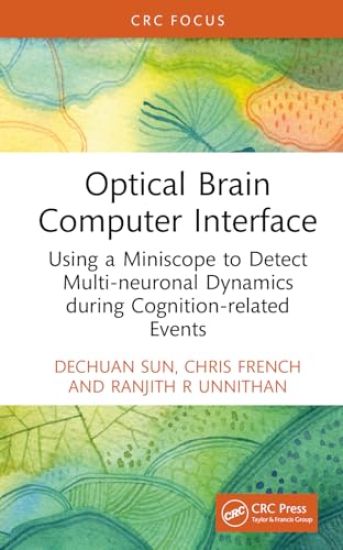
Optical Brain–Computer Interface

Optical Brain–Computer Interface

Dechuan Sun; Chris French; Ranjith R Unnithan

TAYLOR FRANCIS LTD
2024
sidottu
In this shortform book, Sun, French, and Unnithan explore state- of- the- art optical recording techniques, with a focus on the revolutionary miniaturized fluorescence microscope – the miniscope – for real- time and in vivo monitoring of multi- neuronal dynamics during cognition- related events. The miniscope is a powerful tool that allows real- time in vivo optical recording of multi- neuronal activity in freely moving animals. This book highlights the use of the miniscope in the context of the hippocampus, a brain region crucial for memory and cognition. The authors employ a combination of theoretical concepts, practical applications, and illustrative case studies to deliver a comprehensive understanding of optical recording techniques. They provide step- by- step guides for using the miniscope, offer insights into data analysis, and discuss its implications in the context of hippocampal research and brain– computer interfaces. Readers will gain profound insights into the role of the hippocampus in memory and cognition, and expert knowledge of the latest miniaturized in vivo optical recording techniques. The book provides them with thorough guidance on implementing a miniaturized fluorescence microscope for a brain– computer interface and information on advanced analysis techniques on the activity of large neuronal populations. This book provides an invaluable short and accessible guide for researchers, neuroscientists, and brain– computer interface enthusiasts to enable them to understand and leverage the immense potential of this advanced optical recording methodology.

Multispectral Image Sensors Using Metasurfaces

Multispectral Image Sensors Using Metasurfaces

Xin He; Paul Beckett; Ranjith R Unnithan

SPRINGER VERLAG, SINGAPORE
2022
nidottu
This book presents how metasurfaces are exploited to develop new low-cost single sensor based multispectral cameras. Multispectral cameras extend the concept of conventional colour cameras to capture images with multiple color bands and with narrow spectral passbands. Images from a multispectral camera can extract significant amount of additional information that the human eye or a normal camera fails to capture and thus have important applications in precision agriculture, forestry, medicine, object identifications, and classifications. Conventional multispectral cameras are made up of multiple image sensors each externally fitted with a narrow passband wavelength filters, optics and multiple electronics. The need for multiple sensors for each band results in a number of problems such as being bulky, power hungry and suffering from image co-registration problems which in turn limits their wide usage. The above problems can be eliminated if a multispectral camera is developed using one single image sensor.?
Multispectral Image Sensors Using Metasurfaces

Multispectral Image Sensors Using Metasurfaces

Xin He; Paul Beckett; Ranjith R Unnithan

SPRINGER VERLAG, SINGAPORE
2021
sidottu
This book presents how metasurfaces are exploited to develop new low-cost single sensor based multispectral cameras. Multispectral cameras extend the concept of conventional colour cameras to capture images with multiple color bands and with narrow spectral passbands. Images from a multispectral camera can extract significant amount of additional information that the human eye or a normal camera fails to capture and thus have important applications in precision agriculture, forestry, medicine, object identifications, and classifications. Conventional multispectral cameras are made up of multiple image sensors each externally fitted with a narrow passband wavelength filters, optics and multiple electronics. The need for multiple sensors for each band results in a number of problems such as being bulky, power hungry and suffering from image co-registration problems which in turn limits their wide usage. The above problems can be eliminated if a multispectral camera is developed using one single image sensor.?