Kirjojen hintavertailu – 12 859 828 kirjaa ja 27 kauppaa

Kirjailija

Ranulf Higden

Kirjat ja teokset yhdessä paikassa: 12 kirjaa, julkaisuja vuosilta 2012–2025, suosituimpiin kuuluu Polychronicon Ranulphi Higden Monachi Cestrensis. Vertaile teosten hintoja ja tarkista saatavuus suomalaisista kirjakaupoista.

12 kirjaa

Kirjojen julkaisuvuodet: 2012–2025.

Polychronicon Ranulphi Higden, monachi Cestrensis

Polychronicon Ranulphi Higden, monachi Cestrensis

Ranulf Higden

Cambridge University Press
2012
pokkari
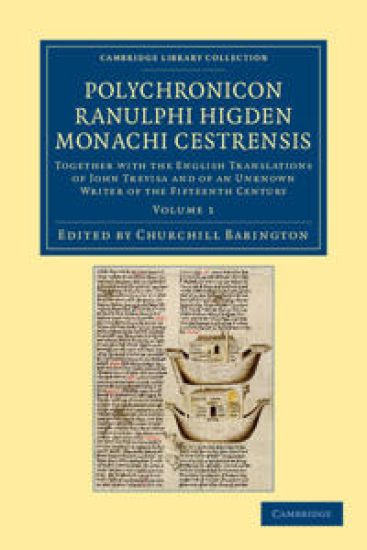
Ranulf Higden (d.1364) was a monk at the abbey of St Werburgh in Chester. His most important literary work is this universal chronicle, which survives in over a hundred Latin manuscripts, testifying to its popularity. The earliest version of it dates from 1327, but Higden continued writing until his death, expanding and updating the text. It was also continued in other monastic houses, most importantly by John Malvern of Worcester. The English translation made by John Trevisa in the 1380s was also widely circulated and is included in this work, published in nine volumes for the Rolls Series between 1865 and 1886. The chronicle shows how fourteenth-century scholars understood world history and geography. Volume 1 contains the first part of Book 1, which describes the historical geography of the known world.
Polychronicon Ranulphi Higden, monachi Cestrensis

Polychronicon Ranulphi Higden, monachi Cestrensis

Ranulf Higden

Cambridge University Press
2012
pokkari
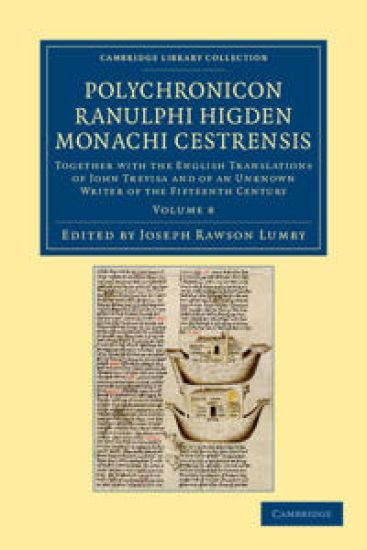
Ranulf Higden (d.1364) was a monk at the abbey of St Werburgh in Chester. His most important literary work is this universal chronicle, which survives in over a hundred Latin manuscripts, testifying to its popularity. The earliest version of it dates from 1327, but Higden continued writing until his death, expanding and updating the text. It was also continued in other monastic houses, most importantly by John Malvern of Worcester. The English translation made by John Trevisa in the 1380s was also widely circulated and is included in this work, published in nine volumes for the Rolls Series between 1865 and 1886. The chronicle shows how fourteenth-century scholars understood world history and geography. Volume 8 concludes Book 7, reaching the reign of Edward III. The appendices contain some of the continuations written after Higden's death.
Polychronicon Ranulphi Higden, monachi Cestrensis

Polychronicon Ranulphi Higden, monachi Cestrensis

Ranulf Higden

Cambridge University Press
2012
pokkari
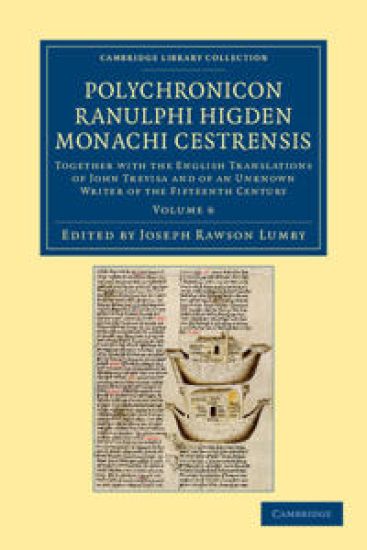
Ranulf Higden (d.1364) was a monk at the Abbey of St Werburgh in Chester. His most important literary work is this universal chronicle, which survives in over a hundred Latin manuscripts, testifying to its popularity. The earliest version of it dates from 1327, but Higden continued writing until his death, expanding and updating the text. It was also continued in other monastic houses, most importantly by John Malvern of Worcester. The English translation made by John Trevisa in the 1380s was also widely circulated and is included in this work, published in nine volumes for the Rolls Series between 1865 and 1886. The chronicle shows how fourteenth-century scholars understood world history and geography. Volume 6 concludes Book 5, mostly on Anglo-Saxon England, and contains the beginning of Book 6, from King Alfred to the mid-tenth century.
Polychronicon Ranulphi Higden, monachi Cestrensis

Polychronicon Ranulphi Higden, monachi Cestrensis

Ranulf Higden

Cambridge University Press
2012
pokkari
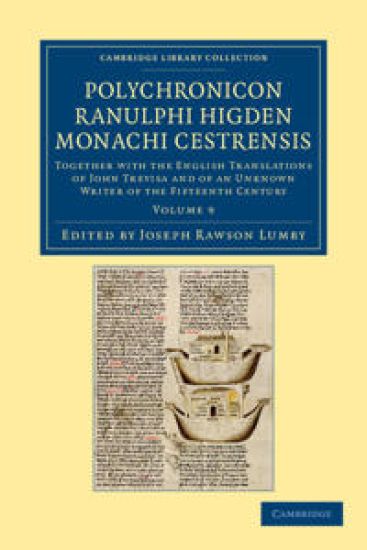
Ranulf Higden (d.1364) was a monk at the abbey of St Werburgh in Chester. His most important literary work is this universal chronicle, which survives in over a hundred Latin manuscripts, testifying to its popularity. The earliest version of it dates from 1327, but Higden continued writing until his death, expanding and updating the text. It was also continued in other monastic houses, most importantly by John Malvern of Worcester. The English translation made by John Trevisa in the 1380s was also widely circulated and is included in this work, published in nine volumes between 1865 and 1886. The chronicle shows how fourteenth-century scholars understood world history and geography. Volume 9 contains the continuation partly written by John Malvern, with the section from 1381 to 1394 now believed to have been written at Westminster. Glossaries and indexes to the entire work are also included.
Polychronicon Ranulphi Higden, monachi Cestrensis

Polychronicon Ranulphi Higden, monachi Cestrensis

Ranulf Higden

Cambridge University Press
2012
pokkari
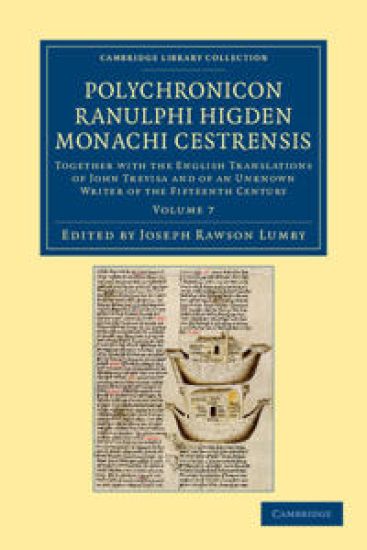
Ranulf Higden (d.1364) was a monk at the abbey of St Werburgh in Chester. His most important literary work is this universal chronicle, which survives in over a hundred Latin manuscripts, testifying to its popularity. The earliest version of it dates from 1327, but Higden continued writing until his death, expanding and updating the text. It was also continued in other monastic houses, most importantly by John Malvern of Worcester. The English translation made by John Trevisa in the 1380s was also widely circulated and is included in this work, published in nine volumes for the Rolls Series between 1865 and 1886. The chronicle shows how fourteenth-century scholars understood world history and geography. Volume 7 continues Book 6 from the mid-tenth century to 1066, also providing a history of Normandy. The first part of Book 7 covers the Norman Conquest to the reign of King Stephen.
Polychronicon Ranulphi Higden, monachi Cestrensis

Polychronicon Ranulphi Higden, monachi Cestrensis

Ranulf Higden

Cambridge University Press
2012
pokkari
Ranulf Higden (d.1364) was a monk at the abbey of St Werburgh in Chester. His most important literary work is this universal chronicle, which survives in over a hundred Latin manuscripts, testifying to its popularity. The earliest version of it dates from 1327, but Higden continued writing until his death, expanding and updating the text. It was also continued in other monastic houses, the most important being by John Malvern of Worcester. The English translation made by John Trevisa in the 1380s was also widely circulated and is included in this work, published in nine volumes for the Rolls Series between 1865 and 1886. The chronicle shows how fourteenth-century scholars understood world history and geography. Volume 3 contains the remainder of Book 2, and Book 3 covers the ancient world up to the age of Alexander the Great.
Polychronicon Ranulphi Higden, monachi Cestrensis

Polychronicon Ranulphi Higden, monachi Cestrensis

Ranulf Higden

Cambridge University Press
2012
pokkari
Ranulf Higden (d.1364) was a monk at the abbey of St Werburgh in Chester. His most important literary work is this universal chronicle, which survives in over a hundred Latin manuscripts, testifying to its popularity. The earliest version of it dates from 1327, but Higden continued writing until his death, expanding and updating the text. It was also continued in other monastic houses, most importantly by John Malvern of Worcester. The English translation made by John Trevisa in the 1380s was also widely circulated and is included in this work, published in nine volumes for the Rolls Series between 1865 and 1886. The chronicle shows how fourteenth-century scholars understood world history and geography. Volume 2 contains the remainder of Book 1, on the description of Britain, and twenty-eight chapters of Book 2, on the early history of the world to the reign of Saul in Israel.

Polychronicon Ranulphi Higden, monachi Cestrensis

Polychronicon Ranulphi Higden, monachi Cestrensis

Ranulf Higden

Cambridge University Press
2012
pokkari
Ranulf Higden (d.1364) was a monk at the abbey of St Werburgh in Chester. His most important literary work is this universal chronicle, which survives in over a hundred Latin manuscripts, testifying to its popularity. The earliest version of it dates from 1327, but Higden continued writing until his death, expanding and updating the text. It was also continued in other monastic houses, most importantly by John Malvern of Worcester. The English translation made by John Trevisa in the 1380s was also widely circulated and is included in this work, published in nine volumes for the Rolls Series between 1865 and 1886. The chronicle shows how fourteenth-century scholars understood world history and geography. Volume 4 contains the rest of Book 3, on the Hellenistic period up to the birth of Christ, and the start of Book 4, up to the end of the first century CE.
Polychronicon Ranulphi Higden, monachi Cestrensis

Polychronicon Ranulphi Higden, monachi Cestrensis

Ranulf Higden

Cambridge University Press
2012
pokkari
Ranulf Higden (d.1364) was a monk at the abbey of St Werburgh in Chester. His most important literary work is this universal chronicle, which survives in over a hundred Latin manuscripts, testifying to its popularity. The earliest version of it dates from 1327, but Higden continued writing until his death, expanding and updating the text. It was also continued in other monastic houses, most importantly by John Malvern of Worcester. The English translation made by John Trevisa in the 1380s was also widely circulated and is included in this work, published in nine volumes for the Rolls Series between 1865 and 1886. The chronicle shows how fourteenth-century scholars understood world history and geography. Volume 5 concludes Book 4, covering the later Roman Empire and the Saxon invasion of Britain. The first part of Book 5 concentrates on the spread of Christianity in Anglo-Saxon England.