Kirjailija
Raphael Patai
Kirjat ja teokset yhdessä paikassa: 21 kirjaa, julkaisuja vuosilta 1962–2025, suosituimpiin kuuluu Hebrew Myths. Vertaile teosten hintoja ja tarkista saatavuus suomalaisista kirjakaupoista.
21 kirjaa
Kirjojen julkaisuvuodet: 1962–2025.
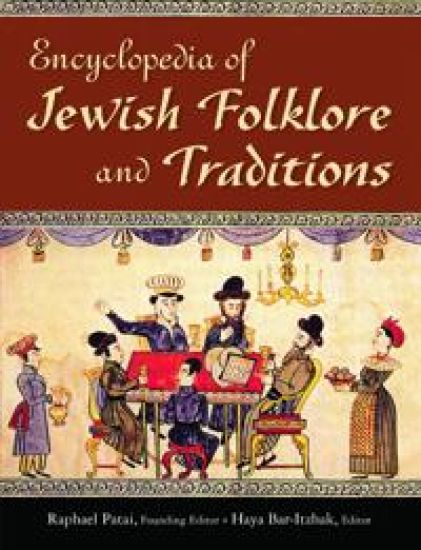
This multicultural reference work on Jewish folklore, legends, customs, and other elements of folklife is the first of its kind.
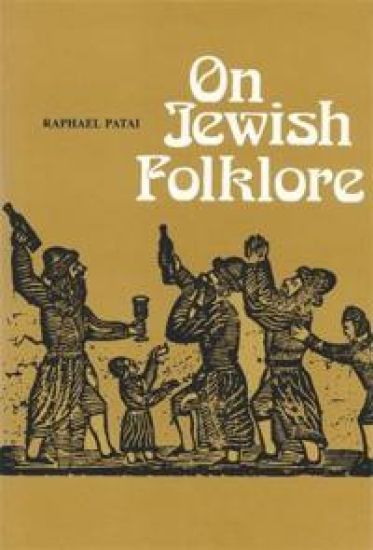
On Jewish Folklore spans a half-century of scholarly inquiry by the noted anthropologist and biblical scholar Raphael Patai. He essays collected in this volume, some of which are presented for the first time in English translation, provide a rich harvest of Jewish customs and traditional beliefs, gathered from all over the world and from ancient to modern times. Among the subjects Dr. Patai investigated and recorded are the history and oral traditions of the now-vanished Marrano community of Meshhed, Iran; cultural change among the so-called Jewish Indians of Mexico; beliefs and customs in connection with birth, the rainbow, and the color blue; Jewish variants of the widespread custom of earth-eating; and the remarkable parallels between the rituals connected with enthroning a new king as described in the Bible and as practiced among certain African tribes.

In this monumental work, Raphael Patai opens up an entirely new field of cultural history by tracing Jewish alchemy from antiquity to the nineteenth century. Until now there has been little attention given to the significant role that Jews played in the field of alchemy. Here, drawing on an enormous range of previously unexplored sources, Patai reveals that Jews were major players in what was for centuries one of humanity's most compelling intellectual obsessions. Originally published in 1994. The Princeton Legacy Library uses the latest print-on-demand technology to again make available previously out-of-print books from the distinguished backlist of Princeton University Press. These editions preserve the original texts of these important books while presenting them in durable paperback and hardcover editions. The goal of the Princeton Legacy Library is to vastly increase access to the rich scholarly heritage found in the thousands of books published by Princeton University Press since its founding in 1905.
The Kingdom of Jordan stands strategically amidst the countries of the Near East, bordered by Israel, Syria, Iraq, and Saudi Arabia. A small country, poor in resources, it is torn by conflicting tensions and policies and by strife between pro-Western and pro-Soviet elements. This study of Jordan in the English language surveys all aspects of Jordan's life: the land, the people, their history, politics, economy, society, and culture. Mr. Patai fully considers the issue of Westernization versus traditionalism and its probable bearing on Jordan's future. Originally published in 1958. The Princeton Legacy Library uses the latest print-on-demand technology to again make available previously out-of-print books from the distinguished backlist of Princeton University Press. These editions preserve the original texts of these important books while presenting them in durable paperback and hardcover editions. The goal of the Princeton Legacy Library is to vastly increase access to the rich scholarly heritage found in the thousands of books published by Princeton University Press since its founding in 1905.
The Kingdom of Jordan stands strategically amidst the countries of the Near East, bordered by Israel, Syria, Iraq, and Saudi Arabia. A small country, poor in resources, it is torn by conflicting tensions and policies and by strife between pro-Western and pro-Soviet elements. This study of Jordan in the English language surveys all aspects of Jordan's life: the land, the people, their history, politics, economy, society, and culture. Mr. Patai fully considers the issue of Westernization versus traditionalism and its probable bearing on Jordan's future. Originally published in 1958. The Princeton Legacy Library uses the latest print-on-demand technology to again make available previously out-of-print books from the distinguished backlist of Princeton University Press. These editions preserve the original texts of these important books while presenting them in durable paperback and hardcover editions. The goal of the Princeton Legacy Library is to vastly increase access to the rich scholarly heritage found in the thousands of books published by Princeton University Press since its founding in 1905.
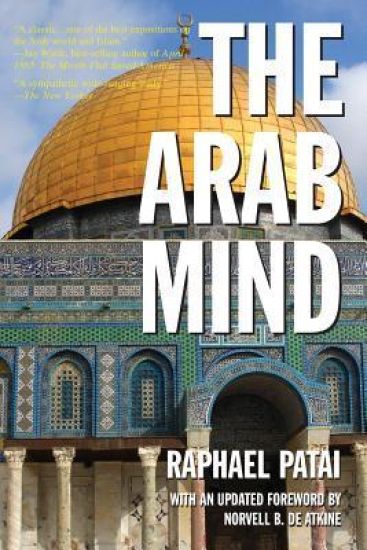
First published in 1973, revised in 1983, and updated in 2007 with new demographic information about the Arab world, The Arab Mind takes readers on a journey through the societies and peoples of a complex and volatile region. This sensitive study explores the historical origins of Arab nationalism, the distinctive rhetorical style of Arabic speakers and its effect on politics, traditional attitudes toward child-reading practices, the status of women, the beauty of Arabic literature, and much more. Since Sept 11, 2001, the book's lessons have been misconstrued by some but have proven indispensable to those trying to truly understand the roots of the major political conflicts of our time. In 2010 the book is more relevant than ever. Patai's sympathetic but critical depiction of Arab culture explores the continuing role of the Bedouin values of honor and courage in modern Arab culture, inter-Arab conflict and the aspiration toward unity, and how anti-Western attitudes conflated with anti-modernization have led to stagnation in much of the Arab world. Patai, a prominent anthropologist and historian, drew both on his research and his personal experience to produce this indispensable work in the field of Middle Eastern studies. With an updated forward by Norvell B. DeAtkine, former director of Middle East studies at the JFK Special Warfare School, The Arab Mind remains a relevant and crucial masterpiece of scholarship for anyone seeking to understand this multifaceted culture today. Reviews: "I took this book to Baghdad for my military assignment and left it there with friends who continue to use it to help inform their experiences. The book helped me understand what I was seeing with my own eyes and helped me avoid mis-steps that probably would have been misinterpreted. The book rang true with my experiences and helped me understand the Iraqi people, who I found to be generally good and noble. " "I have lived in the Middle East, on and off, for four years, and no book explained the Arab mind as well as Raphael Patai's. Written over 30 years ago, it still rings true in so many aspects, and definitely helps explain the cultural clashes that still occur and slow down the process of coexisting. Raphael Patai's love of Arabia and all things Arabic is very obvious throughout his work. Even so, Patai managed to be objective and to portray the good and the bad in Arab culture. Too many authors take one road or the other, allowing personal feelings and thoughts to encroach on the necessary objectivity. Patai, like a true sociologist, presents how a culture was formed, in language easily understandable to the Western mind. . . . "The Arab Mind should nonetheless be mandatory reading for all government workers in the Middle East, as it is truly an indispensible guide through a culture that has been around longer than our own". 1672 "When you read this book, you'll become interested in sociology as an interesting branch of human sciences. Patai is a genius. His book is by far the best in this respect. For Arab readers: Read the book and in no time you'll find yourselves putting names to the abundant examples Patai cites. The book deals with several interesting traits that most Arabs share in their inherent characters. These include the Arab unawareness of time, their tendency to speak more than they can actually deliver, their fixation with sex and their keenness to preserve Bedouin values which include preserving a group's honor by preserving the chastity of its female members. Even though the book is academic, the style is entertaining as it alternates between theories and real life examples to illustrate them. The book, a classic, is certainly worth a read. Try it "-- Review by an Arab reader

In this monumental work, Raphael Patai opens up an entirely new field of cultural history by tracing Jewish alchemy from antiquity to the nineteenth century. Until now there has been little attention given to the significant role that Jews played in the field of alchemy. Here, drawing on an enormous range of previously unexplored sources, Patai reveals that Jews were major players in what was for centuries one of humanity's most compelling intellectual obsessions. Originally published in 1994. The Princeton Legacy Library uses the latest print-on-demand technology to again make available previously out-of-print books from the distinguished backlist of Princeton University Press. These editions preserve the original texts of these important books while presenting them in durable paperback and hardcover editions. The goal of the Princeton Legacy Library is to vastly increase access to the rich scholarly heritage found in the thousands of books published by Princeton University Press since its founding in 1905.
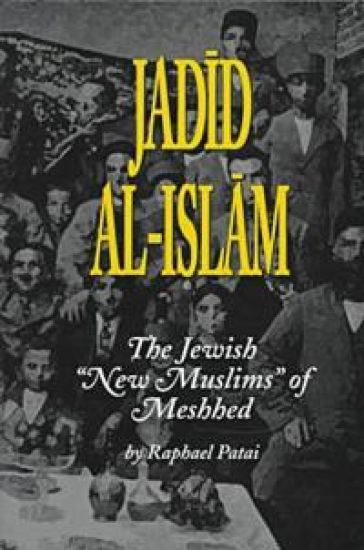
In 1839, Muslims attacked the Jews of Meshhed, murdering 36 of them, and forcing conversion of the rest. The majority adopted Islam only outwardly, and this is the story of how this community managed to survive, at the risk of their lives as crypto-Jews in an inimical Shi'i Muslim environment.
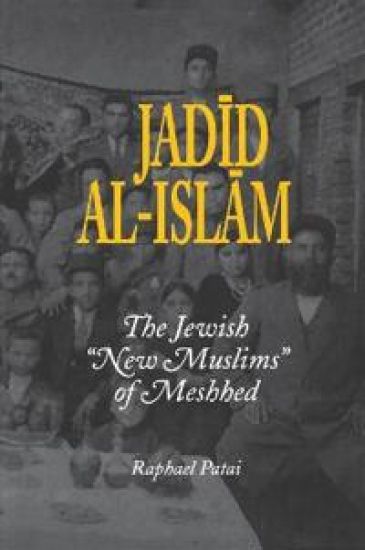
In 1839, Muslims attacked the Jews of Meshhed, murdering 36 of them, and forcing the conversion of the rest. While some managed to escape across the Afghan border, and some turned into true believing Muslims, the majority adopted Islam only outwardly, while secretly adhering to their Jewish faith. Jadid al-Islam is the fascinating story of how this community managed to survive, at the risk of their lives, as crypto-Jews in an inimical Shi'i Muslim environment. Based on unpublished original Persian sources and interviews with members of the existing Meshhed community in Jerusalem and New York, this study documents the history, traditions, tales, customs, and institutions of the Jadid al-Islam—""New Muslims.
On Culture Contact and Its Working in Modern Palestine: American Anthropologist, New Series, V49, No. 4, Part 2, October, 1947
Raphael Patai; J. Alden Mason; A. Irving Hallowell
Literary Licensing, LLC
2013
nidottu
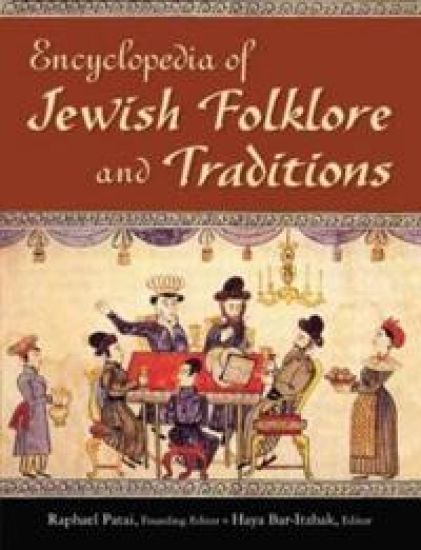
This multicultural reference work on Jewish folklore, legends, customs, and other elements of folklife is the first of its kind.
Cultures in Conflict: An Inquiry Into the Socio-Cultural Problems of Israel and Her Neighbors
Raphael Patai
Literary Licensing, LLC
2012
nidottu
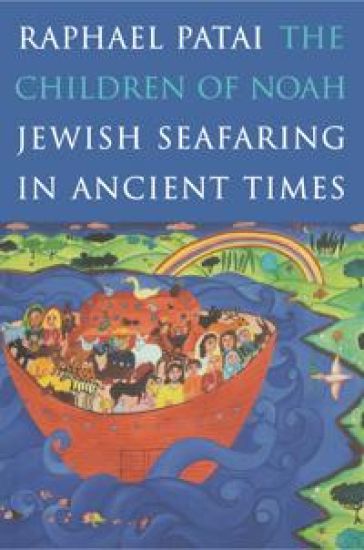
Here the late Raphael Patai (1910-1996) recreates the fascinating world of Jewish seafaring from Noah's voyage through the Diaspora of late antiquity. In a work of pioneering scholarship, Patai weaves together Biblical stories, Talmudic lore, and Midrash literature to bring alive the world of these ancient mariners. As he did in his highly acclaimed book The Jewish Alchemists, Patai explores a subject that has never before been investigated by scholars. Based on nearly sixty years of research, beginning with study he undertook for his doctoral dissertation, The Children of Noah is literally Patai's first book and his last. It is a work of unsurpassed scholarship, but it is accessible to general readers as well as scholars. An abundance of evidence demonstrates the importance of the sea in the lives of Jews throughout early recorded history. Jews built ships, sailed them, fought wars in them, battled storms in them, and lost their lives to the sea. Patai begins with the story of the deluge that is found in Genesis and profiles Noah, the father of all shipbuilders and seafarers. The sea, according to Patai's interpretation, can be seen as an image of the manifestation of God's power, and he reflects on its role in legends and tales of early times. The practical importance of the sea also led to the development of practical institutions, and Patai shows how Jewish seafaring had its own culture and how it influenced the cultures of Mediterranean life as well. Of course, Jewish sailors were subject to the same rabbinical laws as Jews who never set sail, and Patai describes how they went to extreme lengths to remain in adherence, even getting special emendations of laws to allow them to tie knots and adjust rigging on the Sabbath. The Children of Noah is a capstone to an extraordinary career. Patai was both a careful scholar and a gifted storyteller, and this work is at once a vivid history of a neglected aspect of Jewish culture and a treasure trove of sources for further study. It is a stimulating and delightful book.
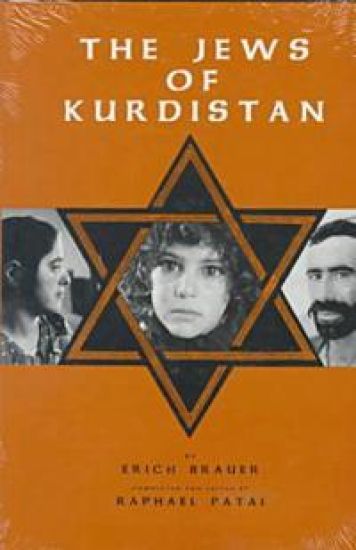
Following World War II, members of the sizable Jewish community in what had been Kurdistan, now part of Iraq, left their homeland and resettled in Palestine where they were quickly assimilated with the dominant Israeli-Jewish culture. The Jews of Kurdistan is a unique historical document in that it presents a picture of Kurdish Jewish life and culture prior to World War II. It is the only ethnological study of the Kurdish Jews ever written and provides a comprehensive look at their material culture, life cycles, religious practices, occupations, and relations with the Muslims. In his preface, Raphael Patai offers data he considers important for supplementing Brauer's book, and comments on the book's values and limitations fifty years after Brauer wrote it. Patai has included additional information elicited from Kurdish Jews in Jerusalem, verified quotations, and completed the bibliography.
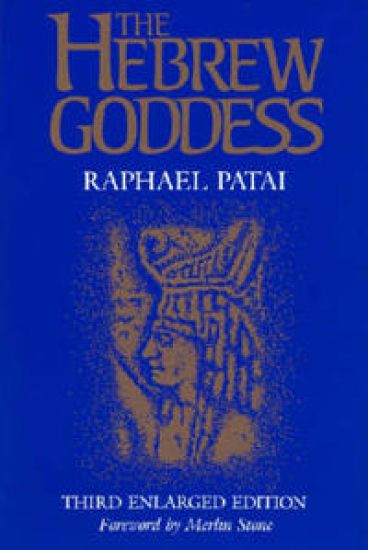
The Hebrew Goddess demonstrates that the Jewish religion, far from being pure monotheism, contained from earliest times strong polytheistic elements, chief of which was the cult of the mother goddess. Lucidly written and richly illustrated, this third edition contains new chapters of the Shekhina.
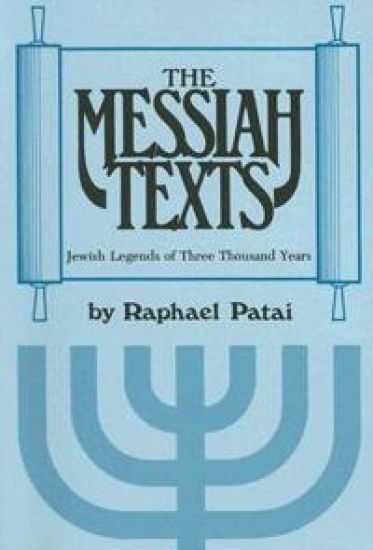
Following a detailed introduction to the world of messianic ideology and its significance in Jewish history, The Messiah Texts traces the progress of the messianic legend from its biblical beginnings to contemporary expressions. Renowned scholar Raphael Patai has skillfully selected passages from a voluminous literature spanning three millennia. Using his own translations from Hebrew, Aramaic, Arabic, Latin, and other original texts, Patai excerpts delightful folk tales, apocalyptic fantasies, and parables of prophetic power. All are central to the understanding of a magnificent heritage. patai also investigates the false messiahs who have appeared throughout Jewish history, the modern Messiah-influenced movements such as reform Judaism and Zionism, and the numerous reasons put forth by the various branches of Judaism as to why the Messiah has not yet appeared.