Kirjojen hintavertailu – 12 859 829 kirjaa ja 27 kauppaa

Kirjailija

Ratnesh Kumar

Kirjat ja teokset yhdessä paikassa: 5 kirjaa, julkaisuja vuosilta 1994–2022, suosituimpiin kuuluu Modeling and Control of Logical Discrete Event Systems. Vertaile teosten hintoja ja tarkista saatavuus suomalaisista kirjakaupoista.

5 kirjaa

Kirjojen julkaisuvuodet: 1994–2022.

Modeling and Control of Logical Discrete Event Systems

Modeling and Control of Logical Discrete Event Systems

Ratnesh Kumar; Vijay K. Garg

Springer-Verlag New York Inc.
2012
nidottu
The field of discrete event systems has emerged to provide a formal treatment of many of the man-made systems such as manufacturing systems, communica­ tion networks. automated traffic systems, database management systems, and computer systems that are event-driven, highly complex, and not amenable to the classical treatments based on differential or difference equations. Discrete event systems is a growing field that utilizes many interesting mathematical models and techniques. In this book we focus on a high level treatment of discrete event systems. where the order of events. rather than their occurrence times, is the principal concern. Such treatment is needed to guarantee that the system under study meets desired logical goals. In this framework, dis­ crete event systems are modeled by formal languages or, equivalently, by state machines. The field of logical discrete event systems is an interdisciplinary field-it in­ cludes ideas from computer science, control theory, and operations research. Our goal is to bring together in one book the relevant techniques from these fields. This is the first book of this kind, and our hope is that it will be useful to professionals in the area of discrete event systems since most of the material presented has appeared previously only in journals. The book is also designed for a graduate level course on logical discrete event systems. It contains all the necessary background material in formal language theory and lattice the­ ory. The only prerequisite is some degree of "mathematical maturity".
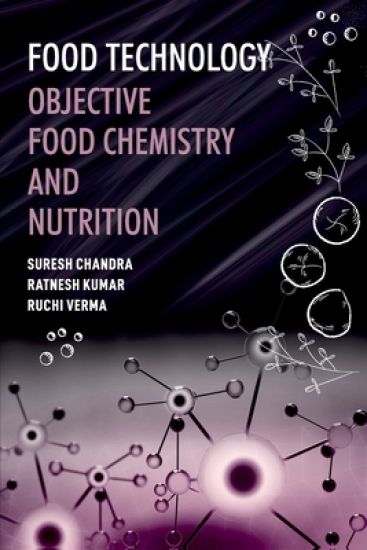
Food Technology

Food Technology

Suresh Chandra; Ratnesh Kumar; Ruchi Verma

New India Publishing Agency
2022
nidottu
The primary aim of the book Food Technology: Objective Food Chemistry and Nutrition is to offer a comprehensive and simplified understanding of the fundamental concepts of Food Chemistry & Nutrition to students studying Food Technology. It comprises 09 chapters, each containing concise notes and multiple-choice questions on various topics such as Carbohydrates, dietary fiber, starch, proteins, lipids, pigments, food flavors, enzymes, nutrition, balanced diets, essential amino acids and essential fatty acids, protein efficiency ratio, water-soluble and fat-soluble vitamins, minerals role in nutrition, co-factors, anti-nutrients, nutraceuticals, and nutrient deficiency diseases. Additionally, it covers chemical and biochemical changes that occur in food during various processing methods. This book is particularly beneficial for students preparing for higher studies or appearing in competitive examinations, such as GATE/NET/ARS/FSSAI, among others. It is also useful for students pursuing Food Processing, Dairy and Food Engineering, Food Science and Technology, Process and Food Engineering, Food Technology, Dairy Science and Technology, Post-Harvest Engineering and Technology, Agricultural Structure and Process Engineering, Horticulture (specialized in Post-Harvest Technology), and Home Science (Food and Nutrition), among other fields. Furthermore, it is helpful for those preparing for competitive examinations, such as ICAR/CSIR/UGC fellowships, NET, ARS, SRF, JRF, and for written exams and interviews for RA/SRF/SMS/Assistant Professor, Food Safety officers, Food inspectors, Public analysts, and national and multinational food process industries, among others.
Food Technology

Food Technology

Suresh Chandra; Ratnesh Kumar; Ruchi Verma

New India Publishing Agency
2022
nidottu
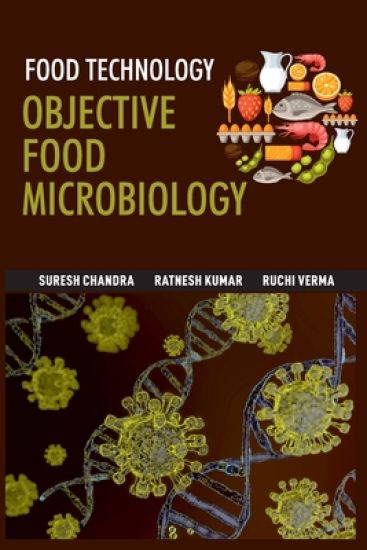
The primary goal of Objective Food Technology: Food Microbiology is to offer a comprehensive and accessible understanding of the fundamental concepts of food microbiology to students pursuing a degree in food technology. This book encompasses six chapters that cover essential topics on the syllabus, such as the characteristics of microorganisms, microbial growth kinetics, serial dilution technique, food spoilage, and toxins from microbes, including Staphylococcus, Salmonella, Shigella, Escherichia, Bacillus, Clostridium, and Aspergillus genera. Additionally, the book provides valuable information on fermented foods and beverages, making it an ideal resource for students preparing for competitive examinations such as GATE, NET, ARS, and FSSAI. This book is also beneficial for students pursuing higher studies or those preparing for competitive examinations such as ICAR, CSIR, UGC fellowships, NET, ARS, SRF, JRF, RA, SRF, SMS, Assistant Professor, Food Safety officers, Food inspectors, Public analysts, and national and multinational food process industries.
Modeling and Control of Logical Discrete Event Systems

Modeling and Control of Logical Discrete Event Systems

Ratnesh Kumar; Vijay K. Garg

Springer
1994
sidottu
The field of discrete event systems has emerged to provide a formal treatment of many of the man-made systems such as manufacturing systems, communica­ tion networks. automated traffic systems, database management systems, and computer systems that are event-driven, highly complex, and not amenable to the classical treatments based on differential or difference equations. Discrete event systems is a growing field that utilizes many interesting mathematical models and techniques. In this book we focus on a high level treatment of discrete event systems. where the order of events. rather than their occurrence times, is the principal concern. Such treatment is needed to guarantee that the system under study meets desired logical goals. In this framework, dis­ crete event systems are modeled by formal languages or, equivalently, by state machines. The field of logical discrete event systems is an interdisciplinary field-it in­ cludes ideas from computer science, control theory, and operations research. Our goal is to bring together in one book the relevant techniques from these fields. This is the first book of this kind, and our hope is that it will be useful to professionals in the area of discrete event systems since most of the material presented has appeared previously only in journals. The book is also designed for a graduate level course on logical discrete event systems. It contains all the necessary background material in formal language theory and lattice the­ ory. The only prerequisite is some degree of "mathematical maturity".