Kirjojen hintavertailu – 12 903 725 kirjaa ja 27 kauppaa

Kirjailija

Rattan Lal

Kirjat ja teokset yhdessä paikassa: 26 kirjaa, julkaisuja vuosilta 1997–2026, suosituimpiin kuuluu Carbon Farming. Vertaile teosten hintoja ja tarkista saatavuus suomalaisista kirjakaupoista.

26 kirjaa

Kirjojen julkaisuvuodet: 1997–2026.

Instant Insights: Soil Carbon Sequestration

Instant Insights: Soil Carbon Sequestration

Various Authors; C. Rumpel; Rattan Lal; Matthias Kuhnert; Sylvia Vetter; Pete Smith; Bas Van Wesemael; Augustine K. Osei; Maren Oelbermann

Burleigh Dodds Science Publishing Limited
2026
pokkari
This book features five peer-reviewed reviews on the process of soil carbon sequestration. The first chapter discusses the relationship between soil carbon sequestration and humanity, as well as the global importance of soil carbon sequestration in removing CO2 from the atmosphere. The second chapter describes the distribution and dynamics of diverse components of the soil carbon or pedological reservoir and explains the impact of anthropogenic activities on the soil. The chapter also considers the range of management strategies that may be used to restore the depleted pedologic carbon reservoir, focussing on soil organic carbon (SOC). The third chapter provides an overview of the available systems for the monitoring, reporting and verification of soil organic carbon, focussing on both their advantages and limitations. The fourth chapter discusses the challenges for large-scale application of spectral mapping when the soil and parent material are heterogeneous and surface conditions are unknown. A case study focussing on a SOC prediction map derived from the spectra of a Sentinel-2 image is also included. The final chapter evaluates the potential for carbon sequestration in temperate agroforestry systems by analysing existing data from different agroforestry practices in temperate regions worldwide.
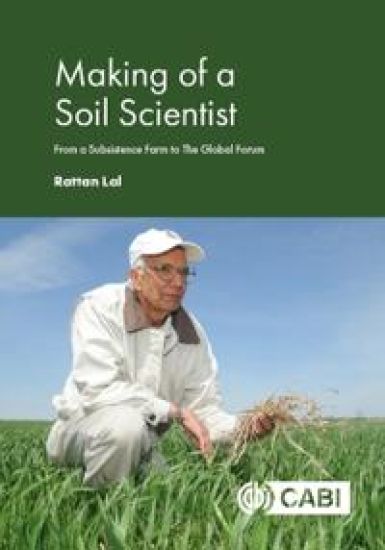
Making of a Soil Scientist

Making of a Soil Scientist

Rattan Lal

CABI PUBLISHING
2025
sidottu
Rattan Lal is ranked No. 1 globally and in the U. S. among agricultural scientists (Plant Science and Agronomists) by Research.com on the basis of the number of scientific citations and his discipline H-index. He has been awarded The World Soil Prize, The Japan Prize, The World Food Prize, The Arrell Innovation Prize, and the Padma Shri Award. This book describes Rattan Lal's professional journey from a subsistence farm in India to working on global fora as a soil scientist. It discusses the challenges and opportunities of his soil-centric approach to global issues faced in the 21st century, emphasizes the need for revisiting the Green Revolution approach, and making agriculture an integral part of the solution to restoring soil health, addressing climate change, and promoting sustainable development. This book will be of interest to students and researchers in soil science, agronomy, natural resource management and sustainable development. This book combines an exploration of the value of a soil-centred philosophy when addressing sustainability issues together with descriptions of the challenges of an international scientific career.
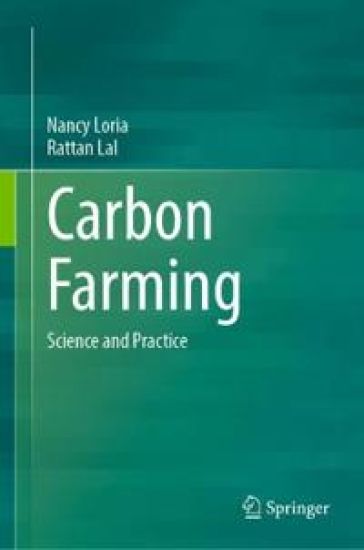
Carbon Farming

Carbon Farming

Nancy Loria; Rattan Lal

Springer Nature Switzerland AG
2025
sidottu
Through a series of meticulously crafted chapters, the book unravels the potential impact of carbon farming on soil health, the carbon cycle, and the broader global environment. The book navigates through a diverse array of carbon farming techniques, from conservation and regenerative agriculture to agroecology, agroforestry and composting.
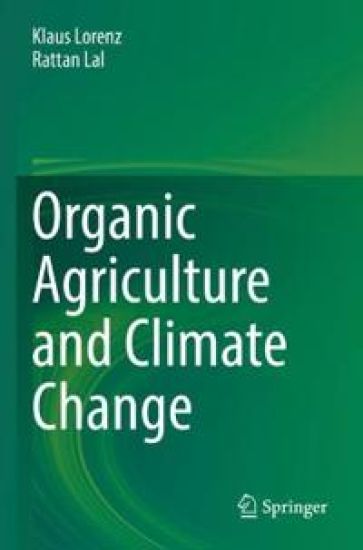
Organic Agriculture and Climate Change

Organic Agriculture and Climate Change

Klaus Lorenz; Rattan Lal

Springer International Publishing AG
2023
nidottu
This book will collate, review and synthesize information on how Organic Agriculture (OA) practices affect and are affected by climate change, in comparison to the more widely used conventional agricultural practices. Pros and cons of OA practices will be discussed separately for croplands, pasture lands, mixed livestock cropping systems, vegetable fields, fruit and tree orchards, and vineyards. The book concludes with an overview on how conventional and OA practices can be prudently and discriminately combined to identify and adopt climate-resilient agro-ecosystems under site-specific conditions.
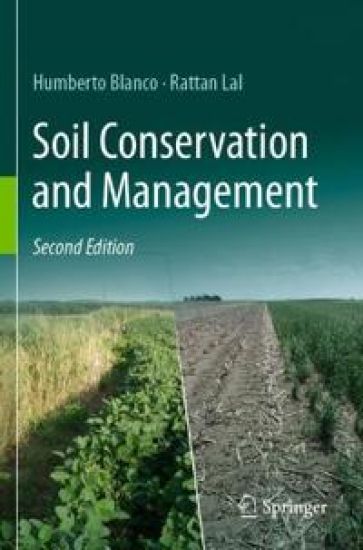
Soil Conservation and Management

Soil Conservation and Management

Humberto Blanco; Rattan Lal

Springer International Publishing AG
2023
sidottu
This updated and expanded second edition textbook, describes all main aspects of soil management, to address the serious problems of soil erosion and the attendant environmental pollution. The global high demands for food, fiber, feed, and fuel put a constant strain on the environment, which can only be mitigated by soil conservation. This edition incorporates new concepts and provides an up-to-date review of soil management principles and practices. The authors also added new chapters on cover crops, crop residues, soil water management, nutrient management, perennials in crop rotations and organic amendments. All practices have a clear perspective on addressing soil erosion, physical and chemical problems, carbon dynamics and sequestration as well as non-point source pollution. The restorative nature of many practices, also consider water conservation as a main pillar of sustaining a healthy soil. This textbook is valuable for students and professionals in soil science, agronomy, agricultural engineering, hydrology, and management of natural resources.
Soil Organic Carbon Sequestration in Terrestrial Biomes of the United States

Soil Organic Carbon Sequestration in Terrestrial Biomes of the United States

Klaus Lorenz; Rattan Lal

Springer Nature Switzerland AG
2023
nidottu
This book collates, reviews and synthesizes information on how soil organic carbon (SOC) stocks differ among major terrestrial biomes of the U. S. A. Information on soil inorganic carbon (SIC) stocks for different terrestrial biomes of the U. S. A. will also be presented. The book deliberates options for increasing SOC stocks and enhancing SOC sequestration in terrestrial biomes by soil and land-use management practices. It concludes with an overview of terrestrial biomes of the U. S. A. where targeted soil and land-use management practices may result in the greatest increases in SOC stocks and enhancements in SOC sequestration.
Organic Agriculture and Climate Change

Organic Agriculture and Climate Change

Klaus Lorenz; Rattan Lal

Springer International Publishing AG
2022
sidottu
This book will collate, review and synthesize information on how Organic Agriculture (OA) practices affect and are affected by climate change, in comparison to the more widely used conventional agricultural practices. Pros and cons of OA practices will be discussed separately for croplands, pasture lands, mixed livestock cropping systems, vegetable fields, fruit and tree orchards, and vineyards. The book concludes with an overview on how conventional and OA practices can be prudently and discriminately combined to identify and adopt climate-resilient agro-ecosystems under site-specific conditions.
Soil Organic Carbon Sequestration in Terrestrial Biomes of the United States

Soil Organic Carbon Sequestration in Terrestrial Biomes of the United States

Klaus Lorenz; Rattan Lal

Springer Nature Switzerland AG
2022
sidottu
This book collates, reviews and synthesizes information on how soil organic carbon (SOC) stocks differ among major terrestrial biomes of the U. S. A. Information on soil inorganic carbon (SIC) stocks for different terrestrial biomes of the U. S. A. will also be presented. The book deliberates options for increasing SOC stocks and enhancing SOC sequestration in terrestrial biomes by soil and land-use management practices. It concludes with an overview of terrestrial biomes of the U. S. A. where targeted soil and land-use management practices may result in the greatest increases in SOC stocks and enhancements in SOC sequestration.
Soil Degradation in the United States

Soil Degradation in the United States

Rattan Lal; Thomas Iivari; John M. Kimble

CRC Press
2020
nidottu
Soil Degradation in the United States: Extent, Severity, and Trends examines the magnitude and severity of soil degradation by different processes in the U. S., including water erosion, wind erosion, C depletion, soil compaction, salt build-up, and soil contamination. In addition, it addresses policy issues with regard to economic and environmental impact, land use change, and global trends. It covers past trends and future projections regarding soil degradation. The book provides a ready reference and data source for soil scientists and researchers, agronomists, environmentalists, land use planners, land managers, and policy makers.
Methods for Assessment of Soil Degradation

Methods for Assessment of Soil Degradation

Rattan Lal; Winfried E. H. Blum; C. Valentin; B.A. Stewart

CRC Press
2019
nidottu
Soil degradation has serious global impacts on agronomic, economic, and sociopolitical conditions, however, statistics regarding the degree of these impacts has been largely unreliable. This book aims to standardize the methodology for obtaining reliable and objective data on soil degradation. It will also identify and develop criteria for assessing the severity of soil degradation, providing a realistic scenario of the problem.
Principles of Soil Physics

Principles of Soil Physics

Rattan Lal; Manoj K. Shukla

CRC Press
2019
nidottu
Principles of Soil Physics examines the impact of the physical, mechanical, and hydrological properties and processes of soil on agricultural production, the environment, and sustainable use of natural resources. The text incorporates valuable assessment methods, graphs, problem sets, and tables from recent studies performed around the globe and offers an abundance of tables, photographs, and easy-to-follow equations in every chapter. The book discusses the consequences of soil degradation, such as erosion, inhibited root development, and poor aeration. It begins by defining soil physics, soil mechanics, textural properties, and packing arrangements . The text continues to discuss the theoretical and practical aspects of soil structure and explain the significance and measurement of bulk density, porosity, and compaction. The authors proceed to clarify soil hydrology topics including hydrologic cycle, water movement, infiltration, modeling, soil evaporation, and solute transport processes. They address the impact of soil temperature on crop growth, soil aeration, and the processes that lead to the emission of greenhouse gases. The final chapters examine the physical properties of gravelly soils and water movement in frozen, saline, and water-repellant soils. Reader-friendly and up-to-date, Principles of Soil Physics provides unparalleled coverage of issues related to soil physics, structure, hydrology, aeration, temperature, and analysis and presents practical techniques for maintaining soil quality to ultimately preserve its sustainability.
Carbon Sequestration in Agricultural Ecosystems

Carbon Sequestration in Agricultural Ecosystems

Klaus Lorenz; Rattan Lal

Springer Nature Switzerland AG
2019
nidottu
A comprehensive book on basic processes of soil C dynamics and the underlying factors and causes which determine the technical and economic potential of soil C sequestration. The book provides information on the dynamics of both inorganic (lithogenic and pedogenic carbonates) and organic C (labile, intermediate and passive). It describes different types of agroecosystems, and lists questions at the end of each chapter to stimulate thinking and promote academic dialogue. Each chapter has a bibliography containing up-to-date references on the current research, and provides the state-of-the-knowledge while also identifying the knowledge gaps for future research. The critical need for restoring C stocks in world soils is discussed in terms of provisioning of essential ecosystem services (food security, carbon sequestration, water quality and renewability, and biodiversity). It is of interest to students, scientists, and policy makers.
Carbon Sequestration for Climate Change Mitigation and Adaptation

Carbon Sequestration for Climate Change Mitigation and Adaptation

David A. N. Ussiri; Rattan Lal

Springer International Publishing AG
2018
nidottu
This book provides an understanding of the role of human activities in accelerating change in global carbon cycling summarizes current knowledge of the contemporary carbon budget. Starting from the geological history, this volume follows a multidisciplinary approach to analyze the role of human activities in perturbing carbon cycling by quantifying changes in different reservoirs and fluxes of carbon with emphasis on the anthropogenic activities, especially after the industrial revolution. It covers the role of different mitigation options – natural ecological, engineered, and geoengineered processes as well as the emerging field of climate engineering in avoiding dangerous abrupt climate change. Although the targeted audience is the educators, students, researchers and scientific community, the simplified analysis and synthesis of current and up to date scientific literature makes the volume easier to understand and a tool policy makers can use to make an informed policy decisions.
Carbon Sequestration in Agricultural Ecosystems

Carbon Sequestration in Agricultural Ecosystems

Klaus Lorenz; Rattan Lal

Springer International Publishing AG
2018
sidottu
A comprehensive book on basic processes of soil C dynamics and the underlying factors and causes which determine the technical and economic potential of soil C sequestration. The book provides information on the dynamics of both inorganic (lithogenic and pedogenic carbonates) and organic C (labile, intermediate and passive). It describes different types of agroecosystems, and lists questions at the end of each chapter to stimulate thinking and promote academic dialogue. Each chapter has a bibliography containing up-to-date references on the current research, and provides the state-of-the-knowledge while also identifying the knowledge gaps for future research. The critical need for restoring C stocks in world soils is discussed in terms of provisioning of essential ecosystem services (food security, carbon sequestration, water quality and renewability, and biodiversity). It is of interest to students, scientists, and policy makers.
Carbon Sequestration for Climate Change Mitigation and Adaptation

Carbon Sequestration for Climate Change Mitigation and Adaptation

David A. N. Ussiri; Rattan Lal

Springer International Publishing AG
2017
sidottu
This book provides an understanding of the role of human activities in accelerating change in global carbon cycling summarizes current knowledge of the contemporary carbon budget. Starting from the geological history, this volume follows a multidisciplinary approach to analyze the role of human activities in perturbing carbon cycling by quantifying changes in different reservoirs and fluxes of carbon with emphasis on the anthropogenic activities, especially after the industrial revolution. It covers the role of different mitigation options – natural ecological, engineered, and geoengineered processes as well as the emerging field of climate engineering in avoiding dangerous abrupt climate change. Although the targeted audience is the educators, students, researchers and scientific community, the simplified analysis and synthesis of current and up to date scientific literature makes the volume easier to understand and a tool policy makers can use to make an informed policy decisions.
Encyclopedia of Soil Science

Encyclopedia of Soil Science

Rattan Lal

Productivity Press
2016
muu
New and Improved Global Edition: Three-Volume SetA ready reference addressing a multitude of soil and soil management concerns, the highly anticipated and widely expanded third edition of Encyclopedia of Soil Science now spans three volumes and covers ground on a global scale. A definitive guide designed for both coursework and self-study, this latest version describes every branch of soil science and delves into trans-disciplinary issues that focus on inter-connectivity or the nexus approach. For Soil Scientists, Crop Scientists, Plant Scientists and MoreA host of contributors from around the world weigh in on underlying themes relevant to natural and agricultural ecosystems. Factoring in a rapidly changing climate and a vastly growing population, they sound off on topics that include soil degradation, climate change, soil carbon sequestration, food and nutritional security, hidden hunger, water quality, non-point source pollution, micronutrients, and elemental transformations. New in the Third Edition: Contains over 600 entriesOffers global geographical and thematic coverageEntries peer reviewed by subject expertsAddresses current issues of global significanceEncyclopedia of Soil Science, Third Edition: Three Volume Set expertly explains the science of soil and describes the material in terms that are easily accessible to researchers, students, academicians, policy makers, and laymen alike. Also Available OnlineThis Taylor & Francis encyclopedia is also available through online subscription, offering a variety of extra benefits for researchers, students, and librarians, including: Citation tracking and alertsActive reference linkingSaved searches and marked listsHTML and PDF format optionsContact Taylor and Francis for more information or to inquire about subscription options and print/online combination packages. US: (Tel) 1.888.318.2367; (E-mail) [email protected]: (Tel) +44 (0) 20 7017 6062; (E-mail) [email protected]
Soil Emission of Nitrous Oxide and its Mitigation

Soil Emission of Nitrous Oxide and its Mitigation

David Ussiri; Rattan Lal

Springer
2014
nidottu
Nitrous oxide gas is a long-lived relatively active greenhouse gas (GHG) with an atmospheric lifetime of approximately 120 years, and heat trapping effects about 310 times more powerful than carbon dioxide per molecule basis. It contributes about 6% of observed global warming. Nitrous oxide is not only a potent GHG, but it also plays a significant role in the depletion of stratospheric ozone. This book describes the anthropogenic sources of N2O with major emphasis on agricultural activities. It summarizes an overview of global cycling of N and the role of nitrous oxide on global warming and ozone depletion, and then focus on major source, soil borne nitrous oxide emissions. The spatial-temporal variation of soil nitrous oxide fluxes and underlying biogeochemical processes are described, as well as approaches to quantify fluxes of N2O from soils. Mitigation strategies to reduce the emissions, especially from agricultural soils, and fertilizer nitrogen sources are described in detail in the latter part of the book.
Carbon Sequestration in Forest Ecosystems

Carbon Sequestration in Forest Ecosystems

Klaus Lorenz; Rattan Lal

Springer
2014
nidottu
Carbon Sequestration in Forest Ecosystems is a comprehensive book describing the basic processes of carbon dynamics in forest ecosystems, their contribution to carbon sequestration and implications for mitigating abrupt climate change. This book provides the information on processes, factors and causes influencing carbon sequestration in forest ecosystems. Drawing upon most up-to-date references, this book summarizes the current understanding of carbon sequestration processes in forest ecosystems while identifying knowledge gaps for future research, Thus, this book is a valuable knowledge source for students, scientists, forest managers and policy makers.
Soil Emission of Nitrous Oxide and its Mitigation

Soil Emission of Nitrous Oxide and its Mitigation

David Ussiri; Rattan Lal

Springer
2012
sidottu
Nitrous oxide gas is a long-lived relatively active greenhouse gas (GHG) with an atmospheric lifetime of approximately 120 years, and heat trapping effects about 310 times more powerful than carbon dioxide per molecule basis. It contributes about 6% of observed global warming. Nitrous oxide is not only a potent GHG, but it also plays a significant role in the depletion of stratospheric ozone. This book describes the anthropogenic sources of N2O with major emphasis on agricultural activities. It summarizes an overview of global cycling of N and the role of nitrous oxide on global warming and ozone depletion, and then focus on major source, soil borne nitrous oxide emissions. The spatial-temporal variation of soil nitrous oxide fluxes and underlying biogeochemical processes are described, as well as approaches to quantify fluxes of N2O from soils. Mitigation strategies to reduce the emissions, especially from agricultural soils, and fertilizer nitrogen sources are described in detail in the latter part of the book.