Kirjojen hintavertailu – 12 859 826 kirjaa ja 27 kauppaa

Kirjailija

Raúl Rojas

Kirjat ja teokset yhdessä paikassa: 8 kirjaa, julkaisuja vuosilta 1993–2026, suosituimpiin kuuluu The Language of Mathematics. Vertaile teosten hintoja ja tarkista saatavuus suomalaisista kirjakaupoista.

Nimi esiintyy myös muodoissa: Raul Rojas

8 kirjaa

Kirjojen julkaisuvuodet: 1993–2026.

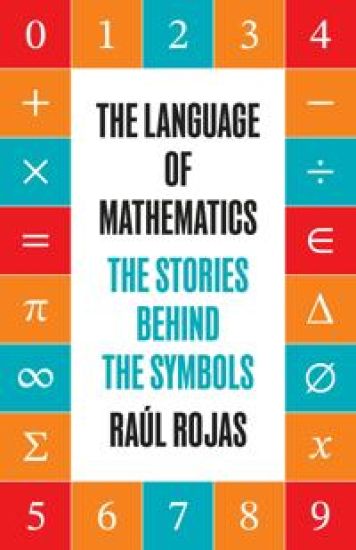
The Language of Mathematics

The Language of Mathematics

Raúl Rojas

PRINCETON UNIVERSITY PRESS
2026
pokkari
A marvelous compendium of mathematical symbols and their fascinating histories Galileo famously wrote that the book of nature is written in mathematical language. The Language of Mathematics is a wide-ranging and beautifully illustrated collection of short, colorful histories of the most commonly used symbols in mathematics, providing readers with an engaging introduction to the origins, evolution, and conceptual meaning of each one. In dozens of lively and informative entries, Raúl Rojas shows how today’s mathematics stands on the shoulders of giants, mathematicians from around the world who developed mathematical notation through centuries of collective effort. He tells the stories of such figures as al-Khwarizmi, René Descartes, Joseph-Louis Lagrange, Carl Friedrich Gauss, Augustin-Louis Cauchy, Karl Weierstrass, Sofia Kovalevskaya, David Hilbert, and Kenneth Iverson. Topics range from numbers and variables to sets and functions, constants, and combinatorics. Rojas describes the mathematical problems associated with different symbols and reveals how mathematical notation has sometimes been an accidental process. The entries are self-contained and can be read in any order, each one examining one or two symbols, their history, and the variants they may have had over time. An essential companion for math enthusiasts, The Language of Mathematics shows how mathematics is a living and evolving entity, forever searching for the best symbolism to express relationships between abstract concepts and to convey meaning.
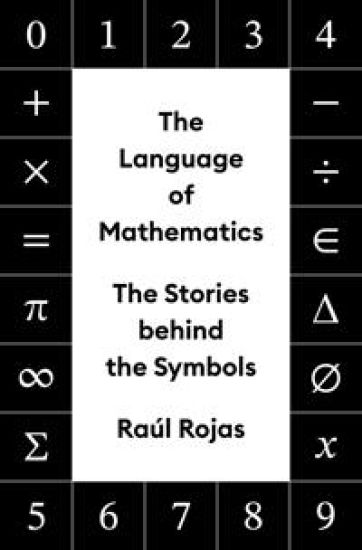
The Language of Mathematics

The Language of Mathematics

Raúl Rojas

PRINCETON UNIVERSITY PRESS
2025
sidottu

Halvin toimitettuna 26,30 €

A marvelous compendium of mathematical symbols and their fascinating historiesGalileo famously wrote that the book of nature is written in mathematical language. The Language of Mathematics is a wide-ranging and beautifully illustrated collection of short, colorful histories of the most commonly used symbols in mathematics, providing readers with an engaging introduction to the origins, evolution, and conceptual meaning of each one. In dozens of lively and informative entries, Raúl Rojas shows how today’s mathematics stands on the shoulders of giants, mathematicians from around the world who developed mathematical notation through centuries of collective effort. He tells the stories of such figures as al-Khwarizmi, René Descartes, Joseph-Louis Lagrange, Carl Friedrich Gauss, Augustin-Louis Cauchy, Karl Weierstrass, Sofia Kovalevskaya, David Hilbert, and Kenneth Iverson. Topics range from numbers and variables to sets and functions, constants, and combinatorics. Rojas describes the mathematical problems associated with different symbols and reveals how mathematical notation has sometimes been an accidental process. The entries are self-contained and can be read in any order, each one examining one or two symbols, their history, and the variants they may have had over time. An essential companion for math enthusiasts, The Language of Mathematics shows how mathematics is a living and evolving entity, forever searching for the best symbolism to express relationships between abstract concepts and to convey meaning.
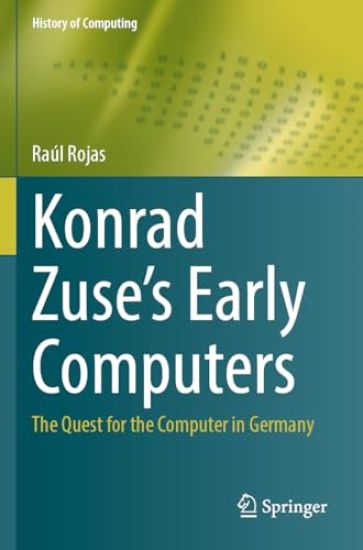
Konrad Zuse's Early Computers

Konrad Zuse's Early Computers

Raúl Rojas

Springer International Publishing AG
2023
sidottu

Halvin toimitettuna 47,10 €

This book describes the historical development of the architectures of the first computers built by the German inventor Konrad Zuse in Berlin between 1936 and 1945. Zuse's machines are historically important because they anticipated many features of modern computers. Specifically, these include the separation of processor and memory, the ability to compute with floating-point numbers, a hardware architecture based on microprogramming of the instruction set, and a layered design with a high-level programming language on top. In fact, Zuse's early computers are closer to modern computers than the Harvard Mark I or ENIAC, two other contenders for the title of "world's first computer." The theoretical program first conceived by Zuse in 1936/37 was fulfilled with a series of machines built before and during World War II: the Z1, Z2, Z3, and Z4. Separate chapters deal with the architecture of each computer, culminating in the description of Plankalkül, the first proposal for a high-level programming language. Students of the sciences and practitioners of computer science should have no trouble following the material. The concise introductory summary sets the reader on the historical path to retrace this remarkable intellectual adventure.
Engineering Applications of Soft Computing

Engineering Applications of Soft Computing

Margarita-Arimatea Díaz-Cortés; Erik Cuevas; Raúl Rojas

Springer International Publishing AG
2018
nidottu
This book bridges the gap between Soft Computing techniques and their applications to complex engineering problems. In each chapter we endeavor to explain the basic ideas behind the proposed applications in an accessible format for readers who may not possess a background in some of the fields. Therefore, engineers or practitioners who are not familiar with Soft Computing methods will appreciate that the techniques discussed go beyond simple theoretical tools, since they have been adapted to solve significant problems that commonly arise in such areas. At the same time, the book will show members of the Soft Computing community how engineering problems are now being solved and handled with the help of intelligent approaches. Highlighting new applications and implementations of Soft Computing approaches in various engineering contexts, the book is divided into 12 chapters. Further, it has been structured so that each chapter can be read independently of the others.
Engineering Applications of Soft Computing

Engineering Applications of Soft Computing

Margarita-Arimatea Díaz-Cortés; Erik Cuevas; Raúl Rojas

Springer International Publishing AG
2017
sidottu
This book bridges the gap between Soft Computing techniques and their applications to complex engineering problems. In each chapter we endeavor to explain the basic ideas behind the proposed applications in an accessible format for readers who may not possess a background in some of the fields. Therefore, engineers or practitioners who are not familiar with Soft Computing methods will appreciate that the techniques discussed go beyond simple theoretical tools, since they have been adapted to solve significant problems that commonly arise in such areas. At the same time, the book will show members of the Soft Computing community how engineering problems are now being solved and handled with the help of intelligent approaches. Highlighting new applications and implementations of Soft Computing approaches in various engineering contexts, the book is divided into 12 chapters. Further, it has been structured so that each chapter can be read independently of the others.
Neural Networks

Neural Networks

Raul Rojas; J. Feldman

Springer-Verlag Berlin and Heidelberg GmbH Co. K
1996
nidottu
Neural networks are a computing paradigm that is finding increasing attention among computer scientists. In this book, theoretical laws and models previously scattered in the literature are brought together into a general theory of artificial neural nets. Always with a view to biology and starting with the simplest nets, it is shown how the properties of models change when more general computing elements and net topologies are introduced. Each chapter contains examples, numerous illustrations, and a bibliography. The book is aimed at readers who seek an overview of the field or who wish to deepen their knowledge. It is suitable as a basis for university courses in neurocomputing.
Theorie der neuronalen Netze

Theorie der neuronalen Netze

Raul Rojas

Springer-Verlag Berlin and Heidelberg GmbH Co. K
1993
nidottu
Neuronale Netze sind ein Berechenbarkeitsparadigma, das in der Informatik zunehmende Beachtung findet. In diesem Buch werden theoretische Ansätze und Modelle, die in der Literatur verstreut sind, zu einer modellübergreifenden Theorie der künstlichen neuronalen Netze zusammengefügt. Mit ständigem Blick auf die Biologie wird - ausgehend von einfachsten Netzen - gezeigt, wie sich die Eigenschaften der Modelle verändern, wenn allgemeinere Berechnungselemente und Netztopologien eingeführt werden. Jedes Kapitel enthält Beispiele und ist ausführlich illustriert und durch bibliographische Anmerkungen abgerundet. Das Buch richtet sich an Leser, die sich einen Überblick verschaffen oder vorhandene Kenntnisse vertiefen wollen. Es ist als Grundlage für Neuroinformatikvorlesungen an deutschsprachigen Universitäten geeignet.