Kirjojen hintavertailu – 12 859 818 kirjaa ja 27 kauppaa

Kirjailija

Ravinder Kaur

Kirjat ja teokset yhdessä paikassa: 28 kirjaa, julkaisuja vuosilta 2017–2026, suosituimpiin kuuluu Grøn samfundsteori. Vertaile teosten hintoja ja tarkista saatavuus suomalaisista kirjakaupoista.

28 kirjaa

Kirjojen julkaisuvuodet: 2017–2026.

Cambiamenti dei parametri fisio-biochimici indotti dal Cd in Hordeum vulgare

Cambiamenti dei parametri fisio-biochimici indotti dal Cd in Hordeum vulgare

Udita Tiwari; Ravinder Kaur; Rajneesh Kumar Agnihotri

Edizioni Sapienza
2023
pokkari
I metalli pesanti sono presenti naturalmente nel suolo come elementi rari. I metalli pesanti, come il Cu e lo Zn, sono essenziali per la normale crescita e lo sviluppo delle piante, poich costituiscono molti enzimi e altre proteine. Tuttavia, concentrazioni elevate di metalli pesanti, sia essenziali sia non essenziali, nel suolo possono provocare sintomi di tossicit e inibizione della crescita. La presenza di metalli pesanti pu influire sull'attivit enzimatica delle piante e dell'uomo.
Alterações dos parâmetros físico-bioquímicos induzidas pelo Cd em Hordeum vulgar

Alterações dos parâmetros físico-bioquímicos induzidas pelo Cd em Hordeum vulgar

Udita Tiwari; Ravinder Kaur; Rajneesh Kumar Agnihotri

Edicoes Nosso Conhecimento
2023
pokkari
Os metais pesados ocorrem naturalmente nos solos como elementos raros. Os metais pesados, como o Cu e o Zn, s o essenciais para o crescimento e desenvolvimento normais das plantas, uma vez que s o constituintes de muitas enzimas e outras prote nas. No entanto, concentra es elevadas de metais pesados essenciais e n o essenciais no solo podem provocar sintomas de toxicidade e inibi o do crescimento. A presen a de metais pesados pode afetar a atividade enzim tica nas plantas e tamb m no ser humano.
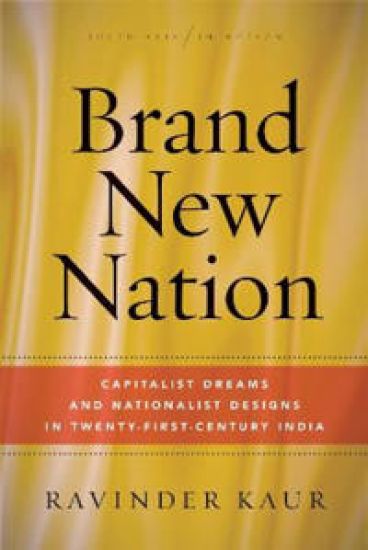
Brand New Nation

Brand New Nation

Ravinder Kaur

Stanford University Press
2020
sidottu
A Financial Times Best Book of the Year The first book that examines India's mega-publicity campaigns to theorize the global transformation of the nation-state into an attractive investment destination. The early twenty-first century was an optimistic moment of global futures-making. The chief narrative was the emergence of the BRICS nations—leading stars in the great spectacle of capitalist growth stories, branded afresh as resource-rich hubs of untapped talent and potential, and newly opened up for foreign investments. The old third-world nations were rapidly embracing the script of unbridled capitalism in the hope of arriving on the world stage. If the tantalizing promise of economic growth invited entrepreneurs to invest in the nation's exciting futures, it offered utopian visions of "good times," and even restoration of lost national glory, to the nation's citizens. Brand New Nation reaches into the past and, inevitably, the future of this phenomenon as well as the fundamental shifts it has wrought in our understanding of the nation-state. It reveals the on-the-ground experience of the relentless transformation of the nation-state into an "attractive investment destination" for global capital. As Ravinder Kaur provocatively argues, the brand new nation is not a mere nineteenth century re-run. It has come alive as a unified enclosure of capitalist growth and nationalist desire in the twenty-first century. Today, to be deemed an attractive nation-brand in the global economy is to be affirmed as a proper nation. The infusion of capital not only rejuvenates the nation; it also produces investment-fueled nationalism, a populist energy that can be turned into a powerful instrument of coercion. Grounded in the history of modern India, the book reveals the close kinship among identity economy and identity politics, publicity and populism, and violence and economic growth rapidly rearranging the liberal political order the world over.
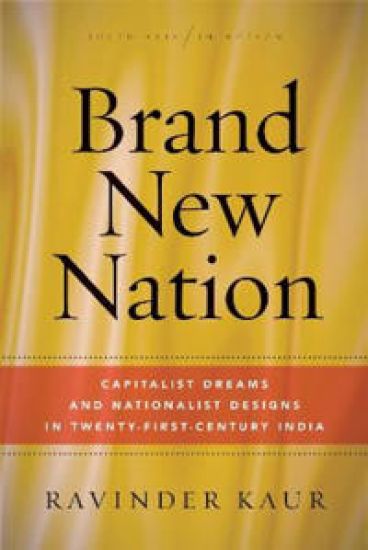
Brand New Nation

Brand New Nation

Ravinder Kaur

Stanford University Press
2020
pokkari
A Financial Times Best Book of the Year The first book that examines India's mega-publicity campaigns to theorize the global transformation of the nation-state into an attractive investment destination. The early twenty-first century was an optimistic moment of global futures-making. The chief narrative was the emergence of the BRICS nations—leading stars in the great spectacle of capitalist growth stories, branded afresh as resource-rich hubs of untapped talent and potential, and newly opened up for foreign investments. The old third-world nations were rapidly embracing the script of unbridled capitalism in the hope of arriving on the world stage. If the tantalizing promise of economic growth invited entrepreneurs to invest in the nation's exciting futures, it offered utopian visions of "good times," and even restoration of lost national glory, to the nation's citizens. Brand New Nation reaches into the past and, inevitably, the future of this phenomenon as well as the fundamental shifts it has wrought in our understanding of the nation-state. It reveals the on-the-ground experience of the relentless transformation of the nation-state into an "attractive investment destination" for global capital. As Ravinder Kaur provocatively argues, the brand new nation is not a mere nineteenth century re-run. It has come alive as a unified enclosure of capitalist growth and nationalist desire in the twenty-first century. Today, to be deemed an attractive nation-brand in the global economy is to be affirmed as a proper nation. The infusion of capital not only rejuvenates the nation; it also produces investment-fueled nationalism, a populist energy that can be turned into a powerful instrument of coercion. Grounded in the history of modern India, the book reveals the close kinship among identity economy and identity politics, publicity and populism, and violence and economic growth rapidly rearranging the liberal political order the world over.
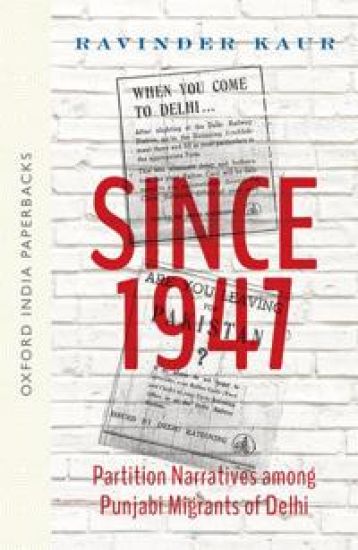
Since 1947

Since 1947

Ravinder Kaur

OUP India
2018
nidottu
Since 1947 is about a series of events-the departure of the British, the inauguration of the post-colonial Indian state, and an unprecedented forced migration that followed Partition. Most importantly, it summarizes the nearly six decade-long efforts at restoring the loss of homes, livelihoods, and national territory in 1947. This study tells the story of Hindus and Sikhs from the North West Frontier Province and West Punjab who made India's capital their new home. Based on the everyday life of the migrants in three resettlement colonies, the book focuses on the period between 1947 and 1965-from the time of Partition till the official closure of resettlement work. It shows how Partition stands as a living theme, a point of reference for the Delhi Punjabis. The narrative is woven with memories of lived and inherited experiences and national histories of Partition. The refugees' journey towards becoming 'locals' is mapped through an exploration of their coping strategies, and gradual identification with the Indian state. This work, thus, shifts focus from standard debates on Hindus-Muslims, Congress party-Muslim League, India-Pakistan, and opens up the inquiry to uncharted territory. Ravinder Kaur also challenges narratives that represent migration as chaotic, disorderly, and hurried. Using personal and governmental narratives, she shows that the population movement-layered by multiple levels of class, caste and gender experience-was far more complicated than we popularly imagine. The author revisits this book with a new introduction in the paperback edition.
The beginning

The beginning

Ravinder Kaur

Createspace Independent Publishing Platform
2018
nidottu
ravinder kaur's debut book, 'the beginning', is a collection of poetry about love, acceptance, self-worth, and belonging. the book is split into five chapters - exposition, rising action, climax, falling action, and resolution. the book contains over 100 poems exploring various themes such as mental health and learning to love yourself.