Kirjojen hintavertailu – 12 903 735 kirjaa ja 27 kauppaa

Kirjailija

Ray Bull

Kirjat ja teokset yhdessä paikassa: 13 kirjaa, julkaisuja vuosilta 1999–2025, suosituimpiin kuuluu Criminal Psychology. Vertaile teosten hintoja ja tarkista saatavuus suomalaisista kirjakaupoista.

13 kirjaa

Kirjojen julkaisuvuodet: 1999–2025.

Investigative Interviewing

Investigative Interviewing

Rebecca Milne; Ray Bull

JOHN WILEY SONS INC
2025
nidottu

Halvin toimitettuna 73,90 €

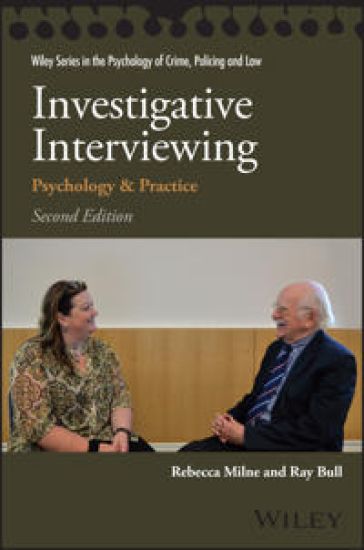
Become a well-informed and skilled investigative interviewer In the newly revised second edition of Investigative Interviewing: Psychology and Practice, a team of distinguished forensic psychologists delivers an up-to-date and practical guide to the psychological concepts and evidence-based research that underpin and inform investigative interviewing. The editors have included works that examine the foundational skills and processes that make up the ethical interviewing of witnesses, victims, and those suspected of crime. The book offers invaluable insights into the conduct of interviews of vulnerable persons—including children and people with learning disabilities—as well as how to transfer skills learned in a training course on interviewing into a real-world workplace. Each chapter is written by a contributor who is a leader in their field and provides coverage of topics ranging from organizational change management (for the implementation of the techniques discussed in this book) to cognitive interviewing. Readers will also find: A thorough introduction to the principles of memory formation and their implications for investigative interviewingComprehensive explorations of the cognitive interview, including discussions of how to help witnesses, victims, and suspects remember morePractical discussions of how to manage conversations, detect deceit, and develop rapport-based interpersonal techniquesFulsome treatments of how to convince members of an investigative organisation to adopt the techniques and strategies discussed in the book Perfect for aspiring and practicing professionals engaged in the interviewing of participants in the criminal justice and investigation processes, Investigative Interviewing: Psychology and Practice will also benefit solicitors, barristers, social workers, and judges with an interest in the art and science of interviewing.
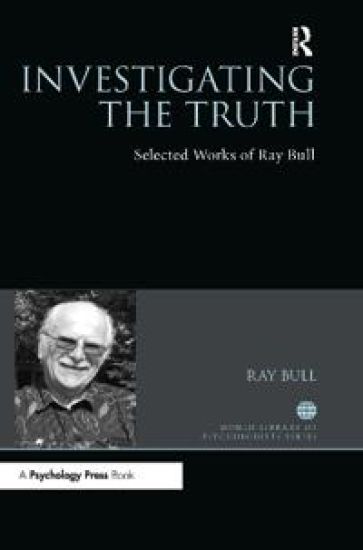
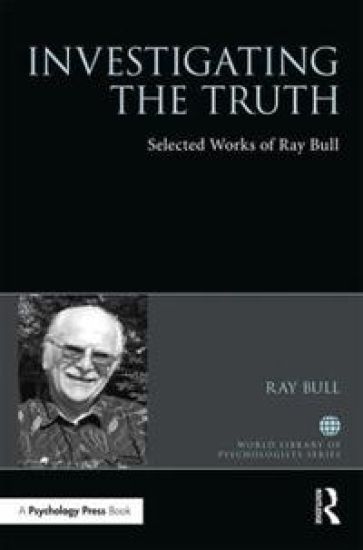
Investigating the Truth

Investigating the Truth

Ray Bull

Routledge
2019
nidottu
In the World Library of Psychologists series, international experts present career-long collections of what they judge to be their finest pieces – extracts from books, key articles, salient research findings, and their major practical theoretical contributions. The Selected Works of Professor Ray Bull include some of the most influential insights into the psychology of investigative interviewing. Whether it has been determining whether a suspect is lying or telling the truth, enabling children to provide reliable testimony, or understanding how the dynamics of the interview process itself can affect what is achieved, Professor Bull has been at the forefront in researching this fascinating area of applied psychology for over 40 years, his work informing practice internationally. An elected Honorary Fellow of the British Psychological Society and the first Honorary Life Member of the International Investigative Interviewing Research Group, Professor Bull also drafted parts of the government’s Memorandum of Good Practice and of Achieving Best Evidence on Video Recorded Interviews with Child Witnesses for Criminal Proceedings. Including a specially written introduction in which Professor Bull reflects on a wide-ranging career and contextualises how the field has evolved, this collection will be a valuable resource for students and researchers of forensic psychology.
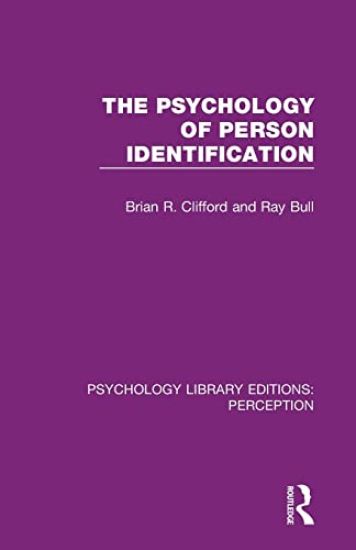
The Psychology of Person Identification

The Psychology of Person Identification

Brian Clifford; Ray Bull

Routledge
2019
nidottu
Originally published in 1978, the laws and procedures governing person identification parades, photofit pictures and the forms of questions asked to obtain a description, had been increasingly called into question. The problem had been highlighted by several well publicised court cases, and considered by the Devlin Committee. This book reviews the status of psychological knowledge at the time concerning the many aspects of person identification and scientifically evaluates the methods and procedures used. Contrary to the popular belief that identification is a simple affair, the authors use the theory and method of psychology to reveal the sources of the difficulties involved in recognising a once-seen person. Estimates of just how good a witness can be are drawn from laboratory studies using face photographs, from mock crime incidents, and from actual criminal cases, for reliability varies markedly in each of these three situations. Both an individual and a social perspective is taken of the eye-witnesses, and research into perception and memory, together with individual differences in such things as cognitive style, personality, suggestibility, age, sex, and ability to form both eidetic and memory images, are examined. The social aspects of stereotypes, the presence of other witnesses and the desire to be a ‘good witness’ are all discussed at length. Finally an extended examination of the possibility of voice parades and changes in identification procedures, together with man-machine interaction techniques, is undertaken.
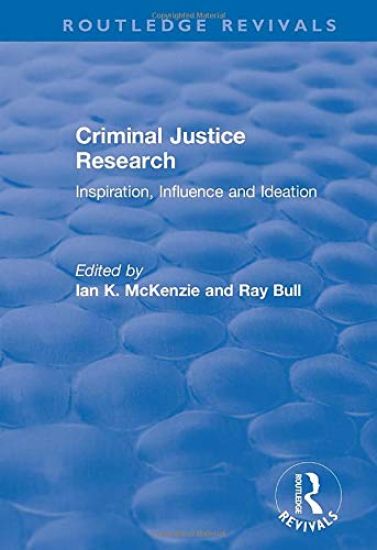
Criminal Justice Research

Criminal Justice Research

Ian McKenzie; Ray Bull

Routledge
2019
nidottu
This title was first published in 2002: A collection of criminal justice researchers select a number of books, documents, papers and such like, that they believe to be important and influential in the field of criminal justice research. Each author has written a description and critique of the selected item and have discussed the impact of each of them with regards to formulating or developing their own research. The authors also speculate onb the direction they believe the area in question might be expected to develop in the first 10-15 years of the 21st century. The definition of crimnal justice, in this book, is a broad one, and that is reflected in the combination of criminologists, psychologists, sociologists and experts on social and public administration. In all the book attempts to examine the inspirations, influences and thought processes which underpin criminal justice research efforts.
Investigating the Truth

Investigating the Truth

Ray Bull

Routledge
2018
sidottu
In the World Library of Psychologists series, international experts present career-long collections of what they judge to be their finest pieces – extracts from books, key articles, salient research findings, and their major practical theoretical contributions. The Selected Works of Professor Ray Bull include some of the most influential insights into the psychology of investigative interviewing. Whether it has been determining whether a suspect is lying or telling the truth, enabling children to provide reliable testimony, or understanding how the dynamics of the interview process itself can affect what is achieved, Professor Bull has been at the forefront in researching this fascinating area of applied psychology for over 40 years, his work informing practice internationally. An elected Honorary Fellow of the British Psychological Society and the first Honorary Life Member of the International Investigative Interviewing Research Group, Professor Bull also drafted parts of the government’s Memorandum of Good Practice and of Achieving Best Evidence on Video Recorded Interviews with Child Witnesses for Criminal Proceedings. Including a specially written introduction in which Professor Bull reflects on a wide-ranging career and contextualises how the field has evolved, this collection will be a valuable resource for students and researchers of forensic psychology.
Criminal Justice Research: Inspiration Influence and Ideation
This title was first published in 2002: A collection of criminal justice researchers select a number of books, documents, papers and such like, that they believe to be important and influential in the field of criminal justice research. Each author has written a description and critique of the selected item and have discussed the impact of each of them with regards to formulating or developing their own research. The authors also speculate onb the direction they believe the area in question might be expected to develop in the first 10-15 years of the 21st century. The definition of crimnal justice, in this book, is a broad one, and that is reflected in the combination of criminologists, psychologists, sociologists and experts on social and public administration. In all the book attempts to examine the inspirations, influences and thought processes which underpin criminal justice research efforts.
The Psychology of Person Identification

The Psychology of Person Identification

Brian Clifford; Ray Bull

Routledge
2017
sidottu
Originally published in 1978, the laws and procedures governing person identification parades, photofit pictures and the forms of questions asked to obtain a description, had been increasingly called into question. The problem had been highlighted by several well publicised court cases, and considered by the Devlin Committee. This book reviews the status of psychological knowledge at the time concerning the many aspects of person identification and scientifically evaluates the methods and procedures used. Contrary to the popular belief that identification is a simple affair, the authors use the theory and method of psychology to reveal the sources of the difficulties involved in recognising a once-seen person. Estimates of just how good a witness can be are drawn from laboratory studies using face photographs, from mock crime incidents, and from actual criminal cases, for reliability varies markedly in each of these three situations. Both an individual and a social perspective is taken of the eye-witnesses, and research into perception and memory, together with individual differences in such things as cognitive style, personality, suggestibility, age, sex, and ability to form both eidetic and memory images, are examined. The social aspects of stereotypes, the presence of other witnesses and the desire to be a ‘good witness’ are all discussed at length. Finally an extended examination of the possibility of voice parades and changes in identification procedures, together with man-machine interaction techniques, is undertaken.
The Social Psychology of Facial Appearance

The Social Psychology of Facial Appearance

Ray Bull; Nichola Rumsey

Springer-Verlag New York Inc.
2011
nidottu
Several years ago Coleman (1981) reported that in 1979 one of the many in­ ternational cosmetics companies had an annual sales figure of $2. 38 billion, nearly 1. 25 million sales representatives, and over 700 products, the majority of these being for the face. Cash and Cash (1982) noted that in 1979 U. S. consumers spent over $4 million on cosmetic products. They stated that, "Although this practice would seem to be a fascinating aspect of human be­ havior on the basis of its generality and resilience, social-behavioral scientists have largely ignored the phenomenon so plainly (or pleasingly) in front of their eyes. " Why should people be so concerned with their facial appearance? Many psychologists have argued (e. g. , Kleck & Rubenstein, 1975) not only that facial information is usually the first that is available to the perceiver, but also that it is continuously available during social interaction. Maruyama and Miller (1981) stated that "appearance is often the first dimension upon which a stranger can be evaluated. Since people tend to see others as integrated and consistent units, rather than as collections of situation-specific behaviors, a potent and immediately evident basis for an evaluation, such as physical appearance, should intrude into and affect any overall and subsequent evalua­ tion.
Criminal Psychology

Criminal Psychology

Ray Bull; Claire Cooke; Ruth Hatcher

Oneworld Publications
2009
nidottu
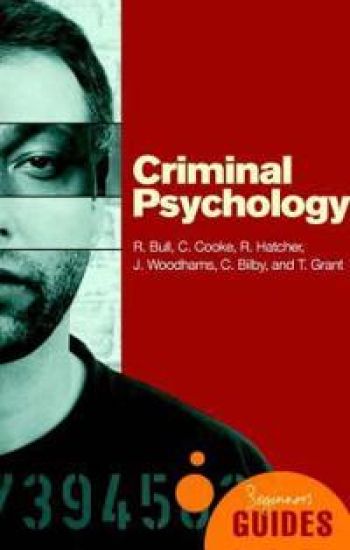
It is a conundrum that has vexed societies throughout history: how do you deal with those that break the law? If their aim is to evade you, how do you identify them? If their aim is to lie, how do you interview them? If they don’t see their actions are wrong, how do you help them to successfully reform? Criminal psychology is the discipline which tackles these challenges head on. From the signals which give away we’re lying to the psychological profiling of violent offenders, this exhaustive guide, written by the UK’s top experts, is the perfect introduction. Also covering policing, and the much debated topic of sexual offenders and their treatment, it will demonstrate how understanding the mind will help us to view modern justice from a more informed perspective.
Witness Identification in Criminal Cases

Witness Identification in Criminal Cases

Rachel Wilcock; Ray Bull; Rebecca Milne

Oxford University Press
2008
nidottu
Witness Identification provides an up-to-date review on identifying crime perpetrators based on psychological theory and research. Applying psychology to the area of criminal identification, the authors make reference to relevant legislation such as the PACE Codes of Practice as they explore the psychology involved in identification. This insightful and practical title will inform anyone interested in this area. The authors outline the psychological information relevant to constructing and delivering identification parades, such as the point of view of the suspect and witness or victim, how witnesses remember, and the factors likely to affect the accuracy of person descriptions. They also consider the effects of stereotypes and expectancies on identification performance, as well as a discussion of the technologies involved in identification procedure. The book includes a chapter on how to assist people who are deemed vulnerable in order to elicit accurate identification evidence. It also looks at other methods of identification in addition to face identification, such as methods to identify a person's voice and gait. By providing an overview of legislation and guidelines to conducting identity parades alongside a psychological underpinning, this book is a valuable resource to anyone whose work involves identification procedures, as well as students of psychology, law and police studies.
Criminal Psychology

Criminal Psychology

Ray Bull; Cooke Claire; Hatcher Ruth

Oneworld Publications
2006
nidottu
It is a conundrum that has vexed societies throughout history: how do you deal with those that break the law? If their aim is to evade you, how do you identify them? If their aim is to lie, how do you interview them? If they don’t see their actions are wrong, how do you help them to successfully reform? Criminal psychology is the discipline which tackles these challenges head on. From the signals which give away we’re lying to the psychological profiling of violent offenders, this exhaustive guide, written by the UK’s top experts, is the perfect introduction. Also covering policing, and the much debated topic of sexual offenders and their treatment, it will demonstrate how understanding the mind will help us to view modern justice from a more informed perspective.
Psychology and Law

Psychology and Law

Amina A Memon; Aldert Vrij; Ray Bull

John Wiley Sons Inc
2003
nidottu
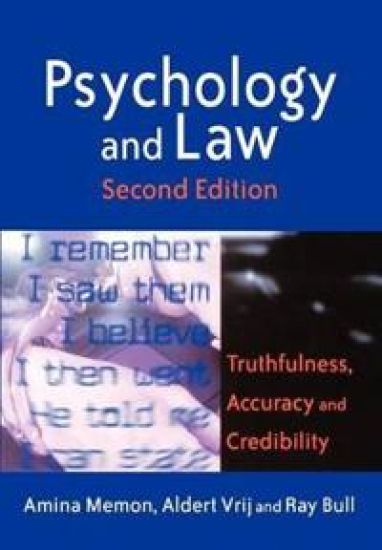
How can psychology inform law and policing to help determine the accuracy of witnesses, victims and suspects? This second edition of Psychology and Law: Truthfulness, Accuracy and Credibility is a substantially revised and exhaustive review of forensic research to do with credibility and the accuracy of evidence. Throughout the book, Memon, Vrij and Bull use their renowned expertise to focus on the practical relevance of research in areas such as: *criminal appearance stereotyping *assessment of the reliability of eyewitness evidence *non-verbal characteristics and physiological correlates of deception *improving practice in interviewing witnesses, in particular children and vulnerable adults *the use of and the study of juries in different countries Aimed primarily at students and researchers in psychology, criminology and law, this book will also appeal to professionals in law and police work.
Investigative Interviewing

Investigative Interviewing

Rebecca Milne; Ray Bull

JOHN WILEY SONS INC
1999
nidottu
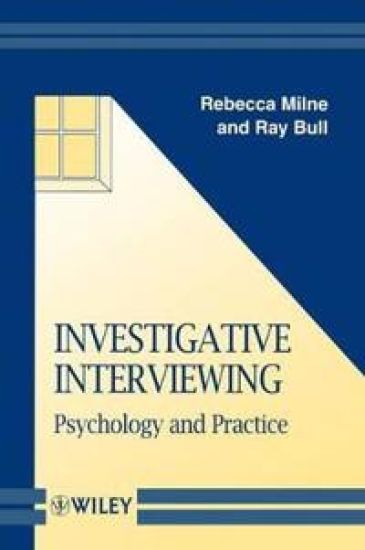
Well-informed and skilled interviewing is a key factor in dealingwith suspects, victims and witnesses. Experienced police andinvestigators know this from their own practice, and there is now asubstantial body of research and theory in psychology whichsupports this practice and can guide both training and thedevelopment of investigative work. The purpose of this book is toprovide a concise and clearly written guide to the psychologicalconcepts and research-based knowledge that can support and guideinvestigative interviewing. It deals in particular with: * good basic practice and methods for investigativeinterviewing * how to deal with false confessions and unreliable or incompletewitness information * the special problems of interviewing children and othervulnerable people * the process of interviewing suspects, victims, witnesses,complainants and colleagues This book will be of interest and value to a wide range ofprofessionals involved in training and practice in the police orother agencies, as well as social workers,lawyers, psychologistsand psychiatrists involved in forensic work. "The strength of thisbook lies in its relevance for both practice and research ininvestigative interviewing, not only in Britain butinternationally. Based on psychological theory and research, itprovides practitioners with a wealth of information and specificguidelines to help improve their interviewing skills. Researchersare challenged to address some of the, as yet, unansweredquestions." Janet Jackson, Netherlands Institute for the Study ofCriminality and Law Enforcement, Leiden, The Netherlands This bookis published in the Wiley Series in the Psychology of Crime,Policing and Law Series Editors: professor Professor Graham DaviesUniversity of Leicester, UK, and Professor Ray Bull University ofPortsmouth, UK