Kirjojen hintavertailu – 12 903 735 kirjaa ja 27 kauppaa

Kirjailija

Raymond A. Schroth

Kirjat ja teokset yhdessä paikassa: 7 kirjaa, julkaisuja vuosilta 1974–2012, suosituimpiin kuuluu Volunteer with the Poor in Peru. Vertaile teosten hintoja ja tarkista saatavuus suomalaisista kirjakaupoista.

7 kirjaa

Kirjojen julkaisuvuodet: 1974–2012.

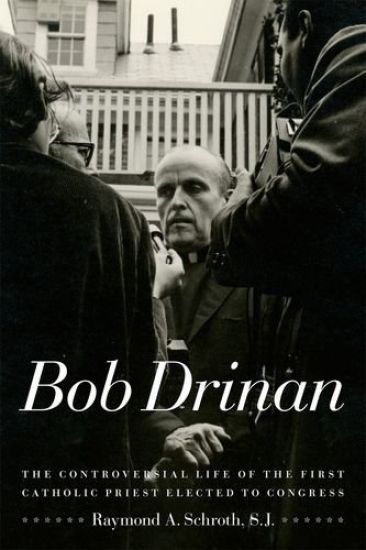
Bob Drinan

Bob Drinan

Raymond A. Schroth

Fordham University Press
2012
pokkari
Raymond Schroth's Bob Drinan: The Controversial Life of the First Catholic Priest Elected to Congress shows that the contentious mixture of religion and politics in this country is nothing new. Four decades ago, Father Robert Drinan, the fiery Jesuit priest from Massachusetts, not only demonstrated against the Vietnam War, he ran for Congress as an antiwar candidate and won, going on to serve for 10 years. Schroth has delved through magazine and newspaper articles and various archives (including Drinan's congressional records at Boston College, where he taught and also served as dean of the law school) and has interviewed dozens of those who knew Drinan to bring us a life-sized portrait. The result is a humanistic profile of an intensely private man and a glimpse into the life of a priest-politician who saw advocacy of human rights as his call. Drinan defined himself as a "moral architect" and was quick to act on his convictions, whether from the bully pulpit of the halls of Congress or from his position in the Church as a priest; to him they were as intricately woven as the clerical garb he continued to wear unapologetically throughout his elected tenure. Drinan's opposition to the Vietnam War and its extension into Cambodia, his call for the impeachment of President Richard Nixon (he served on the House Judiciary Committee, which initiated the charges), his pro-choice stance on abortion (legally, not morally), his passion for civil rights, and his devotion to Jewish people and the well-being of Israel made him one of the most liberal members of Congress and a force to be reckoned with. But his loyalty to the Church was never in question, and when Pope John Paul II demanded that he step down from offi ce, he did so unquestioningly. Afterward, he continued to champion the ideals he thought would make the world a better place. He didn't think of it in terms of left and right; as moral architect, he saw it in terms of right and wrong. This important book doesn't resolve debate about issues of church and state, but it does help us understand how one side can inform the other, if we are listening. It has much to say that is worth hearing.
Bob Drinan

Bob Drinan

Raymond A. Schroth

Fordham University Press
2010
sidottu
Raymond Schroth's Bob Drinan: The Controversial Life of the First Catholic Priest Elected to Congress shows that the contentious mixture of religion and politics in this country is nothing new. Four decades ago, Father Robert Drinan, the fiery Jesuit priest from Massachusetts, not only demonstrated against the Vietnam War, he ran for Congress as an antiwar candidate and won, going on to serve for 10 years. Schroth has delved through magazine and newspaper articles and various archives (including Drinan's congressional records at Boston College, where he taught and also served as dean of the law school) and has interviewed dozens of those who knew Drinan to bring us a life-sized portrait. The result is a humanistic profile of an intensely private man and a glimpse into the life of a priest-politician who saw advocacy of human rights as his call. Drinan defined himself as a "moral architect" and was quick to act on his convictions, whether from the bully pulpit of the halls of Congress or from his position in the Church as a priest; to him they were as intricately woven as the clerical garb he continued to wear unapologetically throughout his elected tenure. Drinan's opposition to the Vietnam War and its extension into Cambodia, his call for the impeachment of President Richard Nixon (he served on the House Judiciary Committee, which initiated the charges), his pro-choice stance on abortion (legally, not morally), his passion for civil rights, and his devotion to Jewish people and the well-being of Israel made him one of the most liberal members of Congress and a force to be reckoned with. But his loyalty to the Church was never in question, and when Pope John Paul II demanded that he step down from offi ce, he did so unquestioningly. Afterward, he continued to champion the ideals he thought would make the world a better place. He didn't think of it in terms of left and right; as moral architect, he saw it in terms of right and wrong. This important book doesn't resolve debate about issues of church and state, but it does help us understand how one side can inform the other, if we are listening. It has much to say that is worth hearing.
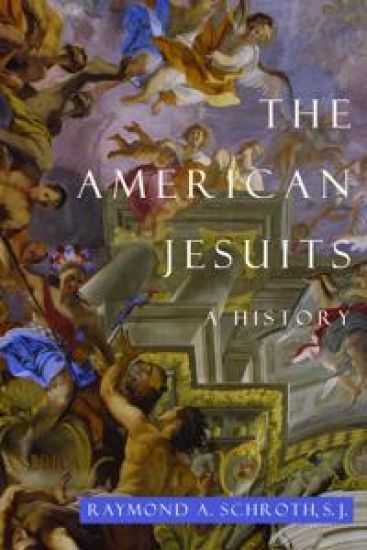
The American Jesuits

The American Jesuits

Raymond A. Schroth

New York University Press
2009
pokkari
Choice Outstanding Academic Title for 2008 A broad and compelling look at the impact of the largest Catholic order of men on American culture With infectious energy and a genuine gift for storytelling, Raymond A. Schroth recounts the history of Jesuits in the United States. The American Jesuits isn't simply a book for Catholics; it's for anyone who loves a well-told historical tale. For more than 450 years, Jesuit priests have traveled the globe out of a religious commitment to serve others. Their order, the Society of Jesus, is the largest religious order of men in the Catholic Church, with more than 20,000 members around the world and almost 3,000 in the United States. It is one of the more liberal orders in the Church, taking very public stands in the U. S. on behalf of social justice causes such as the promotion of immigrants' rights and humanitarian aid, including assistance to Africa's poor, and against American involvement in "unjust wars." Jesuits have played an important part in Americanizing the Catholic Church and in preparing Catholic immigrants for inclusion into American society. Starting off with the first Jesuit to reach the New World—he was promptly murdered on the Florida coast—Schroth focuses on the key periods of the Jesuit experience in the Americas, beginning with the era of European explorers, many of whom were accompanied by Jesuits and some of whom were Jesuits themselves. Suppressed around the time of the American Revolution, the Society experienced resurgence in the nineteenth century, arriving in the U. S. along with waves of Catholic immigrants and establishing a network of high schools and universities. In the mid-twentieth century, the Society transformed itself to serve an urbanizing nation. Schroth is not blind to the Society's shortcomings and not all of his story reflects well on the Jesuits. However, as he reminds readers, Jesuits are not gods and they don't dwell in mountaintop monasteries. Rather, they are imperfect men who work in a messy world to "find God in all things" and to help their fellow men and women do the same. A quintessential American tale of men willing to take risks — for Indians, blacks, immigrants, and the poor, and to promote a loving picture of God—The American Jesuits offers a broad and compelling look at the impact of this 400-year-old international order on American culture and the culture's impact on the Jesuits.
Fordham

Fordham

Raymond A. Schroth

Fordham University Press
2008
pokkari
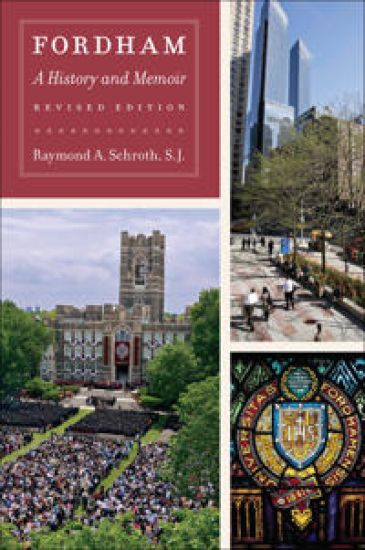
Fordham University is the quintessential American-Catholic institution—and one now looked upon as among the best Catholic universities in the country. Its story is also the story of New York, especially the Bronx, and Fordham's commitment to the city during its rise, fall, and rebirth. It's a story of Jesuits, soldiers, alumni who fought in World Wars, chaplains, teachers, and administrators who made bold moves and big mistakes, of presidents who thought small and those who had vision. And of the first women, students and faculty, who helped bring Fordham into the 20th century. Finally it's the story of an institution's attempt to keep its Jesuit and Catholic identity as it strives for leadership in a competitive world. Combining authoritative history and fascinating anecdotes, Schroth offers an engaging account of Fordham's one hundred thirrty-seven years—here, updated, revised, and expanded to cover the new presidency of Joseph M. McShane, S. J., and the challenges Fordham faces in the new century.
The American Jesuits

The American Jesuits

Raymond A. Schroth

New York University Press
2007
sidottu
Choice Outstanding Academic Title for 2008 A broad and compelling look at the impact of the largest Catholic order of men on American culture With infectious energy and a genuine gift for storytelling, Raymond A. Schroth recounts the history of Jesuits in the United States. The American Jesuits isn't simply a book for Catholics; it's for anyone who loves a well-told historical tale. For more than 450 years, Jesuit priests have traveled the globe out of a religious commitment to serve others. Their order, the Society of Jesus, is the largest religious order of men in the Catholic Church, with more than 20,000 members around the world and almost 3,000 in the United States. It is one of the more liberal orders in the Church, taking very public stands in the U. S. on behalf of social justice causes such as the promotion of immigrants' rights and humanitarian aid, including assistance to Africa's poor, and against American involvement in "unjust wars." Jesuits have played an important part in Americanizing the Catholic Church and in preparing Catholic immigrants for inclusion into American society. Starting off with the first Jesuit to reach the New World—he was promptly murdered on the Florida coast—Schroth focuses on the key periods of the Jesuit experience in the Americas, beginning with the era of European explorers, many of whom were accompanied by Jesuits and some of whom were Jesuits themselves. Suppressed around the time of the American Revolution, the Society experienced resurgence in the nineteenth century, arriving in the U. S. along with waves of Catholic immigrants and establishing a network of high schools and universities. In the mid-twentieth century, the Society transformed itself to serve an urbanizing nation. Schroth is not blind to the Society's shortcomings and not all of his story reflects well on the Jesuits. However, as he reminds readers, Jesuits are not gods and they don't dwell in mountaintop monasteries. Rather, they are imperfect men who work in a messy world to "find God in all things" and to help their fellow men and women do the same. A quintessential American tale of men willing to take risks — for Indians, blacks, immigrants, and the poor, and to promote a loving picture of God—The American Jesuits offers a broad and compelling look at the impact of this 400-year-old international order on American culture and the culture's impact on the Jesuits.