
Kirjojen hintavertailu – 12 859 818 kirjaa ja 27 kauppaa

Kirjailija

Raymond C. La Charite´

Kirjat ja teokset yhdessä paikassa: 2 kirjaa, julkaisuja vuosilta 1968–1999, suosituimpiin kuuluu The Concept of Judgment in Montaigne. Vertaile teosten hintoja ja tarkista saatavuus suomalaisista kirjakaupoista.

Nimi esiintyy myös muodoissa: Raymond C. La Charité

2 kirjaa

Kirjojen julkaisuvuodet: 1968–1999.

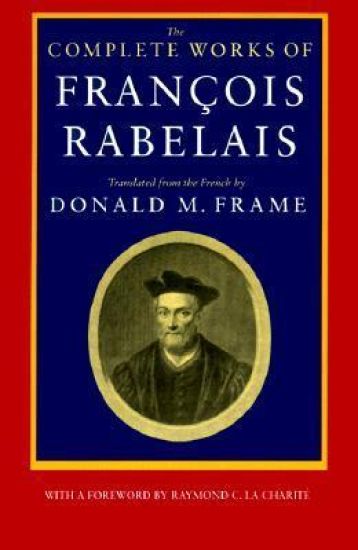
The Complete Works of Francois Rabelais

The Complete Works of Francois Rabelais

François Rabelais; Raymond C. La Charité

University of California Press
1999
pokkari
Rip-roaring and rib-tickling, Francois Rabelais' irreverent story of the giant Gargantua, his giant son Pantagruel, and their companion Panurge is a classic of the written word. This complete translation by Donald Frame, helpfully annotated for the nonspecialist, is a masterpiece in its own right, bringing to twentieth-century English all the exuberance and invention of the original sixteenth-century French. A final part containing all the rest of Rabelais' known writings, including his letters, supplements the five books traditionally known as Gargantua and Pantagruel. This great comic narrative, written in hugely popular installments over more than two decades, was unsparingly satirical of scholarly pomposity and the many abuses of religious, legal, and political power. The books were condemned at various times by the Sorbonne and narrowly escaped being banned. Behind Rabelais' obvious pleasure in lampooning effete erudition and the excesses of society is the humanist's genuine love of knowledge and belief in the basic goodness of human nature. The bawdy wit and uninhibited zest for life that characterize his unlikely trio of travelers have delighted readers and inspired other writers ever since the exploits of Gargantua and Pantagruel first appeared.
The Concept of Judgment in Montaigne

The Concept of Judgment in Montaigne

Raymond C. La Charite´

Springer
1968
nidottu
Many critics seem to consider it inappropriate or unnecessary to ask what Montaigne means by the faculty of judgment. Laumonier speaks of "Ie bon sens, qu'il oppose si souvent a la memoire et qu'il appelle encore 'jugement' et 'entendement', c'est-a-dire la faculte de penser et de reflechir juste. " 1 Our appreciation of what is implied by judgment, that is by Montaigne's notion of judgment, has been delayed perhaps by a too facile acceptance of a so-called synonymity of meaning among the psychological terms used by Montaigne. In a discussion of key concepts in Montaigne, Donald M. Frame has accurately summarized the present situation with regard to our knowledge of Montaigne's notion of judgment and other key concepts: "We all have our hunches, but we need more than that. " 2 For the expression of his interest and concern for the intellectual and moral activities and capabilities of the mind, Montaigne draws upon a broad and elementary semantic field. These primary psychological terms are jugement, entendement, sens, raison, discours, and conscience. Al- though these words may be used synonymously, Montaigne does seem to maintain certain basic distinctions among them; frequent substi- tutions of terms must be the result of semantic and ideational differ- ences. Moreover, the association of several psychological words within a single sentence implies gradations, however slight they may be.