Kirjojen hintavertailu – 12 903 725 kirjaa ja 27 kauppaa

Kirjailija

Raymond Carr

Kirjat ja teokset yhdessä paikassa: 11 kirjaa, julkaisuja vuosilta 1982–2024, suosituimpiin kuuluu Theology in the Mode of Monk: An Aesthetics of Barth and Cone on Revelation and Freedom, Volume 2. Vertaile teosten hintoja ja tarkista saatavuus suomalaisista kirjakaupoista.

11 kirjaa

Kirjojen julkaisuvuodet: 1982–2024.

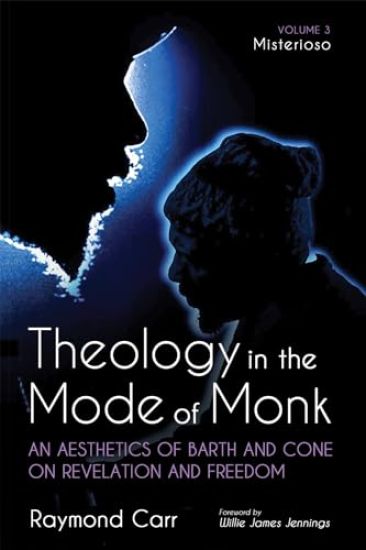
Theology in the Mode of Monk: An Aesthetics of Barth and Cone on Revelation and Freedom, Volume 3
This captivating study engages two of the most influential theologians of the twentieth century: Karl Barth, the Swiss Protestant theologian, who constructed his theology ""from above"" and engaged the powers in the background of Nazi Germany, and James H. Cone, the father of Black Theology in America, who constructed his theology ""from below"" and confronted white racism--the most intractable issue in America's history. In this three-volume project, Carr employs the aesthetic thinking of the jazz legend Thelonious Monk to reconceptualize, restructure, and advance the theologies of Barth and Cone. In this final volume, Carr appeals to Thelonious Monk's tune ""Misterioso"" as the analogical framework for exploring the freedom of God as the melodic foundation for black liberation. Monk's mode of musical thinking encourages the jazz artist in us all to play in the mystery of God's freedom as the true ground for living freely within the world of the principalities and powers.
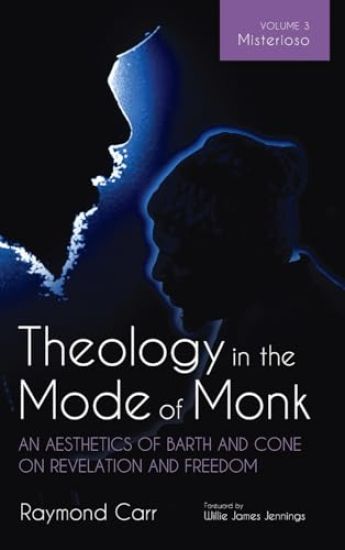
Theology in the Mode of Monk: An Aesthetics of Barth and Cone on Revelation and Freedom, Volume 3
This captivating study engages two of the most influential theologians of the twentieth century: Karl Barth, the Swiss Protestant theologian, who constructed his theology "from above" and engaged the powers in the background of Nazi Germany, and James H. Cone, the father of Black Theology in America, who constructed his theology "from below" and confronted white racism--the most intractable issue in America's history. In this three-volume project, Carr employs the aesthetic thinking of the jazz legend Thelonious Monk to reconceptualize, restructure, and advance the theologies of Barth and Cone. In this final volume, Carr appeals to Thelonious Monk's tune "Misterioso" as the analogical framework for exploring the freedom of God as the melodic foundation for black liberation. Monk's mode of musical thinking encourages the jazz artist in us all to play in the mystery of God's freedom as the true ground for living freely within the world of the principalities and powers.
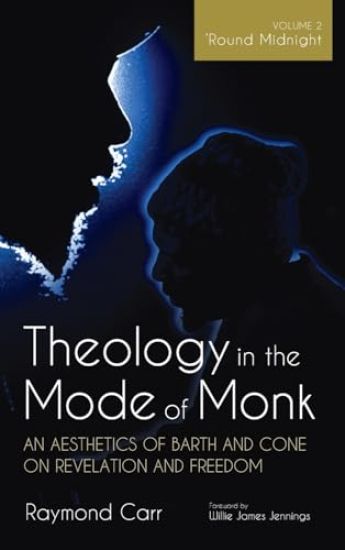
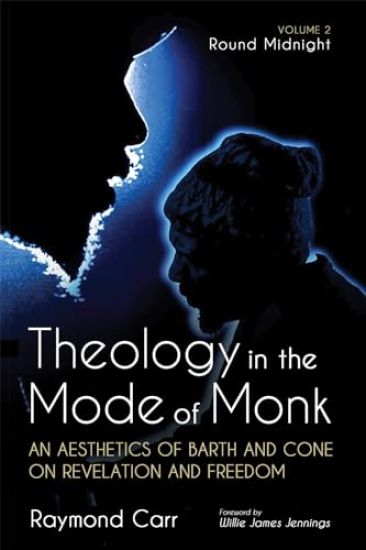
Theology in the Mode of Monk: An Aesthetics of Barth and Cone on Revelation and Freedom, Volume 2
This captivating study engages two of the most influential theologians of the twentieth century: Karl Barth, the Swiss Protestant theologian, who constructed his theology "from above" and engaged the powers in the background of Nazi Germany, and James H. Cone, the father of Black Theology in America, who constructed his theology "from below" and confronted white racism--the most intractable issue in America's history. In this three-volume project, Carr employs the aesthetic thinking of the jazz legend Thelonious Monk to reconceptualize, restructure, and advance the theologies of Barth and Cone. In this second volume, Carr appeals to Monk's tune "'Round Midnight" as the analogical framework for articulating the meaning between Christ, the cantus firmus, and the sociopolitical histories of Karl Barth and James Cone. Monk's encouragement to "improvise on the melody" is heard as the melodic foundation for a new form of christological reflection.
Theology in the Mode of Monk: An Aesthetics of Barth and Cone on Revelation and Freedom, Volume 2
This captivating study engages two of the most influential theologians of the twentieth century: Karl Barth, the Swiss Protestant theologian, who constructed his theology "from above" and engaged the powers in the background of Nazi Germany, and James H. Cone, the father of Black Theology in America, who constructed his theology "from below" and confronted white racism--the most intractable issue in America's history. In this three-volume project, Carr employs the aesthetic thinking of the jazz legend Thelonious Monk to reconceptualize, restructure, and advance the theologies of Barth and Cone. In this second volume, Carr appeals to Monk's tune "'Round Midnight" as the analogical framework for articulating the meaning between Christ, the cantus firmus, and the sociopolitical histories of Karl Barth and James Cone. Monk's encouragement to "improvise on the melody" is heard as the melodic foundation for a new form of christological reflection.
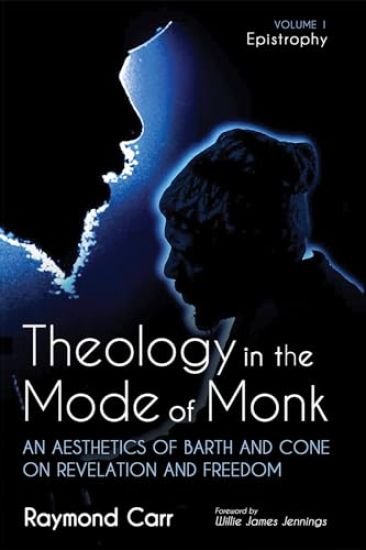
Theology in the Mode of Monk: An Aesthetics of Barth and Cone on Revelation and Freedom, Volume 1
This captivating study engages two of the most influential theologians of the twentieth century: Karl Barth, the Swiss Protestant theologian who constructed his theology "from above" and engaged the powers in the background of Nazi Germany, and James H. Cone, the father of Black Theology in America, who constructed his theology "from below" and confronted white racism--the most intractable issue in America's history. In this three-volume project, Carr employs the aesthetic thinking of the jazz legend Thelonious Monk to reconceptualize, restructure, and advance the theologies of Barth and Cone. This first volume appeals to the Bebop tune "Epistrophy" as the analogical framework for (re)conceptualizing the historical form and hermeneutical backgrounds of Karl Barth and James H. Cone. Monk's mode of musical thinking establishes the aesthetic theological architecture Carr uses to reiterate and reimagine the revolutionary theological contributions of Barth and Cone.
Theology in the Mode of Monk: An Aesthetics of Barth and Cone on Revelation and Freedom, Volume 1
This captivating study engages two of the most influential theologians of the twentieth century: Karl Barth, the Swiss Protestant theologian who constructed his theology "from above" and engaged the powers in the background of Nazi Germany, and James H. Cone, the father of Black Theology in America, who constructed his theology "from below" and confronted white racism--the most intractable issue in America's history. In this three-volume project, Carr employs the aesthetic thinking of the jazz legend Thelonious Monk to reconceptualize, restructure, and advance the theologies of Barth and Cone. This first volume appeals to the Bebop tune "Epistrophy" as the analogical framework for (re)conceptualizing the historical form and hermeneutical backgrounds of Karl Barth and James H. Cone. Monk's mode of musical thinking establishes the aesthetic theological architecture Carr uses to reiterate and reimagine the revolutionary theological contributions of Barth and Cone.
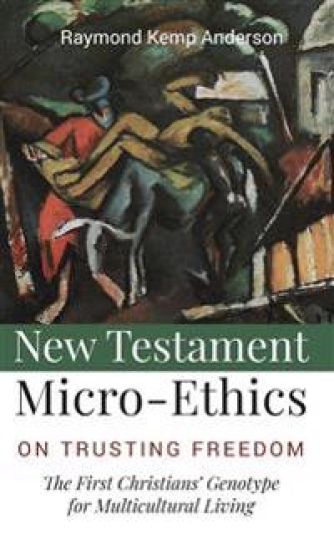
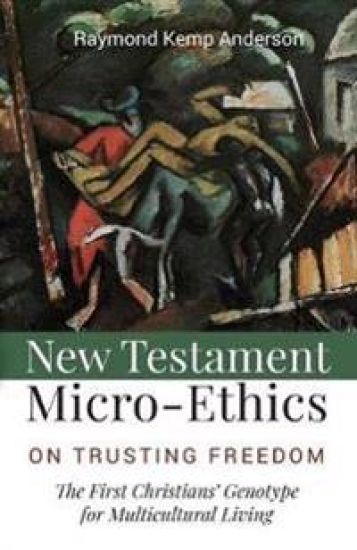
New Testament Micro-Ethics

New Testament Micro-Ethics

Raymond Kemp Anderson; Raymond Carr

Wipf Stock Publishers
2018
pokkari
Anderson shows how Early Christians' faith took root in a multicultural world just as diverse and conflicted as our own. Their basic attitude turns out to have been one of astounding freedom--not a cultus of rules, but a matter of whole-hearted response; for they lived in conversation with the One whose love for all his wayward creatures is utterly tenacious. We find ourselves continually surprised by an insistent grace that treasures all persons equally while exposing and deposing our evil. Such faith still evokes basic confidence; and we find ourselves, ever again moved by gratitude and trusting each others' Christ-emboldened freedom. If we are embraced by grace, our becoming ""great again"" can only mean unlimited concern for all and free-flowing interactive service. The playful work ethic that ensues holds promise for our politically splintered post-industrial age. The New Testament's seed-like ethical genotype still unfolds into a secure, all-embracing, and mutually supportive ""sabbatic"" life stance. What could be more relevant for our future in conflicted times? Raymond Kemp Anderson is Emeritus Chairman of Philosophy and Religion at Wilson College. As one of Karl Barth's last doctoral candidates, he wrote Law and Order: The Life-Structuring Dynamics of Grace and Virtue in Calvin's Ethical Thought. Now, following a long career as teacher and pastor, he has authored Liberating Speech--Today; An American Scholar Recalls Karl Barth's Golden Years as a Teacher (1958-1964); and Karl Barth's Table Talk.
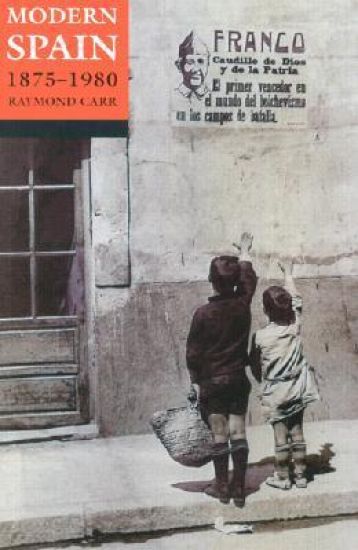
Modern Spain, 1875-1980

Modern Spain, 1875-1980

Raymond Carr

Oxford University Press
2001
nidottu
The word 'liberal', as part of our political vocabulary comes from Spain. It was first used to describe a group of radical patriots cooped up in Cadiz, refugees from the French invasion of 1808. In 1812 they drew up a constitution enshrining the sovereignty of the people which struck the very basis of the old monarchy and became the model for advanced democrats from St Petersburg to Naples. Universal male suffrage was established in Spain in 1890 - earlier than Britain. The imposition of advanced liberal institutions on a conservative society, both economically and socially backward, inevitably caused tensions, and these, Raymond Carr argues, explain much of modern Spanish history. His analysis, incorporating much new research, starts at the 'September Revolution' of 1868 and goes right up to the present day. In the 1970s and 80s the country suffered less from the violent social disruption experienced in previous decades, but - as always - Spain is beset with acute regional problems which become more pressing the longer they remain unsolved.