Kirjojen hintavertailu – 12 903 724 kirjaa ja 27 kauppaa

Kirjailija

Raymond Coppinger

Kirjat ja teokset yhdessä paikassa: 7 kirjaa, julkaisuja vuosilta 2002–2019, suosituimpiin kuuluu How Dogs Work. Vertaile teosten hintoja ja tarkista saatavuus suomalaisista kirjakaupoista.

7 kirjaa

Kirjojen julkaisuvuodet: 2002–2019.

How Dogs Work

How Dogs Work

Raymond Coppinger; Mark Feinstein; Gordon M Burghardt

University of Chicago Press
2019
pokkari
How well do we really know dogs? People may enjoy thinking about them as "man's best friend," but what actually drives the things they do? What is going on in their fur-covered heads as they look at us with their big, expressive eyes? Raymond Coppinger and Mark Feinstein know something about these questions, and with How Dogs Work, they're ready to share; this is their guide to understanding your dog and its behavior. Approaching dogs as a biological species rather than just as pets, Coppinger and Feinstein accessibly synthesize decades of research and field experiments to explain the evolutionary foundations underlying dog behaviors. They examine the central importance of the shape of dogs: how their physical body (including the genes and the brain) affects behavior, how shape interacts with the environment as animals grow, and how all of this has developed over time. Shape, they tell us, is what makes a champion sled dog or a Border collie that can successfully herd sheep. Other chapters in How Dogs Work explore such mysteries as why dogs play; whether dogs have minds, and if so what kinds of things they might know; why dogs bark; how dogs feed and forage; and the influence of the early relationship between mother and pup. Going far beyond the cozy lap dog, Coppinger and Feinstein are equally fascinated by what we can learn from the adaptations of dogs, wolves, coyotes, jackals, dingoes, and even pumas in the wild, as well as the behavior of working animals like guarding and herding dogs. We cherish dogs as family members and deeply value our lengthy companionship with them. But, isn't it time we knew more about who Fido and Trixie really are? How Dogs Work will provide some keys to unlocking the origins of many of our dogs' most common, most puzzling, and most endearing behaviors.

What Is a Dog?

What Is a Dog?

Raymond Coppinger; Lorna Coppinger; Alan Beck

University of Chicago Press
2017
nidottu

Halvin toimitettuna 24,20 €

Of the world's dogs, less than two hundred million are pets, living with humans who provide food, shelter, squeaky toys, and fashionable sweaters. But roaming the planet are four times as many dogs who are their own masters neighborhood dogs, dump dogs, mountain dogs. They are dogs, not companions, and these dogs, like pigeons or squirrels, are highly adapted scavengers who have evolved to fit particular niches in the vicinity of humans. In What Is a Dog? experts on dog behavior Raymond and Lorna Coppinger present an eye-opening analysis of the evolution and adaptations of these unleashed dogs and what they can reveal about the species as a whole. Exploring the natural history of these animals, the Coppingers explain how the village dogs of Vietnam, India, Africa, and Mexico are strikingly similar. These feral dogs, argue the Coppingers, are in fact the truly archetypal dogs, nearly uniform in size and shape and incredibly self-sufficient. Drawing on nearly five decades of research, they show how dogs actually domesticated themselves in order to become such efficient scavengers of human refuse. The Coppingers also examine the behavioral characteristics that enable dogs to live successfully and to reproduce, unconstrained by humans, in environments that we ordinarily do not think of as dog friendly. Providing a fascinating exploration of what it actually means genetically and behaviorally to be a dog, What Is a Dog? will undoubtedly change the way any beagle or bulldog owner will reflect on their four-legged friend.
What Is a Dog?

What Is a Dog?

Raymond Coppinger; Lorna Coppinger; Alan Beck

University of Chicago Press
2016
sidottu
Of the world’s dogs, less than two hundred million are pets, living with humans who provide food, shelter, squeaky toys, and fashionable sweaters. But roaming the planet are four times as many dogs who are their own masters—neighborhood dogs, dump dogs, mountain dogs. They are dogs, not companions, and these dogs, like pigeons or squirrels, are highly adapted scavengers who have evolved to fit particular niches in the vicinity of humans. In What Is a Dog? experts on dog behavior Raymond and Lorna Coppinger present an eye-opening analysis of the evolution and adaptations of these unleashed dogs and what they can reveal about the species as a whole. Exploring the natural history of these animals, the Coppingers explain how the village dogs of Vietnam, India, Africa, and Mexico are strikingly similar. These feral dogs, argue the Coppingers, are in fact the truly archetypal dogs, nearly uniform in size and shape and incredibly self-sufficient. Drawing on nearly five decades of research, they show how dogs actually domesticated themselves in order to become such efficient scavengers of human refuse. The Coppingers also examine the behavioral characteristics that enable dogs to live successfully and to reproduce, unconstrained by humans, in environments that we ordinarily do not think of as dog friendly. Providing a fascinating exploration of what it actually means—genetically and behaviorally—to be a dog, What Is a Dog? will undoubtedly change the way any beagle or bulldog owner will reflect on their four-legged friend.
How Dogs Work

How Dogs Work

Raymond Coppinger; Mark Feinstein; Gordon M. Burghardt

University of Chicago Press
2015
sidottu
How well do we really know dogs? People may enjoy thinking about them as "man's best friend," but what actually drives the things they do? What is going on in their fur-covered heads as they look at us with their big, expressive eyes? Raymond Coppinger and Mark Feinstein know something about these questions, and with How Dogs Work, they're ready to share; this is their guide to understanding your dog and its behavior. Approaching dogs as a biological species rather than just as pets, Coppinger and Feinstein accessibly synthesize decades of research and field experiments to explain the evolutionary foundations behind dog behaviors. They examine the central importance of the shape of dogs: how their physical body (including the genes and the brain) affects behavior, how shape interacts with the environment as animals grow, and how all of this has developed over time. Shape, they tell us, is what makes a champion sled dog or a Border collie that can successfully herd sheep. Other chapters in How Dogs Work explore such mysteries as: why dogs play; whether dogs have minds, and if so what kinds of things they might know; why dogs bark; how dogs feed and forage; and the influence of the early relationship between mother and pup. Going far beyond the cozy lap dog, Coppinger and Feinstein are equally fascinated by what we can learn from the adaptations of dogs, wolves, coyotes, jackals, dingoes, and even pumas in the wild, as well as the behavior of working animals like guarding and herding dogs. We cherish dogs as family members and deeply value our lengthy companionship with them. But, isn't it time we knew more about who Fido and Trixie really are? How Dogs Work will provide some keys to unlocking the origins of many of our dogs' most common, most puzzling, and most endearing behaviors.

Koira?

Koira?

Lorna Coppinger; Raymond Coppinger

Sanasilta
2007
nidottu
Etologipariskunta Lorna ja Raymond Coppinger pohtii kirjan kolmessa artikkelissa kesykoiran alkuperää ja sen mahdollisia selitysmalleja. Ajatus siitä, että koira olisi ihmisen aikoinaan kesyttämä susi, on heidän mielestään biologisena ilmiönä mahdoton. Jospa koira onkin kesyyntynyt itsestään hakeutumalla ihmisasutuksen lähelle valmiille ruoka-apajille? Ihmisen ja koiran välistä suhdetta tarkastellaan kirjassa kahden eri lajin välisenä biologisena ilmiönä. Tästä symbioosiksi kutsutusta suhteesta voi olla hyötyä niin koiralle kuin ihmisellekin, mutta aina ei ole itsestään selvää, kumman puolelle vaaka kallistuu. Ajatuksia herättävää luettavaa koirien omistajille, kouluttajille ja kasvattajille sekä kaikille biologiasta kiinnostuneille!
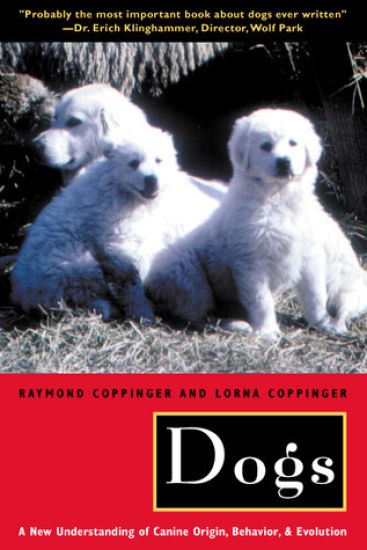
Dogs

Dogs

Raymond Coppinger; Lorna Coppinger

University of Chicago Press
2002
pokkari

Halvin toimitettuna 24,00 €

Biologists, breeders and trainers, and champion sled dog racers, Raymond and Lorna Coppinger have more than four decades of experience with literally thousands of dogs. Offering a scientifically informed perspective on canines and their relations with humans, the Coppingers take a close look at eight different types of dogs - household, village, livestock guarding, herding, sled-pulling, pointing, retrieving, and hound. They argue that dogs did not evolve directly from wolves, nor were they trained by early humans; instead, dogs domesticated themselves to exploit a new ecological niche: Mesolithic village dumps. Tracing the evolution of today's breeds from these village dogs, the Coppingers show how characteristic shapes and behaviors - from pointing and baying to the sleek shapes of running dogs - arise from both genetic heritage and the environments in which pups are raised. For both dogs and humans to get the most out of each other, we need to understand and adapt to the biological needs and dispositions of our canine companions, just as they have to ours.