

Kirjailija
Rebecca Dingo
Kirjat ja teokset yhdessä paikassa: 4 kirjaa, julkaisuja vuosilta 2012–2025, suosituimpiin kuuluu Networking Arguments. Vertaile teosten hintoja ja tarkista saatavuus suomalaisista kirjakaupoista.
4 kirjaa
Kirjojen julkaisuvuodet: 2012–2025.
Transnational Feminist Rhetorics and Gendered Leadership in Global Politics
Rebecca S. Richards; Rebecca Dingo
Lexington Books
2017
nidottu
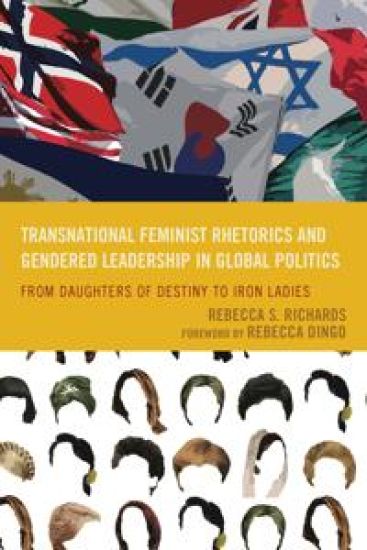
Transnational Feminist Rhetorics and Gendered Leadership in Global Politics examines the rhetoric surrounding women who hold or have held the highest office of a nation-state. Heads of state, such as Golda Meir, Margaret Thatcher, Benazir Bhutto, Ellen Johnson Sirleaf, and Michelle Bachelet, have navigated their ascent to executive government in vastly different ways while contending with gendered expectations of leadership, especially since most of them are the first woman to occupy their country’s highest governmental position. This book analyzes how these women rhetorically perform their positions of power—discursively, visually, and physically—in a traditionally male leadership role. Specifically, this project examines how certain rhetorical acts open up and close down the potential to confront the gendered expectations surrounding political leadership. When people analyze, campaign for, or critique a “female prime minister” or a “woman president,” they are not just talking about one woman but also referencing a collective neoliberal logic that interrupts and reaffirms the belief that the nation-state is an eternal, inevitable structure. Diverse political figures, such as Angela Merkel, Julia Gillard, and Indira Gandhi, are continually put in conversation with one another, through popular media representations, academic scholarship, and political analyses. This book examines the effect of such comparisons and connections, ultimately arguing that many of these gestures reduce or over-simplify women’s contributions to world politics. In order to show this effect, this book manifests the transnational connections found in autobiographies, organizations, political commentaries, biographical films, and other sources that focus on women who have been heads of state.
Transnational Feminist Rhetorics and Gendered Leadership in Global Politics
Rebecca S. Richards; Rebecca Dingo
Lexington Books
2014
sidottu
Transnational Feminist Rhetorics and Gendered Leadership in Global Politics examines the rhetoric surrounding women who hold or have held the highest office of a nation-state. Heads of state, such as Golda Meir, Margaret Thatcher, Benazir Bhutto, Ellen Johnson Sirleaf, and Michelle Bachelet, have navigated their ascent to executive government in vastly different ways while contending with gendered expectations of leadership, especially since most of them are the first woman to occupy their country’s highest governmental position. This book analyzes how these women rhetorically perform their positions of power—discursively, visually, and physically—in a traditionally male leadership role. Specifically, this project examines how certain rhetorical acts open up and close down the potential to confront the gendered expectations surrounding political leadership. When people analyze, campaign for, or critique a “female prime minister” or a “woman president,” they are not just talking about one woman but also referencing a collective neoliberal logic that interrupts and reaffirms the belief that the nation-state is an eternal, inevitable structure. Diverse political figures, such as Angela Merkel, Julia Gillard, and Indira Gandhi, are continually put in conversation with one another, through popular media representations, academic scholarship, and political analyses. This book examines the effect of such comparisons and connections, ultimately arguing that many of these gestures reduce or over-simplify women’s contributions to world politics. In order to show this effect, this book manifests the transnational connections found in autobiographies, organizations, political commentaries, biographical films, and other sources that focus on women who have been heads of state.
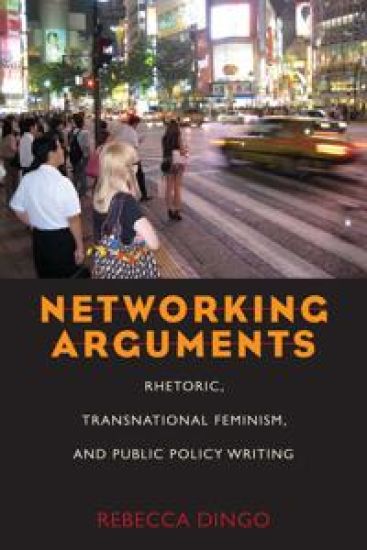
Networking Arguments presents an original study on the use and misuse of global institutional rhetoric and the effects of these practices on women, particularly in developing countries. Using a feminist lens, Rebecca Dingo views the complex networks that rhetoric flows through, globally and nationally, and how itÆs often reconfigured to work both for and against women and to maintain existing power structures. To see how rhetorics travel, Dingo deconstructs the central terminology employed by global institutions—mainstreaming, fitness, and empowerment—and shows how their meanings shift depending on the contexts in which theyÆre used. She studies programs by the World Bank, the United Nations, and the United States, among others, to view the original policies, then follows the trail of their diffusion and manipulation and the ultimate consequences for individuals. To analyze transnational rhetorical processes, Dingo builds a theoretical framework by employing concepts of transcoding, ideological traffic, and interarticulation to uncover the intricacies of power relationships at work within networks. She also views transnational capitalism, neoliberal economics, and neocolonial ideologies as primary determinants of policy and arguments over womenÆs roles in the global economy. Networking Arguments offers a new method of feminist rhetorical analysis that allows for an increased understanding of global gender policies and encourages strategies to counteract the negative effects they can create.