Kirjojen hintavertailu – 12 859 819 kirjaa ja 27 kauppaa

Kirjailija

Rebecca K. Smith

Kirjat ja teokset yhdessä paikassa: 8 kirjaa, julkaisuja vuosilta 2014–2020, suosituimpiin kuuluu Farmland Conservation. Vertaile teosten hintoja ja tarkista saatavuus suomalaisista kirjakaupoista.

Nimi esiintyy myös muodoissa: Rebecca K Smith

8 kirjaa

Kirjojen julkaisuvuodet: 2014–2020.

Farmland Conservation

Farmland Conservation

Lynn V. Dicks; Joscelyne E. Ashpole; Juliana Dänhardt; Katy James; Annelie M. Jönsson; Nicola Randall; David A. Showler; Rebecca K. Smith; Susan Turpie; David R. Williams; William J. Sutherland

Pelagic Publishing
2014
nidottu
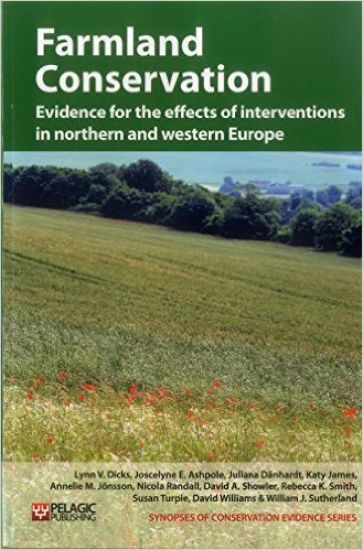
This synopsis covers evidence for the effects of conservation interventions for native farmland wildlife. It is restricted to evidence captured on the website www.conservationevidence.com. It includes papers published in the journal Conservation Evidence, evidence summarized on our database and systematic reviews collated by the Collaboration for Environmental Evidence. It is the thrid volume in the series Synopses of Conservation Evidence. Evidence was collected from all European countries west of Russia, but not those south of France, Switzerland, Austria, Hungary and Romania. A list of interventions to conserve wildlife on farmland was developed collaboratively by a team of thirteen experts. A number of interventions that are not currently agri-environment options were added during this process, such as ‘Provide nest boxes for bees (solitary or bumblebees)’ and ‘Implement food labelling schemes relating to biodiversity-friendly farming’. Interventions relating to the creation or management of habitats not considered commercial farmland (such as lowland heath, salt marsh and farm woodland) were removed. The list of interventions was organized into categories based on the International Union for the Conservation of Nature (IUCN) classifications of direct threats and conservation actions. Interventions that fall under the threat category ‘Agriculture’ are grouped by farming system, with separate sections for interventions that apply to arable or livestock farms, or across all farming types.
Farmland Conservation

Farmland Conservation

Lynn V. Dicks; Joscelyne E. Ashpole; Juliana Dänhardt; Katy James; Annelie M. Jönsson; Nicola Randall; David A. Showler; Rebecca K. Smith; Susan Turpie; David R. Williams; William J. Sutherland

Pelagic Publishing
2014
sidottu
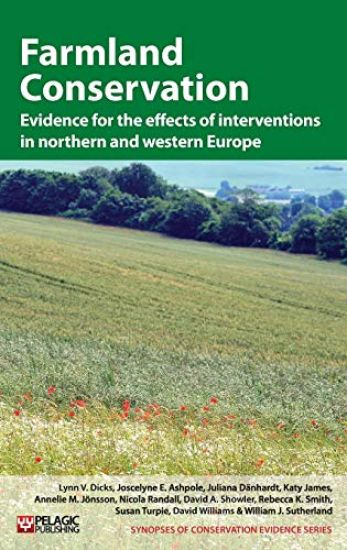
This synopsis covers evidence for the effects of conservation interventions for native farmland wildlife. It is restricted to evidence captured on the website www.conservationevidence.com. It includes papers published in the journal Conservation Evidence, evidence summarized on our database and systematic reviews collated by the Collaboration for Environmental Evidence. It is the thrid volume in the series Synopses of Conservation Evidence. Evidence was collected from all European countries west of Russia, but not those south of France, Switzerland, Austria, Hungary and Romania. A list of interventions to conserve wildlife on farmland was developed collaboratively by a team of thirteen experts. A number of interventions that are not currently agri-environment options were added during this process, such as ‘Provide nest boxes for bees (solitary or bumblebees)’ and ‘Implement food labelling schemes relating to biodiversity-friendly farming’. Interventions relating to the creation or management of habitats not considered commercial farmland (such as lowland heath, salt marsh and farm woodland) were removed. The list of interventions was organized into categories based on the International Union for the Conservation of Nature (IUCN) classifications of direct threats and conservation actions. Interventions that fall under the threat category ‘Agriculture’ are grouped by farming system, with separate sections for interventions that apply to arable or livestock farms, or across all farming types.
Terrestrial Mammal Conservation

Terrestrial Mammal Conservation

Nick A Littlewood; Ricardo Rocha; Rebecca K Smith

Open Book Publishers
2020
pokkari
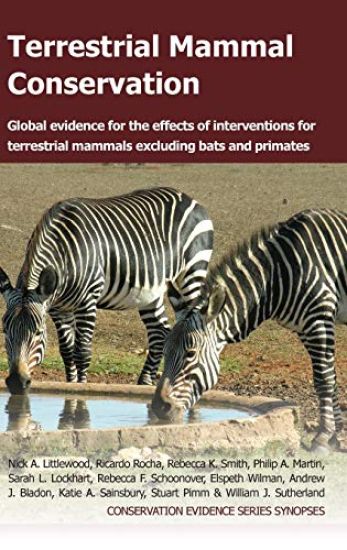
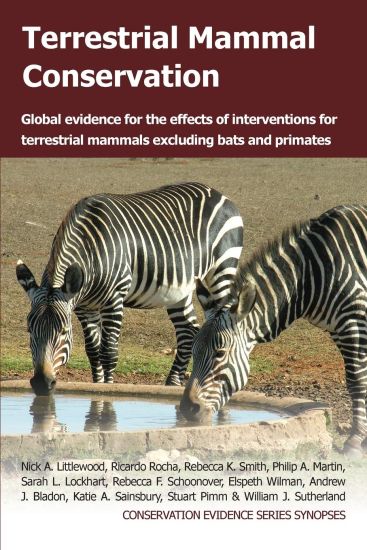
Terrestrial Mammal Conservation provides a thorough summary of the available scientific evidence of what is known, or not known, about the effectiveness of all of the conservation actions for wild terrestrial mammals across the world (excluding bats and primates, which are covered in separate synopses). Actions are organized into categories based on the International Union for Conservation of Nature classifications of direct threats and conservation actions. Over the course of fifteen chapters, the authors consider interventions as wide ranging as creating uncultivated margins around fields, prescribed burning, setting hunting quotas and removing non-native mammals. This book is written in an accessible style and is designed to be an invaluable resource for anyone concerned with the practical conservation of terrestrial mammals. The authors consulted an international group of terrestrial mammal experts and conservationists to produce this synopsis. Funding was provided by the MAVA Foundation, Arcadia and National Geographic Big Cats Initiative. Terrestrial Mammal Conservation is the seventeenth publication in the Conservation Evidence Series, linked to the online resource www. ConservationEvidence.com. Conservation Evidence Synopses are designed to promote a more evidence-based approach to biodiversity conservation. Others in the series include Bat Conservation, Primate Conservation, Bird Conservation and Forest Conservation and more are in preparation. Expert assessment of the evidence summarised within synopses is provided online and within the annual publication What Works in Conservation.
Terrestrial Mammal Conservation

Terrestrial Mammal Conservation

Nick A Littlewood; Ricardo Rocha; Rebecca K Smith

Open Book Publishers
2020
sidottu
Terrestrial Mammal Conservation provides a thorough summary of the available scientific evidence of what is known, or not known, about the effectiveness of all of the conservation actions for wild terrestrial mammals across the world (excluding bats and primates, which are covered in separate synopses). Actions are organized into categories based on the International Union for Conservation of Nature classifications of direct threats and conservation actions. Over the course of fifteen chapters, the authors consider interventions as wide ranging as creating uncultivated margins around fields, prescribed burning, setting hunting quotas and removing non-native mammals. This book is written in an accessible style and is designed to be an invaluable resource for anyone concerned with the practical conservation of terrestrial mammals. The authors consulted an international group of terrestrial mammal experts and conservationists to produce this synopsis. Funding was provided by the MAVA Foundation, Arcadia and National Geographic Big Cats Initiative. Terrestrial Mammal Conservation is the seventeenth publication in the Conservation Evidence Series, linked to the online resource www. ConservationEvidence.com. Conservation Evidence Synopses are designed to promote a more evidence-based approach to biodiversity conservation. Others in the series include Bat Conservation, Primate Conservation, Bird Conservation and Forest Conservation and more are in preparation. Expert assessment of the evidence summarised within synopses is provided online and within the annual publication What Works in Conservation.
Amphibian Conservation

Amphibian Conservation

Rebecca K. Smith; William J. Sutherland

Pelagic Publishing
2014
nidottu
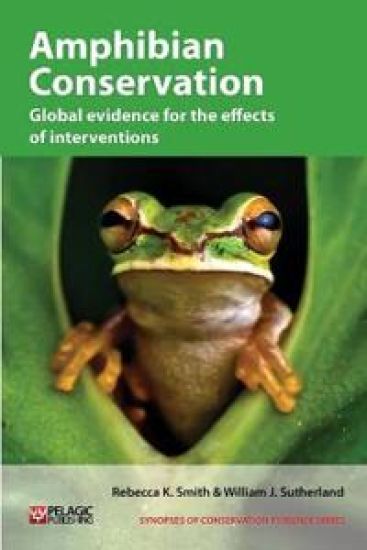
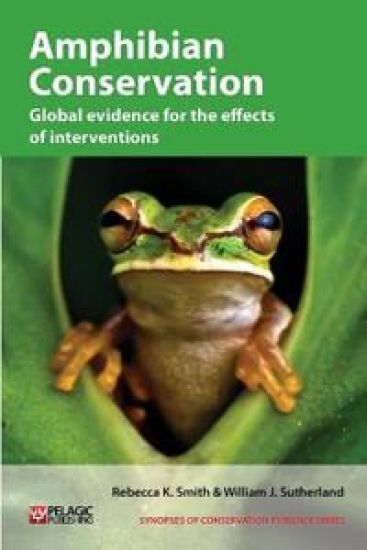
Amphibian Conservation is the fourth in the series of Synopses of Conservation Evidence, linked to the online resource www. ConservationEvidence.com. This synopsis is part of the Conservation Evidence project and provides a useful resource for conservationists. It forms part of a series designed to promote a more evidence-based approach to biodiversity conservation. Others in the series include bee, bird, farmland and bat conservation and many others are in preparation. Approximately 32% of the 7,164+ amphibian species are currently threatened with extinction and at least 43% of species are declining. Despite this, until recently amphibians and their conservation had received little attention. Although work is now being carried out to conserve many species, often it is not adequately documented. This book brings together and summarises the available scientific evidence and experience relevant to the practical conservation of amphibians. The authors consulted an international group of amphibian experts and conservationists to produce a thorough summary of what is known, or not known, about the effectiveness of amphibian conservation actions across the world. "The book is packed with literature summaries and citations; a veritable information goldmine for graduate students and researchers. It also admirably provides decision makers with a well-researched resource of proven interventions that can be employed to stem/reverse the decline of amphibian populations." -John G Palis, Bulletin of the Chicago Herpetological Society
Amphibian Conservation

Amphibian Conservation

Rebecca K. Smith; William J. Sutherland

Pelagic Publishing
2014
sidottu
Amphibian Conservation is the fourth in the series of Synopses of Conservation Evidence, linked to the online resource www. ConservationEvidence.com. This synopsis is part of the Conservation Evidence project and provides a useful resource for conservationists. It forms part of a series designed to promote a more evidence-based approach to biodiversity conservation. Others in the series include bee, bird, farmland and bat conservation and many others are in preparation. Approximately 32% of the 7,164+ amphibian species are currently threatened with extinction and at least 43% of species are declining. Despite this, until recently amphibians and their conservation had received little attention. Although work is now being carried out to conserve many species, often it is not adequately documented. This book brings together and summarises the available scientific evidence and experience relevant to the practical conservation of amphibians. The authors consulted an international group of amphibian experts and conservationists to produce a thorough summary of what is known, or not known, about the effectiveness of amphibian conservation actions across the world. "The book is packed with literature summaries and citations; a veritable information goldmine for graduate students and researchers. It also admirably provides decision makers with a well-researched resource of proven interventions that can be employed to stem/reverse the decline of amphibian populations." -John G Palis, Bulletin of the Chicago Herpetological Society