Kirjojen hintavertailu – 12 903 725 kirjaa ja 27 kauppaa

Kirjailija

Rebecca L. Stein

Kirjat ja teokset yhdessä paikassa: 8 kirjaa, julkaisuja vuosilta 2008–2024, suosituimpiin kuuluu Screen Shots. Vertaile teosten hintoja ja tarkista saatavuus suomalaisista kirjakaupoista.

8 kirjaa

Kirjojen julkaisuvuodet: 2008–2024.

The Anthropology of Religion, Magic, and Witchcraft

The Anthropology of Religion, Magic, and Witchcraft

Rebecca L. Stein; Philip L. Stein; Benjamin R. Kracht; Marjorie M. Snipes

TAYLOR FRANCIS LTD
2024
nidottu
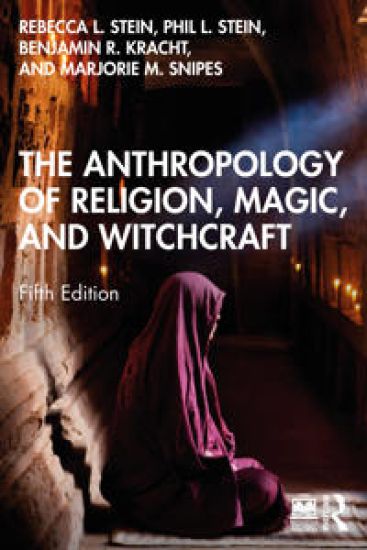
This concise and accessible textbook introduces students to the anthropological study of religion. It examines religious expression from a cross-cultural perspective and exposes students to the complexities of religion in small-scale and complex societies. The chapters incorporate key theoretical concepts and a wide range of ethnographic material. The fifth edition of The Anthropology of Religion, Magic, and Witchcraft offers: • a revised introduction covering the foundations of the anthropology of religion, anthropological methods, and a push toward decolonizing the anthropology of religion, • expanded coverage of symbols, healing, wizardry, and the intersections of religion with other social institutions, • new case study material with examples drawn from around the globe, especially from Indigenous communities, • marginalia in each chapter introducing provocative small-case examples related to the chapter—many of these can be used as prompts for further research, small in-class case studies, or examples for hands-on learning, • a new chapter on religion and healing, especially useful for Anthropology programs without representation of four fields, as it provides a wider and more interdisciplinary application of the discipline, • a consistent review of foundations from chapter to chapter, linking material and enabling students to connect what they are learning throughout the course, and • further resources via a comprehensive companion website, including interactive activities, critical case studies, updated study questions, bibliographical suggestions (including video), and color images. This is an essential guide for students encountering the anthropology of religion for the first time and also for those with an ongoing interest in this fascinating field.

The Anthropology of Religion, Magic, and Witchcraft

The Anthropology of Religion, Magic, and Witchcraft

Rebecca L. Stein; Philip L. Stein; Benjamin R. Kracht; Marjorie M. Snipes

TAYLOR FRANCIS LTD
2024
sidottu
This concise and accessible textbook introduces students to the anthropological study of religion. It examines religious expression from a cross-cultural perspective and exposes students to the complexities of religion in small-scale and complex societies. The chapters incorporate key theoretical concepts and a wide range of ethnographic material. The fifth edition of The Anthropology of Religion, Magic, and Witchcraft offers: • a revised introduction covering the foundations of the anthropology of religion, anthropological methods, and a push toward decolonizing the anthropology of religion, • expanded coverage of symbols, healing, wizardry, and the intersections of religion with other social institutions, • new case study material with examples drawn from around the globe, especially from Indigenous communities, • marginalia in each chapter introducing provocative small-case examples related to the chapter—many of these can be used as prompts for further research, small in-class case studies, or examples for hands-on learning, • a new chapter on religion and healing, especially useful for Anthropology programs without representation of four fields, as it provides a wider and more interdisciplinary application of the discipline, • a consistent review of foundations from chapter to chapter, linking material and enabling students to connect what they are learning throughout the course, and • further resources via a comprehensive companion website, including interactive activities, critical case studies, updated study questions, bibliographical suggestions (including video), and color images. This is an essential guide for students encountering the anthropology of religion for the first time and also for those with an ongoing interest in this fascinating field.

Screen Shots

Screen Shots

Rebecca L. Stein

Stanford University Press
2021
sidottu
In the last two decades, amid the global spread of smartphones, state killings of civilians have increasingly been captured on the cameras of both bystanders and police. Screen Shots studies this phenomenon from the vantage point of the Israeli occupation of Palestinian territories. Here, cameras have proliferated as political tools in the hands of a broad range of actors and institutions, including Palestinian activists, Israeli soldiers, Jewish settlers, and human rights workers. All trained their lens on Israeli state violence, propelled by a shared dream: that advances in digital photography—closer, sharper, faster—would advance their respective political agendas. Most would be let down. Drawing on ethnographic work, Rebecca L. Stein chronicles Palestinian video-activists seeking justice, Israeli soldiers laboring to perfect the military's image, and Zionist conspiracy theorists accusing Palestinians of "playing dead." Writing against techno-optimism, Stein investigates what camera dreams and disillusionment across these political divides reveal about the Israeli and Palestinian colonial present, and the shifting terms of power and struggle in the smartphone age.
Screen Shots

Screen Shots

Rebecca L. Stein

Stanford University Press
2021
pokkari
In the last two decades, amid the global spread of smartphones, state killings of civilians have increasingly been captured on the cameras of both bystanders and police. Screen Shots studies this phenomenon from the vantage point of the Israeli occupation of Palestinian territories. Here, cameras have proliferated as political tools in the hands of a broad range of actors and institutions, including Palestinian activists, Israeli soldiers, Jewish settlers, and human rights workers. All trained their lens on Israeli state violence, propelled by a shared dream: that advances in digital photography—closer, sharper, faster—would advance their respective political agendas. Most would be let down. Drawing on ethnographic work, Rebecca L. Stein chronicles Palestinian video-activists seeking justice, Israeli soldiers laboring to perfect the military's image, and Zionist conspiracy theorists accusing Palestinians of "playing dead." Writing against techno-optimism, Stein investigates what camera dreams and disillusionment across these political divides reveal about the Israeli and Palestinian colonial present, and the shifting terms of power and struggle in the smartphone age.
Digital Militarism

Digital Militarism

Adi Kuntsman; Rebecca L. Stein

Stanford University Press
2015
pokkari
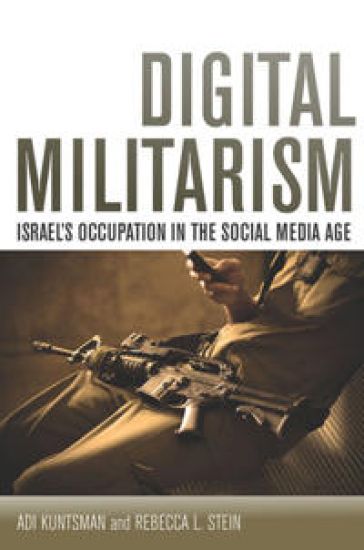
Israel's occupation has been transformed in the social media age. Over the last decade, military rule in the Palestinian territories grew more bloody and entrenched. In the same period, Israelis became some of the world's most active social media users. In Israel today, violent politics are interwoven with global networking practices, protocols, and aesthetics. Israeli soldiers carry smartphones into the field of military operations, sharing mobile uploads in real-time. Official Israeli military spokesmen announce wars on Twitter. And civilians encounter state violence first on their newsfeeds and mobile screens. Across the globe, the ordinary tools of social networking have become indispensable instruments of warfare and violent conflict. This book traces the rise of Israeli digital militarism in this global context—both the reach of social media into Israeli military theaters and the occupation's impact on everyday Israeli social media culture. Today, social media functions as a crucial theater in which the Israeli military occupation is supported and sustained.
Digital Militarism

Digital Militarism

Adi Kuntsman; Rebecca L. Stein

Stanford University Press
2015
sidottu
Israel's occupation has been transformed in the social media age. Over the last decade, military rule in the Palestinian territories grew more bloody and entrenched. In the same period, Israelis became some of the world's most active social media users. In Israel today, violent politics are interwoven with global networking practices, protocols, and aesthetics. Israeli soldiers carry smartphones into the field of military operations, sharing mobile uploads in real-time. Official Israeli military spokesmen announce wars on Twitter. And civilians encounter state violence first on their newsfeeds and mobile screens. Across the globe, the ordinary tools of social networking have become indispensable instruments of warfare and violent conflict. This book traces the rise of Israeli digital militarism in this global context—both the reach of social media into Israeli military theaters and the occupation's impact on everyday Israeli social media culture. Today, social media functions as a crucial theater in which the Israeli military occupation is supported and sustained.
Itineraries in Conflict

Itineraries in Conflict

Rebecca L. Stein

Duke University Press
2008
pokkari
In Itineraries in Conflict, Rebecca L. Stein argues that through tourist practices-acts of cultural consumption, routes and imaginary voyages to neighboring Arab countries, culinary desires-Israeli citizens are negotiating Israel’s changing place in the contemporary Middle East. Drawing on ethnographic and archival research conducted throughout the last decade, Stein analyzes the divergent meanings that Jewish and Palestinian citizens of Israel have attached to tourist cultures, and she considers their resonance with histories of travel in Israel, its Occupied Territories, and pre-1948 Palestine. Stein argues that tourism’s cultural performances, spaces, souvenirs, and maps have provided Israelis in varying social locations with a set of malleable tools to contend with the political changes of the last decade: the rise and fall of a Middle East Peace Process (the Oslo Process), globalization and neoliberal reform, and a second Palestinian uprising in 2000. Combining vivid ethnographic detail, postcolonial theory, and readings of Israeli and Palestinian popular texts, Stein considers a broad range of Israeli leisure cultures of the Oslo period with a focus on the Jewish desires for Arab things, landscapes, and people that regional diplomacy catalyzed. Moving beyond conventional accounts, she situates tourism within a broader field of “discrepant mobility,” foregrounding the relationship between histories of mobility and immobility, leisure and exile, consumption and militarism. She contends that the study of Israeli tourism must open into broader interrogations of the Israeli occupation, the history of Palestinian dispossession, and Israel’s future in the Arab Middle East. Itineraries in Conflict is both a cultural history of the Oslo process and a call to fellow scholars to rethink the contours of the Arab-Israeli conflict by considering the politics of popular culture in everyday Israeli and Palestinian lives.
Itineraries in Conflict

Itineraries in Conflict

Rebecca L. Stein

Duke University Press
2008
sidottu
In Itineraries in Conflict, Rebecca L. Stein argues that through tourist practices-acts of cultural consumption, routes and imaginary voyages to neighboring Arab countries, culinary desires-Israeli citizens are negotiating Israel’s changing place in the contemporary Middle East. Drawing on ethnographic and archival research conducted throughout the last decade, Stein analyzes the divergent meanings that Jewish and Palestinian citizens of Israel have attached to tourist cultures, and she considers their resonance with histories of travel in Israel, its Occupied Territories, and pre-1948 Palestine. Stein argues that tourism’s cultural performances, spaces, souvenirs, and maps have provided Israelis in varying social locations with a set of malleable tools to contend with the political changes of the last decade: the rise and fall of a Middle East Peace Process (the Oslo Process), globalization and neoliberal reform, and a second Palestinian uprising in 2000. Combining vivid ethnographic detail, postcolonial theory, and readings of Israeli and Palestinian popular texts, Stein considers a broad range of Israeli leisure cultures of the Oslo period with a focus on the Jewish desires for Arab things, landscapes, and people that regional diplomacy catalyzed. Moving beyond conventional accounts, she situates tourism within a broader field of “discrepant mobility,” foregrounding the relationship between histories of mobility and immobility, leisure and exile, consumption and militarism. She contends that the study of Israeli tourism must open into broader interrogations of the Israeli occupation, the history of Palestinian dispossession, and Israel’s future in the Arab Middle East. Itineraries in Conflict is both a cultural history of the Oslo process and a call to fellow scholars to rethink the contours of the Arab-Israeli conflict by considering the politics of popular culture in everyday Israeli and Palestinian lives.