Kirjojen hintavertailu – 12 903 725 kirjaa ja 27 kauppaa

Kirjailija

Rebecca Sullivan

Kirjat ja teokset yhdessä paikassa: 25 kirjaa, julkaisuja vuosilta 2005–2026, suosituimpiin kuuluu Canadian Television Today. Vertaile teosten hintoja ja tarkista saatavuus suomalaisista kirjakaupoista.

25 kirjaa

Kirjojen julkaisuvuodet: 2005–2026.

Bonnie Sherr Klein's 'not a Love Story'

Bonnie Sherr Klein's 'not a Love Story'

Rebecca Sullivan

University of Toronto Press
2014
pokkari
Bonnie Sherr Klein’s “Not a Love Story” provocatively examines the first Canadian film to explore pornography’s role in society from a feminist perspective. Directed by Bonnie Sherr Klein for Studio D, the National Film Board’s women’s unit, the film featured both Klein and Lindalee Tracey, an activist, performance artist, and stripper, as they toured the seamier fringes of pornography and sex work in Montreal, Toronto, New York, and San Francisco. Censored in Ontario upon its release in 1981, Not a Love Story collided with the escalating “Porn Wars” that contributed to the tearing apart of the second-wave feminist movement. Using interviews with members of the crew and extensive archival research into the production process, Rebecca Sullivan delves into the creation and reception of Not a Love Story to explore the issues of censorship, sexual labour and performance, and documentary practice that the film raised. An insightful analysis not just of the film itself but of the issues which surround feminist analyses of pornography as a genre, Bonnie Sherr Klein’s “Not a Love Story” offers a fresh assessment of Canada’s women’s movement and the politics of feminist filmmaking during a volatile era.

Becoming Biosubjects

Becoming Biosubjects

Neil Gerlach; Sheryl Hamilton; Rebecca Sullivan; Priscilla Walton

University of Toronto Press
2011
sidottu
Becoming Biosubjects examines the ways in which the Canadian government, media, courts, and everyday Canadians are making sense of the challenges being posed by biotechnologies. The authors argue that the human body is now being understood as something that is fluid and without fixed meaning. This has significant implications both for how we understand ourselves and how we see our relationships with other forms of life. Focusing on four major issues, the authors examine the ways in which genetic technologies are shaping criminal justice practices, how policies on reproductive technologies have shifted in response to biotechnologies, the debates surrounding the patenting of higher life forms, and the Canadian (and global) response to bioterrorism. Regulatory strategies in government and the courts are continually evolving and are affected by changing public perceptions of scientific knowledge. The legal and cultural shifts outlined in Becoming Biosubjects call into question what it means to be a Canadian, a citizen, and a human being.
Becoming Biosubjects

Becoming Biosubjects

Neil Gerlach; Sheryl Hamilton; Rebecca Sullivan; Priscilla Walton

University of Toronto Press
2011
pokkari
Becoming Biosubjects examines the ways in which the Canadian government, media, courts, and everyday Canadians are making sense of the challenges being posed by biotechnologies. The authors argue that the human body is now being understood as something that is fluid and without fixed meaning. This has significant implications both for how we understand ourselves and how we see our relationships with other forms of life. Focusing on four major issues, the authors examine the ways in which genetic technologies are shaping criminal justice practices, how policies on reproductive technologies have shifted in response to biotechnologies, the debates surrounding the patenting of higher life forms, and the Canadian (and global) response to bioterrorism. Regulatory strategies in government and the courts are continually evolving and are affected by changing public perceptions of scientific knowledge. The legal and cultural shifts outlined in Becoming Biosubjects call into question what it means to be a Canadian, a citizen, and a human being.
Visual Habits

Visual Habits

Rebecca Sullivan

University of Toronto Press
2005
pokkari
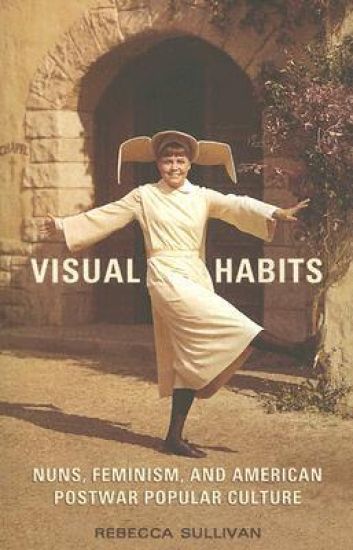
The 1950s and 60s were times of extraordinary social and political change across North America that re-drew the boundaries between traditional and progressive, conservative and liberal. Nowhere is this more apparent than in the history of Catholic nuns. During these two decades, nuns boldly experimented with their role in the church, removing their habits, rejecting the cloister, and fighting for social justice. The media quickly took to their cause and dubbed them 'the new nuns,' modern exemplars of liberated but sexually contained womanhood. With Visual Habits, Rebecca Sullivan brings this unexamined history of nuns to the fore, revisiting the intersection of three distinct movements - the Second Vatican Council, the second wave of feminism, and the sexual revolution - to explore the pivotal role nuns played in revamping cultural expectations of femininity and feminism. From The Nun's Story to The Flying Nun to The Singing Nun, nuns were a major presence in the mainstream media. Charting their evolving representation in film and television, popular music, magazines, and girls' literature, Sullivan discusses these images in the context of the period's seemingly unlimited potential for social change. In the process, she delivers a rich cultural analysis of a topic too long ignored.
Visual Habits

Visual Habits

Rebecca Sullivan

University of Toronto Press
2005
sidottu
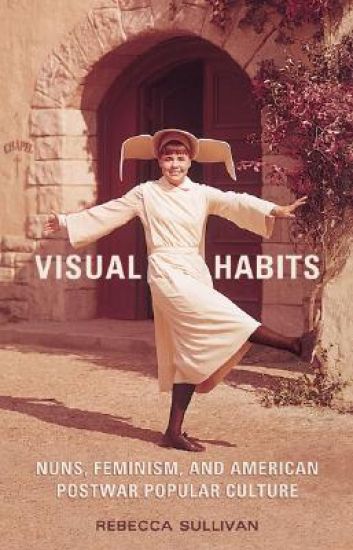
The 1950s and 60s were times of extraordinary social and political change across North America that re-drew the boundaries between traditional and progressive, conservative and liberal. Nowhere is this more apparent than in the history of Catholic nuns. During these two decades, nuns boldly experimented with their role in the church, removing their habits, rejecting the cloister, and fighting for social justice. The media quickly took to their cause and dubbed them 'the new nuns,' modern exemplars of liberated but sexually contained womanhood. With Visual Habits, Rebecca Sullivan brings this unexamined history of nuns to the fore, revisiting the intersection of three distinct movements - the Second Vatican Council, the second wave of feminism, and the sexual revolution - to explore the pivotal role nuns played in revamping cultural expectations of femininity and feminism. From The Nun's Story to The Flying Nun to The Singing Nun, nuns were a major presence in the mainstream media. Charting their evolving representation in film and television, popular music, magazines, and girls' literature, Sullivan discusses these images in the context of the period's seemingly unlimited potential for social change. In the process, she delivers a rich cultural analysis of a topic too long ignored.