Kirjojen hintavertailu – 12 903 735 kirjaa ja 27 kauppaa

Kirjailija

Rebecca Zorach

Kirjat ja teokset yhdessä paikassa: 10 kirjaa, julkaisuja vuosilta 2011–2026, suosituimpiin kuuluu Barbara Jones–Hogu – Resist, Relate, Unite. Vertaile teosten hintoja ja tarkista saatavuus suomalaisista kirjakaupoista.

10 kirjaa

Kirjojen julkaisuvuodet: 2011–2026.

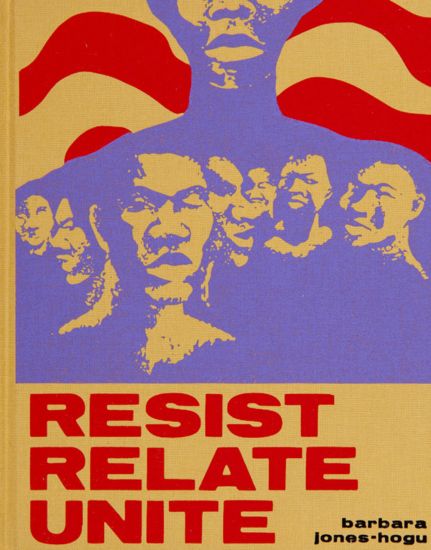
Barbara Jones–Hogu – Resist, Relate, Unite

Barbara Jones–Hogu – Resist, Relate, Unite

Julie Rodrigues Widho; Faheem Majeed; Zoé Whitley; Rebecca Zorach

DePaul University Art Museum
2018
sidottu
Chicago-based artist Barbara Jones-Hogu (1938–2017) was a central figure of the Black Arts Movement and a founding member of the African Commune of Bad Relevant Artists (AfriCOBRA). Throughout her career she worked in painting, printmaking, film, education, and contributed to major projects including Chicago’s Wall of Respect mural. The Barbara Jones-Hogu: Resist, Relate, Unite catalog is the first monograph of Barbara Jones-Hogu’s work. The book includes a foreword by DPAM Director and Chief Curator Julie Rodrigues Widholm, essays by Tate Modern curator Zoé Whitley and Chicago artist Faheem Majeed, an interview with the artist by art historian Rebecca Zorach, and 22 illustrated plates, a selected bibliography, exhibition history, and checklist. The limited edition catalog was designed by Matt Austin of Candor Arts and features a hand silk screened cover.
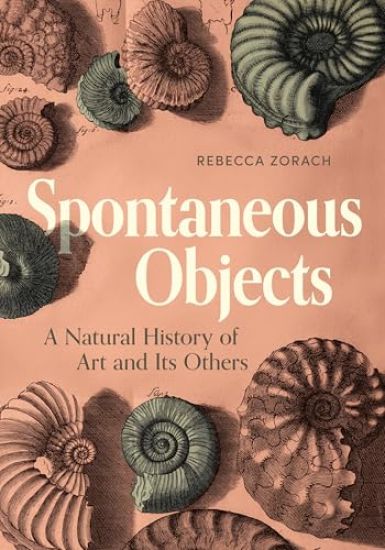
Spontaneous Objects

Spontaneous Objects

Rebecca Zorach

Pennsylvania State University Press
2026
sidottu
In the late medieval and early modern periods, European artists, theorists, and natural philosophers imagined Nature not simply as a force of reproduction but as an artist in its own right—a creative power capable of generating images, artifacts, and objects of beauty. Tracing this idea from the fifteenth through early nineteenth centuries, Rebecca Zorach challenges assumptions about human artistic genius and intention that have long dominated histories of art and science. With inspiration from new materialist theory, Zorach reclaims a largely disregarded undercurrent of historical thought about the powers of nature. Through case studies ranging from Renaissance centaurs and snails to Adam Smith’s beaver hat and Kant’s travelers’ tales, Zorach investigates how ideas about nature’s generative power unsettled conventional definitions of image, artifact, and artistic intention. At the same time, Zorach also confronts the violent legacies of a different vision of nature’s power: as European empires expanded, emerging natural philosophies contributed to global colonial imaginaries and racial hierarchies, reframing nature as a force to be classified, controlled, and exploited. In seeking to understand whether and how these views of nature cohere, Zorach excavates how the historical formation of the “human” and the “natural” depends on ideas about artistic production and artistic intention. A significant contribution to art history, visual culture, and environmental humanities, Spontaneous Objectswill engage scholars interested in the intersections of art, science, theology, and colonial modernity.
Kerry James Marshall

Kerry James Marshall

Benjamin Buchloh; Aria Dean; Darby English; Mark Godfrey; Madeleine Grynsztejn; Cathérine Hug; Kerry James Marshall; Rebecca Zorach; Nikita Sena Quarshie

Royal Academy of Arts
2025
sidottu

Halvin toimitettuna 42,90 €

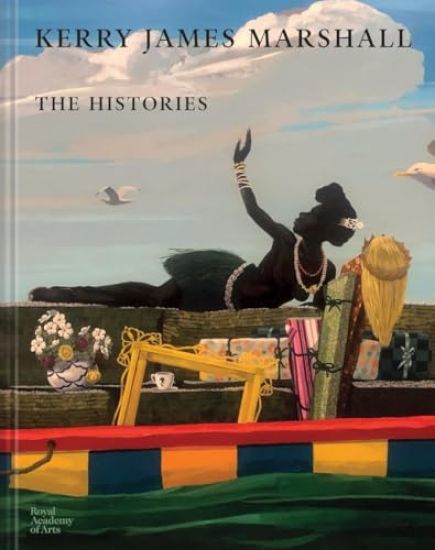
Kerry James Marshall: The Histories is the most extensive publication on the artist to date, celebrating half a century of his work. It reveals the complex ways in which he has transformed histories of Western painting, centering Black bodies in ambitious compositions set in barber shops, public housing projects, parks, and beauty salons. It charts his use of portraiture to memorialise individuals such as Nat Turner, Harriet Tubman, and Olaudah Equiano. A new series, illustrated here for the first time, looks at under-acknowledged aspects of the history of Africa. With lavish illustrations of all the works in the accompanying exhibition, it also includes chapters on Marshall’s Rythm Mastr project and his various public commissions including his stained glass windows for the cathedral in Washington D. C.. A survey by Mark Godfrey is accompanied by shorter essays by Aria Dean, Darby English, Madeleine Grynsztejn, Cathérine Hug, Nikita Sena Quarshie, Rebecca Zorach, and an interview between Kerry James Marshall and Benjamin H. D. Buchloh.
Temporary Monuments

Temporary Monuments

Rebecca Zorach

THE UNIVERSITY OF CHICAGO PRESS
2024
sidottu
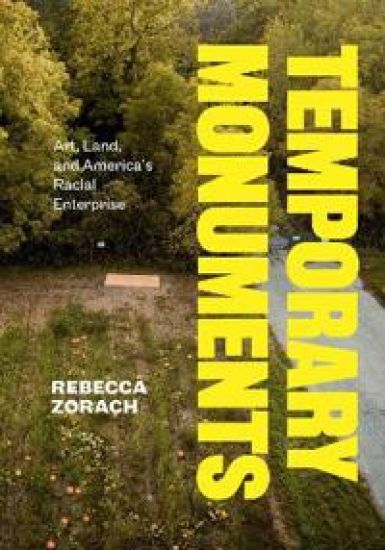
How art played a central role in the design of America’s racial enterprise—and how contemporary artists resist it. Art has long played a key role in constructing how people understand and imagine America. Starting with contemporary controversies over public monuments in the United States, Rebecca Zorach carefully examines the place of art in the occupation of land and the upholding of White power in the US, arguing that it has been central to the design of America’s racial enterprise. Confronting closely held assumptions of art history, Zorach looks to the intersections of art, nature, race, and place, working through a series of symbolic spaces—the museum, the wild, islands, gardens, home, and walls and borders—to open and extend conversations on the political implications of art and design. Against the backdrop of central moments in American art, from the founding of early museums to the ascendancy of abstract expressionism, Zorach shows how contemporary artists—including Dawoud Bey, Theaster Gates, Maria Gaspar, Kerry James Marshall, Alan Michelson, Dylan Miner, Postcommodity, Cauleen Smith, and Amanda Williams—have mined the relationship between environment and social justice, creating works that investigate and interrupt White supremacist, carceral, and environmentally toxic worlds. The book also draws on poetry, creative nonfiction, hip-hop videos, and Disney films to illuminate crucial topics in art history, from the racial politics of abstraction to the origins of museums and the formation of canons.
Temporary Monuments

Temporary Monuments

Rebecca Zorach

THE UNIVERSITY OF CHICAGO PRESS
2024
nidottu
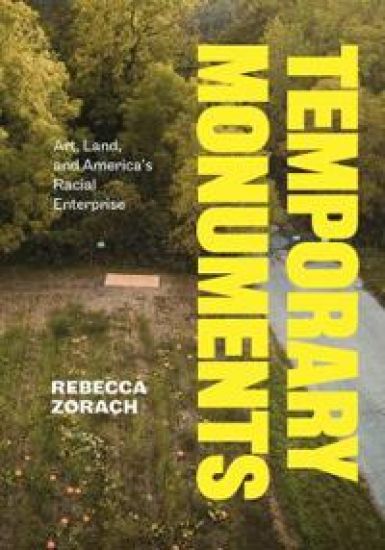
How art played a central role in the design of America’s racial enterprise—and how contemporary artists resist it. Art has long played a key role in constructing how people understand and imagine America. Starting with contemporary controversies over public monuments in the United States, Rebecca Zorach carefully examines the place of art in the occupation of land and the upholding of White power in the US, arguing that it has been central to the design of America’s racial enterprise. Confronting closely held assumptions of art history, Zorach looks to the intersections of art, nature, race, and place, working through a series of symbolic spaces—the museum, the wild, islands, gardens, home, and walls and borders—to open and extend conversations on the political implications of art and design. Against the backdrop of central moments in American art, from the founding of early museums to the ascendancy of abstract expressionism, Zorach shows how contemporary artists—including Dawoud Bey, Theaster Gates, Maria Gaspar, Kerry James Marshall, Alan Michelson, Dylan Miner, Postcommodity, Cauleen Smith, and Amanda Williams—have mined the relationship between environment and social justice, creating works that investigate and interrupt White supremacist, carceral, and environmentally toxic worlds. The book also draws on poetry, creative nonfiction, hip-hop videos, and Disney films to illuminate crucial topics in art history, from the racial politics of abstraction to the origins of museums and the formation of canons.
Art for People's Sake

Art for People's Sake

Rebecca Zorach

Duke University Press
2019
pokkari
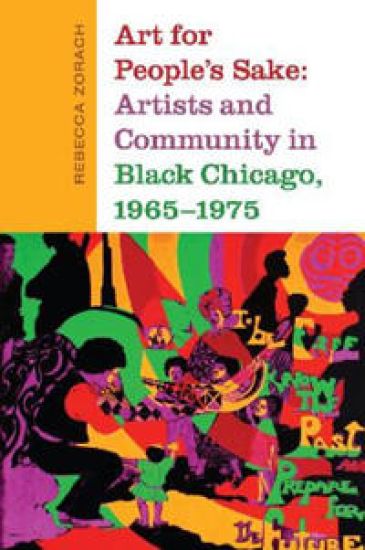
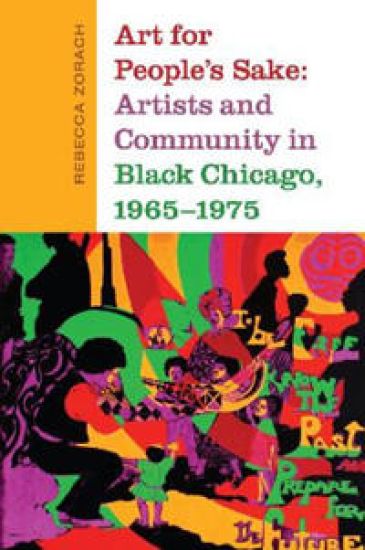
In the 1960s and early 1970s, Chicago witnessed a remarkable flourishing of visual arts associated with the Black Arts Movement. From the painting of murals as a way to reclaim public space and the establishment of independent community art centers to the work of the AFRICOBRA collective and Black filmmakers, artists on Chicago's South and West Sides built a vision of art as service to the people. In Art for People's Sake Rebecca Zorach traces the little-told story of the visual arts of the Black Arts Movement in Chicago, showing how artistic innovations responded to decades of racist urban planning that left Black neighborhoods sites of economic depression, infrastructural decay, and violence. Working with community leaders, children, activists, gang members, and everyday people, artists developed a way of using art to help empower and represent themselves. Showcasing the depth and sophistication of the visual arts in Chicago at this time, Zorach demonstrates the crucial role of aesthetics and artistic practice in the mobilization of Black radical politics during the Black Power era.
Art for People's Sake

Art for People's Sake

Rebecca Zorach

Duke University Press
2019
sidottu
In the 1960s and early 1970s, Chicago witnessed a remarkable flourishing of visual arts associated with the Black Arts Movement. From the painting of murals as a way to reclaim public space and the establishment of independent community art centers to the work of the AFRICOBRA collective and Black filmmakers, artists on Chicago's South and West Sides built a vision of art as service to the people. In Art for People's Sake Rebecca Zorach traces the little-told story of the visual arts of the Black Arts Movement in Chicago, showing how artistic innovations responded to decades of racist urban planning that left Black neighborhoods sites of economic depression, infrastructural decay, and violence. Working with community leaders, children, activists, gang members, and everyday people, artists developed a way of using art to help empower and represent themselves. Showcasing the depth and sophistication of the visual arts in Chicago at this time, Zorach demonstrates the crucial role of aesthetics and artistic practice in the mobilization of Black radical politics during the Black Power era.
The Wall of Respect

The Wall of Respect

Abdul Alkalimat; Rebecca Zorach; Romi Crawford

Northwestern University Press
2017
nidottu
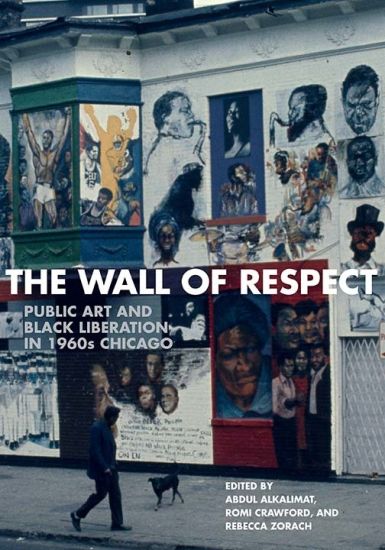
The Wall of Respect: Public Art and Black Liberation in 1960s Chicago is the first in-depth, illustrated history of a lost Chicago monument. The Wall of Respect was a revolutionary mural created by fourteen members of the Organization of Black American Culture (OBAC) on the South Side of Chicago in 1967. This book includes photographs by Darryl Cowherd, Bob Crawford, Roy Lewis, and Robert A. Sengstacke, and gathers historic essays, poetry, and previously unpublished primary documents from the movement’s founders that provide a guide to the work’s creation and evolution. The Wall of Respect received national critical acclaim when it was unveiled on the side of a building at Forty-Third and Langley in Chicago’s Bronzeville neighborhood. Painters and photographers worked side by side on the mural's seven themed sections, which featured portraits of Black heroes and sheroes, among them John Coltrane, Nina Simone, Billie Holiday, Malcolm X, Muhammad Ali, and W. E. B. Du Bois. The Wall became a platform for music, poetry, and political rallies. Over time it changed, reflecting painful controversies among the artists as well as broader shifts in the Civil Rights and Black Liberation Movements. At the intersection of African American culture, politics, and Chicago art history, The Wall of Respect offers, in one keepsake-quality work, an unsurpassed collection of images and essays that illuminate a powerful monument that continues to fascinate artists, scholars, and readers in Chicago and across the United States.
Gold

Gold

Rebecca Zorach; Michael W. Phillips

Reaktion Books
2016
nidottu
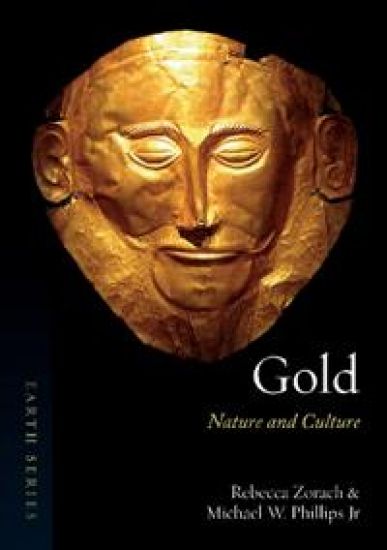
Gleaming and perfect, gold has beguiled humankind for many millennia, attracting treasure hunters, adorning the living and the dead, and symbolizing wealth, power, divinity and eternity. This book offers a lively, critical look at the cultural history of this most regal metal, from its use in religious ceremonies to colonial expeditions to modern science, examining its importance across many cultures and time periods and the many places where it has played a central role. Gold reveals this metal as a substance of paradoxes. Its softness makes it at once useless for the making of tools and highly suited for the exploration of form and the transmission of images, such as the faces of rulers on currency. It has been the icon of value - the surest bet in times of uncertain markets - yet also of valuelessness, a discovery that King Midas learned the hard way. Furthermore, Gold shows how this element has been at the centre of many clashes between cultures throughout history, the unfortunate catalyst of countless moments of bloodlust. Ultimately, this book shows that the questions posed by our relentless desire for gold are really questions about value itself. Lavishly illustrated, this book offers a shimmering exploration of the mythology, economy, aesthetics and perils at the centre of this simple yet irresistible substance.
The Passionate Triangle

The Passionate Triangle

Rebecca Zorach

University of Chicago Press
2011
sidottu
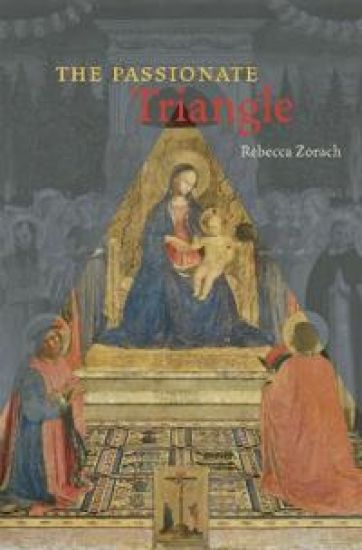
Triangles abounded in the intellectual culture of early modern Europe - the Christian Trinity was often mapped as a triangle, for instance, and perspective, a characteristic artistic technique, is based on a triangular theory of vision. Renaissance artists, for their part, often used shapes and lines to arrange figures into a triangle on the surface of a painting - a practice modern scholars call triangular composition. But is there secret meaning in the triangular arrangements artists used, or just a pleasing symmetry? What do triangles really tell us about the European Renaissance and its most beguiling works of art? In this book, Rebecca Zorach takes us on a lively hunt for the triangle's embedded significance. From the leisure pursuits of Egyptian priests to Jacopo Tintoretto's love triangles, Zorach explores how the visual and mathematical properties of triangles allowed them to express new ideas and to inspire surprisingly intense passions. Examining prints and paintings as well as literary, scientific, and philosophical texts, "The Passionate Triangle" opens up an array of new ideas, presenting unexpected stories of the irrational, passionate, melancholic, and often erotic potential of mathematical thinking before the Scientific Revolution.