

Kirjailija
Rebekka Habermas
Kirjat ja teokset yhdessä paikassa: 5 kirjaa, julkaisuja vuosilta 2002–2022, suosituimpiin kuuluu Frauen Und Manner Des Burgertums: Eine Familiengeschichte (1750-1850). Vertaile teosten hintoja ja tarkista saatavuus suomalaisista kirjakaupoista.
5 kirjaa
Kirjojen julkaisuvuodet: 2002–2022.

Kirchner og Nolde
Dorthe Aagesen; Beatrice von Bormann; Silvia Dolz; Rebekka Habermas; Mette Houlberg Rung; Nancy Jouwe; Dicky Takndare; Natasha A. Kelly; Laetitia Lei; Patrice Nganang; Temi Odumosu; H. Glenn Penny; Amanda Pinatih; Aya Soika; Hilke Thode-Arora; Anna Vestergaard Jørgensen; Fanny Wonu Veys; Andrew Zimmerman
SMK Forlag
2021
nidottu
Ernst Ludwig Kirchner og Emil Nolde er hovedskikkelser i den tyske ekspressionistiske bevægelse. De vendte sig bort fra det europæiske samfund og de etablerede normer i tidens borgerlige kultur og søgte i stedet inspiration i mennesker, livsformer og genstande fra andre dele af verden, især Afrika og Oceanien. I denne bog undersøges Noldes og Kirchners kunst på baggrund af deres historiske og ideologiske kontekst. Her afdækkes forbindelser mellem værkerne og den racetænkning og undertrykkelse, som også er en del af europæisk historie. Dermed afsløres en række mindre kendte og mere voldelige sider af ekspressionismen. Denne publikation er udgivet i anledning af udstillingerne om Nolde og Kirchners virke i 1910'erne, organiseret af SMK - Statens Museum for Kunst, København og Stedelijk Museum Amsterdam i samarbejde med Brücke-Museum, Berlin

From the seemingly insignificant theft of some bread and a dozen apples in nineteenth century rural Germany, to the high courts and modern-day property laws, this English-language translation of Habermas' Diebe vor Gericht explores how everyday incidents of petty stealing and the ordinary people involved in these cases came to shape the current legal system. Habermas draws from an unusual cache of archival documents of theft cases, tracing the evolution and practice of the legal system of Germany through the nineteenth century. This close reading, relying on approaches of legal anthropology, challenges long-standing narratives of legal development, state building, and modern notions of the rule of law. Ideal for legal historians and scholars of modern German and nineteenth-century European history, this innovative volume steps outside the classic narratives of legal history and gives an insight into the interconnectedness of social, legal and criminal history.
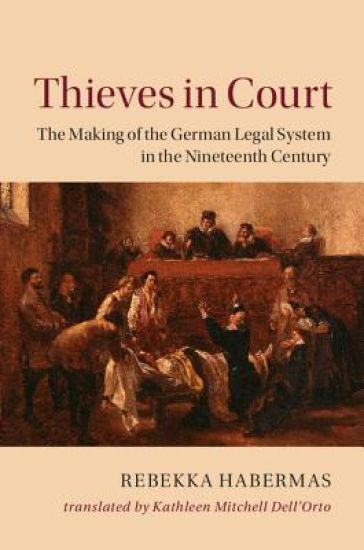
From the seemingly insignificant theft of some bread and a dozen apples in nineteenth century rural Germany, to the high courts and modern-day property laws, this English-language translation of Habermas' Diebe vor Gericht explores how everyday incidents of petty stealing and the ordinary people involved in these cases came to shape the current legal system. Habermas draws from an unusual cache of archival documents of theft cases, tracing the evolution and practice of the legal system of Germany through the nineteenth century. This close reading, relying on approaches of legal anthropology, challenges long-standing narratives of legal development, state building, and modern notions of the rule of law. Ideal for legal historians and scholars of modern German and nineteenth-century European history, this innovative volume steps outside the classic narratives of legal history and gives an insight into the interconnectedness of social, legal and criminal history.

Frauen Und Manner Des Burgertums: Eine Familiengeschichte (1750-1850)
Rebekka Habermas
Vandenhoeck and Ruprecht
2002
nidottu
Wie bildete sich zwischen 1750 und 1850 eine spezifisch burgerliche Lebensform heraus' Wie sah diese burgerliche Kultur aus' Rebekka Habermas betrachtet erstmals in diesem Zusammenhang Frauen und Manner gleichermassen, so dass auch Fragen nach einer burgerlichen Geschlechterordnung in das Blickfeld rucken. Im Mittelpunkt des Buches stehen zwei Generationen einer Familie, die zunachst dem altstandischen Burgertum angehorte, spater dann dem Bildungsburgertum. Untersucht werden drei Themenfelder: die Arbeit, das gesellschaftliche Leben sowie die Heiraten und Ehen. Daneben gibt die Arbeit auch Einblicke in das Alltagsleben einer burgerlichen Familie. Dieser mikrogeschichtliche Zugang fuhrt zu bemerkenswerten, uberraschenden Einsichten: Dass im Burgertum ein neues mannliches Arbeitsethos entstand oder dass die Frauen zunehmend zum Mussiggang verurteilt waren, lasst sich nicht belegen; auch das Bild einer Trennung zwischen der mannlich beherrschten Offentlichkeit und der stark von den Frauen gepragten Privatsphare lasst sich nicht aufrechterhalten; schliesslich kann die burgerliche Ehe nicht primar als Ort mannlicher Dominanz beschrieben werden. Der Band stellt bisher zentrale Vorstellungen in Frage und verandert unser Bild vom Burgertum, seiner Kultur und Geschichte.