Kirjojen hintavertailu – 12 903 733 kirjaa ja 27 kauppaa

Kirjailija

Reed F. Noss

Kirjat ja teokset yhdessä paikassa: 7 kirjaa, julkaisuja vuosilta 1994–2024, suosituimpiin kuuluu Saving Nature's Legacy. Vertaile teosten hintoja ja tarkista saatavuus suomalaisista kirjakaupoista.

7 kirjaa

Kirjojen julkaisuvuodet: 1994–2024.

Fire Ecology of Florida and the Southeastern Coastal Plain

Fire Ecology of Florida and the Southeastern Coastal Plain

Reed F. Noss

University Press of Florida
2024
pokkari
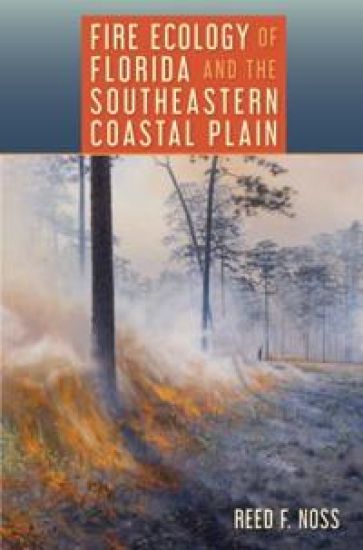
An overview of the importance of fire to ecosystems in the Southeast, with guidance on how to best conduct controlled burns in the region. A biodiversity hotspot, Florida is home to many ecosystems and species that evolved in the presence of frequent fire. In this book, Reed Noss discusses the essential role of fire in generating biodiversity and offers best practices for using fire to keep the region's ecosystems healthy and resilient. Reviewing several lines of evidence, Noss shows that fire has been important to the southeastern Coastal Plain for tens of millions of years. He explains how the region's natural fire regimes are connected to its climate, high rate of lightning strikes, physical chemistry, and vegetation. But urbanization and active fire suppression have reduced the frequency and extent of fires. Noss suggests the practice of controlled burning can and should be improved to protect fire-dependent species and natural communities from decline and extinction. Noss argues that fire managers should attempt to simulate natural fire regimes when conducting controlled burns. Based on what the species of the Southeast likely experienced during their evolutionary histories, he makes recommendations about pyrodiversity, how often and in what seasons to burn, the optimal heterogeneity of burns, mechanical treatments such as cutting and roller-chopping, and the proper use of fuel breaks. In doing so, Noss is the first to apply the new discipline of evolutionary fire ecology to a specific region. This book is a fascinating history of fire ecology in Florida, an enlightening look at why fire matters to the region, and a necessary resource for conservationists and fire managers in the state and elsewhere.
Handbook of Citizen Science in Ecology and Conservation

Handbook of Citizen Science in Ecology and Conservation

Reed F. Noss

University of California Press
2020
pokkari
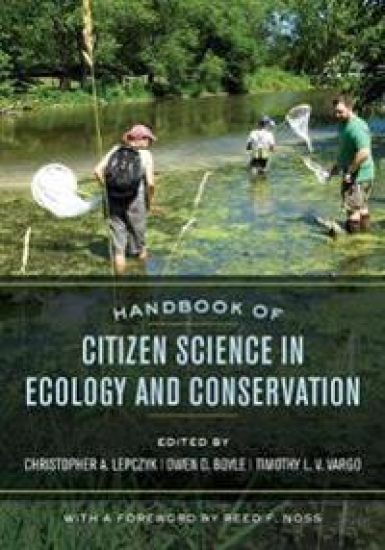
Handbook of Citizen Science in Ecology and Conservation is the first practical and comprehensive manual for creating, implementing, or improving natural science research and monitoring projects that involve collaboration between scientists and the general public. As citizen science projects become increasingly common, project leaders are seeking information on concrete best practices for planning and implementing projects—practices that allow them to guide and gauge success while also ensuring the collection of high-quality data and rewarding experiences for volunteers. In this handbook, citizen science practitioners from around the world and with decades of experience provide step-by-step instructions, insights, and advice, and they explore real-world applications through case studies from a variety of citizen science projects. This is the definitive reference guide for anyone interested in starting or improving a citizen science project with ecological or conservation applications, from professors and graduate students to agency staff and nongovernmental organizations.
Handbook of Citizen Science in Ecology and Conservation

Handbook of Citizen Science in Ecology and Conservation

Reed F. Noss

University of California Press
2020
sidottu
Handbook of Citizen Science in Ecology and Conservation is the first practical and comprehensive manual for creating, implementing, or improving natural science research and monitoring projects that involve collaboration between scientists and the general public. As citizen science projects become increasingly common, project leaders are seeking information on concrete best practices for planning and implementing projects—practices that allow them to guide and gauge success while also ensuring the collection of high-quality data and rewarding experiences for volunteers. In this handbook, citizen science practitioners from around the world and with decades of experience provide step-by-step instructions, insights, and advice, and they explore real-world applications through case studies from a variety of citizen science projects. This is the definitive reference guide for anyone interested in starting or improving a citizen science project with ecological or conservation applications, from professors and graduate students to agency staff and nongovernmental organizations.
Fire Ecology of Florida and the Southeastern Coastal Plain

Fire Ecology of Florida and the Southeastern Coastal Plain

Reed F. Noss

University Press of Florida
2018
sidottu
A biodiversity hotspot, Florida is home to many ecosystems and species that depend on frequent fire to exist. In this book, Reed Noss discusses the essential role of fire in generating biodiversity and offers best practices for using fire to keep the region's ecosystems healthy and resilient. Reviewing fossil evidence, Noss shows that fire has been important to the Southeastern Coastal Plain for tens of millions of years. He explains how the region's natural fire patterns are connected to its climate, high rate of lightning strikes, physical chemistry, and vegetation. But urbanization has recently reduced the frequency and range of these fires in profound ways. Noss believes the practice of controlled burns can and should be improved in order to protect fire-dependent species from extinction. Noss argues that fire managers should mimic the natural fire regimes of an area when conducting controlled burns. Based on what the species of the Southeast experienced during their evolutionary histories, he makes recommendations about pyrodiversity, how often and in what seasons to burn, the optimal heterogeneity of burns, mechanical treatments such as cutting and roller-chopping, and the proper use of fuel breaks. In doing so, Noss is the first to apply the new discipline of evolutionary fire ecology to a specific region. This book is a fascinating history of fire ecology in Florida, an enlightening look at why fire matters to the region, and a necessary resource for conservationists and fire managers in the state and surrounding areas.
Forgotten Grasslands of the South

Forgotten Grasslands of the South

Reed F. Noss; Edward O. Wilson

Island Press
2012
nidottu
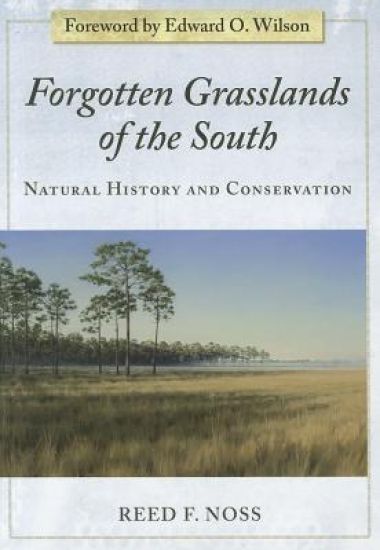
"Forgotten Grasslands of the South" is the study of one of the biologically richest and most endangered ecosystems in North America. In a seamless blend of science and personal observation, renowned ecologist Reed Noss explains the natural history of southern grasslands, their origin and history, and the physical determinants of grassland distribution, including ecology, soils, landform, and hydrology. In addition to offering fascinating new information about these little-studied ecosystems, Noss demonstrates how natural history is central to the practice of conservation. Although theory and experimentation have recently dominated the field of ecology, ecologists are coming to realise how these distinct approaches are not divergent but complementary, and that pursuing them together can bring greater knowledge and understanding of how the natural world works and how we can best conserve it. This long-awaited work sets a new standard for scientific literature and is essential reading for those who study and work to conserve the grasslands of the South as well as for everyone who is fascinated by the natural world.
The Science of Conservation Planning

The Science of Conservation Planning

Reed F. Noss; Michael O'Connell; Dennis D. Murphy

Island Press
1997
nidottu
Broad-scale conservation of habitats is increasingly being recognized as a more effective means of protecting species and landscapes than single-species preservation efforts. While interest in the approach has grown tremendously in recent years, it remains controversial and the science behind it has yet to be fully developed. In "The Science of Conservation Planning," three of the nation's leading conservation biologists explore the role of the scientist in the planning process and present a framework and guidelines for applying science to regional habitat-based conservation planning. Chapters consider: history and background of conservation planning efforts criticisms of science in conservation planning principles of conservation biology that apply to conservation planning detailed examination of conservation plans specific recommendations for all parties involved. The recommendations, interpretations, and questions provided are thoroughly based in the science of conservation biology, and the framework presented is adaptable to allow for revision and improvement as knowledge is gained and theories refined. "The Science of Conservation Planning" will serve as a model for the application of conservation biology to real-life problems, and can lead to the development of scientifically and politically sound plans that are likely to achieve their conservation goals, even in cases where biological and ecological information is limited. The book is essential for scientists at all levels, including agency biologists, academic scientists, environmental consultants, and scientists employed by industry and conservation groups. It is also a valuable resource for elected officials and their staffs, environmentalists, developers, students, and citizen activists involved with the complex and contentious arena of conservation planning.
Saving Nature's Legacy

Saving Nature's Legacy

Reed F. Noss; Allen Y. Cooperrider

Island Press
1994
pokkari
Written by two leading conservation biologists, "Saving Nature's Legacy" is a thorough and readable introduction to issues of land management and conservation biology. It presents a broad, land-based approach to biodiversity conservation in the United States, with the authors succinctly translating principles, techniques, and findings of the ecological sciences into an accessible and practical plan for action. After laying the groundwork for biodiversity conservation -- what biodiversity is, why it is important, its status in North America -- Noss and Cooperrider consider the strengths and limitations of past and current approaches to land management. They then present the framework for a bold new strategy, with explicit guidelines on: inventorying biodiversityselecting areas for protection designing regional and continental reserve networks establishing monitoring programssetting priorities for getting the job done Throughout the volume, the authors provide in-depth assessments of what must be done to protect and restore the full spectrum of native biodiversity to the North American continent.