Kirjojen hintavertailu – 12 903 725 kirjaa ja 27 kauppaa

Kirjailija

Regenia Gagnier

Kirjat ja teokset yhdessä paikassa: 10 kirjaa, julkaisuja vuosilta 1991–2020, suosituimpiin kuuluu Literatures of Liberalization. Vertaile teosten hintoja ja tarkista saatavuus suomalaisista kirjakaupoista.

10 kirjaa

Kirjojen julkaisuvuodet: 1991–2020.

Literatures of Liberalization

Literatures of Liberalization

Regenia Gagnier

Springer Nature Switzerland AG
2020
nidottu
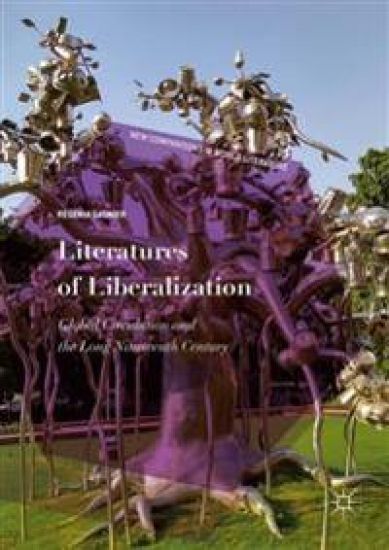
This book traces the global circulation of cultures and ideologies from the technological and democratic revolutions of the long nineteenth century to liberal and neoliberal modernity. Focussing on moments of coerced (colonial and postcolonial) and voluntary contact rather than national boundaries, the author draws attention to the global scope of literatures and geopolitical commodities as actants in world affairs, as in processes of liberalization, democratization, and trade, but also to the distinctiveness of each local environment at its moments of transculturation. Based in extensive experience in collaborative, multilingual, interdisciplinary networks, the book synthesizes existing theoretical scholarship, provides original case studies of world-historical Victorian and modern writers, and articulates a new interdisciplinary methodology for literary studies in a global context. It will be of interest to Victorianists, modernists, comparatists, political theorists, translators, and scholars of world literatures, world ecology, and globalization.
Artistic Duplicity

Artistic Duplicity

William B. Dillingham; Regenia Gagnier

Sacristy Press
2020
sidottu
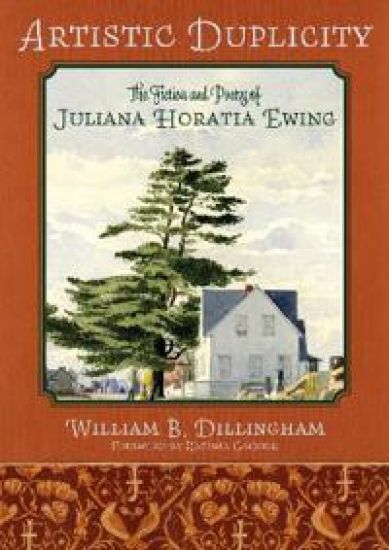
Artistic Duplicity challenges the traditional status of Juliana Ewing in literary history as an author solely of children's writings. This book presents Ewing as a sophisticated conscious artist whose work deserves to be considered seriously by adult readers who value skill and profundity. Although she writes in a style often accessible to children of somewhat advanced reading ability, she possessed the extraordinary gift of addressing at the same time a more mature audience, conveying thereby not a simple moral but complex and striking ideas. Each chapter is divided into two sections, the first part a commentary on a particular work in the context of her life and writing career with special attention to her abilities that mark her as a sophisticated craftswoman of fiction and poetry and the second part the text of that work. The commentary for the final chapter covers five poems followed by the texts of those poems. The book is, then, an unusual combination of a scholarly study of a literary figure and a collection of ten writings by that author. As a scholarly book, it is based on original research and makes a notable contribution to the study of Ewing not merely as an author of children's literature but as a writer of mature, complex, skillful, and often profound works.
Literatures of Liberalization

Literatures of Liberalization

Regenia Gagnier

Springer International Publishing AG
2018
sidottu
This book traces the global circulation of cultures and ideologies from the technological and democratic revolutions of the long nineteenth century to liberal and neoliberal modernity. Focussing on moments of coerced (colonial and postcolonial) and voluntary contact rather than national boundaries, the author draws attention to the global scope of literatures and geopolitical commodities as actants in world affairs, as in processes of liberalization, democratization, and trade, but also to the distinctiveness of each local environment at its moments of transculturation. Based in extensive experience in collaborative, multilingual, interdisciplinary networks, the book synthesizes existing theoretical scholarship, provides original case studies of world-historical Victorian and modern writers, and articulates a new interdisciplinary methodology for literary studies in a global context. It will be of interest to Victorianists, modernists, comparatists, political theorists, translators, and scholars of world literatures, world ecology, and globalization.
Victorian Literature

Victorian Literature

John Plunkett; Ana Parejo Vadillo; Regenia Gagnier

Red Globe Press
2011
sidottu
An anthology of both familiar and previously unavailable primary texts that illuminate the world of nineteenth-century ideas. An expert team introduce and annotate a range of original social, cultural, political and historical documents necessary for contextualising key literary texts from the Victorian period.
Victorian Literature

Victorian Literature

John Plunkett; Ana Parejo Vadillo; Regenia Gagnier

Red Globe Press
2011
nidottu
An anthology of both familiar and previously unavailable primary texts that illuminate the world of nineteenth-century ideas. An expert team introduce and annotate a range of original social, cultural, political and historical documents necessary for contextualising key literary texts from the Victorian period.
Individualism, Decadence and Globalization

Individualism, Decadence and Globalization

Regenia Gagnier

Palgrave Macmillan
2010
nidottu
Beginning with a widespread definition of Decadence as when individual parts flourish at the expense of the whole, Regenia Gagnier - a leading cultural historian of late nineteenth-century Britain - shows the full range of meanings of individualism at the height of its promise.
Individualism, Decadence and Globalization

Individualism, Decadence and Globalization

Regenia Gagnier

Palgrave Macmillan
2010
sidottu
Beginning with a widespread definition of Decadence as when individual parts flourish at the expense of the whole, Regenia Gagnier - a leading cultural historian of late nineteenth-century Britain - shows the full range of meanings of individualism at the height of its promise.
The Insatiability of Human Wants

The Insatiability of Human Wants

Regenia Gagnier

University of Chicago Press
2000
nidottu
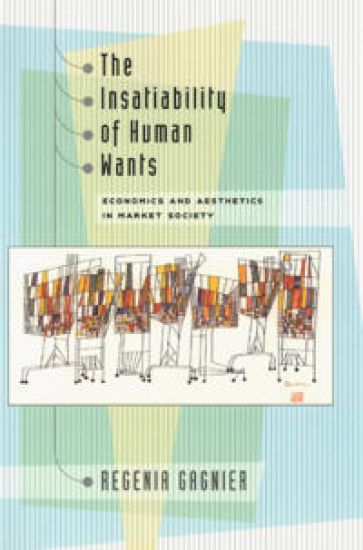
What is the relationship between our conception of humans as producers or creators; as consumers of taste and pleasure; and as creators of value? Combining cultural history, economics, and literary criticism, Regenia Gagnier's new work traces the parallel development of economic and aesthetic theory, offering a shrewd reading of humans as workers and wanters, born of labor and desire. The Insatiability of Human Wants begins during a key transitional moment in aesthetic and economic theory, 1871, when both disciplines underwent a turn from production to consumption models. In economics, an emphasis on the theory of value and the social relations between land, labor, and capital gave way to more individualistic models of consumerism. Similarly, in aesthetics, theories of artistic production or creativity soon bowed to models of taste, pleasure, and reception. Using these developments as a point of departure, Gagnier deftly traces the shift in Western thought from models of production to consumption. From its exploration of early market logic and Kantian thought to its look at the aestheticization of homelessness and our own market boom, The Insatiability of Human Wants invites us to contemplate alternative interpretations of economics, aesthetics, and history itself.
The Insatiability of Human Wants

The Insatiability of Human Wants

Regenia Gagnier

University of Chicago Press
2000
sidottu
What is the relationship between our conception of humans as producers or creators; as consumers of taste and pleasure; and as creators of value? Combining cultural history, economics, and literary criticism, Regenia Gagnier's new work traces the parallel development of economic and aesthetic theory, offering a shrewd reading of humans as workers and wanters, born of labor and desire. The Insatiability of Human Wants begins during a key transitional moment in aesthetic and economic theory, 1871, when both disciplines underwent a turn from production to consumption models. In economics, an emphasis on the theory of value and the social relations between land, labor, and capital gave way to more individualistic models of consumerism. Similarly, in aesthetics, theories of artistic production or creativity soon bowed to models of taste, pleasure, and reception. Using these developments as a point of departure, Gagnier deftly traces the shift in Western thought from models of production to consumption. From its exploration of early market logic and Kantian thought to its look at the aestheticization of homelessness and our own market boom, The Insatiability of Human Wants invites us to contemplate alternative interpretations of economics, aesthetics, and history itself.
Subjectivities

Subjectivities

Regenia Gagnier

Oxford University Press Inc
1991
sidottu
The author suggests that whereas bourgeois subjectivity ordinarily resembles the central and progressively developing self of such novels as David Copperfield, working class subjectivity consists of attention to working environment and community that diminishes the concern with self. These differences account for the relative valuations placed on middle class and working class autobiographies by the literary establishment.