Kirjojen hintavertailu – 12 903 725 kirjaa ja 27 kauppaa

Kirjailija

Reginald Dyck

Kirjat ja teokset yhdessä paikassa: 4 kirjaa, julkaisuja vuosilta 2015–2026, suosituimpiin kuuluu After the Theft of the Sacred Volume 75. Vertaile teosten hintoja ja tarkista saatavuus suomalaisista kirjakaupoista.

4 kirjaa

Kirjojen julkaisuvuodet: 2015–2026.

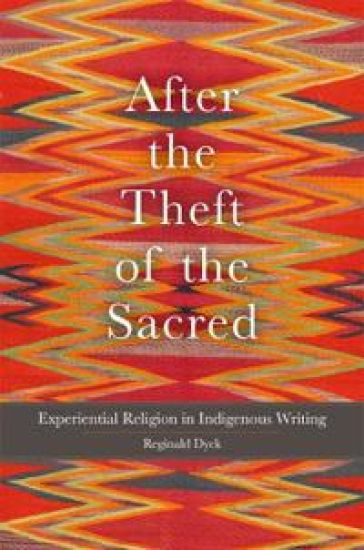
After the Theft of the Sacred Volume 75

After the Theft of the Sacred Volume 75

Reginald Dyck

UNIVERSITY OF OKLAHOMA PRESS
2026
sidottu
In recent decades, individualistic and secular ways of participating in the world have grown pervasive in Western society. This evolution has compelled shifts in Indian Country as well. In After the Theft of the Sacred, Native American literature scholar Reginald Dyck investigates these shifts, and the resulting complexities of contemporary Indigenous religious and spiritual experiences. Drawing on a wide range of works by well-known Indigenous authors, he shows how Native communities and characters use their lived religions to make sense of an increasingly fragmented and urban world. Dyck explores a range of interdisciplinary perspectives to reckon with the transition from an Indigenous communal social imaginary to a modern individualistic one in which belief has become a choice rather than a given. He applies careful close readings to the novels of Ray Young Bear, Greg Sarris, Louise Erdrich, Leslie Marmon Silko, and Tommy Orange; and the poetry of Simon J. Ortiz, Robert Davis Hoffmann, Joy Harjo and Linda Hogan; among other works. Dyck argues that these authors show the ways that Native communities and characters have suffered, as an effect of colonialism, a spiritual theft—what N. Scott Momaday has incisively called “the theft of the sacred.” This theft is evident across religious expressions, he argues, whether one is a traditionalist, a member of the Native American Church, a Christian, or any other kind of believer or nonbeliever. Yet within what many label as a spiritual crisis, Dyck demonstrates that communities and characters create continuities through adaptations, improvisations, individualizations, and leaps of faith. Native studies scholarship regularly references Indigenous religions, but few works analyze them experientially as this book does. The interdisciplinary interpretations developed in After the Theft of the Sacred make manifest the richness of Indigenous literature in its engagement of spiritual challenges experienced by contemporary Native peoples.
Raven's Echo Volume 91

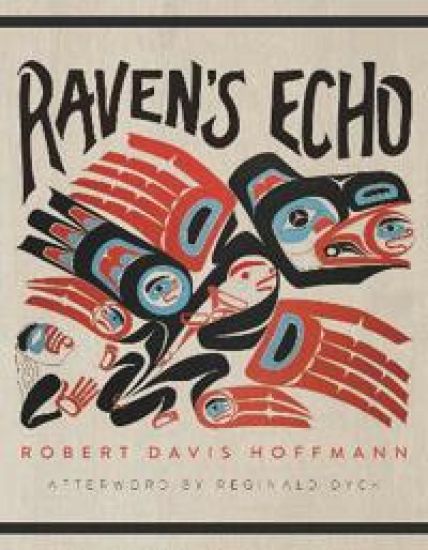
Raven's Echo Volume 91

Robert Davis Hoffmann; Reginald Dyck

University of Arizona Press
2022
nidottu
In Raven’s Echo, Tlingit artist and poet Robert Davis Hoffmann calls on readers to nurture material as well as spiritual life, asking beautiful and brutal questions about our individual positions within the universe and within history. The poems in this collection are brimming with an imaginative array of characters, including the playful yet sometimes disturbing trickster Raven, and offer insights into both traditional and contemporary Native life in southeast Alaska. Raven’s Echo is divided into two books, “SoulCatcher” and “Reconstruction.” “SoulCatcher” artfully explores human alienation and spiritual longing through poems that describe the speaker’s enduring struggle to find a place in Tlingit tribal history and contemporary experience. It takes up topics like colonialism, government subordination, painful acculturation, assimilation, and an array of other challenges, while it also addresses human loneliness in a world of spirits who often elude rather than nurture. The poems in “Reconstruction” present ways of integrating traditional Tlingit culture into contemporary life by honoring the significance of the land, subsistence fishing, warrior identity, and the role of elders. The two books are woven together by the constant thread of finding a way to live humanely in a world that is historically fractured yet spiritually inviting. Hoffmann’s poetry is acutely aware of economic, political, and social tensions, while still highlighting the joy of traditions and the beauty of Alaskan nature throughout the collection. The destructiveness of colonialism brings a profound darkness to some of the poems in Raven’s Echo, but the collection also explores the possibility of finding spiritual healing in the face of historical and contemporary traumas. As Hoffman’s poetry grapples with reconstructing a life within Tlingit tradition and history, the speaker urges that the importance of honoring and remembering traditions through art is ever present: “Listen, I’m trying to say something— / always our stories have lived through paintings, / always our stories stayed alive through retelling.” Raven’s Echo may tell stories about living in a world of guns and horsepower, global warming, cops, and drunks—but Raven always lurks in the background.
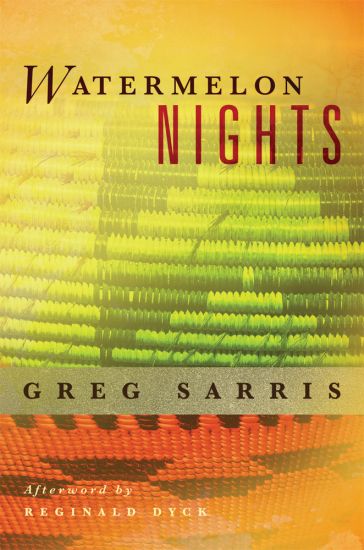
Watermelon Nights

Watermelon Nights

Greg Sarris; Reginald Dyck

University of Oklahoma Press
2021
nidottu
In Watermelon Nights, Greg Sarris tells a powerful tale about the love and forgiveness that keep a modern Native American family together in Santa Rosa, California. Told from the points of view of a twenty-year-old Pomo man named Johnny Severe, his grandmother Elba, and his mother, Iris, this intergenerational saga uncovers the secrets-and traumatic events-that inform each of these characters’ extraordinary powers of perception. First published in 1998, Watermelon Nights remains one of the few works of fiction to illuminate the experiences of urban Native Americans and is the only one to depict the historical conditions that shape a tribe’s rural-to-urban migration. As the novel opens, Johnny is trying to organize the remaining members of his displaced California tribe. At the same time, he is struggling with his own sexuality and thinking about leaving his grandmother’s home for the big city. As the novel shifts perspective, tracing the controversial history of the Pomo people, we learn how the tragic events of Elba’s childhood, as well as Iris’s attempts to separate herself from her cultural roots, make Johnny’s dilemma all the more difficult. In the end, what binds both family and tribe together is a respect-albeit at times reluctant-for the traditions that have withstood so many challenges. This new edition of the novel features a revised preface by the author and an afterword by Reginald Dyck, who identifies broader contexts important to our understanding of the novel, including tribal sovereignty, federal Indian policy, and the effects of historical trauma. Gritty yet rich in emotion, Watermelon Nights stands beside the works of Louise Erdrich, Stephen Graham Jones, and Tommy Orange.
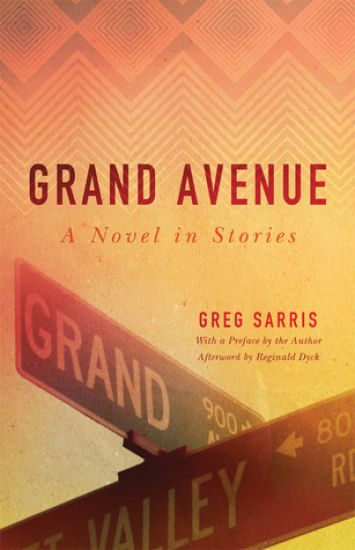
Grand Avenue

Grand Avenue

Greg Sarris; Reginald Dyck

University of Oklahoma Press
2015
nidottu
Grand Avenue runs through the center of the Northern California town of Santa Rosa. One stretch of it is home not only to Pomo Indians making a life outside the reservation but also to Mexicans, blacks, and some Portuguese, all trying to find their way among the many obstacles in their turbulent world. Bound together by a lone ancestor, the lives of the American Indians form the core of these stories - tales of healing cures, poison, family rituals, and a humor that allows the inhabitants of Grand Avenue to see their own foibles with a saving grace. A teenage girl falls in love with a crippled horse marked for slaughter. An aging healer summons her strength for one final song. A father seeks a bond with his illegitimate son. A mother searches for the power to care for her cancer-stricken daughter's spirit. Here is a tapestry of lives rendered with the color, wisdom, and a quest for meaning that are characteristic of the traditional storytelling in which they are rooted, a tradition Sarris grew up hearing and learning. Vibrant with the emotions and realities of a changing world, these narratives - the basis of an HBO miniseries - are all equally stunning and from the heart.