Kirjojen hintavertailu – 12 903 735 kirjaa ja 27 kauppaa

Kirjailija

Reginald S. Sheehan

Kirjat ja teokset yhdessä paikassa: 5 kirjaa, julkaisuja vuosilta 2000–2024, suosituimpiin kuuluu Strategic Behavior and Policy Choice on the U.S. Supreme Court. Vertaile teosten hintoja ja tarkista saatavuus suomalaisista kirjakaupoista.

Nimi esiintyy myös muodoissa: Reginald S Sheehan

5 kirjaa

Kirjojen julkaisuvuodet: 2000–2024.

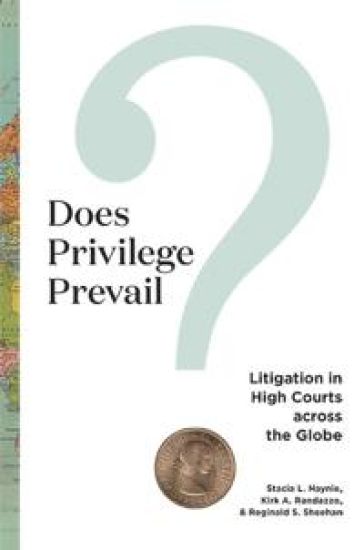
Does Privilege Prevail?

Does Privilege Prevail?

Stacia L Haynie; Kirk a Randazzo; Reginald S Sheehan

UNIVERSITY OF VIRGINIA PRESS
2024
sidottu
The first transnational comparative study of legal party capability theory Justice is supposed to be blind. Cynics will say they know better. But what do the facts say? This groundbreaking study provides objective, data-driven answers to long-standing questions about winners and losers in courtrooms across the world. Does the party with the greater resources, such as money and influence, always prevail—and if so, why? Does Privilege Prevail? is the first book to evaluate these questions using a multi-country approach and, in doing so, assess what legal professionals and political scientists call party capability theory. Stacia Haynie, Kirk Randazzo, and Reginald Sheehan analyze over fifteen thousand litigation outcomes of the high courts of six countries—Australia, Canada, India, the Philippines, South Africa, and the United Kingdom—from 1970 to 2000. This unprecedented trove of data reveals that while the “haves” of society do undoubtedly enjoy certain advantages in the judicial system, a more complex explanation for legal outcomes is required than party capability theory provides—especially when it comes to assessing the role of attorneys and their legal teams or the components of the docket where judges can provide avenues for the “have nots” to succeed.
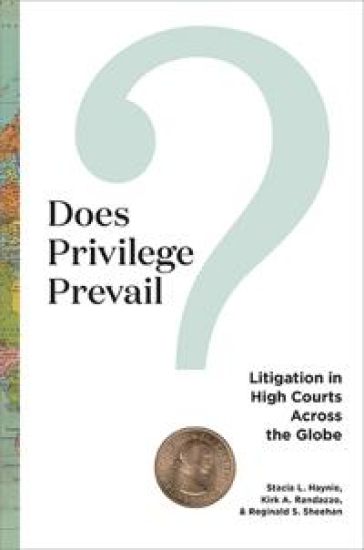
Does Privilege Prevail?

Does Privilege Prevail?

Stacia L Haynie; Kirk a Randazzo; Reginald S Sheehan

UNIVERSITY OF VIRGINIA PRESS
2024
pokkari
The first transnational comparative study of legal party capability theory Justice is supposed to be blind. Cynics will say they know better. But what do the facts say? This groundbreaking study provides objective, data-driven answers to long-standing questions about winners and losers in courtrooms across the world. Does the party with the greater resources, such as money and influence, always prevail—and if so, why? Does Privilege Prevail? is the first book to evaluate these questions using a multi-country approach and, in doing so, assess what legal professionals and political scientists call party capability theory. Stacia Haynie, Kirk Randazzo, and Reginald Sheehan analyze over fifteen thousand litigation outcomes of the high courts of six countries—Australia, Canada, India, the Philippines, South Africa, and the United Kingdom—from 1970 to 2000. This unprecedented trove of data reveals that while the “haves” of society do undoubtedly enjoy certain advantages in the judicial system, a more complex explanation for legal outcomes is required than party capability theory provides—especially when it comes to assessing the role of attorneys and their legal teams or the components of the docket where judges can provide avenues for the “have nots” to succeed.
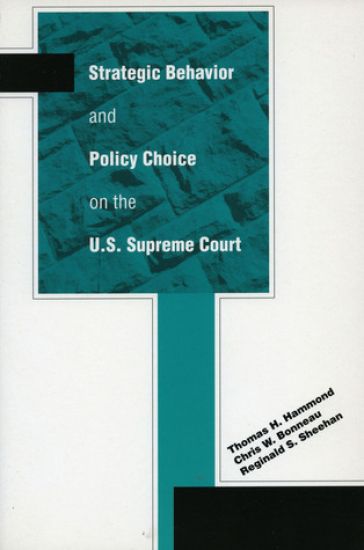
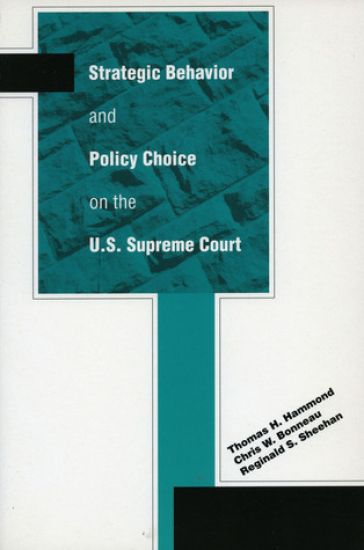
Strategic Behavior and Policy Choice on the U.S. Supreme Court

Strategic Behavior and Policy Choice on the U.S. Supreme Court

Thomas H. Hammond; Chris W. Bonneau; Reginald S. Sheehan

Stanford University Press
2005
sidottu
Despite several decades of research on Supreme Court decision-making by specialists in judicial politics, there is no good answer to a key question: if each justice's behavior on the Court were motivated solely by some kind of "liberal" or "conservative" ideology, what patterns should be expected in the Court's decision-making practices and in the Court's final decisions? It is only when these patterns are identified in advance that political scientists will be able to empirically evaluate theories which assert that the justices' behavior is motivated by the pursuit of their personal policy preferences. This book provides the first comprehensive and integrated model of how strategically rational Supreme Court justices should be expected to behave in all five stages of the Court's decision-making process. The authors' primary focus is on how each justice's wish to gain as desirable a final opinion as possible will affect his or her behavior at each stage of the decision-making process.
Strategic Behavior and Policy Choice on the U.S. Supreme Court

Strategic Behavior and Policy Choice on the U.S. Supreme Court

Thomas H. Hammond; Chris W. Bonneau; Reginald S. Sheehan

Stanford University Press
2005
pokkari
Despite several decades of research on Supreme Court decision-making by specialists in judicial politics, there is no good answer to a key question: if each justice's behavior on the Court were motivated solely by some kind of "liberal" or "conservative" ideology, what patterns should be expected in the Court's decision-making practices and in the Court's final decisions? It is only when these patterns are identified in advance that political scientists will be able to empirically evaluate theories which assert that the justices' behavior is motivated by the pursuit of their personal policy preferences. This book provides the first comprehensive and integrated model of how strategically rational Supreme Court justices should be expected to behave in all five stages of the Court's decision-making process. The authors' primary focus is on how each justice's wish to gain as desirable a final opinion as possible will affect his or her behavior at each stage of the decision-making process.
Continuity and Change on the United States Courts of Appeals

Continuity and Change on the United States Courts of Appeals

Donald Songer; Reginald S. Sheehan; Susan B. Haire

The University of Michigan Press
2000
sidottu
While many fine works of scholarship examine the role of the Supreme Court in American politics, there has been a dearth of scholarly books that focus on the Courts of Appeals. Continuity and Change on the United States Courts of Appeals is unique both in its focus on this level of the judiciary and its approach that examines major trends over the twentieth century. Since the Supreme Court has the discretion to refuse to hear almost all cases appealed to it, the Courts of Appeals are usually the final option for litigants in the federal system. Unless overturned by the Supreme Court or, in cases decided on the basis of statute, by Congressional action, the rulings can have a significant impact on government policy. The authors present the first comprehensive examination of the shifting role of the Courts of Appeals, investigating changes over time and presenting the first systematic analyses of those changes. Their work is the first book to utilize the database of the U. S. Courts of Appeals, analyzing over 15,000 cases to examine trends between 1925 and 1988. The book answers questions such as who are the judges? What are their decisional tendencies? What has been the role of region and partisan politics? Who are the litigants? And who has won and who has lost throughout the twentieth century? It is the only current, up-to-date book on the Courts of Appeals and an essential read for all scholars and students interested in American politics and judicial behavior. Donald R. Songer is Professor of Political Science, University of South Carolina. Reginald S. Sheehan is Associate Professor of Political Science and Director of the Program for Law and Juridical Politics, Michigan State University. Susan B. Haire is Assistant Professor of Political Science, University of Georgia