Kirjojen hintavertailu – 12 859 828 kirjaa ja 27 kauppaa

Kirjailija

Reiner Finkeldey

Kirjat ja teokset yhdessä paikassa: 3 kirjaa, julkaisuja vuosilta 2006–2022, suosituimpiin kuuluu Instant Insights: Restoring Degraded Forests. Vertaile teosten hintoja ja tarkista saatavuus suomalaisista kirjakaupoista.

3 kirjaa

Kirjojen julkaisuvuodet: 2006–2022.

Instant Insights: Restoring Degraded Forests

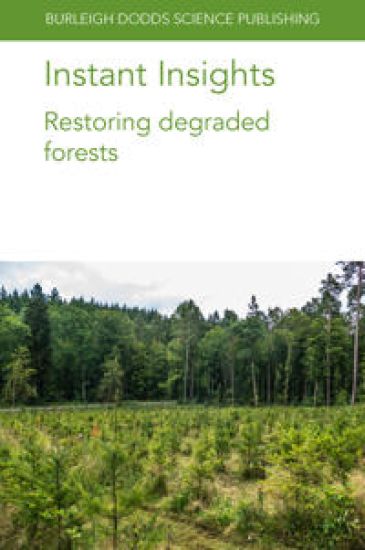
Instant Insights: Restoring Degraded Forests

Stephanie Mansourian; Reiner Finkeldey; Markus Müller; Carina Carneiro de Melo Moura; Oliver Gailing; Rolando Cerda; Luis Orozco-Aguilar; Norvin Sepúlveda; Jenny Ordoñez; Geovana Carreño-Rocabado; Freddy Amores; Willan Caicedo; Samuel Oblitas; Eduardo Somarriba; Carl Traeholt

Burleigh Dodds Science Publishing Limited
2022
pokkari
This collection features four peer-reviewed reviews on restoring degraded forests. The first chapter reviews the restoration of tropical forests, focusing specifically on forest landscape restoration (FLR). It addresses the importance of implementing FLR and provides two detailed case studies to demonstrate this. The chapter concludes with a discussion on the challenges and opportunities in taking FLR forwards. The second chapter considers the importance of exploiting the genetics of tropical tree species for the restoration of tropical forests. The chapter identifies and reviews the available methods to measure genetic diversity and suitability for future plantation establishment, including field trials and molecular markers. The third chapter provides an overview of ecosystem services delivered by tropical agroforestry systems (AFS). The chapter reviews practical approaches for trade-off analysis between ecosystem services and plant biodiversity for better design (or redesign), as well as the sustainable management of AFS. The final chapter discusses how measuring, monitoring and managing the environmental impact of plantation operations are key components in sustainable palm oil production. The chapter examines the operational impacts of oil palm cultivation on biodiversity, as well as how oil palm production can be balanced to ensure forest conservation.
Tropical Forest Genetics

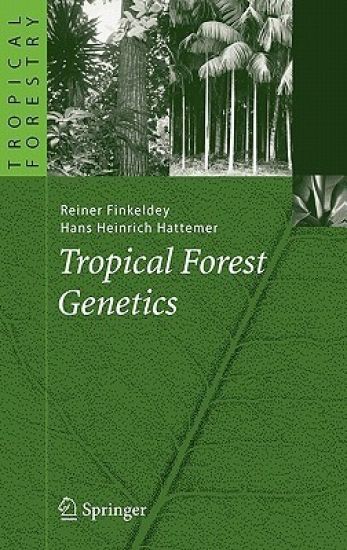
Tropical Forest Genetics

Reiner Finkeldey; Hans Heinrich Hattemer

Springer-Verlag Berlin and Heidelberg GmbH Co. K
2010
nidottu
This book is intended to provide information on fundamental genetic processes in tropical forests. It is based on lecture notes by the authors prepared for po- graduate students, mainly from tropical countries, of the M. Sc. course “Tropical and International Forestry”at the Faculty of Forest Sciences and Forest Ecology, Georg August University Göttingen, Germany. The intended readership is s- dents, researchers and practitioners interested in the genetic variation of species, in particular forest trees, living in complex forest ecosystems in the tropics. Particular emphasis is placed on the human impact on forest genetic resources in the tropics. Readers should be familiar with basics of classical and molecular genetics such as the structure and function of DNA (double-helix structure, repli- tion), polypeptide synthesis (transcription and translation), and the transm- sion of genetic information during sexual reproduction (“Mendel’s rules”). This knowledge is easily available from recently published genetics textbooks; we recommend the book by Griffiths et al. (2000). The development of biochemical and molecular marker techniques and their application to species of tropical forests have greatly improved our kno- edge of genetic variation patterns of “wild”plants in the tropics during the last two decades. Many examples in this book are based on gene marker techniques.
Tropical Forest Genetics

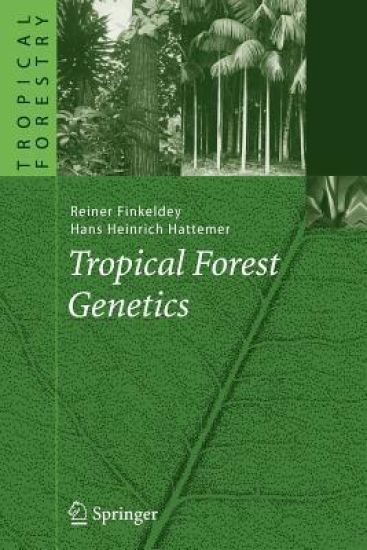
Tropical Forest Genetics

Reiner Finkeldey; Hans Heinrich Hattemer

Springer-Verlag Berlin and Heidelberg GmbH Co. K
2006
sidottu
This book is intended to provide information on fundamental genetic processes in tropical forests. It is based on lecture notes by the authors prepared for po- graduate students, mainly from tropical countries, of the M. Sc. course “Tropical and International Forestry”at the Faculty of Forest Sciences and Forest Ecology, Georg August University Göttingen, Germany. The intended readership is s- dents, researchers and practitioners interested in the genetic variation of species, in particular forest trees, living in complex forest ecosystems in the tropics. Particular emphasis is placed on the human impact on forest genetic resources in the tropics. Readers should be familiar with basics of classical and molecular genetics such as the structure and function of DNA (double-helix structure, repli- tion), polypeptide synthesis (transcription and translation), and the transm- sion of genetic information during sexual reproduction (“Mendel’s rules”). This knowledge is easily available from recently published genetics textbooks; we recommend the book by Griffiths et al. (2000). The development of biochemical and molecular marker techniques and their application to species of tropical forests have greatly improved our kno- edge of genetic variation patterns of “wild”plants in the tropics during the last two decades. Many examples in this book are based on gene marker techniques.