Kirjojen hintavertailu – 12 859 827 kirjaa ja 27 kauppaa

Kirjailija

Reiner Manstetten

Kirjat ja teokset yhdessä paikassa: 9 kirjaa, julkaisuja vuosilta 1998–2025, suosituimpiin kuuluu Nachhaltiges Handeln in Wirtschaft und Gesellschaft. Vertaile teosten hintoja ja tarkista saatavuus suomalaisista kirjakaupoista.

9 kirjaa

Kirjojen julkaisuvuodet: 1998–2025.

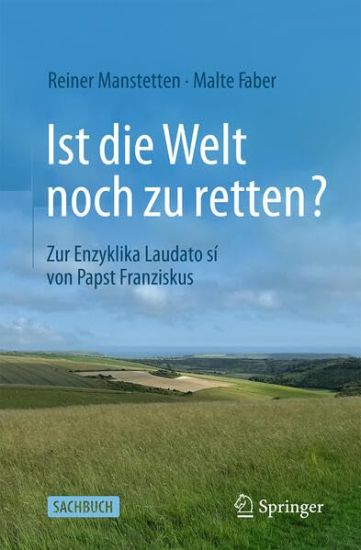
Ist die Welt noch zu retten?

Ist die Welt noch zu retten?

Reiner Manstetten; Malte Faber

Springer-Verlag Berlin and Heidelberg GmbH Co. KG
2025
nidottu
Dieses Buch nimmt die Enzyklika Laudato si’ von Papst Franziskus zum Ausgangspunkt, um zentrale Fragen der ökologischen Krise und sozialen Gerechtigkeit neu zu beleuchten. Die Enzyklika mahnt eindringlich zur ökologischen Umkehr, ohne in Pessimismus zu verfallen – sie setzt auf Hoffnung und Vertrauen als tragende Kräfte des Wandels. Die Autoren analysieren die Herausforderungen und Chancen eines Dialogs zwischen wissenschaftlicher Rationalität und religiöser Sinnstiftung. Sie zeigen, wie Begriffe wie Hoffnung und Vertrauen – oft religiös geprägt – auch im Nachhaltigkeitsdiskurs eine zentrale Rolle spielen können. Gleichzeitig machen sie deutlich, wo Spannungen entstehen: etwa dort, wo wissenschaftliche Erkenntnisse in religiösen Texten zu kurz kommen. Mit einem fundierten Blick auf beide Perspektiven eröffnet das Buch neue Wege, wie säkulares und religiöses Denken gemeinsam zu einem tieferen Verständnis von Gerechtigkeit, Freiheit und ökologischer Verantwortung beitragen können.
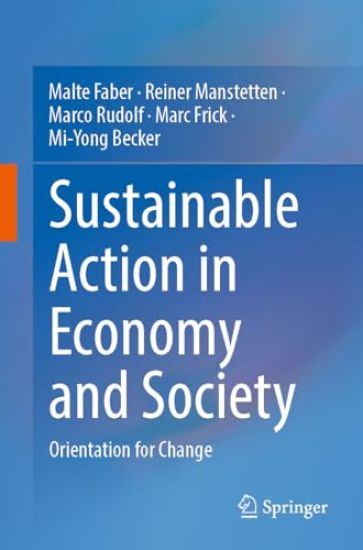
Sustainable Action in Economy and Society

Sustainable Action in Economy and Society

Malte Faber; Reiner Manstetten; Marco Rudolf; Marc Frick; Mi-Yong Becker

Springer-Verlag Berlin and Heidelberg GmbH Co. KG
2024
nidottu
Climate change, species extinction, energy and raw material shortages are global challenges that are directly linked to our economic activity. They affect our very existence and jeopardize our ability to lead a good life today and in the future, both as a society and as individuals. The range of questions for which we need answers seems limitless and finding the "right" path for global change increasingly utopian. How do we maintain an overview in the face of highly complex interrelationships and interactions? How can we distinguish the essential from the non-essential? What fundamental relationships in nature do we need to take into account? What kind of economy is appropriate? What is just? And under what conditions are people willing to change? This book offers orientation. It deals with concepts from the natural sciences, economics and philosophy - including time, thermodynamics, scarcity, responsibility and justice - which enable an understanding of the upcoming transformation to sustainability from different perspectives. Ideally, they serve as guidelines for effective decisions and show how change is possible despite immense challenges. The book is aimed at anyone who wants to contribute to the transformation towards sustainability - whether in politics, business, administration or civil society.
Nachhaltiges Handeln in Wirtschaft und Gesellschaft

Nachhaltiges Handeln in Wirtschaft und Gesellschaft

Malte Faber; Reiner Manstetten; Marco Rudolf; Marc Frick; Mi-Yong Becker

Springer-Verlag Berlin and Heidelberg GmbH Co. KG
2023
nidottu
Klimawandel, Artensterben, Energie- und Rohstoffmangel sind globale Herausforderungen, die unmittelbar mit unserer Wirtschaftsweise verbunden sind. Sie betreffen unser Dasein im Kern und gefährden die Möglichkeiten, heute und in Zukunft, als Gesellschaft und individuell, ein gutes Leben zu führen. Der Raum der Fragen, für die wir Antworten benötigen, erscheint grenzenlos und das Finden des „richtigen“ Pfades für den globalen Wandel zunehmend utopisch. Wie behalten wir angesichts hochkomplexer Zusammenhänge und Wechselwirkungen den Überblick? Wie können wir Wesentliches vom Unwesentlichen unterscheiden? Welche grundlegenden Beziehungen in der Natur müssen wir in Rechnung stellen? Welche Wirtschaftsweise ist angemessen? Was ist gerecht? Und unter welchen Bedingungen sind Menschen veränderungsbereit? Dieses Buch bietet Orientierung. Es behandelt Konzepte aus den Natur-, den Wirtschaftswissenschaften und der Philosophie – u.a. Zeit, Thermodynamik, Knappheit, Verantwortung und Gerechtigkeit – die aus verschiedenen Blickwinkeln ein Verständnis der anstehenden Transformation zur Nachhaltigkeit ermöglichen. Idealerweise dienen sie als Leitlinien für wirksame Entscheidungen und zeigen auf, wie trotz immenser Herausforderungen Wandel möglich wird. Das Buch richtet sich an alle, die am Wandel in Richtung Nachhaltigkeit mitwirken wollen - sei es in Politik, Wirtschaft, Verwaltung oder Zivilgesellschaft.
Sustainability and the Art of Long-Term Thinking

Sustainability and the Art of Long-Term Thinking

Bernd Klauer; Reiner Manstetten; Thomas Petersen; Johannes Schiller

Routledge
2018
nidottu
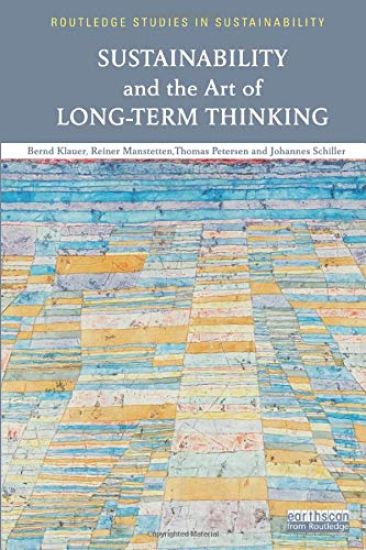
Dealing with time is intimately linked to sustainability, because sustainability, at its core, involves long-term ethical claims. To live up to them, decision and policy-making has to consider long-term development of society, economy, and nature. However, dealing with time and such long-term development is a notoriously difficult subject, both in science and, in particular, in practical decision and policy making. Rooted in philosophical and scientific reasoning, this book explores how the concept of time can be incorporated into effective practical action. The book describes a system and uses case studies to help sustainability practitioners and researchers consider the long-term consequences of our actions in a methodical way. The system integrates scientific and practical knowledge about time and temporal developments to help break down the sometimes overwhelming complexity of sustainability issues. Combining theoretical conceptual thinking and practical applications, this book will be of great interest to students and researchers of sustainability science, environmental sciences, sustainable development, environmental economics, political sciences and practical philosophy.
Sustainability and the Art of Long-Term Thinking

Sustainability and the Art of Long-Term Thinking

Bernd Klauer; Reiner Manstetten; Thomas Petersen; Johannes Schiller

Routledge
2016
sidottu
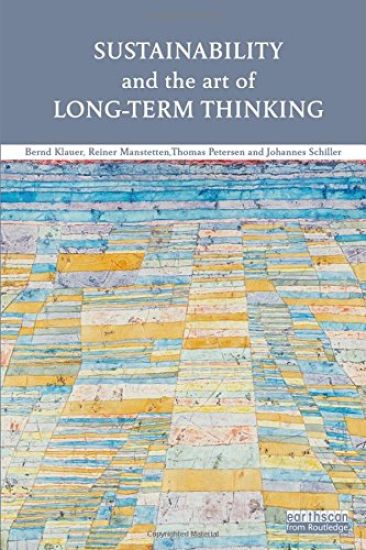
Dealing with time is intimately linked to sustainability, because sustainability, at its core, involves long-term ethical claims. To live up to them, decision and policy-making has to consider long-term development of society, economy, and nature. However, dealing with time and such long-term development is a notoriously difficult subject, both in science and, in particular, in practical decision and policy making. Rooted in philosophical and scientific reasoning, this book explores how the concept of time can be incorporated into effective practical action. The book describes a system and uses case studies to help sustainability practitioners and researchers consider the long-term consequences of our actions in a methodical way. The system integrates scientific and practical knowledge about time and temporal developments to help break down the sometimes overwhelming complexity of sustainability issues. Combining theoretical conceptual thinking and practical applications, this book will be of great interest to students and researchers of sustainability science, environmental sciences, sustainable development, environmental economics, political sciences and practical philosophy.
Philosophical Basics of Ecology and Economy

Philosophical Basics of Ecology and Economy

Malte Faber; Reiner Manstetten

Routledge
2011
nidottu
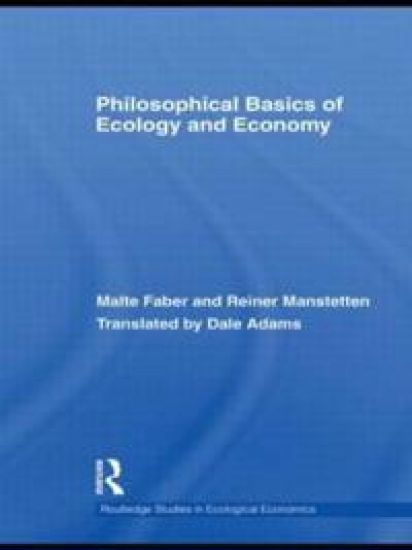
In today's world – despite the dramatic anthropogenic environmental changes – a proper understanding of the relationship between humanity and nature requires a certain detachment. The pressing problems in their whole extent will only be fully understood and solved with comprehensive and patient analysis. Accordingly, this book develops new perspectives on fundamental questions of biology, ecology, and the economy, integrated within a framework of a terminology specially devised by the authors. By illuminating the epistemological backgrounds of ecological-economic research, the authors lay foundations for interdisciplinary environmental research and offer guidelines for practical action. In close contact to the findings of present-day biology and economics, they demonstrate the fruitfulness as well as the shortcomings of modern science for the understanding of the proper place of humankind in nature.. Frequently, current problems in the fields of economics, ecology, politics, philosophy and biology are discussed in a kind of "dialogue" with thinkers and poets like Bacon, Quesnay, Kant, Goethe and Novalis. On the other hand, the book offers traits of the Anglo-Saxon tradition of thought: a precise, analytical approach to theory and a pragmatic approach to action. Both approaches are used by the authors complementarily. Thus the authors lay the foundations for an ecological economical and political practice which is able to tackle concrete environmental problems on an encompassing and long-term basis. This translated volume will be of great use and interest to students of ecology, economics and in particular environmental education, sustainable development and environmental ethics.
Philosophical Basics of Ecology and Economy

Philosophical Basics of Ecology and Economy

Malte Faber; Reiner Manstetten

Routledge
2009
sidottu
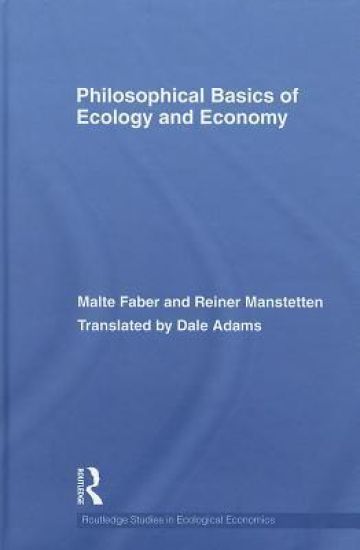
In today's world – despite the dramatic anthropogenic environmental changes – a proper understanding of the relationship between humanity and nature requires a certain detachment. The pressing problems in their whole extent will only be fully understood and solved with comprehensive and patient analysis. Accordingly, this book develops new perspectives on fundamental questions of biology, ecology, and the economy, integrated within a framework of a terminology specially devised by the authors. By illuminating the epistemological backgrounds of ecological-economic research, the authors lay foundations for interdisciplinary environmental research and offer guidelines for practical action. In close contact to the findings of present-day biology and economics, they demonstrate the fruitfulness as well as the shortcomings of modern science for the understanding of the proper place of humankind in nature.. Frequently, current problems in the fields of economics, ecology, politics, philosophy and biology are discussed in a kind of "dialogue" with thinkers and poets like Bacon, Quesnay, Kant, Goethe and Novalis. On the other hand, the book offers traits of the Anglo-Saxon tradition of thought: a precise, analytical approach to theory and a pragmatic approach to action. Both approaches are used by the authors complementarily. Thus the authors lay the foundations for an ecological economical and political practice which is able to tackle concrete environmental problems on an encompassing and long-term basis. This translated volume will be of great use and interest to students of ecology, economics and in particular environmental education, sustainable development and environmental ethics.
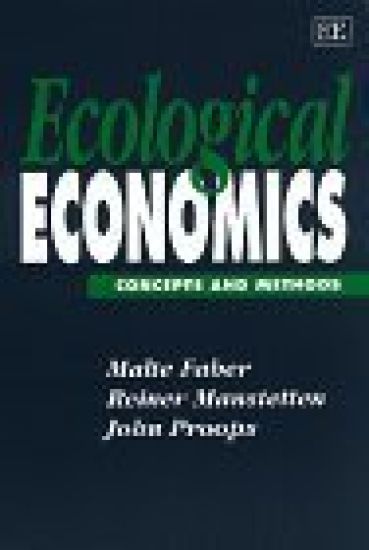
Ecological Economics

Ecological Economics

Malte Faber; Reiner Manstetten; John Proops

Edward Elgar Publishing Ltd
1998
nidottu
Ecological Economics offers an authoritative overview of a rapidly developing discipline lying at the interface of economics, natural science and philosophy. This pioneering new book focuses on the concepts and methods required to integrate sciences and humanities in order to build ecological economics. Ecological Economics as a practice seeks to comprehend the evolving interactions between humans and the natural world. Ranging across the discipline from its conceptual and philosophical foundations to problems of global warming and waste production in the chemicals industry, the authors confidently address the central dilemma of control over nature by humans ignorant of the environmental impacts of their actions. Faber, Manstetten and Proops argue convincingly for an evolutionary approach to human-nature interactions and for the use of natural science concepts, such as entropy. Students and researchers concerned with environmental, resource and ecological economics will welcome Ecological Economics as a convincing and innovative approach to the creation of a discipline capable of contributing to a new relationship between human and non-human nature.