Kirjojen hintavertailu – 12 872 014 kirjaa ja 27 kauppaa

Kirjailija

Reinhild Boehme

Kirjat ja teokset yhdessä paikassa: 8 kirjaa, julkaisuja vuodelta 2024, suosituimpiin kuuluu Treating Anxiety Using Using Cognitive Behavioral Therapy Skills and Interventions. Vertaile teosten hintoja ja tarkista saatavuus suomalaisista kirjakaupoista.

8 kirjaa

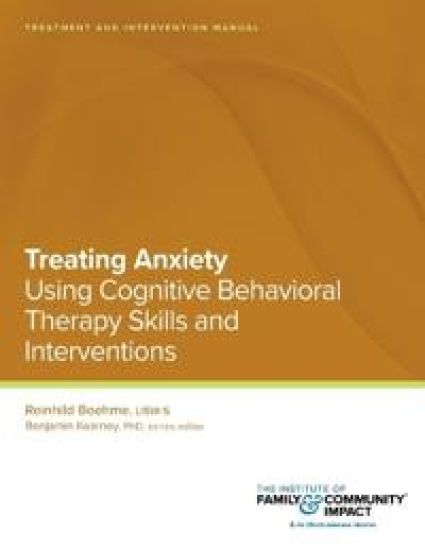
Treating Anxiety Using Using Cognitive Behavioral Therapy Skills and Interventions

Treating Anxiety Using Using Cognitive Behavioral Therapy Skills and Interventions

Benjamin Kearney; Reinhild Boehme

Institute of Family and Community Impact
2024
pokkari
For mental health professionals, building trusting relationships with clients and knowing which interventions will most benefit them are challenging enough. Helping clients who are also dealing at the same time with chronic conditions such as poverty, violence, and addiction can seem overwhelming. That's especially true for behavioral health service providers who have limited experience. That's why we at OhioGuidestone have developed this series of clinical manuals to help professionals develop their skills while providing effective treatment. OhioGuidestone, the largest community behavioral health organization in Ohio, regularly trains new therapists and other behavioral health interventionists to work with clients who face severe, therapy-interfering challenges. We've brought that experience to these manuals. In this era of managed care oversight, tight funding, and pressure to deliver evidence-based or informed care, it is essential for new therapists to get up to speed on best practices quickly. It is also essential for experienced clinicians to be well provided with effective and varied treatment plans. The manuals in this series provide step-by-step guidance on evidence-based and informed treatment modalities and interventions that can be used by both licensed and unlicensed mental health professionals-as well as by their supervisors for training purposes. Seasoned mental health professionals will find the resources offered in these manuals useful for developing a renewed focus on evidence- and research-based interventions. At OhioGuidestone, our interventions are grounded in cognitive behavioral science and also shaped by the relational and attachment scientific advances that continue to inform the behavioral health field (especially the interpersonal neurobiology work published by W. W. Norton & Company). We understand the demands of serving client populations experiencing trauma and toxic stress. Our interventions are designed not to address discrete diagnoses (clients often have more than one) but rather the symptoms that are related to them. The series addresses a wide range of issues, such as depression, anxiety, ADHD, PTSD, and even reluctance to engage in therapy, and it provides interventions for children and adults. We cannot "fix" our clients. But we can guide them along clear paths toward developing the skills they need to navigate the challenges they face, in their thoughts and in their lives. It's our sincere hope that the books in this series will help better prepare more mental health professionals to do just that. - Benjamin Kearney, PhD, series editor

Overcoming Reluctance in Therapeutic Relationships

Overcoming Reluctance in Therapeutic Relationships

Reinhild Boehme

Institute of Family and Community Impact
2024
pokkari
For mental health professionals, building trusting relationships with clients and knowing which interventions will most benefit them are challenging enough. Helping clients who are also dealing at the same time with chronic conditions suchas poverty, violence, and addiction can seem overwhelming. That's especially true for behavioral health service providers who have limited experience. That's why we at OhioGuidestone have developed this series of clinical manuals to help professionals develop their skills while providing effective treatment. OhioGuidestone, the largest community behavioral health organization in Ohio, regularly trains new therapists and other behavioral health interventionists to workwith clients who face severe, therapy-interfering challenges. We've brought that experience to these manuals. In this era of managed care oversight, tight funding, and pressure to deliver evidence-based or informed care, it is essential for new therapists to get up to speed on best practices quickly. It is also essential for experienced clinicians to be well provided with effective and varied treatment plans. The manuals in this series provide step-by-step guidance on evidence-based and informed treatment modalities and interventions that can be used by both licensed and unlicensed mental health professionals-as well as by their supervisors for training purposes. Seasoned mental health professionals will find the resources offered in these manuals useful for developing a renewed focus on evidence- and research-basedinterventions. At OhioGuidestone, our interventions are grounded in cognitive behavioral science and also shaped by the relational and attachment scientific advances that continue to inform the behavioral health field (especially the interpersonal neurobiology work published by W. W. Norton & Company). We understand the demands of serving client populations experiencing trauma and toxic stress. Our interventions are designed not to address discrete diagnoses (clients often have more than one) but rather the symptoms that are related to them. The series addresses awide range of issues, such as depression, anxiety, ADHD, PTSD, and even reluctance to engage in therapy, and it provides interventions for children and adults. We cannot "fix" our clients. But we can guide them along clear paths towarddeveloping the skills they need to navigate the challenges they face, in their thoughts and in their lives. It's our sincere hope that the books in this series will help better prepare more mental health professionals to do just that.
Treating Posttraumatic Stress Disorder

Treating Posttraumatic Stress Disorder

Reinhild Boehme

Institute of Family and Community Impact
2024
pokkari
This manual is for licensed mental health providers who provide psychotherapy and related services. Treating clients suffering from posttraumatic stress disorder and related disorders can be challenging, even for a seasoned practitioner. This is partially due to the fact that posttraumatic stress disorder is about something. The reasons for your client'sdistress are known. Your client has experienced trauma, and the symptoms are an expression of, and the result of, the traumatic experience. When a client presents with symptoms of posttraumatic stress, there is always a difficult story waiting to be told. And your client may or may not be ready to tell it. And you, the practitioner, will need to hear the story. This, too, can be difficult. Traumatic experiences may call into question, both for the practitioner and the client, everything they believe to be true: That people are inherently good. That good things happen to good people. That we can protect ourselves and our families from harm. That life is fair. Traumatic experiences happen in spite of us believing that they should not. And more often than not they don't just happen. Much trauma is related to what people do to each other. Children are hurt by their parents. Spouses hurt each other. In other words, there is often an interpersonal component to traumatic experiences. This can make recovery from Posttraumatic stress disorder difficult. If your client has beenhurt by someone close, it can be difficult to enter into a new relationship-and that includes the therapeutic relationship. For the treatment provider, this can be frustrating. You may know exactly what you need to do but find that your client can't let her guard down. Also keep in mind that clients who come from historically marginalized populations-such as those subjected to broad-scale, historical trauma-may have suffered relational (and actual) injuries that can make it very difficult for them to believe that any one person or institution can be trusted at all. For mental health professionals, building trusting relationships with clients and knowing which interventions will most benefit them are challenging enough. Helping clients who are also dealing at the same time with chronic conditions suchas poverty, violence, and addiction can seem overwhelming. That's especially true for behavioral health service providers who have limited experience. That's why we at OhioGuidestone have developed this series of clinical manuals to help professionals develop their skills while providing effective treatment. OhioGuidestone, the largest community behavioral health organization in Ohio, regularly trains new therapists and other behavioral health interventionists to workwith clients who face severe, therapy-interfering challenges. We've brought that experience to these manuals.
Treating Depression Using Cognitive Behavioral Therapy Skills and Interventions

Treating Depression Using Cognitive Behavioral Therapy Skills and Interventions

Reinhild Boehme

Institute of Community and Family Impact
2024
pokkari
For mental health professionals, building trusting relationships with clients and knowing which interventions will most benefit them are challenging enough. Helping clients who are also dealing at the same time with chronic conditions such as poverty, violence, and addiction can seem overwhelming. That's especially true for behavioral health service providers who have limited experience. That's why we at OhioGuidestone have developed this series of clinical manuals to help professionals develop their skills while providing effective treatment. OhioGuidestone, the largest community behavioral health organization in Ohio, regularly trains new therapists and other behavioral health interventionists to work with clients who face severe, therapy-interfering challenges. We've brought that experience to these manuals. In this era of managed care oversight, tight funding, and pressure to deliver evidence-based or informed care, it is essential for new therapists to get up to speed on best practices quickly. It is also essential for experienced clinicians to be well provided with effective and varied treatment plans. The manuals in this series provide step-by-step guidance on evidence-based and informed treatment modalities and interventions that can be used by both licensed and unlicensed mental health professionals-as well as by their supervisors for training purposes. Seasoned mental health professionals will find the resources offered in these manuals useful for developing a renewed focus on evidence- and research-based interventions. At OhioGuidestone, our interventions are grounded in cognitive behavioral science and also shaped by the relational and attachment scientific advances that continue to inform the behavioral health field (especially the interpersonal neurobiology work published by W. W. Norton & Company). We understand the demands of serving client populations experiencing trauma and toxic stress. Our interventions are designed not to address discrete diagnoses (clients often have more than one) but rather the symptoms that are related to them. The series addresses a wide range of issues, such as depression, anxiety, ADHD, PTSD, and even reluctance to engage in therapy, and it provides interventions for children and adults. We cannot "fix" our clients. But we can guide them along clear paths toward developing the skills they need to navigate the challenges they face, in their thoughts and in their lives. It's our sincere hope that the books in this series will help better prepare more mental health professionals to do just that.
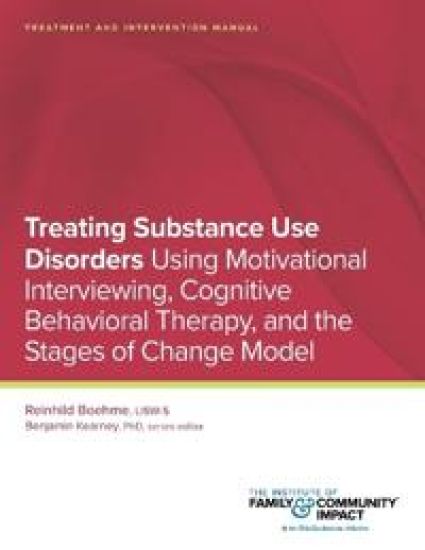
Treating Substance Use Disorders

Treating Substance Use Disorders

Reinhild Boehme

Institute of Family and Community Impact
2024
pokkari
For mental health professionals, building trusting relationships with clients and knowing which interventions will most benefit them are challenging enough. Helping clients who are also dealing at the same time with chronic conditions such as poverty, violence, and addiction can seem overwhelming. That's especially true for behavioral health service providers who have limited experience. That's why we at OhioGuidestone have developed this series of clinical manuals to help professionals develop their skills while providing effective treatment. OhioGuidestone, the largest community behavioral health organization in Ohio, regularly trains new therapists and other behavioral health interventionists to work with clients who face severe, therapy-interfering challenges. We've brought that experience to these manuals. In this era of managed care oversight, tight funding, and pressure to deliver evidence-based or informed care, it is essential for new therapists to get up to speed on best practices quickly. It is also essential for experienced clinicians to be well provided with effective and varied treatment plans. The manuals in this series provide step-by-step guidance on evidence-based and informed treatment modalities and interventions that can be used by both licensed and unlicensed mental health professionals-as well as by their supervisors for training purposes. Seasoned mental health professionals will find the resources offered in these manuals useful for developing a renewed focus on evidence- and research-based interventions. At OhioGuidestone, our interventions are grounded in cognitive behavioral science and also shaped by the relational and attachment scientific advances that continue to inform the behavioral health field (especially the interpersonal neurobiology work published by W. W. Norton & Company). We understand the demands of serving client populations experiencing trauma and toxic stress. Our interventions are designed not to address discrete diagnoses (clients often have more than one) but rather the symptoms that are related to them. The series addresses a wide range of issues, such as depression, anxiety, ADHD, PTSD, and even reluctance to engage in therapy, and it provides interventions for children and adults. We cannot "fix" our clients. But we can guide them along clear paths toward developing the skills they need to navigate the challenges they face, in their thoughts and in their lives. It's our sincere hope that the books in this series will help better prepare more mental health professionals to do just that. - Benjamin Kearney, PhD, series editor