Kirjojen hintavertailu – 12 859 818 kirjaa ja 27 kauppaa

Kirjailija

Reinhold Kramer

Kirjat ja teokset yhdessä paikassa: 6 kirjaa, julkaisuja vuosilta 2007–2026, suosituimpiin kuuluu 'PS: Burn After Reading'. Vertaile teosten hintoja ja tarkista saatavuus suomalaisista kirjakaupoista.

6 kirjaa

Kirjojen julkaisuvuodet: 2007–2026.

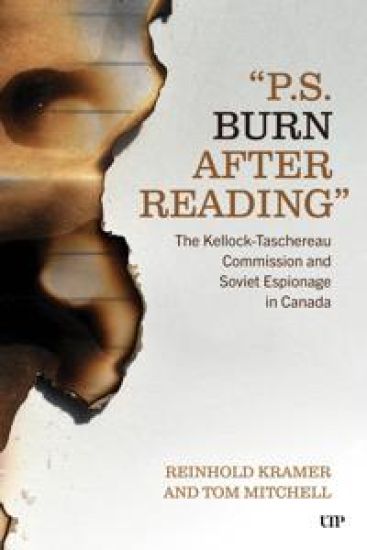
'PS: Burn After Reading'

'PS: Burn After Reading'

Reinhold Kramer; Tom Mitchell

UNIVERSITY OF TORONTO PRESS
2026
sidottu
After Soviet cipher clerk Igor Gouzenko defected in 1945, Canada was shocked by the revelation that its own citizens were engaged in espionage for the Soviet Union. P. S. Burn After Reading explores how the Canadian government used the controversial Kellock-Taschereau Commission – sometimes judiciously, sometimes not – to uncover and thwart domestic spies during the early days of the Cold War. Drawing on a wealth of sources, including the Commission’s extensive records, GRU documents turned over by Gouzenko, American Venona decrypts, Soviet KGB archives, and newly released British MI5 and MI6 files, authors Reinhold Kramer and Tom Mitchell provide a comprehensive account of the crisis. They reveal that, despite some civil liberties missteps, the government’s suspicions were largely justified. The book weaves together the evidence against the spies, the tradecraft of Soviet espionage, complex legal challenges faced by the state, and the political fallout. With access to hundreds of newly released British intelligence files, P. S. Burn After Reading offers both specialists and general readers fresh insights into the espionage crisis of 1945–46 and the pivotal role it played in exposing Canada’s postwar security and intelligence vulnerabilities.
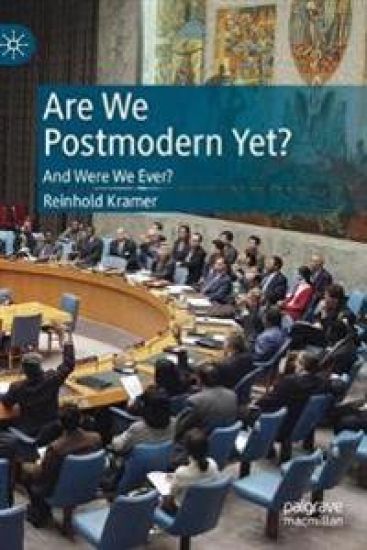
Are We Postmodern Yet?

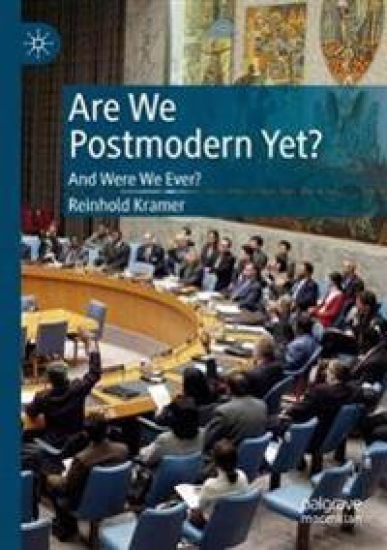
Are We Postmodern Yet?

Reinhold Kramer

Springer Nature Switzerland AG
2020
nidottu
In this book, Reinhold Kramer explores a variety of important social changes, including the resistance to objective measures of truth, the rise of “How-I-Feel” ethics, the ascendancy of individualism, the immersion in cyber-simulations, the push toward globalization and multilateralism, and the decline of political and religious faiths. He argues that the displacement, since the 1990s, of grand narratives by ego-based narratives and small narratives has proven inadequate, and that selective adherence, pluralist adaptation, and humanism are more worthy replacements. Relying on evolutionary psychology as much as on Charles Taylor, Kramer argues that no single answer is possible to the book title’s question, but that the term “postmodernity” – referring to the era, not to postmodernism – still usefully describes major currents within the contemporary world.
Are We Postmodern Yet?

Are We Postmodern Yet?

Reinhold Kramer

Springer Nature Switzerland AG
2019
sidottu
In this book, Reinhold Kramer explores a variety of important social changes, including the resistance to objective measures of truth, the rise of “How-I-Feel” ethics, the ascendancy of individualism, the immersion in cyber-simulations, the push toward globalization and multilateralism, and the decline of political and religious faiths. He argues that the displacement, since the 1990s, of grand narratives by ego-based narratives and small narratives has proven inadequate, and that selective adherence, pluralist adaptation, and humanism are more worthy replacements. Relying on evolutionary psychology as much as on Charles Taylor, Kramer argues that no single answer is possible to the book title’s question, but that the term “postmodernity” – referring to the era, not to postmodernism – still usefully describes major currents within the contemporary world.
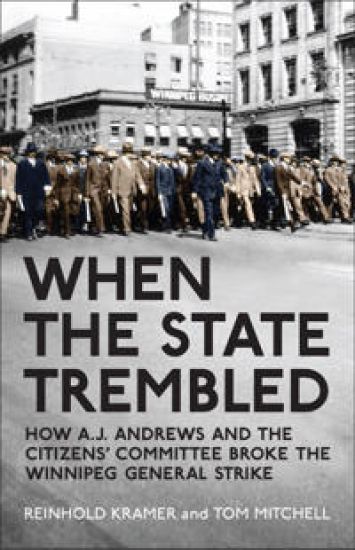
When the State Trembled

When the State Trembled

Reinhold Kramer; Tom Mitchell

University of Toronto Press
2010
pokkari
The Winnipeg General Strike of 1919, which involved approximately 30,000 workers, is Canada's best-known strike. When the State Trembled recovers the hitherto untold story of the Citizens' Committee of 1000, formed by Winnipeg's business elite in order to crush the revolt and sustain the status quo. This account, by the authors of the award-winning Walk Towards the Gallows, reveals that the Citizens drew upon and extended a wide repertoire of anti-labour tactics to undermine working-class unity, battle for the hearts and minds of the middle class, and stigmatize the general strike as a criminal action. Newly discovered correspondence between leading Citizen lawyer A. J. Andrews and Acting Minister of Justice Arthur Meighen illuminates the strategizing and cooperation that took place between the state and the Citizens. While the strike's break was a crushing defeat for the labour movement, the later prosecution of its leaders on charges of sedition reveals abiding fears of radicalism and continuing struggles between capital and labour on the terrain of politics and law.
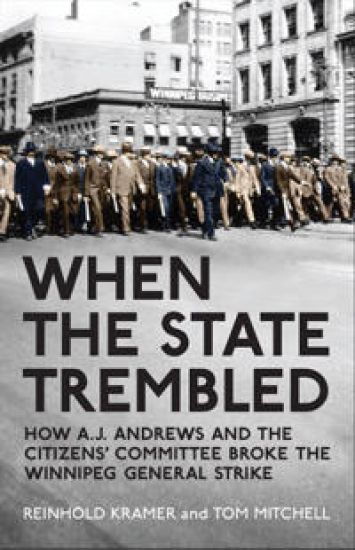
When the State Trembled

When the State Trembled

Reinhold Kramer; Tom Mitchell

University of Toronto Press
2010
sidottu
The Winnipeg General Strike of 1919, which involved approximately 30,000 workers, is Canada's best-known strike. When the State Trembled recovers the hitherto untold story of the Citizens' Committee of 1000, formed by Winnipeg's business elite in order to crush the revolt and sustain the status quo. This account, by the authors of the award-winning Walk Towards the Gallows, reveals that the Citizens drew upon and extended a wide repertoire of anti-labour tactics to undermine working-class unity, battle for the hearts and minds of the middle class, and stigmatize the general strike as a criminal action. Newly discovered correspondence between leading Citizen lawyer A. J. Andrews and Acting Minister of Justice Arthur Meighen illuminates the strategizing and cooperation that took place between the state and the Citizens. While the strike's break was a crushing defeat for the labour movement, the later prosecution of its leaders on charges of sedition reveals abiding fears of radicalism and continuing struggles between capital and labour on the terrain of politics and law.
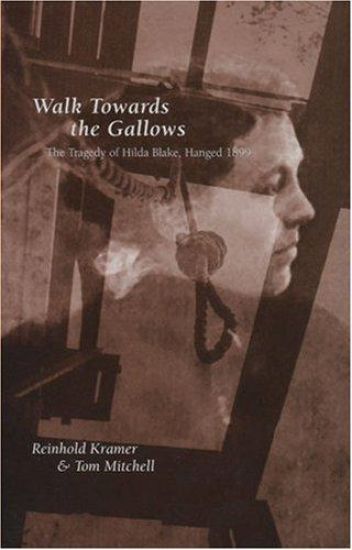
Walk Towards the Gallows

Walk Towards the Gallows

Tom Mitchell; Reinhold Kramer

University of Toronto Press
2007
pokkari
On 5 July 1899 Hilda Blake, a 21-year-old maidservant in Brandon, Manitoba, who had come to Canada from England ten years earlier as an orphan immigrant, shot and killed her mistress. Two days after Christmas she was hanged, one of the few women in Canadian history to die for her crime. Blake unintentionally left a remarkable documentary record, ranging from Poorhouse records, courts dockets of custody and criminal cases in which she was the central figure, popular, journalistic, and professional assessments of her character, and a poem, 'My Downfall', that she penned in Brandon Gaol while awaiting execution. To explain why Hilda bought a gun and why she fired it, Kramer and Mitchell employee both historical and literary techniques. The result is a richly textured story of late Victorian social, cultural, and political life. This remarkable book - part mystery, part historical detective story - uncovers Hilda Blake's life, from her origins in Norfolk, England, to her tragic death. It also examines the lives of other principals in the story: successful Brandon businessman Robert Lane and his wife Mary, the murdered woman; Lane's business partner, Alexander McIlvride; Police Chief James Kircaldy; A. P. Stewart and his wife, Letitia Singer Stewart, the family for whom the 12-year-old orphaned Hilda first worked as a domestic servant; Rev. C. C. McLaurin, the Baptist minister who knew Hilda and counselled the condemned woman in her final days; social purity activist Dr Amelia Yeomans, who petitioned for clemency; Governor-General Minto, who urged the Laurier government to stay the execution, even Clifford Sifton, the MP from Brandon, federal minister of Immigration, and the most powerful western Liberal in the Laurier cabinet, for whom the case was a potential minefield. As the authors write, 'We tell a story because only a story can expose the real workings of a culture, and only a story can express our protest against time.'