Kirjojen hintavertailu – 12 859 829 kirjaa ja 27 kauppaa
Kirjailija
Rhona Rapoport
Kirjat ja teokset yhdessä paikassa: 6 kirjaa, julkaisuja vuosilta 2002–2020, suosituimpiin kuuluu Beyond Work-Family Balance. Vertaile teosten hintoja ja tarkista saatavuus suomalaisista kirjakaupoista.
This volume, first published in 1975 with a new introduction by Ziona Strelitz, marked a pioneering contribution to family and leisure studies. The study includes empirical material collected in the form of biographical case studies. The case studies are not only rich in detail and well presented, but they provide a meaning of leisure within the pattern of life of the individuals studied. This book will be of great interest to students of leisure and family studies.
This volume, first published in 1975 with a new introduction by Ziona Strelitz, marked a pioneering contribution to family and leisure studies. The study includes empirical material collected in the form of biographical case studies. The case studies are not only rich in detail and well presented, but they provide a meaning of leisure within the pattern of life of the individuals studied. This book will be of great interest to students of leisure and family studies.
In this book, first published in 1971, the authors show from first-hand studies of family and working life (and with evidence from many countries, including the socialist societies of Eastern Europe) the nature of the discrimination facing women in the professions – and how various family and employment patterns might contribute to solving it. Their point is not that some new stereotype should be substituted for traditional views of the role of husbands and wives: different patterns fit different situations.
In this book, first published in 1971, the authors show from first-hand studies of family and working life (and with evidence from many countries, including the socialist societies of Eastern Europe) the nature of the discrimination facing women in the professions – and how various family and employment patterns might contribute to solving it. Their point is not that some new stereotype should be substituted for traditional views of the role of husbands and wives: different patterns fit different situations.
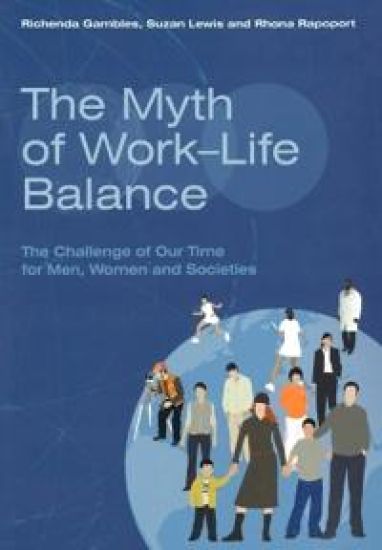
Many regard the ways in which paid work can be combined or ‘balanced’ with other parts of life as an individual concern and a small, rather self-indulgent problem in today’s world. Some feel that worrying about a lack of time or energy for family relationships or friendships is a luxury or secondary issue when compared with economic growth or development. In the business world and among many Governments around the world, the importance of paid work and the primacy of economic competitiveness, whatever the personal costs, is almost accepted wisdom. Profits and short term efficiency gains are often placed before social issues of care or human dignity. But what about the impact this has on men and women’s well being, or the long-term sustainability of people, families, society or even the economy? Drawing from interviews and group meetings in seven diverse countries – India, Japan, the Netherlands, Norway, South Africa, the UK and USA – this book explores the multiple difficulties in combining paid work with other parts of life and the frustrations people experience in diverse settings. There is a myth that ‘work-life balance’ can be achieved through quick fixes rather than challenging the place of paid work in people’s lives and the way work actually gets done. As well as exploring contemporary problems, this book attempts to seed hope and new ways of thinking about one of the key challenges of our time.
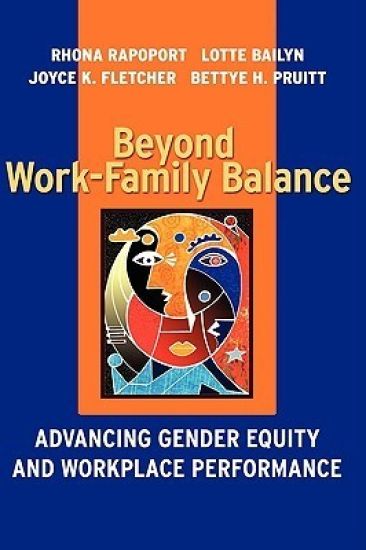
Everyone who struggles to meet the demands of work and personal-life responsibilities knows how tough it is to do so. This bold new book shows that it is the deeply engrained separation of work and personal life that has limited our ability to deal effectively with the conflict between them. Beyond Work-Family Balance demonstrates why the image of "balance" is outmoded and why a new approach work-personal life integration offers greater promise for meaningful change. Providing many examples from action research projects in more than a dozen organizations of different kinds, the authors show how using their method of integrating rather than separating personal-life considerations from the workplace can achieve positive outcomes, not only for workers but also for the work. The method offers a way of looking deeply into the work culture to find inequitable and ineffective work practices that are so embedded and routine that no one thinks to question them they are just the way things get done. Once identified, these work practices can be changed to achieve what the authors call a Dual Agenda: a more equitable workplace where both men and women can achieve their full potential and a more effective workplace where the needs of the work, rather than gendered and outmoded assumptions, determine what gets done and how.