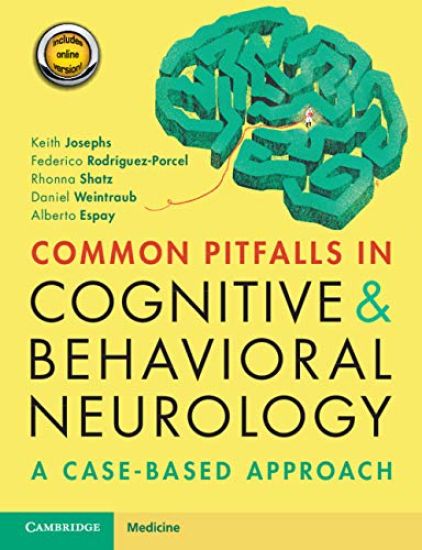
Common Pitfalls in Cognitive and Behavioral Neurology
Keith Josephs; Federico Rodriguez-Porcel; Rhonna Shatz; Daniel Weintraub; Alberto Espay
Cambridge University Press
2020
muu
Clinical case studies are fundamental in cementing theoretical training, especially for neurological disorders where diagnosis can be difficult. This book describes a variety of clinical scenarios associated with either the misdiagnosis or incorrect management of cognitive and behavioral neurological syndromes, identifying common pitfalls, which are discussed in detail. Each case emphasizes the importance of information derived from the patient's history and physical examination in forming a correct diagnosis. Focusing on disorders and presentations that are a frequent source of confusion, key diagnostic principles are illustrated clearly. Questions to the reader move the narrative along logically, whilst highlighting specific aspects of clinical presentation that lead to the correct diagnosis. Videos of patients connect readers to the cases and demonstrate how to avoid diagnostic pitfalls. An online version of the book can be accessed on Cambridge Core, via the code printed on the inside of the cover.