Kirjojen hintavertailu – 12 859 819 kirjaa ja 27 kauppaa

Kirjailija

Ricardo Rocha

Kirjat ja teokset yhdessä paikassa: 7 kirjaa, julkaisuja vuosilta 2016–2024, suosituimpiin kuuluu Terrestrial Mammal Conservation. Vertaile teosten hintoja ja tarkista saatavuus suomalaisista kirjakaupoista.

7 kirjaa

Kirjojen julkaisuvuodet: 2016–2024.

Luis Valdez

Luis Valdez

Jorge A. Huerta; Guillermo Avilés-Rodríguez; Karina Gutiérrez; Jade Power-Sotomayor; Ricardo Rocha

TAYLOR FRANCIS LTD
2024
sidottu
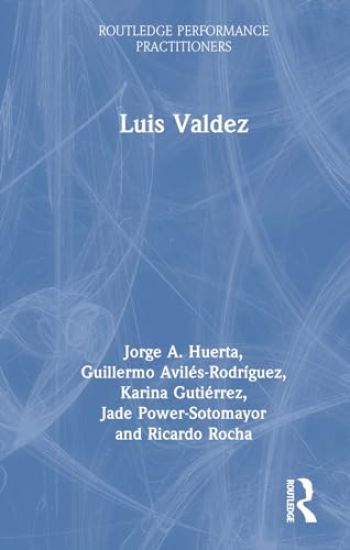
Luis Valdez studies the life and work of this Chicano playwright, director, performer, and producer along with the implications of his legacy for Chicana/o/x communities and for all who engage with his work. Valdez’s work broadened the scope of theater and arts in the Chicano community, and his formation of El Teatro Campesino brought together students and farmworkers. This volume highlights his professional work and writings. It offers a unique investigation of Luis Valdez, his life, his oeuvre, and his contributions to the theater in the United States and beyond. This book combines:an in-depth biographical overview of Valdez’s life and career, focusing on defining experiences that set his trajectory into motion;an exploration of Valdez’s key writings—the 1973 epic poem Pensamiento Serpentino and the unpublished lecture The Power of Zero which articulate his philosophy of the Theatre of the Sphere;a stylistic analysis of his key works, including Soldado Razo and Zoot Suit as well as their critical reception; anda selection of improvisation and dance-based warm-ups, embodiment exercises, and an acto writing practicum adapted to experiment with Valdez’s works. As a first step towards critical understanding, and as an initial exploration before going on to further, primary research, Routledge Performance Practitioners offer unbeatable value for today’s students.
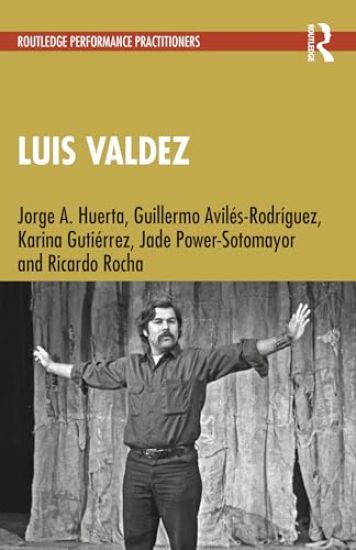
Luis Valdez

Luis Valdez

Jorge A. Huerta; Guillermo Avilés-Rodríguez; Karina Gutiérrez; Jade Power-Sotomayor; Ricardo Rocha

TAYLOR FRANCIS LTD
2024
nidottu
Luis Valdez studies the life and work of this Chicano playwright, director, performer, and producer along with the implications of his legacy for Chicana/o/x communities and for all who engage with his work. Valdez’s work broadened the scope of theater and arts in the Chicano community, and his formation of El Teatro Campesino brought together students and farmworkers. This volume highlights his professional work and writings. It offers a unique investigation of Luis Valdez, his life, his oeuvre, and his contributions to the theater in the United States and beyond. This book combines:an in-depth biographical overview of Valdez’s life and career, focusing on defining experiences that set his trajectory into motion;an exploration of Valdez’s key writings—the 1973 epic poem Pensamiento Serpentino and the unpublished lecture The Power of Zero which articulate his philosophy of the Theatre of the Sphere;a stylistic analysis of his key works, including Soldado Razo and Zoot Suit as well as their critical reception; anda selection of improvisation and dance-based warm-ups, embodiment exercises, and an acto writing practicum adapted to experiment with Valdez’s works. As a first step towards critical understanding, and as an initial exploration before going on to further, primary research, Routledge Performance Practitioners offer unbeatable value for today’s students.
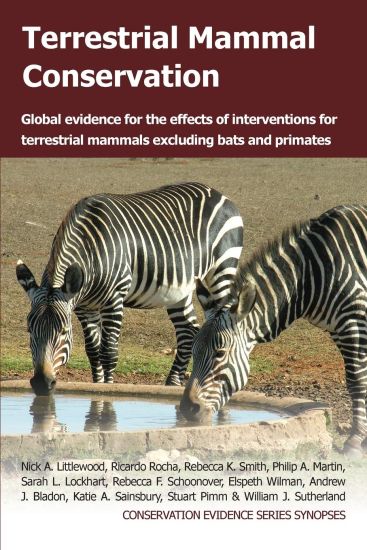
Terrestrial Mammal Conservation

Terrestrial Mammal Conservation

Nick A Littlewood; Ricardo Rocha; Rebecca K Smith

Open Book Publishers
2020
pokkari
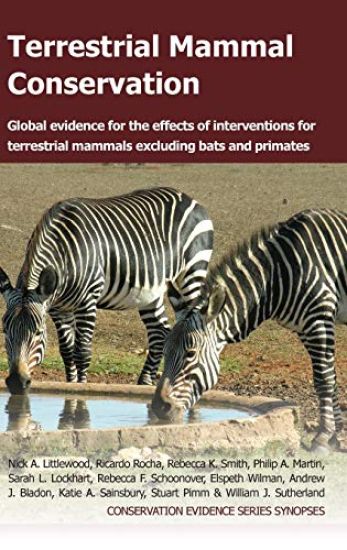
Terrestrial Mammal Conservation provides a thorough summary of the available scientific evidence of what is known, or not known, about the effectiveness of all of the conservation actions for wild terrestrial mammals across the world (excluding bats and primates, which are covered in separate synopses). Actions are organized into categories based on the International Union for Conservation of Nature classifications of direct threats and conservation actions. Over the course of fifteen chapters, the authors consider interventions as wide ranging as creating uncultivated margins around fields, prescribed burning, setting hunting quotas and removing non-native mammals. This book is written in an accessible style and is designed to be an invaluable resource for anyone concerned with the practical conservation of terrestrial mammals. The authors consulted an international group of terrestrial mammal experts and conservationists to produce this synopsis. Funding was provided by the MAVA Foundation, Arcadia and National Geographic Big Cats Initiative. Terrestrial Mammal Conservation is the seventeenth publication in the Conservation Evidence Series, linked to the online resource www. ConservationEvidence.com. Conservation Evidence Synopses are designed to promote a more evidence-based approach to biodiversity conservation. Others in the series include Bat Conservation, Primate Conservation, Bird Conservation and Forest Conservation and more are in preparation. Expert assessment of the evidence summarised within synopses is provided online and within the annual publication What Works in Conservation.
Terrestrial Mammal Conservation

Terrestrial Mammal Conservation

Nick A Littlewood; Ricardo Rocha; Rebecca K Smith

Open Book Publishers
2020
sidottu
Terrestrial Mammal Conservation provides a thorough summary of the available scientific evidence of what is known, or not known, about the effectiveness of all of the conservation actions for wild terrestrial mammals across the world (excluding bats and primates, which are covered in separate synopses). Actions are organized into categories based on the International Union for Conservation of Nature classifications of direct threats and conservation actions. Over the course of fifteen chapters, the authors consider interventions as wide ranging as creating uncultivated margins around fields, prescribed burning, setting hunting quotas and removing non-native mammals. This book is written in an accessible style and is designed to be an invaluable resource for anyone concerned with the practical conservation of terrestrial mammals. The authors consulted an international group of terrestrial mammal experts and conservationists to produce this synopsis. Funding was provided by the MAVA Foundation, Arcadia and National Geographic Big Cats Initiative. Terrestrial Mammal Conservation is the seventeenth publication in the Conservation Evidence Series, linked to the online resource www. ConservationEvidence.com. Conservation Evidence Synopses are designed to promote a more evidence-based approach to biodiversity conservation. Others in the series include Bat Conservation, Primate Conservation, Bird Conservation and Forest Conservation and more are in preparation. Expert assessment of the evidence summarised within synopses is provided online and within the annual publication What Works in Conservation.
Field Guide to the Bats of the Amazon

Field Guide to the Bats of the Amazon

Adrià López-Baucells; Ricardo Rocha; Paulo Bobrowiec; Enrico Bernard; Jorge Palmeirim; Christoph F. J. Meyer

Pelagic Publishing
2018
nidottu
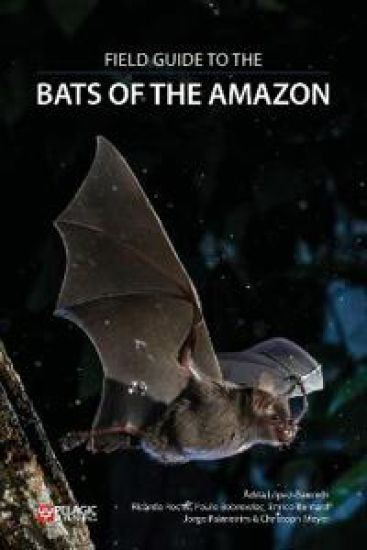
Do you think identifying bats in Europe or in North America is difficult? Well, try it in the Amazon. The planet’s green lung is home to the most diverse bat communities on the planet with more than 160 species currently described. Local species richness often surpasses 100 and for many, their identification in the field is, to say the least, challenging. This task will now become easier with the publication of the Field Guide to the Bats of the Amazon: a landmark handbook aimed at facilitating species identification in the field. The book, written and designed by an international bat research team mainly based in the University of Lisbon in collaboration with the National Institute of Amazonian Research (INPA), is a guide for anyone conducting field work on bats in the Amazon or interested in bat biodiversity. It is largely based on previous published keys with modifications derived from both personal observations and years of field experience in the Brazilian Amazon at the Biological Dynamics of Forest Fragments Project (BDFFP), as well as a thorough revision of available bat keys and species descriptions. The field guide also features the first acoustic key for Amazonian bats, illustrated with the echolocation spectrogram of most species. This represents a major step towards alleviating the daunting task of identifying the numerous species of aerial insectivorous bats that occur in the Amazon based on their echolocation calls. It further constitutes an important tool to improving the knowledge and optimizing surveys of aerial insectivorous Neotropical bats, a group which remains largely understudied. The field guide provides an essential tool, not only for researchers, but also for bat conservationists, consultancies and anyone interested in Neotropical bats in general, and Amazonian bats in particular.