Kirjailija
Richard A. Falk
Kirjat ja teokset yhdessä paikassa: 33 kirjaa, julkaisuja vuosilta 1975–2025, suosituimpiin kuuluu Patriotism to the Earth. Vertaile teosten hintoja ja tarkista saatavuus suomalaisista kirjakaupoista.
Nimi esiintyy myös muodoissa: Richard a Falk
33 kirjaa
Kirjojen julkaisuvuodet: 1975–2025.
Professor Falk gives special attention to the political setting that shapes international law and to the creation of those intellectual perspectives which would strengthen world order. Originally published in 1970. The Princeton Legacy Library uses the latest print-on-demand technology to again make available previously out-of-print books from the distinguished backlist of Princeton University Press. These editions preserve the original texts of these important books while presenting them in durable paperback and hardcover editions. The goal of the Princeton Legacy Library is to vastly increase access to the rich scholarly heritage found in the thousands of books published by Princeton University Press since its founding in 1905.
The Future of the International Legal Order, Volume 2
Cyril E. Black; Richard A. Falk
Princeton University Press
2015
pokkari
Wolfgang Friedmann, Burns H. Weston, William T. Burke, and Ivan A. Vlasic explore the new frontiers and wealth and resources that are altering the patterns of the world economy. Since rapid and dramatic technological progress poses problems that can be solved only by international or multinational controls these legal specialists emphasize the urgent need for nonviolent measures capable of reconciling the interests of the wealthy and impoverished nations and of satisfying the rising demands of the underdeveloped world for participation in the scientific revolution. The existing situation and current trends are described, and detailed recommendations to strengthen the role of international law in the decades ahead are made. Originally published in 1970. The Princeton Legacy Library uses the latest print-on-demand technology to again make available previously out-of-print books from the distinguished backlist of Princeton University Press. These editions preserve the original texts of these important books while presenting them in durable paperback and hardcover editions. The goal of the Princeton Legacy Library is to vastly increase access to the rich scholarly heritage found in the thousands of books published by Princeton University Press since its founding in 1905.
The Vietnam War and International Law, Volume 4
Richard A. Falk
Princeton University Press
2015
pokkari
This concluding volume of The Vietnam War and International Law focuses on the last stages of America's combat role in Indochina. The articles in the first section deal with general aspects of the relationship of international law to the Indochina War. Sections II and III are concerned with the adequacy of the laws of war under modern conditions of combat, and with related questions of individual responsibility for the violation of such laws. Section IV deals with some of the procedural issues related to the negotiated settlement of the war. The materials in Section V seek to reappraise the relationship between the constitutional structure of the United States and the way in which the war was conducted, while the final section presents the major documents pertaining to the end of American combat involvement in Indochina. A supplement takes account of the surrender of South Vietnam in spring 1975. Contributors to the volume--lawyers, scholars, and government officials--include Dean Rusk, Eugene V. Rostow, Richard A. Falk, John Norton Moore, and Richard Wasserstrom. Originally published in 1976. The Princeton Legacy Library uses the latest print-on-demand technology to again make available previously out-of-print books from the distinguished backlist of Princeton University Press. These editions preserve the original texts of these important books while presenting them in durable paperback and hardcover editions. The goal of the Princeton Legacy Library is to vastly increase access to the rich scholarly heritage found in the thousands of books published by Princeton University Press since its founding in 1905.
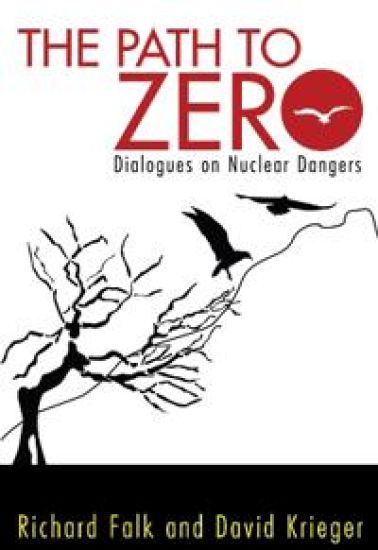
The Path to Zero argues that it is time to re-open the public debate on nuclear weapons. In a series of clear and well-reasoned dialogues, long-time scholars and peace activists Richard Falk and David Krieger probe key questions about our nuclear capability and dig beneath the secrecy that has largely surrounded its existence. Falk and Krieger argue that Hiroshima and Nagasaki were only the beginning. In recent times, nuclear annihilation at the hands of rogue states and terrorists has become an even greater concern than the spectre of nuclear war between superpowers. The Path to Zero argues that whilst none of us has the power to bring about global change alone, together we are immensely powerful - powerful enough to overcome the threats of the Nuclear Age and move us appreciably along 'the path to zero'.
Is Iraq becoming another Vietnam? Author Kenneth Campbell received a Purple Heart after serving 13 months in Vietnam. He then spent years campaigning to get the US out of the war. Here, Campbell lays out the political similarities of both wars. He traces the chief lessons of Vietnam, which helped America successfully avoid quagmires for thirty years, and explains how neoconservatives within the Bush administration cynically used the tragedy of 9/11 to override the "Vietnam syndrome" and drag America into a new quagmire in Iraq. In view of where the U. S. finds itself today -- unable to stay but unable to leave -- Campbell recommends that America re-dedicate itself to the essential lessons of Vietnam: the danger of imperial arrogance, the limits of military force, the importance of international and constitutional law, and the power of morality.
The American Empire and the Commonwealth of God
David Ray Griffin; John B. Cobb Jr.; Richard A. Falk; Catherine Keller
Westminster/John Knox Press,U.S.
2006
nidottu
In this book, four distinguished scholars level a powerful critique of the rapid expansion of the emerging American empire and its oppressive and destructive political, military, and economic policies. Arguing that a global Pax Americana is internationally disastrous, the authors demonstrate how America's imperialism inevitably leads to rampant irreversible ecological devastation, expanding military force for imperialistic purposes, and a grossly inequitable distribution of goods--all leading to the diminished well-being of human communities.
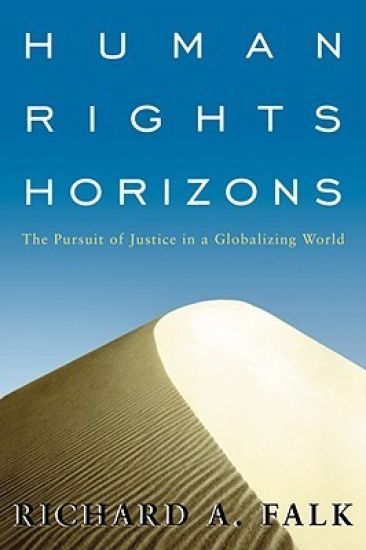
In Human Rights Horizons, one of the world's foremost authorities on human rights and international relations maps out the way to a more just and human global society. Borders are being erased; democracy and capitalism are spreading. The world is rapidly changing, and these changes are opening the door for the promotion of human rights to become and integral part of worldwide politics and law. In his provocative new book, Falk discusses the borderline between the promotion of human rights and the promotion of interventionist and coercive diplomacy. Can the US and the UN find an acceptable balance between unnecessary, protracted violence (Somalia) and simply letting genocide spread (Rwanda)? While looking at specific cases, Falk also sheds important new light on non-Western attitudes toward human rights, the challenge of genocidal politics, the intersection of morality and global security, and the pursuit of international justice. Thoughtful and very accessibly written, Human Rights Horizons clearly presents a path to an original new humanitarian policy for the 21st century.
Taking Suffering Seriously
William F. Felice; Richard A. Falk
State University of New York Press
1996
pokkari
Examines the evolution of collective human rights in international relations and argues that the concept of human rights must integrate group rights based on race/ethnicity, gender, class, and sexuality. Taking Suffering Seriously examines the evolution and development of the concept of collective human rights in international relations. Focusing on the tension between the rights of the individual member of society and the collective rights of certain groups, Felice argues that the protection of human dignity requires an expansion of our understanding of human rights to include those collective group rights often violated by state and global structures. He advocates a third way, between liberalism and Marxism, to move toward a world in which decision-making is based on norms of meeting basic human needs and true equality.
Law, Morality, and War in the Contemporary World
Richard A. Falk
Praeger Publishers Inc
1984
sidottu