Kirjailija
Richard A. Gabriel
Kirjat ja teokset yhdessä paikassa: 39 kirjaa, julkaisuja vuosilta 1979–2025, suosituimpiin kuuluu Muhammad. Vertaile teosten hintoja ja tarkista saatavuus suomalaisista kirjakaupoista.
Nimi esiintyy myös muodoissa: Richard A Gabriel
39 kirjaa
Kirjojen julkaisuvuodet: 1979–2025.
Gabriel offers a startling new look at Judaism and Christianity by attempting to trace their historical theological roots, not to the revelations of God, but to the common theological ancestor, the religions of ancient Egypt. Using new material only recently made available by archaeology, Gabriel shows how the theological premises of Christianity were in existence three thousand years before Christ and how the heresy of Akhenaten became the source for Moses' Judaism. Gabriel begins with the challenge that the dawn of man's ethical conscience began in Egypt by 3400 BCE, long before the age of revelation in the West. Over the course of 3000 years, Egyptian theologians developed a complete theology of trinitarian monotheism, immortality of the soul, resurrection, and a post-mortem judgment within the Osiris myth. These concepts existed nowhere else in the ancient world and were passed directly to Christianity. In 1200 BCE, the heretic pharaoh Akhenaten abandoned Egyptian tradition and invented his own theology of a single god, no immortal soul, no resurrection, and no post-mortem judgment. This tradition was passed to the West through Moses whose Judaic theology is identical to Akhenaten's.
Gabriel expands upon the groundbreaking work of B. H. Lidell-Hart's Great Captains by offering detailed portraits of six great captains of the ancient world who met the challenges of their age and shaped the future of their societies, and civilization itself, through their actions. He analyzes the lives of Thutmose III of Egypt, Sargon II of Assyria, Philip II of Macedon, Hannibal of Carthage, Scipio Africanus of Republican Rome, and Caesar Augustus of Imperial Rome for the lessons contemporary leaders, particularly military leaders, can learn. While all were great military men, with the exception of Caesar Augustus, they were also great political leaders who, in this capacity more often than through their feats of arms, shaped their societies. All were educated men, and all possessed the quality of imaginative reasoning. A provocative analysis for scholars, students, and general readers of military history and the ancient world. Military personnel will find the parallels to current military organization and thinking particularly valuable.
The Great Captains frequently looked to crucial battles to learn lessons that they themselves employed. While the battles of antiquity have often been examined, Western generals looked to the wars of the Greeks and the Romans, the Chinese to their own campaigns, and so on. Never before have military leaders and other students of military history had the benefit of a systematic look at the key battles throughout the ancient world. In this volume, Gabriel and Boose examine the 31 wars, campaigns or battles from Megiddo (1479 B. C.) to the fall of Constantinople (A. D. 1453) that had the greatest impact on the ancient world, stretching from the Mediterranean through the Middle East to Japan and Korea. Beginning with Megiddo, the first battle in history for which there is a relatively detailed account of strategy and tactics, Gabriel and Boose provide a systematic survey of major battles, wars, and campaigns. Each analysis begins with the Strategic Setting, which places events within the larger political and strategic context; then looks to The Antagonists, providing a comparative look at each army, its equipment, tactics, weaponry, logistics, style of combat leadership, and doctrine to assess its major strengths and weaknesses. The authors then examine The Battle, offering a detailed account of the struggle complete with maps and charts to clarify the analysis of what happened on the battlefield. The final section, Lessons of War, dissects each battle for its successes and failures that are particularly relevant to the development and conduct of war in the modern age. Each survey ends with a bibliography of key sources for further reading. This volume is designed to be an invaluable reference source for military historians and professionals as well as the general reader.
This in-depth work demonstrates that ancient battles rivaled those of the modern period in size, complexity, and lethality. The organization of armies of the ancient world, their performance, their military operations, and their ability to raise the art of warfare to towering heights are the focus of this carefully documented volume. An examination is made of all the major military establishments of the Bronze and Iron Ages. Pertinent evidence is gathered from a number of disciplines and integrated into a coherent whole. Corroborative evidence is drawn from modern analysis when accepting or rejecting the claims of ancient writers. Where that was lacking, the authors conducted empirical studies of ancient weapons, which led to a better understanding of how ancient battles were really fought. The book concludes with description and analysis of the armies of the ancient world placed in a modern perspective. From Sumer to Rome provides a detailed portrait of the world's earliest military establishments. A number of military innovations and developments that came to fruition in the Iron Age and that remained are traced. An empirical analysis of all the major weapons of the ancient armies is made. The factors that played dominant roles in outcomes are explored and thorough analysis of military medical care systems is provided. This book will be an excellent addition to the libraries of military historians, students of ancient warfare and weaponry, and the general reader.
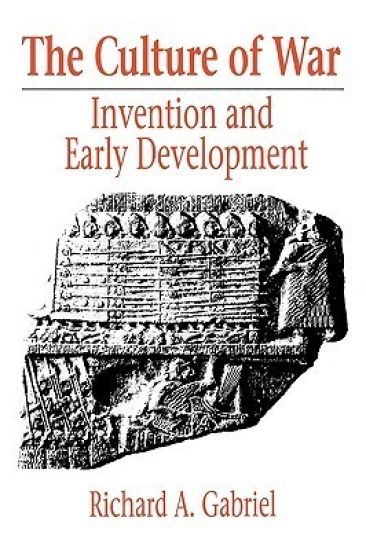
Although war has been analyzed from many perspectives, no scholar has satisfactorily explained why the human race fights and how we came to create a degree of military sophistication capable of destroying the entire species. Gabriel addresses these questions in his study of the origins and development of warfare. He looks particularly at the relationship between the evolution of the social institution of war and the development of the military institutions, tactical sciences, and technology required for organized conflict. Beginning with a discussion of the biological and evolutionary history of man, Gabriel investigates the proposition that the human race is genetically predisposed to warlike behavior. He next reviews the archaeological record to test the common assumption that war has existed from the earliest times. He traces the evolution of the social institutions and technology of war in a succession of ancient cultures beginning with the Bronze Age. The development of armies, tactics, logistics, and weapons is examined, together with the psychological and social implications of mankind's choice to use them. The work concludes with a discussion demonstrating how the practice of war in modern times relates to the perpetuation of values and institutional forms created by earlier societies--especially those of classical Greece and Rome. The first study to integrate the findings of cultural anthropology with the concerns of military analysis, this work will be of interest to students and academics in these and related fields.
Colored by the popular and official mythologies of heroism, the accepted view of mental collapse during combat is that it is a fairly rare occurrence that can be attributed to psychological weakness or simple cowardice. With the advent of each new generation of weapons, however, this view becomes less tenable. The increasingly lethal battlefields of conventional warfare have sharply escalated the numbers of psychiatric casualties, which reached staggering proportions worldwide by the early 1980s. Professor Gabriel, a leading authority on military psychiatry, provides the first systematic examination of the problem, its history and current dimension, the systems developed by the superpowers to counter it, and the far-reaching implications of our continued acceptance of warfare under radically altered conditions.
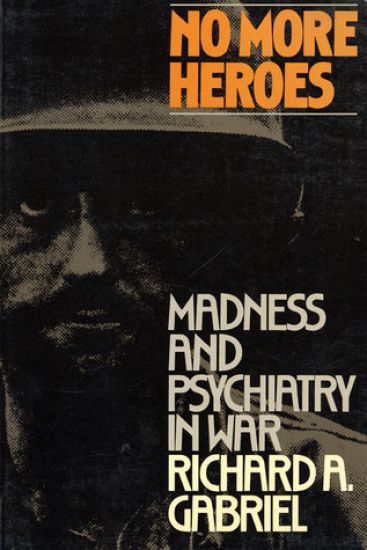
No More Heroes: Madness and Psychiatry in War
Richard A. Gabriel
Hill Wang Inc.,U.S.
1988
nidottu
Halvin toimitettuna 21,90 €
"No More Heroes" is an in depth exploration of madness and psychiatry in war.
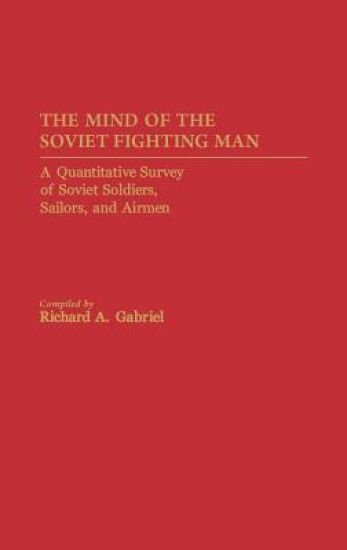
This is a systematic, comparative attitudinal study of the Soviet fighting man. The author interviewed emigre ex-Soviet servicemen from all branches and of all ranks to determine their feelings about their military experience. Each of the three major sections of the work addresses one branch of the service, detailing the answers of respondents to eighty-one questions. The resulting sets of data are divided into twelve categories dealing with various aspects of military service in the Soviet Union: general views of military service, military life, combat ability, training, quality of officers and NCOs, leadership, morale and discipline, ideology, unit cohesion, desertion and AWOL, alcohol use, and suicide. Gabriel's conclusions, as well as the data he presents, answer critical questions about Soviet military effectiveness and encourage further analysis of the psychology of the Soviet fighting man.
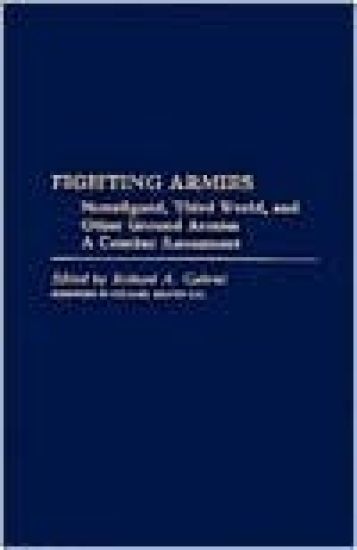
Fighting Armies: Nonaligned, Third World, and Other Ground Armies
Richard A. Gabriel
Greenwood Press
1983
sidottu
Product information not available.
Crisis in Command: Mismanagement in the Army
Richard A. Gabriel; Paul L. Savage
Hill Wang
1979
nidottu
Crisis in Command, written in the aftermath of the Vietnam War, details the mismanagement of the US Army's leadership. Former soldiers Richard A. Gabriel and Paul L. Savage provide documented evidence that the military forces of the United States are ill-prepared for war, having been weakened by officer-corps members who have abandoned honor and integrity to further their individual careers.