Kirjojen hintavertailu – 12 903 724 kirjaa ja 27 kauppaa

Kirjailija

Richard B. Freeman

Kirjat ja teokset yhdessä paikassa: 4 kirjaa, julkaisuja vuosilta 1971–2020, suosituimpiin kuuluu What Workers Want. Vertaile teosten hintoja ja tarkista saatavuus suomalaisista kirjakaupoista.

Nimi esiintyy myös muodoissa: Richard B Freeman

4 kirjaa

Kirjojen julkaisuvuodet: 1971–2020.

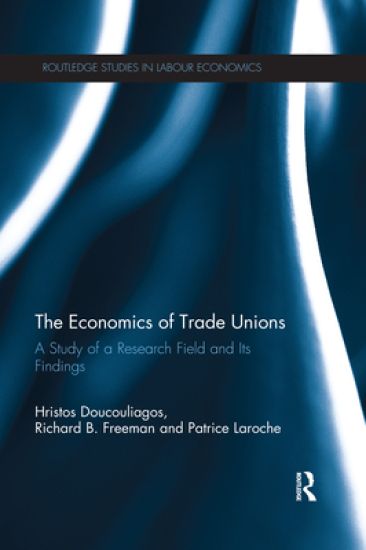
The Economics of Trade Unions

The Economics of Trade Unions

Hristos Doucouliagos; Richard B. Freeman; Patrice Laroche

Routledge
2020
nidottu
Richard B. Freeman and James L. Medoff’s now classic 1984 book What Do Unions Do? stimulated an enormous theoretical and empirical literature on the economic impact of trade unions. Trade unions continue to be a significant feature of many labor markets, particularly in developing countries, and issues of labor market regulations and labor institutions remain critically important to researchers and policy makers. The relations between unions and management can range between cooperation and conflict; unions have powerful offsetting wage and non-wage effects that economists and other social scientists have long debated. Do the benefits of unionism exceed the costs to the economy and society writ large, or do the costs exceed the benefits? The Economics of Trade Unions offers the first comprehensive review, analysis and evaluation of the empirical literature on the microeconomic effects of trade unions using the tools of meta-regression analysis to identify and quantify the economic impact of trade unions, as well as to correct research design faults, the effects of selection bias and model misspecification. This volume makes use of a unique dataset of hundreds of empirical studies and their reported estimates of the microeconomic impact of trade unions. Written by three authors who have been at the forefront of this research field (including the co-author of the original volume, What Do Unions Do?), this book offers an overview of a subject that is of huge importance to scholars of labor economics, industrial and employee relations, and human resource management, as well as those with an interest in meta-analysis.
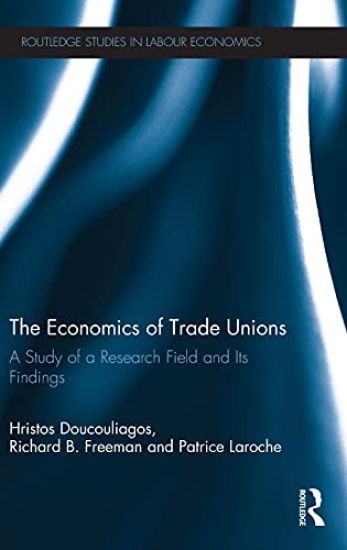
The Economics of Trade Unions

The Economics of Trade Unions

Hristos Doucouliagos; Richard B. Freeman; Patrice Laroche

Routledge
2017
sidottu
Richard B. Freeman and James L. Medoff’s now classic 1984 book What Do Unions Do? stimulated an enormous theoretical and empirical literature on the economic impact of trade unions. Trade unions continue to be a significant feature of many labor markets, particularly in developing countries, and issues of labor market regulations and labor institutions remain critically important to researchers and policy makers. The relations between unions and management can range between cooperation and conflict; unions have powerful offsetting wage and non-wage effects that economists and other social scientists have long debated. Do the benefits of unionism exceed the costs to the economy and society writ large, or do the costs exceed the benefits? The Economics of Trade Unions offers the first comprehensive review, analysis and evaluation of the empirical literature on the microeconomic effects of trade unions using the tools of meta-regression analysis to identify and quantify the economic impact of trade unions, as well as to correct research design faults, the effects of selection bias and model misspecification. This volume makes use of a unique dataset of hundreds of empirical studies and their reported estimates of the microeconomic impact of trade unions. Written by three authors who have been at the forefront of this research field (including the co-author of the original volume, What Do Unions Do?), this book offers an overview of a subject that is of huge importance to scholars of labor economics, industrial and employee relations, and human resource management, as well as those with an interest in meta-analysis.
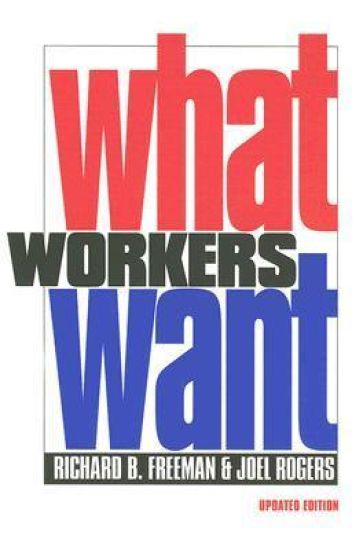
What Workers Want

What Workers Want

Richard B. Freeman; Joel Rogers

ILR Press
2006
pokkari
Praise for the first edition: "This very valuable book reports the results of a large-scale and complex survey aimed at understanding the preferences of employees regarding workplace governance and their attitudes toward the three key institutions in the labor market: unions, government, and firms.... The findings are... sophisticated and convincing.... This is a terrifically useful book that contains a wealth of information."—Labor History "What Workers Want is one of the most ambitious efforts ever undertaken to determine the attitudes of employees about the American workplace.... An extremely important contribution to the long and often heated debates that swirl around these issues."—Ralph Nader, Public Citizen News "What Workers Want is a sharply focused study of how American workers think about workplace participation. This book is a message about workplace democracy that union leaders would do well to build into their organizing strategies."—Dissent "This is easily one of the most readable books on industrial relations matters written by academics in recent times. The authors are able simultaneously to engage the reader in an almost folksy manner, while also being quite rigorous in their presentation of data. There should be more such books."—The Journal of Industrial Relations How would a typical American workplace be structured if the employees could design it? According to Richard B. Freeman and Joel Rogers, it would be an organization run jointly by employees and their supervisors, one where disputes between labor and management would be resolved through independent arbitration. Their groundbreaking book provides a comprehensive account of employees' attitudes about participation, representation, and regulation on the job. For this edition, the authors have added an introduction showing how recent data have confirmed and strengthened their basic argument. A new concluding chapter lays out the model of "open source unionism" that they propose for rebuilding unionism in the United States, making this updated edition essential for anyone thinking about what labor should be doing to move forward.