Kirjojen hintavertailu – 12 859 829 kirjaa ja 27 kauppaa

Kirjailija

Richard Blanco

Kirjat ja teokset yhdessä paikassa: 15 kirjaa, julkaisuja vuosilta 1998–2025, suosituimpiin kuuluu How to Love a Country. Vertaile teosten hintoja ja tarkista saatavuus suomalaisista kirjakaupoista.

15 kirjaa

Kirjojen julkaisuvuodet: 1998–2025.

Homeland of My Body

Homeland of My Body

Richard Blanco

BEACON PRESS
2025
nidottu
A rich, accomplished, intensely intimate collection with 2 full sections of new poems bookending Blanco's selections from his 5 previous volumes "An engineer, poet, Cuban American . . . his poetry bridges cultures and languages--a mosaic of our past, our present, and our future--reflecting a nation that is hectic, colorful, and still becoming."--President Joe Biden, conferring the National Humanities Medal on Richard Blanco, 2023 "What a gift, this new gathering of poems from the singular Richard Blanco. A cause for rejoicing "--Krista Tippett, author of Being Wise and host of On Being "Blanco's poems are journeys to a homeland within the heart, a welcome homecoming earned from a lifetime's wise voyaging."--Sandra Cisneros"A triumphant anthem to a rich life in all its ages and awakenings."--Naomi Shihab Nye In this collection of over 100 poems, Richard Blanco has carefully selected poems from his previous books that represent his evolution as a writer grappling with his identity, working to find and define "home," and bookended them with new poems that address those issues from a fresh, more mature perspective, allowing him to approach surrendering the pain and urgency of his past explorations. Pausing at this pivotal moment in mid-career, Blanco reexamines his life-long quest to find his proverbial home and all that it encompasses: love, family, identity and ultimately art itself. In the closing section of the volume, he has come to understand and internalize the idea that "home" is not one place, not one thing, and lives both inside him and inside his art. The poems range in form, voice, and setting, showcasing his command of craft, but in essence they are one continuous reflection on the existential question at the core of all of Blanco's poetry: how can we find our place in the world. All are characterized by his keen eye, deep sensibility, and polished craft, without pretense. This volume is a gift to Blanco's many readers but even more to those who have yet to discover that they can understand, and fall in love with poetry, that a poet can speak to them about his own and their own lives so profoundly, and that this poet, as Barack Obama discovered, can speak for all of us. Richard Blanco has been justly celebrated for his poetic gifts and his command of the many forms poetry can take, from the finely structured to the prose poem formats. His previous volumes have been praised by Patricia Smith, Eileen Myles, Sandra Cisneros, Elizabeth Alexander, and many others. His poems have appeared in The New Yorker, The Atlantic, and dozens of other publications.
Homeland of My Body

Homeland of My Body

Richard Blanco

BEACON PRESS
2023
sidottu
A rich, accomplished, intensely intimate collection with two full sections of new poems bookending Blanco's selections from his five previous volumes "An engineer, poet, Cuban American...his poetry bridges cultures and languages--a mosaic of our past, our present, and our future--reflecting a nation that is hectic, colorful, and still becoming."--President Joe Biden, conferring the National Humanities Medal on Richard Blanco, 2023 In this collection of over 100 poems, Richard Blanco has carefully selected poems from his previous books that represent his evolution as a writer grappling with his identity, working to find and define "home," and bookended them with new poems that address those issues from a fresh, more mature perspective, allowing him to approach surrendering the pain and urgency of his past explorations. Pausing at this pivotal moment in mid-career, Blanco reexamines his life-long quest to find his proverbial home and all that it encompasses: love, family, identity and ultimately art itself. In the closing section of the volume, he has come to understand and internalize the idea that "home" is not one place, not one thing, and lives both inside him and inside his art. The poems range in form, voice, and setting, showcasing his command of craft, but in essence they are one continuous reflection on the existential question at the core of all of Blanco's poetry: how can we find our place in the world. All are characterized by his keen eye, deep sensibility, and polished craft, without pretense. This volume is a gift to Blanco's many readers but even more to those who have yet to discover that they can understand, and fall in love with poetry, that a poet can speak to them about his own and their own lives so profoundly, and that this poet, as Barack Obama discovered, can speak for all of us. Richard Blanco has been justly celebrated for his poetic gifts and his command of the many forms poetry can take, from the finely structured to the prose poem formats. His previous volumes have been praised by Patricia Smith, Eileen Myles, Sandra Cisneros, Elizabeth Alexander, and many others. His poems have appeared in The New Yorker, The Atlantic, and dozens of other publications.
Grabbed

Grabbed

Richard Blanco

Beacon Press
2020
nidottu
A gender-inclusive anthology of poetry and prose that addresses the physical and psychological act of being "grabbed," or in any way assaulted. The #MeToo movement, the infamous Access Hollywood tape, and the depraved and hypocritical actions of celebrities, politicians, CEOs, and other powerful people have caused people all over the nation to speak out in outrage, to express allegiance for the victims of these assaults, and to raise their voices against a culture that has allowed this behavior to continue for too long. The editors asked writers and poets to add to the conversation about what being "grabbed" means to them in their own experience or in whatever way the word "grabbed" inspired them. What they received are often searing, heart-rending works, ranging in topic from sexual misconduct to racial injustice, from an unwanted caress to rape, expressed in powerful, beautifully crafted prose and poetry. The writers represented here, some very well known, such as Rita Dove, Jericho Brown, Eileen Miles, Ana Menendez and Sapphire, as well as some newer voices not yet fully discovered, have mined their collective experiences to reveal their most vulnerable moments, and in some cases, to narrate moments that they have had previously been unwilling or unable to speak of. What results is a collection of emotional, hard-hitting pieces that speak to the aftermath of violation - whether mental, emotional, or physical.
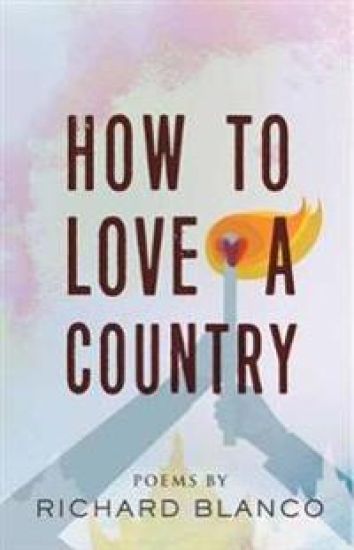
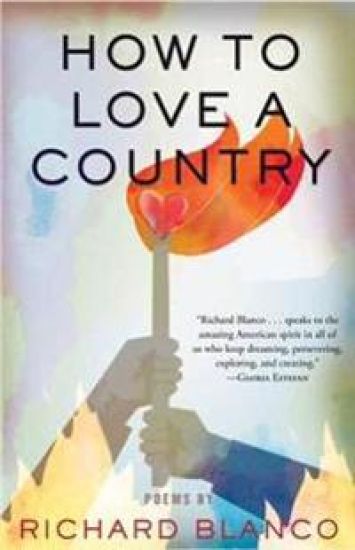
How to Love a Country

How to Love a Country

Richard Blanco

Beacon Press
2019
sidottu
A new collection from the renowned inaugural poet exploring immigration, gun violence, racism, LGBTQ issues, and more, in accessible and emotive verses The diverse poems in this collection form a mosaic of seemingly varied topics: the Pulse Nightclub massacre; an unexpected encounter on a visit to Cuba; the forced exile of 8,500 Navajos in 1868; the arrival of a young Chinese woman at Angel Island in 1938; the incarceration of a gifted writer; and the poet's abiding love for his partner, who he is finally allowed to wed. But despite each poem's unique subject matter or occasion, all are fundamentally asking one overwhelming question: how to love this country? Seeking answers, Blanco digs deep into the very marrow of our nation--our cities and towns--with poems that interrogate our past and present, grieve our injustices and note our flaws, yet remember to celebrate our ideals and cling to our hopes. Blanco unravels the very fabric of the American narrative, pursuing a resolution to the inherent contradiction of our nation's psyche and mandate: e pluribus unum (out of many, one), charged with the utopian idea that no single narrative is more important than another, and that America could and ought someday to be a county where all narratives converge into one. A country in which we can all truly thrive and truly love.
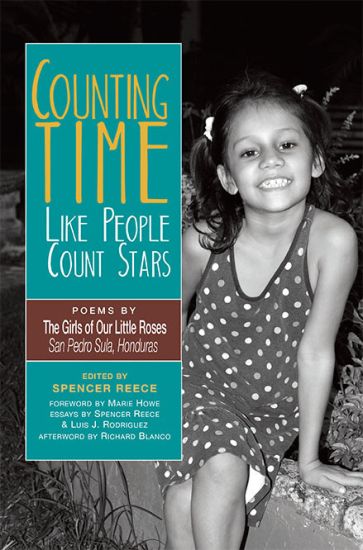
Counting Time Like People Count Stars

Counting Time Like People Count Stars

Marie Howe; Luis J. Rodriguez; Richard Blanco

Tia Chucha Press
2017
nidottu
Over twenty-five years ago two Americans, Dr. Diana Frade and her husband, Episcopalian Bishop Leo Frade, founded Our Little Roses Home for Girls in San Pedro Sula, Honduras. Until then abandoned girls were often given to prisoners since no such homes existed. Now Our Little Roses has some 60 rescued or orphaned girls in a city once considered the “murder capital of the world.” Poverty and violence—especially in the past 25 years attributed to deported Los Angeles–based gangs—has affected the lives of all in the poorest Spanish-speaking country of the hemisphere. Unaccompanied youth from Honduras were among the 100,000 refugees, which also included children and youth from El Salvador and Guatemala, arriving to the United States between 2013 and 2015. American poet and Episcopalian priest Spencer Reece spent two years at Our Little Roses teaching poetry to girls who have lost family due to poverty, violence, and disasters like Hurricane Mitch that struck Honduras, Nicaragua, and Guatemala in 1998, resulting in 22,000 people dead or missing, 2.7 million homeless, and $6 billion in damages. This book has essays by Reece and Luis J. Rodríguez as a backdrop to the girls’ voices, and a foreword and afterword by poets Marie Howe and Richard Blanco. Luis and his wife Trini, a poet, teacher, and indigenous healer, also helped teach at Our Little Roses and the Holy Family Bilingual School inside a walled compound in one of the city’s poorest neighborhoods. Here poetry and stories transcend the pain of loss that often goes unexpressed. Here poetry serves as a beacon of hope and inspiration in the shadows. Here poetry can save lives.
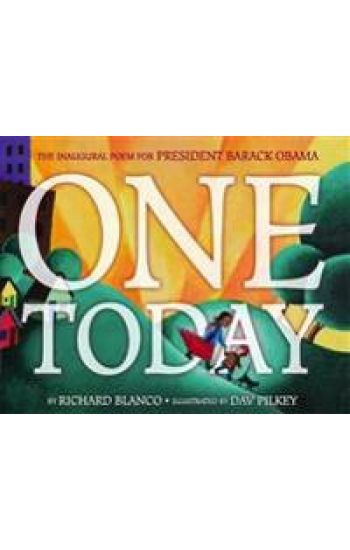
One Today

One Today

Richard Blanco; Dav Pilkey

Little, Brown Young Readers
2015
sidottu
One Today, written for and presented at Obama's second term inauguration, celebrates America from dawn to dusk, and from coast to coast. Dav Pilkey brings to life this vision of a bustling, diverse, united nation, where the extraordinary happens every day.
Carlos Betancourt

Carlos Betancourt

Richard Blanco

Skira Rizzoli
2015
sidottu
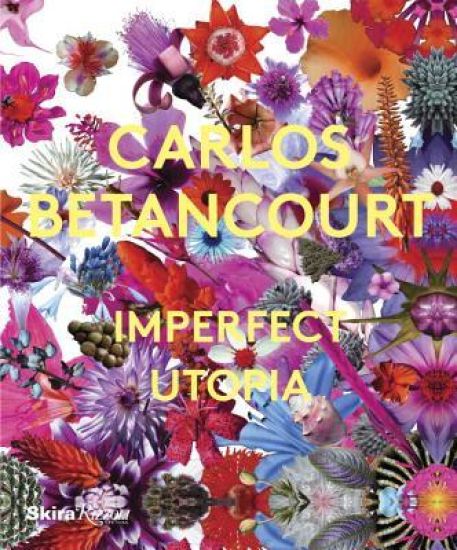
Mixed-media artist Carlos Betancourt and his influential studio, Imperfect Utopia, helped to launch the Miami art scene in the 1980’s. Betancourt’s oeuvre ?is a lush explosion of radiant, eccentric colors in which he explores the kaleidoscope (multi-racial, multi-lingual, trans-cultural) of Caribbean and American culture. His work alludes to issues of memory, beauty, identity, and communication. He bends the lines between art, photography, and nature in his photographs, collages, painting, installations, and conceptual pieces. Carlos Betancourt’s imagery reinterprets the past and present and offers it in a fresh context. He is inspired by Puerto Rico, Miami, and his extensive travels; also artist Ana Mendieta’s interventions in nature, Robert Rauschenberg’s assemblages, Andy Warhol’s perceptions, Neo Rauch compositions, and a Federico Fellini-esque cast of characters for his photo assemblages. This exuberant volume explores Betancourt’s body of work, with more than 250 images and texts by art critic Paul Laster, art history professor Robert Farris Thompson and United States Inaugural Poet, Richard Blanco. His artwork is included in the permanent collections of various museums, including The Metropolitan Museum of Art, The National Portrait Gallery, and The Smithsonian Institute.
Matters of the Sea / Cosas del mar

Matters of the Sea / Cosas del mar

Richard Blanco

University of Pittsburgh Press
2015
nidottu
Matters of the Sea / Cosas del mar is a commemorative bilingual chapbook that beautifully reproduces Richard Blanco's stirring poem presented during the historic reopening ceremony of the United States Embassy in Havana, Cuba, on August 14, 2015." Matters of the Sea is one of the most emotionally complex and personal poems I've ever written, invested with all my love for the people of two countries that are part of my very being. As with the presidential inauguration in 2013, I am once again humbled and honored to participate as a poet in another historic moment of such significance. I'm elated by the power of poetry to mark such important, communal moments and to be a catalyst for change and understanding by reaching deep into our emotional selves and connecting us to our shared humanity."—Richard Blanco
The Prince of los Cocuyos

The Prince of los Cocuyos

Richard Blanco

ECCO Press
2015
nidottu
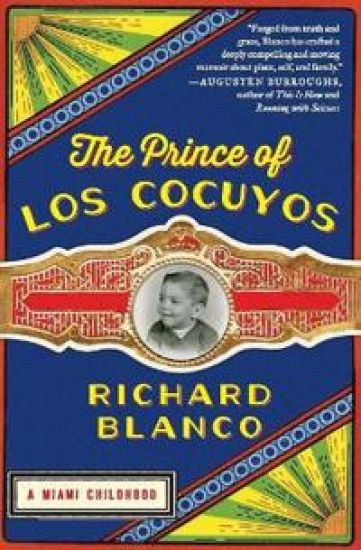
A poignant, hilarious, and inspiring memoir from the first Latino and openly gay inaugural poet, which explores his coming-of-age as the child of Cuban immigrants and his attempts to understand his place in America while grappling with his burgeoning artistic and sexual identities. Richard Blanco's childhood and adolescence were experienced between two imaginary worlds: his parents' nostalgic world of 1950s Cuba and his imagined America, the country he saw on reruns of The Brady Bunch and Leave it to Beaver-an "exotic" life he yearned for as much as he yearned to see "la patria." Navigating these worlds eventually led Blanco to question his cultural identity through words; in turn, his vision as a writer-as an artist-prompted the courage to accept himself as a gay man. In this moving, contemplative memoir, the 2013 inaugural poet traces his poignant, often hilarious, and quintessentially American coming-of-age and the people who influenced him. A prismatic and lyrical narrative rich with the colors, sounds, smells, and textures of Miami, Richard Blanco's personal narrative is a resonant account of how he discovered his authentic self and ultimately, a deeper understanding of what it means to be American. His is a singular yet universal story that beautifully illuminates the experience of "becoming;" how we are shaped by experiences, memories, and our complex stories: the humor, love, yearning, and tenderness that define a life.
For All of Us, One Today

For All of Us, One Today

Richard Blanco

Beacon Press
2013
pokkari
2014 International Latino Awards Winner: Best Biography - Spanish or Bilingual "For All of Us, One Today" is a fluid, poetic story anchored by Richard Blanco's experiences as the inaugural poet in 2013, and beyond. In this brief and evocative narrative, he shares for the first time his journey as a Latino immigrant and openly gay man discovering a new, emotional understanding of what it means to be an American. He tells the story of the call from the White House committee and all the exhilaration and upheaval of the days that followed. He reveals the inspiration and challenges behind the creation of the inaugural poem, "One Today," as well as two other poems commissioned for the occasion ("Mother Country" and "What We Know of Country"), published here for the first time ever, alongside translations of all three of those poems into his native Spanish. Finally, Blanco reflects on his life-changing role as a public voice since the inauguration, his spiritual embrace of Americans everywhere, and his vision for poetry's new role in our nation's consciousness. Like the inaugural poem itself, "For All of Us, One Today" speaks to what makes this country and its people great, marking a historic moment of hope and promise in our evolving American landscape.
Boston Strong

Boston Strong

Richard Blanco

University of Pittsburgh Press
2013
nidottu
Boston Strong is a commemorative chapbook that beautifully reproduces Richard Blanco’s poignant poem presented May 30, 2013 at the benefit concert to help the people most affected by the tragic events that occured on April 15, 2013 during the Boston Marathon. The net proceeds from the sale of this book benefit The One Fund Boston. The One Fund Boston was established through the generosity of businesses, foundations, and individual donors. The Victim Relief Fund of The One Fund Boston will be used to assist those families of the victims who were killed and the victims who were most seriously affected as a result of the tragic events during the Boston Marathon on April 15, 2013, and related events on April 18 and April 19.
Looking for The Gulf Motel

Looking for The Gulf Motel

Richard Blanco

University of Pittsburgh Press
2012
nidottu
Family continues to be a wellspring of inspiration and learning for Blanco. His third book of poetry, Looking for The Gulf Motel, is a genealogy of the heart, exploring how his family's emotional legacy has shaped—and continues shaping—his perspectives. The collection is presented in three movements, each one chronicling his understanding of a particular facet of life from childhood into adulthood. As a child born into the milieu of his Cuban exiled familia, the first movement delves into early questions of cultural identity and their evolution into his unrelenting sense of displacement and quest for the elusive meaning of home. The second, begins with poems peering back into family again, examining the blurred lines of gender, the frailty of his father-son relationship, and the intersection of his cultural and sexual identities as a Cuban-American gay man living in rural Maine. In the last movement, poems focused on his mother's life shaped by exile, his father's death, and the passing of a generation of relatives, all provide lessons about his own impermanence in the world and the permanence of loss. Looking for the Gulf Motel is looking for the beauty of that which we cannot hold onto, be it country, family, or love.
Directions to the Beach of the Dead

Directions to the Beach of the Dead

Richard Blanco

University of Arizona Press
2005
nidottu
In his second book of narrative, lyric poetry, Richard Blanco explores the familiar, unsettling journey for home and connections, those anxious musings about other lives: “Should I live here? Could I live here?” Whether the exotic (“I’m struck with Maltese fever …I dream of buying a little Maltese farm…) or merely different (“Today, home is a cottage with morning in the yawn of an open window…”), he examines the restlessness that threatens from merely staying put, the fear of too many places and too little time. The words are redolent with his Cuban heritage: Marina making mole sauce; Tía Ida bitter over the revolution, missing the sisters who fled to Miami; his father, especially, “his hair once as black as the black of his oxfords…” Yet this is a volume for all who have longed for enveloping arms and words, and for that sanctuary called home. “So much of my life spent like this-suspended, moving toward unknown places and names or returning to those I know, corresponding with the paradox of crossing, being nowhere yet here.” Blanco embraces juxtaposition. There is the Cuban Blanco, the American Richard, the engineer by day, the poet by heart, the rhythms of Spanish, the percussion of English, the first-world professional, the immigrant, the gay man, the straight world. There is the ennui behind the question: why cannot I not just live where I live? Too, there is the precious, fleeting relief when he can write "…I am, for a moment, not afraid of being no more than what I hear and see, no more than this:..." It is what we all hope for, too.
City of a Hundred Fires

City of a Hundred Fires

Richard Blanco

University of Pittsburgh Press
1998
nidottu
Named one of Library Journal’s Top 20 Poetry Books of 1998Winner of the 1997 Agnes Lynch Starrett PrizeRunner up for the Great Lakes Colleges Association 1999 New Writers AwardCity of a Hundred Fires presents us with a journey through the cultural coming of age experiences of the hyphenated Cuban-American. This distinct group, known as the Ñ Generation (as coined by Bill Teck), are the bilingual children of Cuban exiles nourished by two cultural currents—the fragmented traditions and transferred nostalgia of their parents' Caribbean homeland and the very real and present America where they grew up and live.